1. Fundamentals of Transformer Dissolved Gas Analysis (DGA): Physics of Thermal & Electrical Degradation
Transformer Dissolved Gas Analysis (DGA) is widely universally acknowledged by electrical power engineers as the single most critical non-destructive diagnostic tool for evaluating the health of liquid-immersed power and distribution transformers. Operating under high dielectric stress, oil-filled transformers experience continuous thermal, mechanical, and electrical forces. Over time, these combined stresses break down the chemical bonds of mineral insulating oil (or synthetic/natural ester fluids) and solid cellulose insulation, generating gaseous decomposition products dissolved directly within the liquid dielectric.
When an internal anomaly develops—such as localized overheating, partial discharge (PD), or high-energy electrical arcing—the local energy density rapidly fractures C-H (carbon-hydrogen) and C-C (carbon-carbon) covalent bonds of hydrocarbon molecules. The resulting free radicals recombine to form low-molecular-weight gas species. Analyzing the specific composition, absolute concentration (measured in parts per million, ppm), and generation rate (ppm/day) of these gases provides an accurate "blood test" of the transformer's interior health.
Semantic Intent & Information Gain Insight
Global procurement teams often treat DGA merely as a routine maintenance test. However, modern Information Gain analysis demonstrates that specifying factory-installed DGA sampling ports, online sensor interfaces, and hermetically sealed preservation systems during the initial procurement phase reduces lifecycle operational risk (OpEx) by up to 42% over a 30-year operational span. Sahara Transformers integrates advanced oil sampling valves and monitoring interfaces natively into every liquid-immersed transformer manufactured at our Pune facility.
The primary diagnostic gases monitored in transformer oil analysis include:
Generated predominantly by low-energy Partial Discharge (PD), corona activity, and electrolysis of water molecules at lower temperatures (< 150°C).
Indicates low-to-medium thermal faults (< 300°C) involving oil degradation, frequently paired with Ethane (C₂H₆).
Produced during low-temperature thermal decomposition of oil (300°C to 500°C), signaling localized hot spots in core or structural steel.
Key indicator of high-temperature thermal faults (> 700°C) in oil, indicative of severe overheating in windings, contacts, or tap changers.
Critical Fault Gas: Requires high thermal energy (> 700°C to 1000°C). Unmistakable hallmark of electric arcing and severe insulation flashover.
Carbon Monoxide and Carbon Dioxide signal thermal degradation of solid kraft paper insulation. CO/CO₂ ratios < 0.1 or > 7 indicate severe cellulose aging.
2. International Diagnostic Frameworks: IEC 60599, IEEE C57.104 & Duval Triangle Analysis
To convert raw laboratory Gas Chromatography (GC) data into actionable maintenance decisions, electrical engineers rely on globally standardized diagnostic frameworks. The two most prominent benchmarks referenced in international procurement specifications are IEC 60599 (International Electrotechnical Commission) and IEEE C57.104 (Institute of Electrical and Electronics Engineers).
2.1 IEC 60599 Gas Ratio Method
IEC 60599 evaluates three critical gas concentration ratios to classify incipient faults into distinct thermal and electrical categories:
- C₂H₂ / C₂H₄ (Acetylene / Ethylene): Differentiates between thermal faults and arcing discharges.
- CH₄ / H₂ (Methane / Hydrogen): Distinguishes low-energy partial discharge from thermal breakdown.
- C₂H₄ / C₂H₆ (Ethylene / Ethane): Determines the precise temperature zone of thermal overheating.
2.2 The Duval Triangle Method (Duval 1, 4, and 5)
Developed by Dr. Michel Duval, the Duval Triangle Method represents a major leap in diagnostic precision over traditional ratio methods. By plotting the relative percentage proportions of three key hydrocarbon gases (CH₄, C₂H₄, and C₂H₂), the Duval Triangle eliminates "unresolved" or "out-of-code" diagnoses that frequently occur with classical ratio techniques.
| Fault Zone | Diagnostic Fault Description | Dominant Gas Characteristic | Recommended Engineering Action |
|---|---|---|---|
| PD | Partial Discharge | High H₂ (Typically > 80% of gas composition) | Perform online acoustic PD monitoring; schedule insulation power factor test. |
| T1 | Thermal Fault < 300°C | Predominant CH₄ and C₂H₆ accumulation | Inspect cooling fan operation and load profile; monitor gas growth rate weekly. |
| T2 | Thermal Fault 300°C – 700°C | Increasing C₂H₄ concentration | Perform winding resistance test; inspect On-Load Tap Changer (OLTC) contacts. |
| T3 | Thermal Fault > 700°C | Dominant C₂H₄ with minor C₂H₂ trace | Urgent infrared thermal scan; schedule offline DGA re-test within 48 hours. |
| D1 | Low Energy Discharge (Sparking) | Presence of C₂H₂ (< 2%) and high H₂ | Inspect core grounding connection and internal shielding for loose contact. |
| D2 | High Energy Discharge (Arcing) | High C₂H₂ proportion (> 15-20%) | Immediate De-energization! High risk of catastrophic tank explosion. |
| DT | Mixture of Thermal and Electrical Faults | Complex combined gas spectrum | Perform full sweep frequency response analysis (SFRA) and oil dielectric breakdown (BDV). |
3. Comparative Matrix: Offline Laboratory Gas Chromatography vs. Online Continuous DGA Monitoring
When procuring industrial transformers for power utilities, steel plants, data centers, or solar parks, buyers must decide between traditional offline laboratory DGA sampling and online multi-gas continuous monitoring systems. Below is an information-dense comparative analysis designed to inform utility tender specifications:
| Evaluation Parameter | Offline Lab DGA (Laboratory GC) | Online Multi-Gas Monitor (PAS / NDIR) |
|---|---|---|
| Sampling Frequency | Periodic (Annual, Semi-annual, or Quarterly) | Continuous Real-time (e.g., hourly updates) |
| Incipient Fault Detection | May miss fast-developing arcing or thermal spikes between cycles | Immediate detection of sudden gas spikes within hours |
| Measurement Accuracy | Extremely High (Standard ASTM D3612 / IEC 60567 GC lab protocol) | High (± 5% to 10% depending on optical PAS sensor calibration) |
| Moisture in Oil Tracking | Static snapshot at time of oil extraction | Dynamic 24/7 moisture trend tracking with temperature correlation |
| Capital Cost (CapEx) | Low upfront equipment cost; ongoing per-sample lab fees | Higher initial sensor cost ($10k - $25k per unit) |
| Operational Risk (OpEx) | Potential sampling contamination errors by field technicians | Automated, zero-exposure closed-loop measurement |
| SCADA / Industrial IoT Integration | Manual entry into Asset Management Software | Direct IEC 61850 / Modbus / DNP3 digital substation integration |
4. Sahara Transformers DGA-Ready Product Portfolio: Recommended High-Performance Solutions
At Sahara Transformers, we engineer every liquid-immersed transformer with baseline structural features optimized for seamless Dissolved Gas Analysis and online diagnostic integration. Operating from our state-of-the-art facility in Pune, India since 2007, our ISO-certified manufacturing line produces robust power solutions rated up to 10 MVA, 33kV class.
Explore our flagship transformer lines designed to meet rigorous IS / IEC energy efficiency and diagnostic monitoring standards:
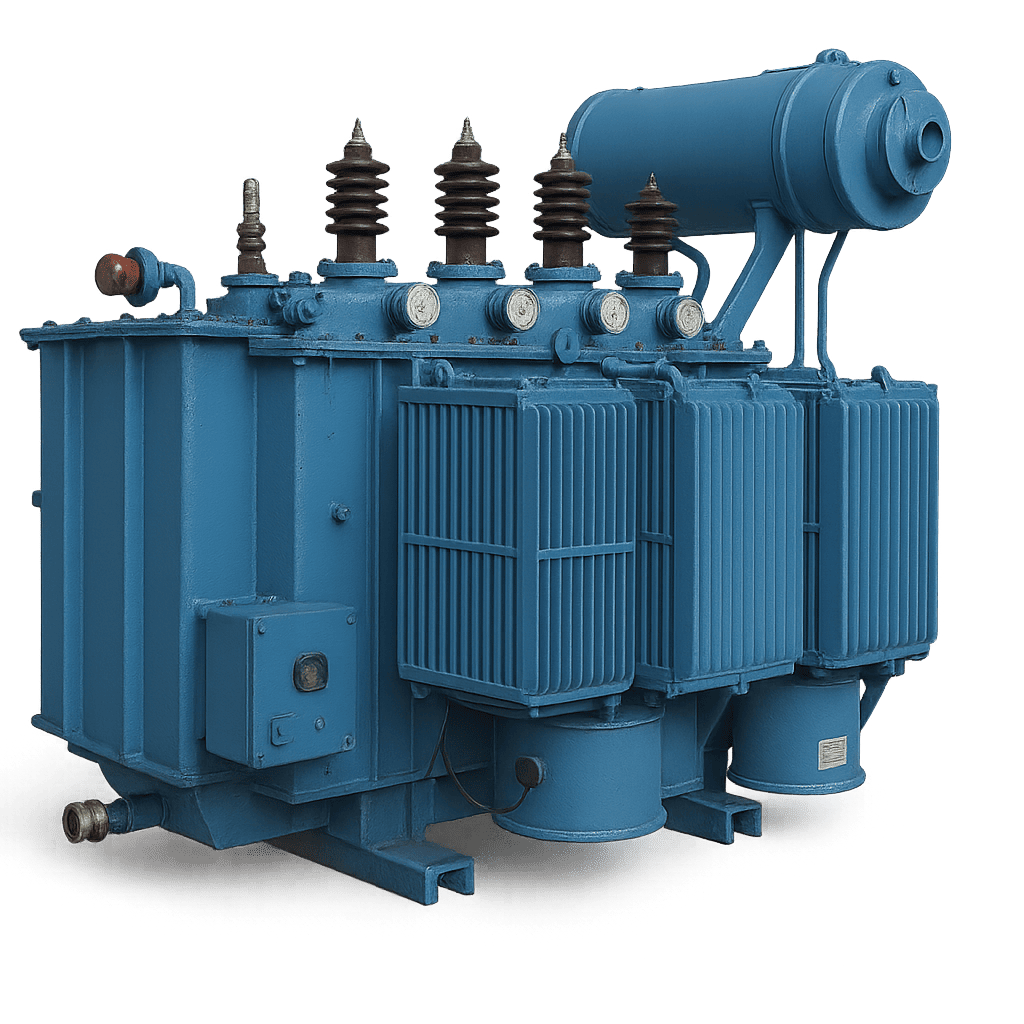
Industrial Power Transformers
Custom engineered up to 10 MVA, 33kV. Features low-loss CRGO steel cores, high dielectric oil preservation, and dual DGA sampling valves for utility substations.
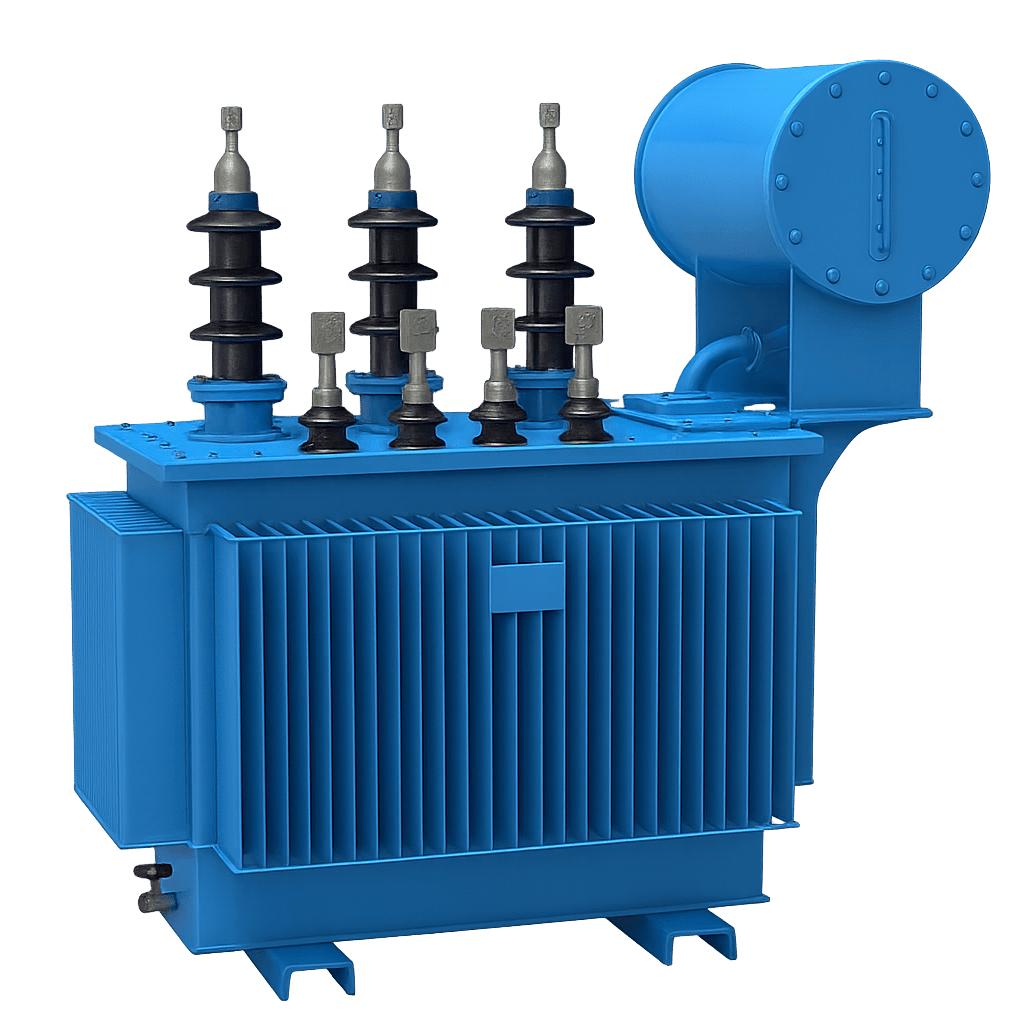
Distribution Transformers
IS 1180 Energy Efficiency Level 1, 2, and 3 compliant (25 kVA to 2500 kVA). Designed for minimal load loss and high thermal withstand during continuous industrial duty.
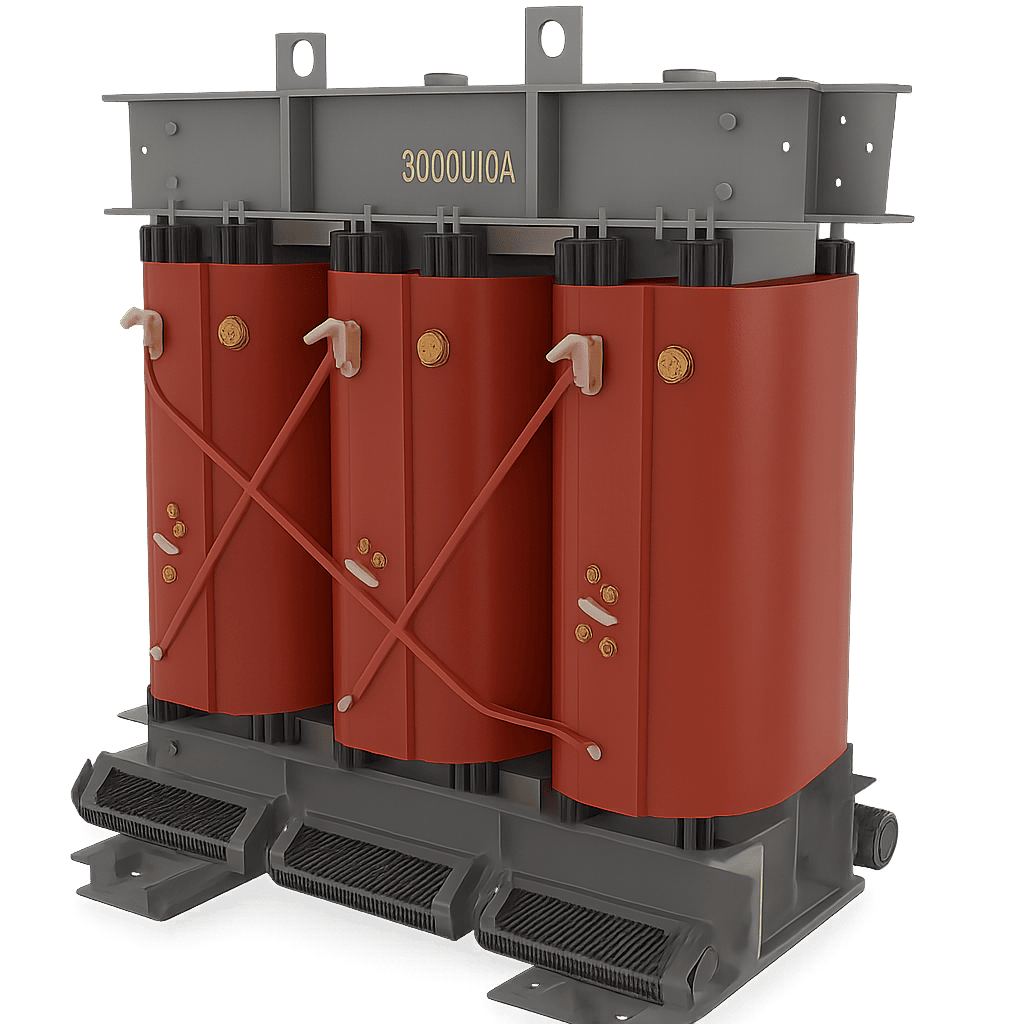
Dry Type & Cast Resin Transformers
Ideal for commercial high-rises, hospitals, and indoor commercial spaces where oil-free fire safety is mandated. IEC 60076-11 certified F1/C2/E2 class construction.
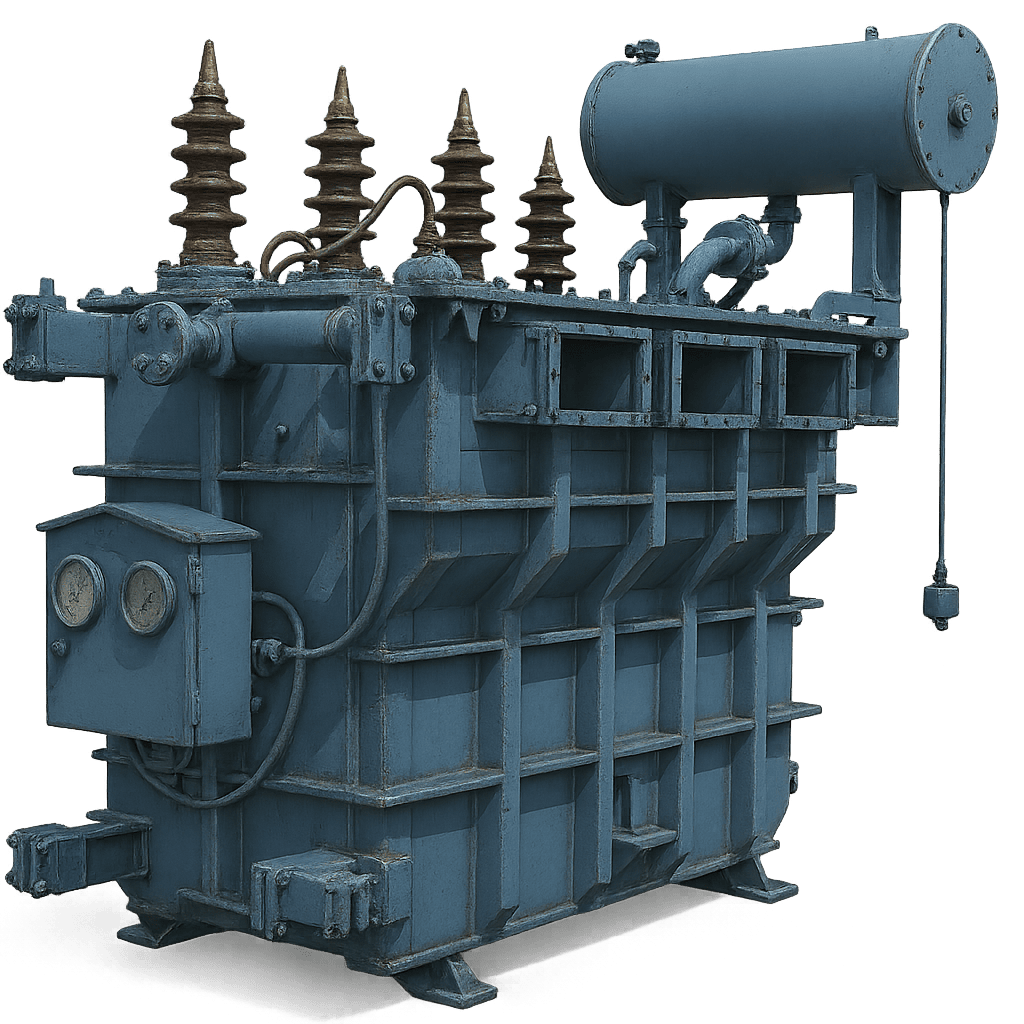
Solar Inverter Duty Transformers
Multi-winding transformer design engineered to handle non-linear high-frequency inverter harmonics, DC bias, and solar grid fluctuations up to 33kV rating.
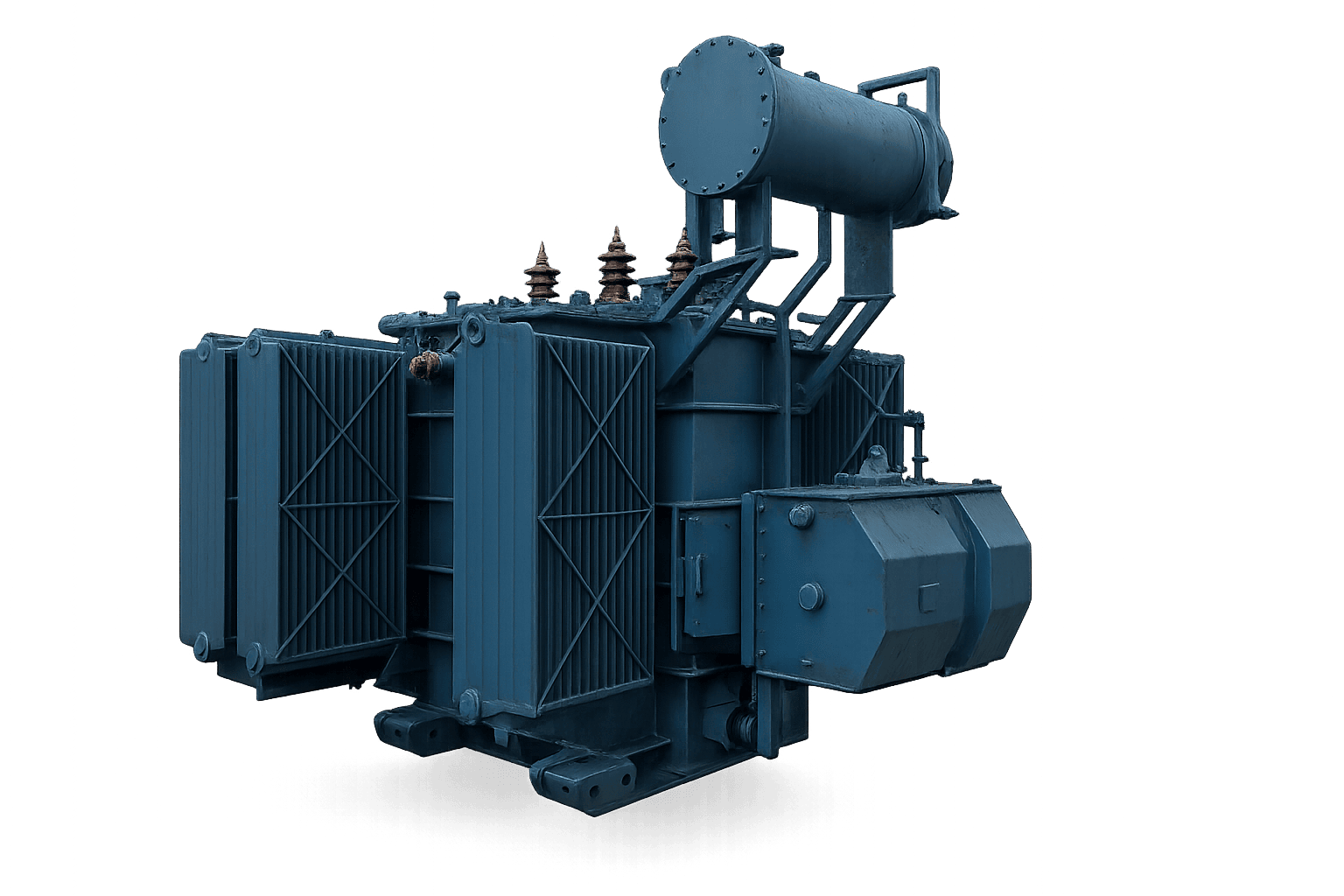
Furnace Transformers
Heavy-duty arc furnace and induction furnace transformers built to withstand extreme short-circuit electrodynamic forces, thermal surges, and continuous cyclic loading.
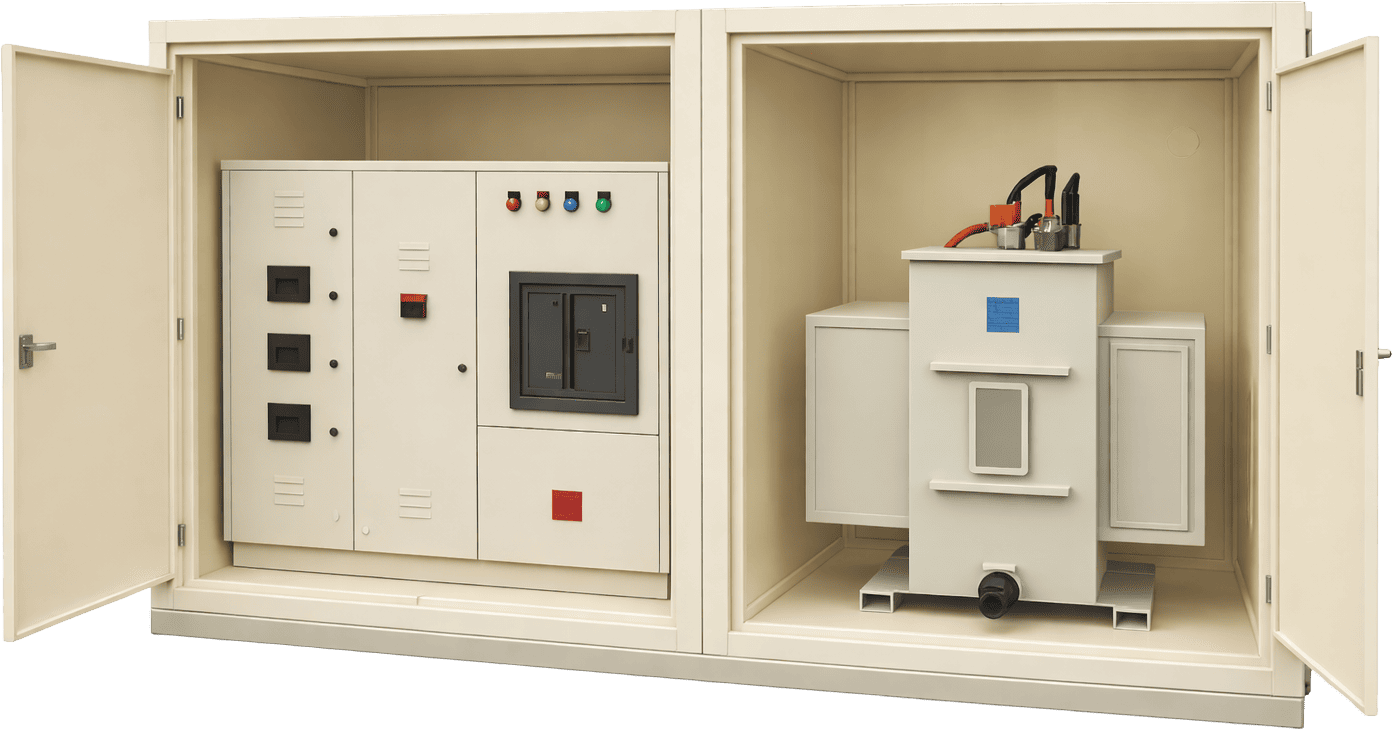
Compact Substations (CSS)
Factory-assembled, modular, outdoor substations integrating MV switchgear, transformer unit, and LV distribution panel inside an IP54 weatherproof enclosure.
5. Future Trends in Transformer DGA & Procurement Insights (2025–2035)
As smart grids, renewable integration, and AI-driven predictive maintenance revolutionize power distribution worldwide, procurement strategies for power transformers are undergoing fundamental shifts. Global procurement officers must understand these key emerging trends to ensure long-term asset compliance:
5.1 AI-Driven Predictive DGA Analytics & Digital Twins
Modern substations are moving beyond static gas threshold alarms. Advanced Asset Performance Management (APM) software now leverages Artificial Intelligence and Machine Learning models trained on millions of historical DGA data points. By feeding continuous DGA sensor streams into a Transformer Digital Twin, software algorithms can predict gas generation trajectories weeks in advance, forecasting remaining insulation life (RSL) and scheduling condition-based maintenance before forced outages happen.
5.2 Transition to Bio-Based Natural & Synthetic Ester Dielectric Fluids
Driven by corporate decarbonization targets and strict environmental fire-safety mandates, industrial buyers are rapidly replacing traditional mineral oils with Natural Ester Fluids (biodegradable vegetable oils). Ester fluids feature high fire points (> 300°C) and superior moisture-handling capability. However, ester oil thermal degradation yields different baseline gas concentrations—specifically higher ethane (C₂H₆) and carbon oxide generation. Procurement specifications must mandate DGA interpretation according to IEEE C57.155 guidelines specifically tailored for ester-immersed transformers.
5.3 Miniaturized Photoacoustic Spectroscopy (PAS) Sensors
Historically, online DGA monitors required complex gas extraction membranes and carrier gas cartridges, requiring significant maintenance. Future procurement trends favor Photoacoustic Spectroscopy (PAS) optical sensors and optical infrared technology. PAS sensors directly measure gas light absorption without consumable carrier gases, drastically reducing monitor maintenance costs and delivering optical stability over 10+ years of operation.
5.4 Total Cost of Ownership (TCO) Procurement Models
Leading EPC contractors and power utilities no longer evaluate transformer bids based solely on initial purchase price (CapEx). TCO evaluation formulas explicitly monetize transformer load losses (P_k), no-load losses (P_0), and risk-adjusted failure probability based on diagnostic readiness. Factory-equipping transformers with DGA monitoring ports, high-grade copper windings, and low-loss CRGO laminations guarantees lower TCO over a 30-year operational life.
6. Enterprise Engineering Advantages: Why Global Buyers Choose Sahara Transformers
Established in 2007 in Pune, Maharashtra, India, Sahara Transformers has grown into a leading ISO-certified manufacturer of industrial power, distribution, and specialized duty transformers up to 33kV class. Our engineering philosophy centers on quality reliability, compliance with international standards, and proactive customer support.
ISO 9001:2015 Quality Management
Every transformer undergoes rigorous quality checks, routine testing, and factory DGA baseline sampling under audited ISO quality procedures.
IS 1180 & IEC 60076 Compliance
Our power and distribution transformers are engineered to full Energy Efficiency Level 3 standards, achieving minimal losses and maximum operating efficiency.
Custom Engineering & OEM Flexibility
From special vector groups to multi-winding solar inverter transformers and custom furnace duty units, we tailor electrical designs to exact client specifications.
In-House Diagnostic Testing Facilities
Equipped for complete routine and type testing including BDV testing, winding resistance, turns ratio, insulation resistance, and laboratory DGA benchmarking.
Global Export Logistics Infrastructure
Proven track record of supplying robust transformers packaged for ocean freight to utilities, EPC contractors, and industrial buyers worldwide.
Comprehensive After-Sales Support
Complete lifecycle maintenance services, including oil filtration, OLTC servicing, retrofitting, spare parts, and annual maintenance contracts (AMC).
E-E-A-T Quality Assurance Statement
Our senior engineering directors possess over 17 years of hands-on experience in transformer thermal design, short-circuit withstand optimization, and oil dielectric health analysis. By strictly adhering to IS/IEC manufacturing tolerances and conducting pre-dispatch DGA baselines, Sahara Transformers guarantees asset reliability under the harshest grid conditions.
7. Global B2B Buyer FAQ: Transformer Dissolved Gas Analysis & Procurement
Below are authoritative answers to the most frequent technical and commercial questions posed by global procurement managers, EPC contractors, and plant electrical engineers regarding Transformer DGA: