Scott Connected Transformers: Engineering Principles, Selection Criteria & Global Procurement Trends

An authoritative technical guide and industrial product blueprint for electrical engineers, EPC contractors, and global buyers. Discover vector conversion mechanics, harmonic management, future grid trends, and standardized procurement guidelines from Sahara Transformers.

1. Executive Overview & Fundamental Vector Engineering

In high-power industrial grids, converting a symmetrical three-phase utility supply into two single-phase loads (or a balanced two-phase system) presents a major challenge for power system engineers. Directly connecting heavy single-phase equipment—such as electric arc furnaces, induction heating units, traction sub-stations, and specialized laboratory test beds—to a conventional three-phase grid induces severe voltage unbalance, negative-sequence currents, excessive rotor heating in utility generators, and financial penalties from grid operators. The Scott Connected Transformer (frequently referred to as the Scott-T Connection) remains the most robust, passive, and cost-effective electromagnetic solution for overcoming phase asymmetry.

Invented by Charles F. Scott, this transformer topology interconnects two distinct single-phase transformers—designated as the Main Transformer and the Teaser Transformer—to achieve seamless power transformation between three-phase and two-phase systems with 90-degree spatial and phase displacement.

Main Transformer Winding Dynamics

The Main Transformer is designed with a center-tapped primary winding (ratio 1:1 relative to system voltage line-to-line) connected directly across two phases of the primary 3-phase supply (e.g., Phases A and B). Its center tap (50% node) serves as the structural tie point for the Teaser Transformer connection. The secondary winding produces one of the orthogonal two-phase voltages.

Teaser Transformer 86.6% Voltage Tap

The Teaser Transformer primary winding is connected between the third phase of the 3-phase supply (Phase C) and the center tap of the Main Transformer primary. To maintain equal magnetizing flux and phase magnitude balance across both units, the Teaser primary winding is precisely tapped at 86.6% (√3/2) of the total Main Transformer primary turns. This geometric offset resolves the 30-degree phase difference inherent in 3-phase geometry.

Vector Neutral Realization & Grounding

A neutral point for the primary side can be derived electronically or physically at a specific tap location on the Teaser winding—located at 28.9% (1/√3) of the total primary turns measured from the center-tap junction of the Main transformer. This allows rigid neutral grounding, essential for high-voltage isolation, relay coordination, and zero-sequence current protection.

Mathematical Vector Analysis & Current Balancing

When equal resistive or inductive loads are applied across the secondary output terminals of the Main and Teaser transformers, the phasor sum of the currents drawn from the primary 3-phase grid results in balanced line currents with identical magnitudes and 120-degree phase separations. The fundamental relationships governing power balance are expressed as follows:

V_Teaser = (√3 / 2) * V_Main = 0.866 * V_Line
I_Primary_PhaseA = I_Primary_PhaseB = I_Primary_PhaseC = (P_Total) / (√3 * V_Line * cosΦ)

If secondary loading becomes unbalanced, the primary line currents shift proportionately, creating an asymmetrical load profile. Therefore, precise engineering of winding impedance, leakage inductance, and thermal dissipation path between the Main and Teaser coils is paramount to maintaining high operational efficiency during variable duty cycles.

2. Recommended Scott Connected Transformer Configurations

Engineered to IS 1180 / IEC 60076 standards for heavy duty traction, metallurgical processing, and high-density industrial systems.

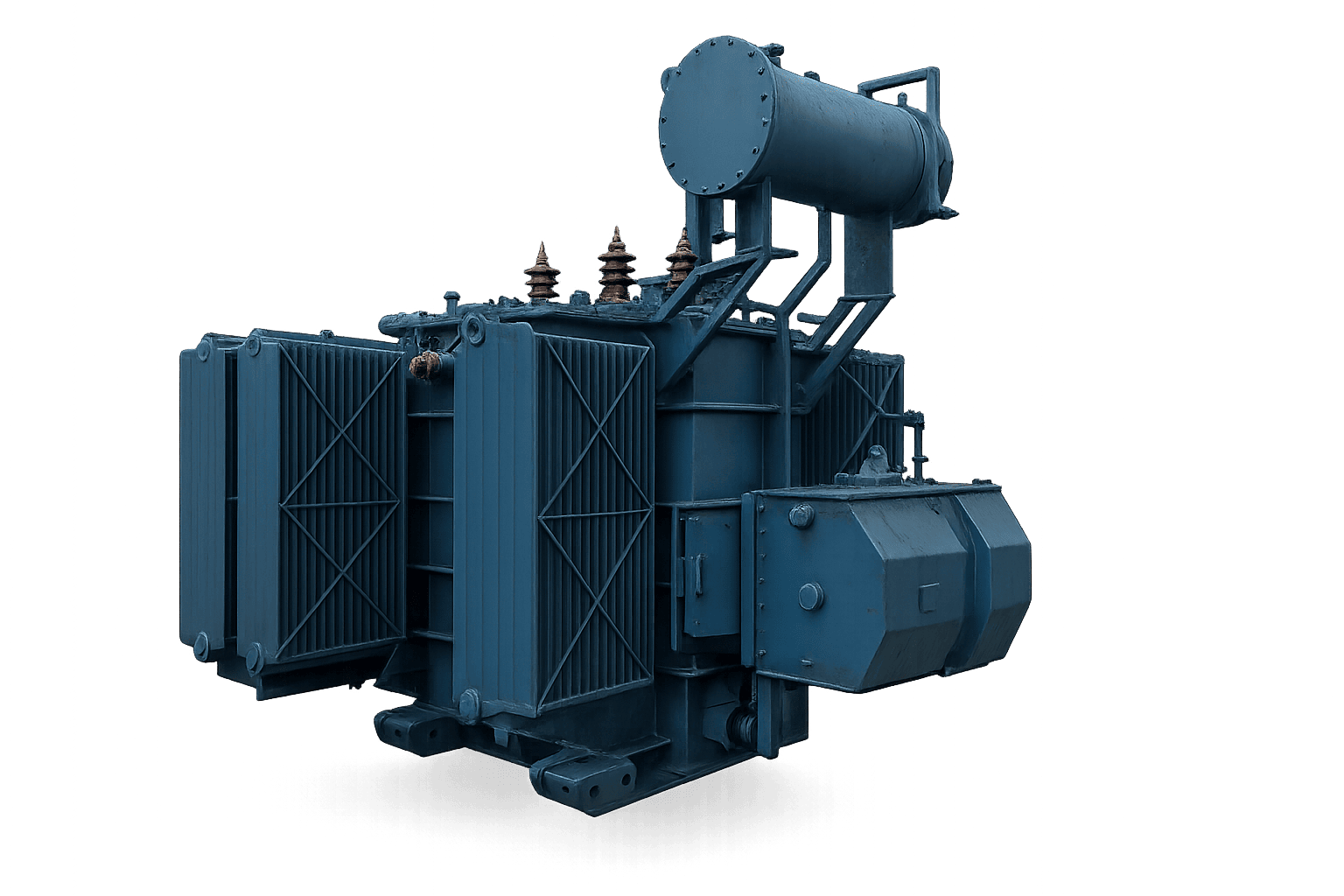
Heavy Duty Oil Immersed Scott Connected Transformer by Sahara Transformers

Oil-Immersed Heavy Duty Scott Transformers

Built for outdoor substations, heavy railway electrification, and high-capacity industrial plants requiring primary ratings up to 33kV and total capacities up to 10 MVA.

  • Capacity Range: 250 kVA to 10,000 kVA
  • Voltage Class: 11kV, 22kV, 33kV Primary
  • Cooling System: ONAN / ONAF liquid cooling
  • Loss Rating: Compliant with IS 1180 Level 3 / IEC Energy Efficiency
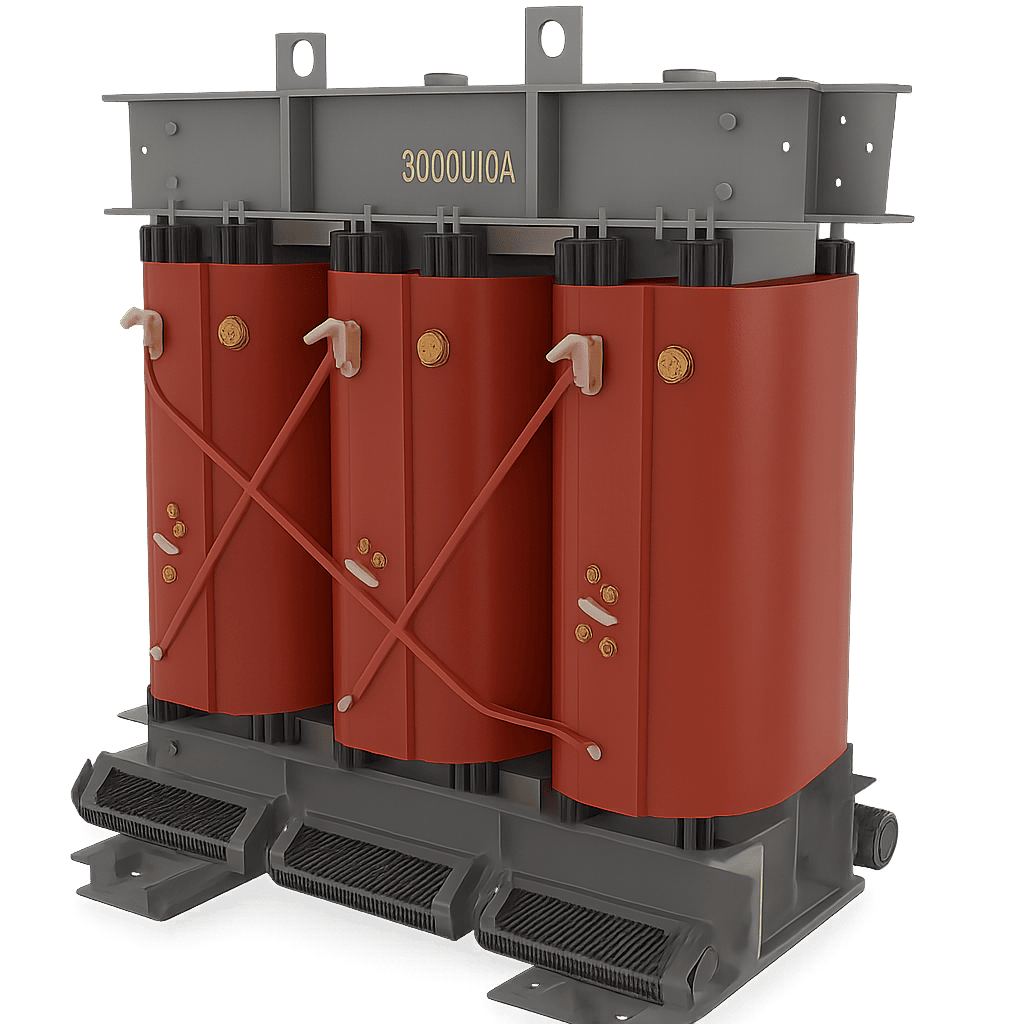
Dry Type Cast Resin Scott Connected Transformer

Dry-Type Cast Resin (CRT) Scott Transformers

Engineered for indoor installations, urban rail transit, data centers, and multi-story industrial complexes where fire safety (Class F1) and minimal maintenance are critical.

  • Capacity Range: 100 kVA to 5,000 kVA
  • Insulation Class: Class H (180°C) or Class F (155°C)
  • Enclosure Protection: IP23 to IP54 Sheet Metal / Stainless Steel
  • Features: Flame-retardant, self-extinguishing, moisture-proof
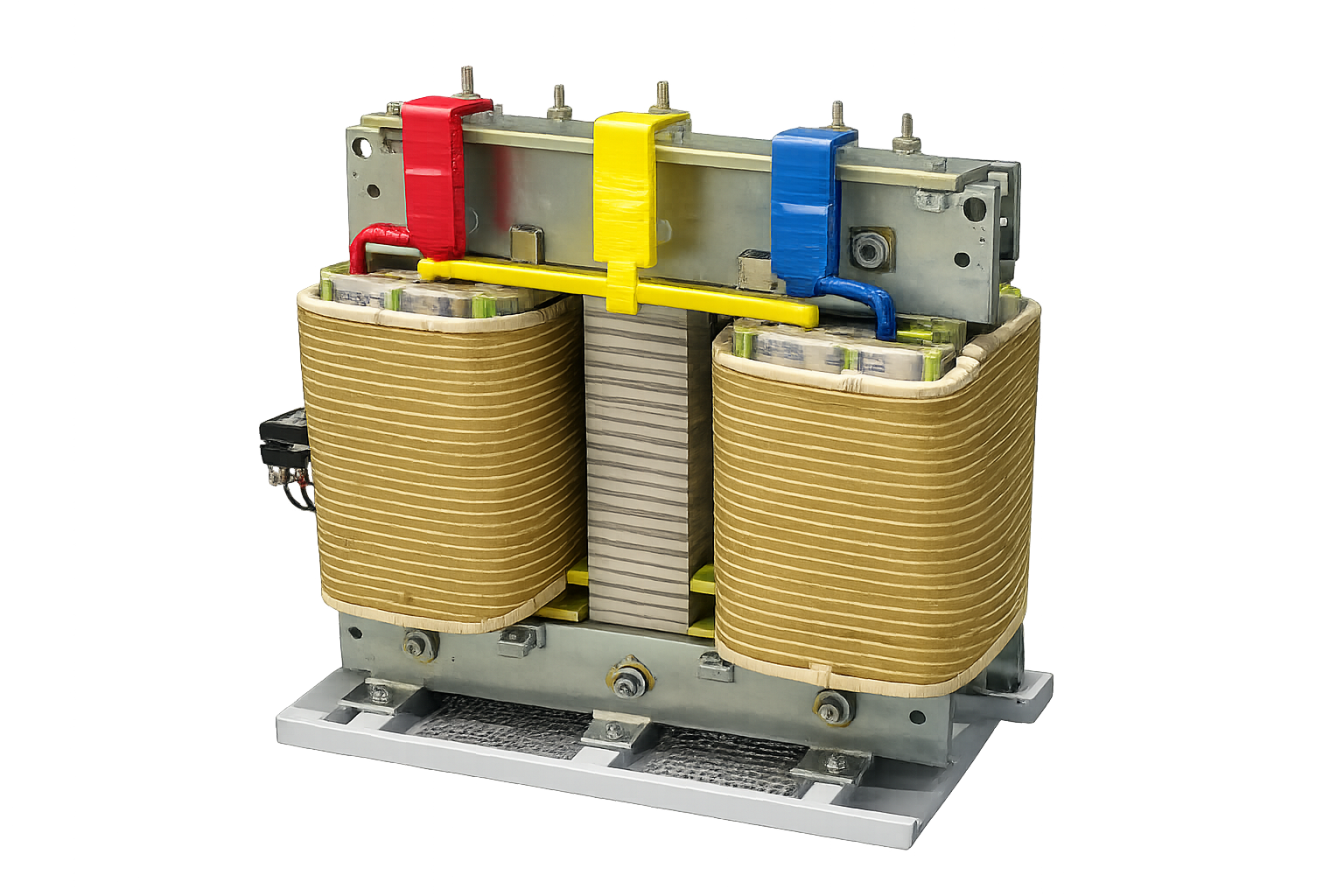
Metallurgical Furnace Scott Connected Transformer

Furnace-Duty Scott Connected Transformers

Specifically optimized to sustain extreme thermal cycling, heavy harmonic pollution, and mechanical stress encountered during electric arc and induction furnace operations.

  • Capacity Range: Up to 10 MVA with On-Load Tap Changer (OLTC)
  • Current Output: High-current secondary busbars up to 25,000A
  • Short Circuit Rating: Reinforced mechanical bracing for extreme thermal shocks
  • Tap Options: Off-Circuit Tap Changer (OCTC) or Remote OLTC

3. Standard Technical Specifications & Performance Metrics

When sourcing Scott Connected Transformers, global procurement managers and chief electrical engineers must evaluate core electrical metrics against regulatory standards such as IS 1180 (Part 1) Amendment No. 1 and IEC 60076. Below is a standardized reference chart for Sahara's energy-efficient 11kV class Scott Transformer units:

Rating (kVA) Primary Voltage (kV) Secondary Voltage (V) Impedance (%) Max 50% Load Loss (W) Max 100% Load Loss (W) Vector Group Alignment
250 kVA11 kV2 x 415 V / 230 V4.50%920 W2,700 WScott-T (3-Ph to 2-Ph)
500 kVA11 kV2 x 415 V / 230 V4.50%1,430 W4,100 WScott-T (3-Ph to 2-Ph)
1,000 kVA11 kV2 x 415 V / 433 V5.00%2,620 W7,000 WScott-T (3-Ph to 2-Ph)
1,600 kVA11 kV / 22 kV2 x 660 V / 415 V6.25%3,970 W11,300 WScott-T (3-Ph to 2-Ph)
2,500 kVA11 kV / 33 kVCustom Multi-Tap6.25%5,900 W17,500 WScott-T (3-Ph to 2-Ph)

4. Future Procurement Trends for Scott Connected Transformers (2025–2035)

As global energy networks undergo rapid decarbonization and modernization, the market dynamics for special-purpose transformers are shifting dramatically. Buyers, utility planners, and procurement directors must align their capital expenditure strategies with the following structural trends shaping the next decade of power equipment sourcing:

A. Acceleration of High-Speed Rail Electrification

Electric railway traction networks represent one of the primary end-use sectors for Scott Connected Transformers. Modern high-speed locomotives draw massive single-phase AC currents from overhead catenary systems. Direct connection causes grid instability across supply substations. By deploying multi-MVA Scott Connected units at feeder substations, rail authorities ensure balanced 3-phase grid draw while supplying distinct track sections with 90° phase-separated overhead lines. Global investments in high-speed passenger and freight rail networks across Europe, Asia, and North America are driving double-digit annual demand growth for 22kV and 33kV high-capacity traction Scott transformers.

B. Green Metallurgy & Zero-Carbon Electric Arc Furnaces

The steel and foundry industries are undergoing a massive transition from coal-fired blast furnaces to zero-emission Electric Arc Furnaces (EAF) and induction melting setups. These furnaces present erratic, single-phase, high-current load profiles that cycle hundreds of times daily. Scott Connected Transformers equipped with advanced On-Load Tap Changers (OLTC) are increasingly mandated by environmental regulations to minimize primary voltage flicker and unbalance penalties while sustaining heavy melting duty cycles.

C. Eco-Friendly Ester Fluids & Fire-Safe Dielectrics

Traditional mineral oil insulation is rapidly being superseded by natural and synthetic ester transformer fluids. Synthetic esters offer superior fire safety (K-class flash points >300°C), full biodegradability, and high moisture tolerance. Global buyers targeting ESG compliance are specifying ester-filled Scott transformers for indoor, subterranean, and environmentally sensitive industrial installations.

D. Smart Transformer Integration & IoT Sensing

Procurement guidelines now prioritize "Smart Transformers" embedded with real-time digital sensors. Modern Scott Transformers are equipped with Fiber-Optic Winding Temperature Sensors, Dissolved Gas Analysis (DGA) monitors, and online bushing monitoring modules. Integrated IoT gateways transmit operational telemetry to SCADA and cloud platforms, enabling predictive maintenance and preventing catastrophic winding failures.
5. Technical Evolution & Engineering Innovations

Over the past decade, manufacturing technology for specialized vector transformers has advanced considerably beyond classical empirical formulas. Precision manufacturing methods developed by Sahara Transformers ensure lower total cost of ownership (TCO) and enhanced operational safety:

Amorphous Core & High-Grade CRGO

By incorporating laser-scribed, high-permeability Cold Rolled Grain Oriented (CRGO) silicon steel or advanced Amorphous Alloys, core magnetic losses are reduced by up to 30%. This substantially reduces no-load losses during idle furnace or light traction states.

Finite Element Analysis (FEA) Thermal Modeling

Because the Main and Teaser windings exhibit asymmetric leakage flux distributions under varying load angles, 3D FEA electromagnetic modeling is utilized to design uniform cooling channels. This eliminates thermal hot spots and extends winding insulation life span.

Enhanced Mechanical Short-Circuit Withstand

Furnace and traction transformers experience frequent external short circuits. Modern Scott units utilize high-density pressboard insulation, epoxy-dotted paper, and hydraulic clamping systems capable of withstanding mechanical forces up to 25 times nominal current.

6. Frequently Asked Questions (FAQ) for Global Buyers

Addressing critical engineering, operational, and commercial questions asked by international buyers and technical consultants.

Q1: What is the exact difference between a Scott Connected Transformer and a Le Blanc Connection Transformer? +

Both Scott-T and Le Blanc connections transform three-phase power into two-phase power. However, a Scott Transformer uses two physically separate single-phase transformer tanks (or a specially designed 2-limb core assembly) with an 86.6% teaser tap. A Le Blanc Transformer uses a conventional 3-limb core with complex primary and secondary star/delta winding configurations. The Scott connection generally provides superior phase balance performance, simpler winding geometry, and easier physical repairability, making it the preferred standard for heavy traction and industrial furnace applications.

Q2: How do you calculate the kVA rating requirements for Main vs. Teaser windings? +

Although the output rating of both secondary windings is identical (50% of total system kVA capacity each), the primary windings carry unequal vector currents. The Teaser primary winding requires an 86.6% voltage rating, but it carries full primary line current. Therefore, the physical core/winding rating of the Teaser transformer must be designed for 1.155 times its real output rating (√3/2 factor). In practical terms, manufacturers design both Main and Teaser units identically to ensure complete interchangeability and manufacturing symmetry, rating the total transformer frame size roughly 7.5% to 15% higher than equivalent 3-phase standard distribution units.

Q3: What critical technical parameters must be provided when requesting a Scott Transformer quotation? +

To receive an exact technical bid and engineering drawing from Sahara Transformers, global buyers should provide: 1) Primary Voltage (e.g., 11kV, 22kV, 33kV) and frequency (50Hz/60Hz); 2) Secondary Voltage for both Main and Teaser circuits (e.g., 2 x 415V or custom furnace voltage); 3) Total rated kVA capacity; 4) Duty cycle profile (Continuous, Furnace Duty, Traction Intermittent); 5) Cooling type (ONAN, ONAF, KNAN, Dry-Type Cast Resin); 6) Ambient environmental conditions (altitude, ambient temp range, IP rating); 7) Applicable standard (IS 1180, IEC 60076, ANSI C57).

Q4: Can a Scott Connected Transformer be used in reverse to generate 3-phase from 2-phase? +

Yes. The Scott connection is completely bi-directional. When supplied with a balanced two-phase voltage system displaced by 90 electrical degrees, the Scott vector network steps up or down the voltage and transforms it into a fully symmetrical 3-phase line current profile with 120-degree phase displacement across the primary terminals.

Q5: How does Sahara Transformers test Scott Connected Transformers prior to export shipment? +

Every Scott Transformer manufactured at our Pune plant undergoes comprehensive routine, type, and special testing in accordance with IEC 60076 and IS standards. Routine tests include: Winding Resistance Measurement, Voltage Ratio & Vector Group Verification at 86.6% tap, Measurement of No-Load Loss and Current, Measurement of Short-Circuit Impedance and Load Loss, Separate-Source AC Withstand Voltage Test, and Induced Overvoltage Test. Optional type tests such as Temperature Rise Tests and Impulse Voltage Withstand Tests are conducted upon buyer request.

7. Why Global Buyers Partner with Sahara Transformers

Combining decades of manufacturing expertise, ISO-certified quality systems, and custom engineering capabilities for demanding worldwide applications.

ISO Certified Manufacturing Since 2007

Operating from our modern manufacturing plant in Pune (Wadmukhwadi, Charholi, Maharashtra), Sahara Transformers operates under strict ISO 9001 quality management systems. With over 17 years of proven engineering history, every unit is built for 30+ years of operational lifecycle.

Energy Efficiency Level 3 Compliance

Our custom transformer designs strictly comply with IS 1180 (Part 1) Amendment No. 1 and IEC international efficiency norms. We minimize total loss figures across 50% and 100% load states, generating direct utility bill savings for plant operators.

Custom Engineering up to 33kV & 10 MVA

From complex vector multi-tap Scott Transformers to Solar Inverter Duty, Dry-Type Cast Resin, and Furnace Transformers, our design office provides bespoke 3D CAD modeling, custom thermal ratings, and flexible terminal box configurations.

Global Export & Regulatory Compliance

Sahara Transformers supplies major infrastructure projects, EPC contractors, utilities, and commercial buyers across Asia, the Middle East, Africa, and international markets, adhering strictly to IEC, IEEE, ANSI, and local utility regulations.

Rigorous Routine & Type Testing

Our in-house high-voltage laboratory conducts rigorous diagnostic testing—including Dissolved Gas Analysis (DGA), Tan Delta, Impulse voltage tests, and sound level checks—ensuring 100% defect-free equipment delivery.

Lifecycle Support & Servicing

Beyond manufacturing, we offer end-to-end site commissioning, oil filtration, OLTC servicing, preventive maintenance, and Annual Maintenance Contracts (AMC) to safeguard your power infrastructure.

Require a Custom Scott Connected Transformer Solution?

Consult directly with Sahara's senior transformer design engineers. Get detailed vector drawings, electrical loss calculations, and competitive pricing for your project needs.