Electric Distribution Transformers: Technical Buyer’s Guide, Efficiency Standards & Global Sourcing Trends

An authoritative analysis on engineering parameters, Total Cost of Ownership (TCO) evaluation, smart grid readiness, IS 1180 / IEC 60076 compliance, and strategic procurement for industrial utilities, EPC contractors, and global power networks.

ISO 9001:2015 Certified Manufacturer
Voltage Class: Up to 33kV
Capacity Range: 25 kVA to 10 MVA
Global Export & Custom OEM Compliance

1. Executive Summary & Structural Overview of Electric Distribution Transformers

In modern power systems, electric distribution transformers serve as the vital final-stage voltage regulation assets within the electrical grid distribution chain. Responsible for stepping down medium-voltage transmission power (typically 33kV, 22kV, 11kV, or 6.6kV) into usable low-voltage output (415V three-phase or 240V single-phase), these electromagnetic induction machines maintain grid stability, protect downstream industrial machinery, and minimize system-wide technical losses.

As global decarbonization mandates accelerate and power grids transition into digitalized smart networks, the evaluation process for procuring distribution transformers has shifted from initial capital expenditure (CapEx) to long-term operational expenditure (OpEx) optimization. Global procurement teams, utility engineers, and EPC (Engineering, Procurement, and Construction) decision-makers face increasing complexity when evaluating thermal insulation classes, winding materials (Copper vs. Electrolytic Grade Aluminum), core laminate grades (Cold Rolled Grain Oriented CRGO vs. Amorphous Alloys), and dielectric media (mineral oil vs. eco-friendly synthetic/natural esters).

Since 2007, Sahara Transformers has operated at the forefront of transformer design and heavy-electrical manufacturing in Pune, Maharashtra—India's premier industrial engineering hub. Operating under rigorous ISO quality management frameworks, Sahara Transformers manufactures custom-engineered distribution and special-duty transformers operating up to 33kV class with ratings extending from 25 kVA to 10 MVA. This comprehensive technical guide provides an uncompromised breakdown of product categories, efficiency matrices, lifecycle cost evaluation models, future technology roadmaps, and key procurement criteria aligned with International Electrotechnical Commission (IEC 60076) and Bureau of Indian Standards (IS 1180 Part 1) guidelines.

2. Product Recommendations & Technical Application Spectrum

Detailed breakdown of distribution and specialized transformer architectures manufactured by Sahara Transformers for industrial, utility, renewable energy, and commercial infrastructure.

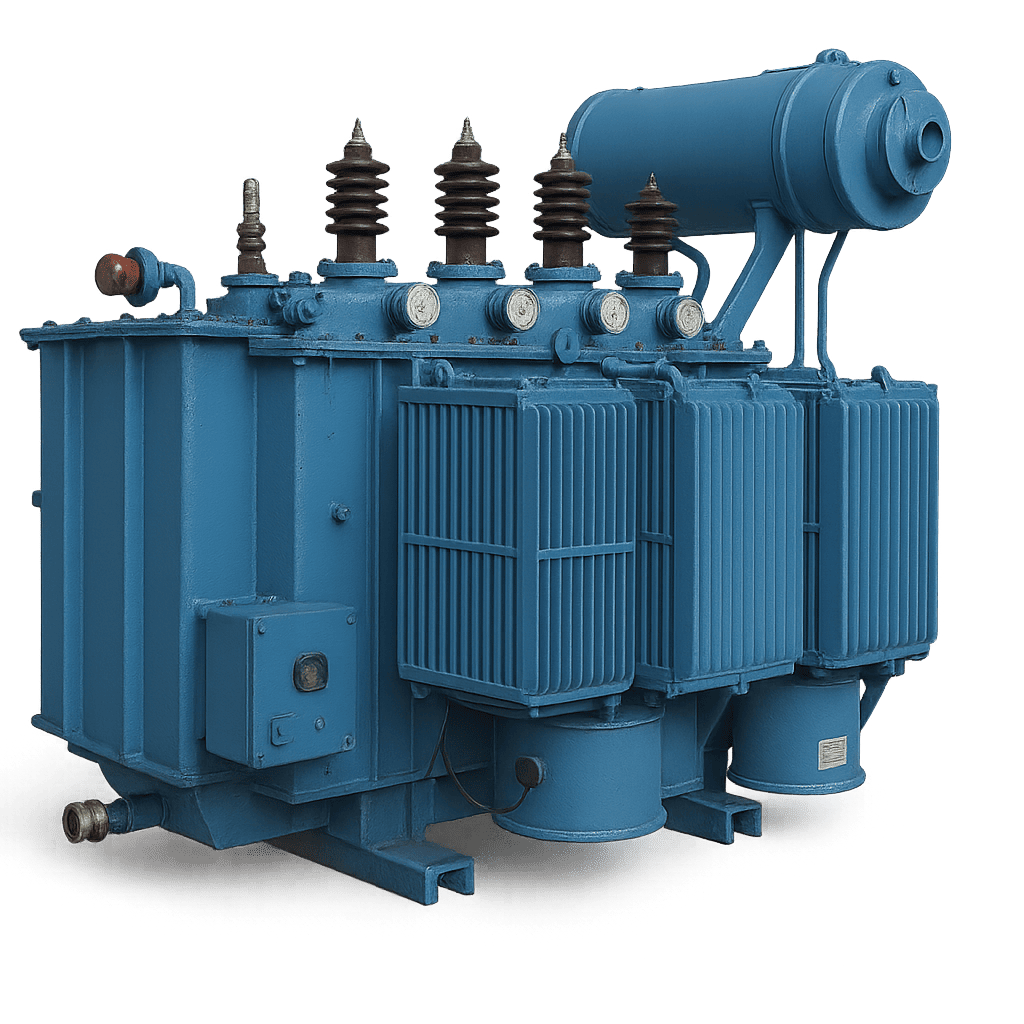
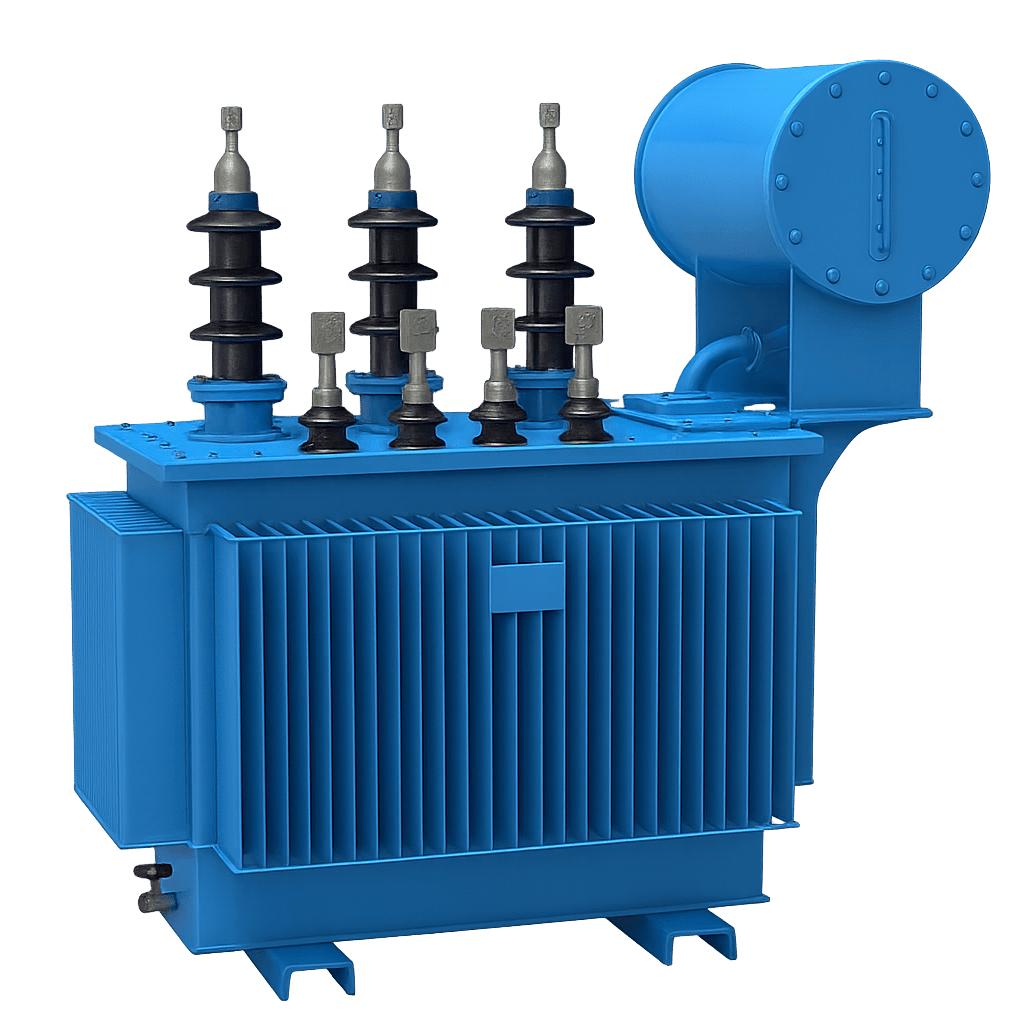
Electric Distribution Transformer — Sahara Transformers

Oil-Immersed Distribution Transformers

Engineered for robust outdoor pole-mounted or pad-mounted utility and industrial applications. Features thermally upgraded insulating paper, corrugated cooling fins or radiators, and Hermetically Sealed or Conservator tanks designed to withstand heavy surge impulses, short-circuit stress, and continuous heavy load cycles.

  • Capacity Range: 25 kVA to 2500 kVA
  • Primary Voltage Class: 11kV, 22kV, 33kV
  • Cooling System: ONAN (Oil Natural Air Natural)
  • Compliance Standards: IS 1180 Part 1 Level 1/2/3, IEC 60076
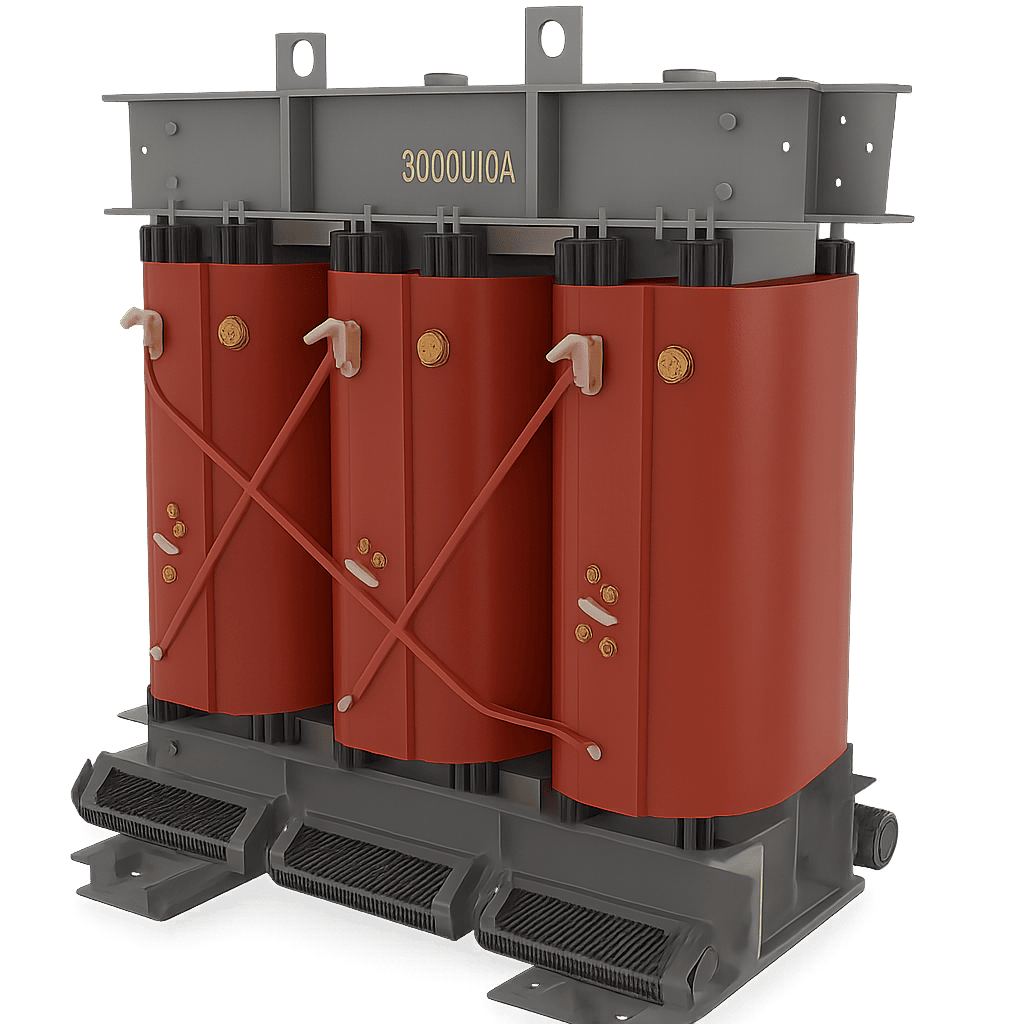
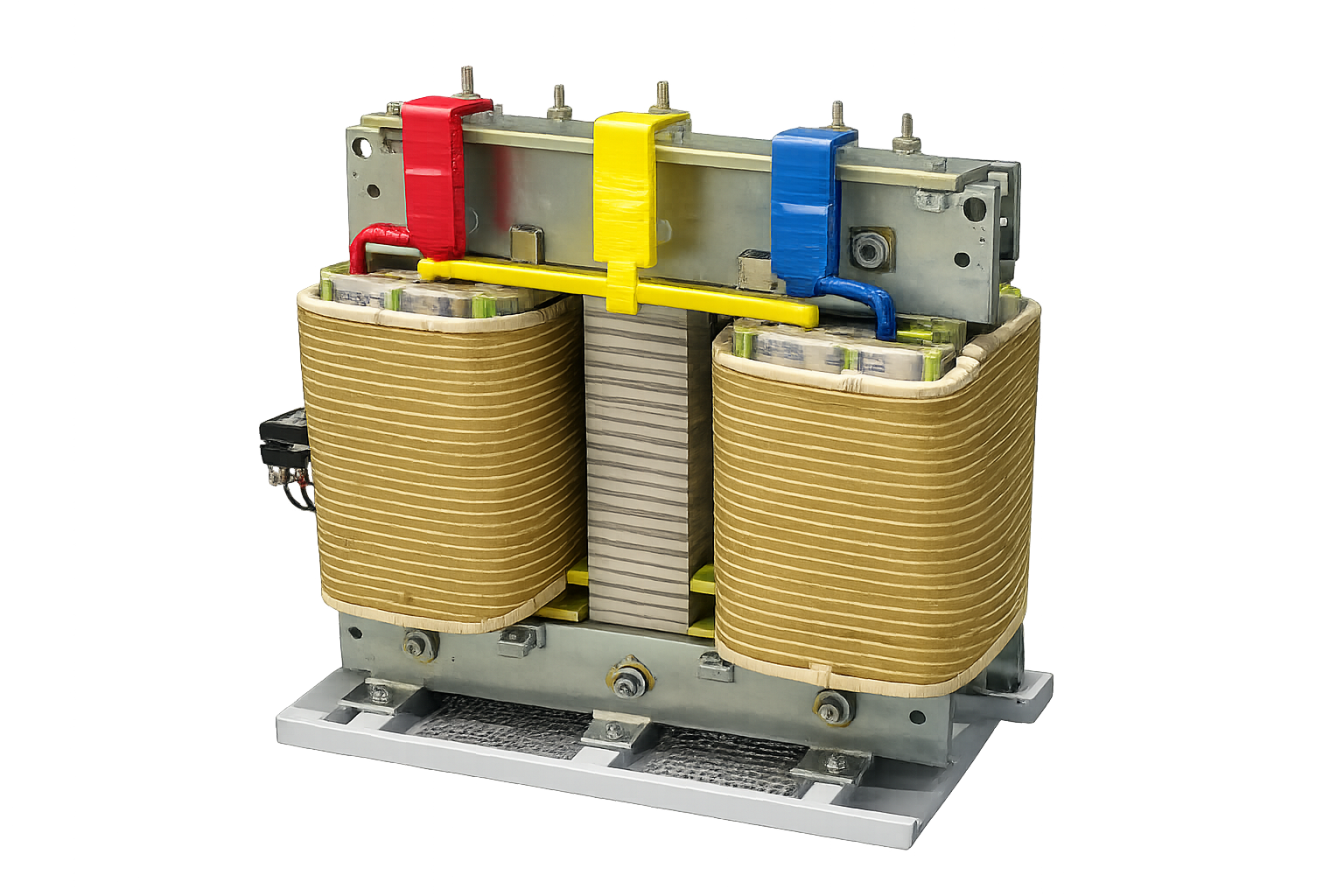
Dry Type Cast Resin Transformer — Sahara Transformers

Dry Type & Cast Resin Transformers (CRT / VPI)

Ideal for high-density urban infrastructure, high-rise buildings, underground subways, chemical plants, and data centers where fire safety is non-negotiable. Encapsulated in epoxy resin under vacuum, these transformers are self-extinguishing, moisture-proof, maintenance-free, and exhibit partial discharge values under 10 pC.

  • Capacity Range: 100 kVA to 3150 kVA
  • Insulation Class: Class F (155°C) / Class H (180°C)
  • Cooling System: AN (Air Natural) / AF (Air Forced)
  • Safety Rating: F1 Fire Behavior / E2 Environmental / C2 Climatic
Solar Inverter Duty Transformer — Sahara Transformers

Solar & Renewable Inverter-Duty Transformers

Purpose-built for utility-scale solar PV plants and battery energy storage systems (BESS). Designed with multi-winding secondary configurations (3-winding or 4-winding) to step up low inverter AC voltages directly to transmission levels while resisting non-linear harmonic distortion, high dV/dt voltage spikes, and thermal stress.

  • Capacity Range: 500 kVA to 10,000 kVA (10 MVA)
  • Secondary Windings: Multi-winding (Dual/Triple LV inputs)
  • Electrostatic Shield: Grounded copper shielding between HV/LV
  • Harmonic Factor: K-Factor rated up to K-20
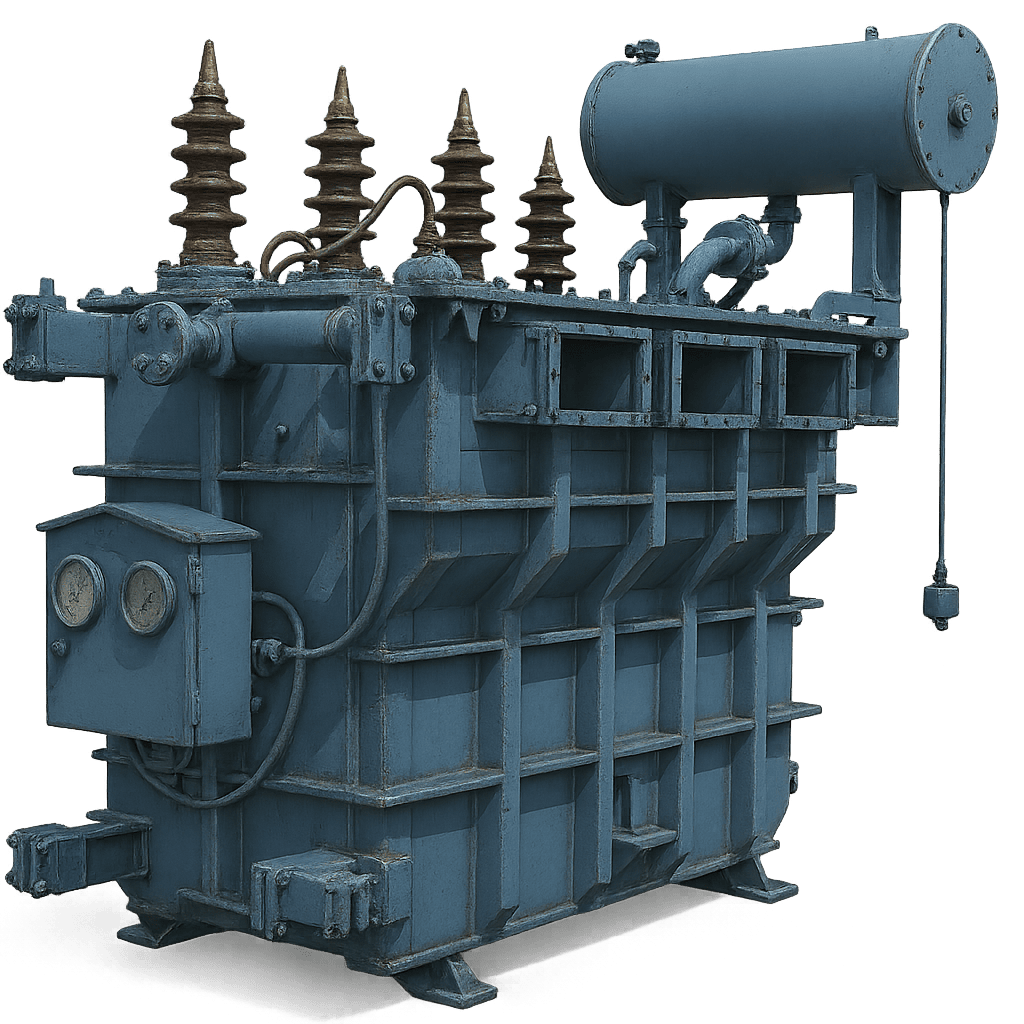
Industrial Power Transformer — Sahara Transformers

High-Capacity Industrial Power Transformers

Engineered for primary receiving substations, heavy industrial plants, steel mills, and regional distribution utilities. Equipped with On-Load Tap Changers (OLTC) or Off-Circuit Tap Changers (OCTC), advanced short-circuit withstand capabilities, and heavy-duty structural tanks tested for full vacuum resistance.

  • Voltage Rating: 11kV, 22kV, 33kV Substation Class
  • Power Rating: Up to 10 MVA
  • Tap Changer Options: On-Load Tap Changer (OLTC) with RTCC Panel
  • Tank Construction: Rigid bell-type or conventional bolted design
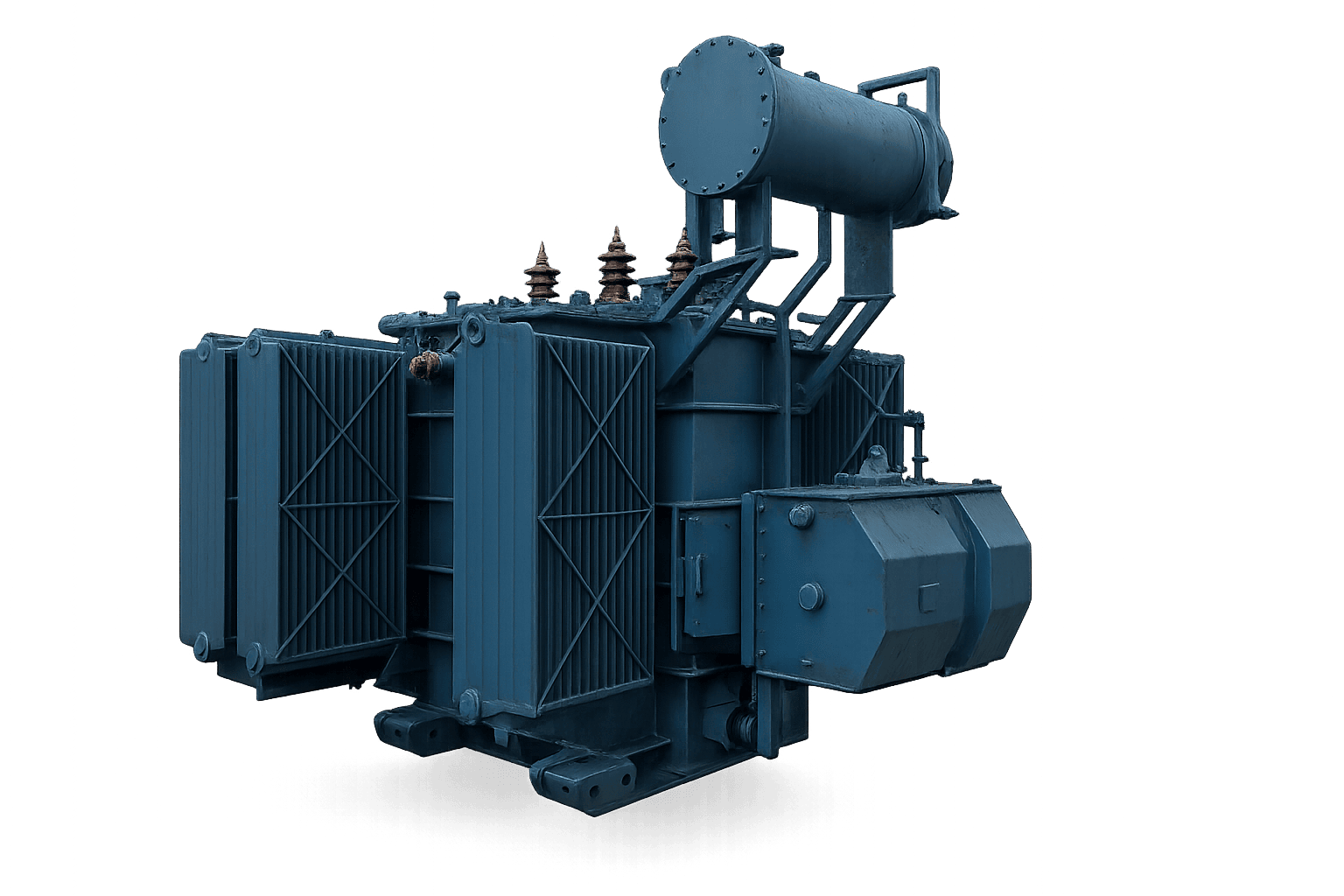
Metallurgical Furnace Transformer — Sahara Transformers

Metallurgical Furnace & Heavy Duty Duty Transformers

Specialized transformers designed to support severe electrical mechanical stresses encountered in Electric Arc Furnaces (EAF), Induction Furnaces, and submerged arc smelting operations. Capable of handling extremely high secondary output currents (tens of thousands of amperes) with extreme mechanical bracing.

  • Duty Cycle: Severe repetitive short-circuit withstand
  • Secondary Output: Low voltage, ultra-high current busbars
  • Cooling Options: OFWF (Oil Forced Water Forced) / ODAF
  • Applications: Steel foundries, smelting plants, electro-chemical
Scott Connected Transformer — Sahara Transformers

Scott-Connected 3-Phase to 2-Phase Transformers

Precision-engineered vector transformation units utilized to balance 3-phase supply grids while supplying single-phase or 2-phase heavy loads such as railway electric traction systems, special industrial heating furnaces, and lab test setups. Prevents phase unbalance and voltage distortion on primary supply lines.

  • Topology: Main Transformer + Teaser Transformer configuration
  • Phase Transformation: 3-Phase Input to 2-Phase Output
  • Balancing Capability: Eliminates negative sequence currents
  • Voltage Range: Custom input/output ratio up to 33kV
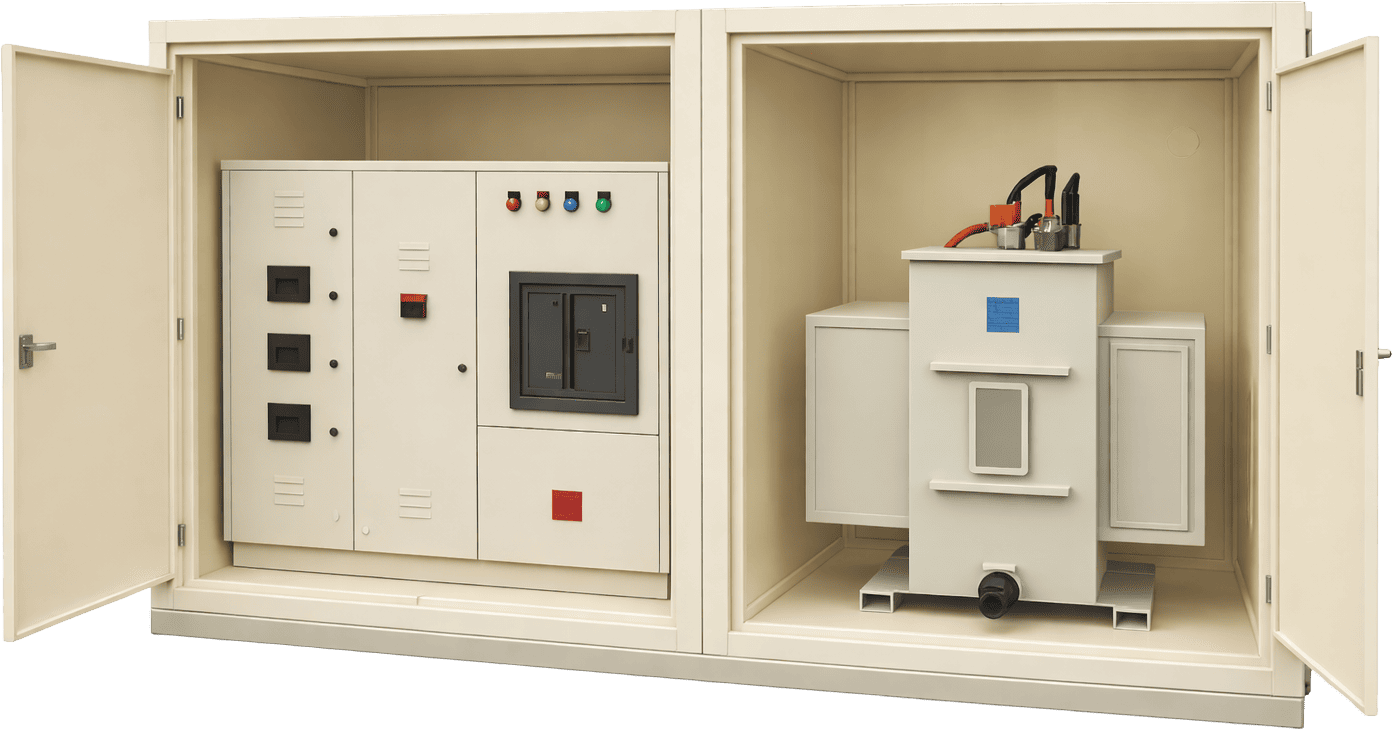
Compact Substation CSS — Sahara Transformers

Integrated Compact Substations (CSS / Package Substations)

Factory-assembled, modular power distribution enclosures integrating high-voltage switchgear (Ring Main Unit - RMU), a step-down distribution transformer, and a low-voltage distribution panel inside a single weather-proof, vandal-resistant metal or GRC enclosure. Designed for fast civil deployment in smart cities, industrial parks, and commercial complexes.

  • Transformer Capacity: Up to 2500 kVA
  • HV Switchgear: 11kV/33kV SF6 or Vacuum RMU
  • Protection Class: IP54 / IP43 Outdoor Enclosure
  • Standard: IEC 62271-202 Compliant

3. Technical Energy Efficiency Standards: IS 1180 & IEC Guidelines

Understanding the maximum permissible loss values for 11kV distribution transformers under Bureau of Indian Standards IS 1180 (Part 1): 2014 Amendment No. 1. Selecting high-efficiency Energy Level 3 equipment directly cuts operational carbon footprint and lifetime losses.

Sl. No. Rating (kVA) Impedance (%) Maximum Total Loss at 75°C (Watts)
Energy Efficiency Level 1 Energy Efficiency Level 2 Energy Efficiency Level 3 (Premium Efficiency)
50% Load 100% Load 50% Load 100% Load 50% Load 100% Load
i250 kVA4.501050 W3150 W980 W2930 W920 W2700 W
ii315 kVA4.501100 W3275 W1025 W3100 W955 W2750 W
iii400 kVA4.501300 W3875 W1225 W3450 W1150 W3330 W
iv500 kVA4.501600 W4750 W1510 W4300 W1430 W4100 W
v630 kVA4.502000 W5855 W1860 W5300 W1745 W4850 W
vi800 kVA5.002459 W7300 W2287 W6402 W2147 W5837 W
vii1000 kVA5.003000 W9000 W2790 W7700 W2620 W7000 W
viii1250 kVA5.003600 W10750 W3300 W9200 W3220 W8400 W
ix1600 kVA6.254500 W13500 W4200 W11800 W3970 W11300 W
x2000 kVA6.255400 W17000 W5050 W15000 W4790 W14100 W
xi2500 kVA6.256500 W20000 W6150 W18500 W5900 W17500 W
Total Cost of Ownership (TCO) Calculation Formula for B2B Procurement

When evaluating international tenders, forward-thinking utility engineers compute Total Cost of Ownership (TCO) using capitalized loss formulas rather than relying solely on purchase price:

TCO = Capital Purchase Price + (A × No-Load Losses in kW) + (B × Load Losses in kW)

Where A represents the capitalized value of iron losses ($/kW) over a 25-30 year lifespan (operating 8760 hours/year), and B represents the capitalized value of copper losses ($/kW) adjusted for average plant load factor. Sahara’s Level 3 Energy Efficient transformers consistently achieve lower TCO over standard Level 1 equipment within 18 to 24 months of continuous operation.

4. Future Product & Global Procurement Trends (2025–2035)

The transformer manufacturing industry is undergoing a seismic structural transition driven by global grid decarbonization, distributed renewable energy penetration, and the electrification of industrial transportation. Technical buyers must prepare their electrical infrastructure for the following major market and design shifts over the coming decade:

A. Smart Grid Integration & Online Condition Monitoring (IoT Transformers)

Traditional reactive maintenance models are rapidly giving way to continuous predictive asset diagnostics. Modern electric distribution transformers are increasingly specified with embedded IoT sensors, fiber-optic winding temperature probes, electronic oil level indicators, and continuous Dissolved Gas Analysis (DGA) micro-monitors. These smart sensors communicate via IEC 61850 protocols directly to utility SCADA systems, enabling predictive detection of thermal hotspots, paper degradation, and arcing before catastrophic breakdown occurs.

B. Transition to Biodegradable Ester Dielectric Fluids

While conventional mineral oil has historically dominated transformer insulation, environmental regulations and fire safety requirements are driving the adoption of Synthetic Esters and Natural Ester Oils (derived from vegetable seeds). Ester fluids exhibit a fire point exceeding 300°C (K-class dielectric rating), rendering them virtually non-flammable. Furthermore, ester fluids are 99% readily biodegradable within 28 days, protecting surrounding soil and groundwater in environmentally sensitive installations such as hydropower catchments, solar parks, and urban centers.

C. Amorphous Core Alloys & Ultra-Low Loss CRGO Innovations

To meet stringent zero-emissions targets, transformer core manufacturing is bifurcating into advanced Cold Rolled Grain Oriented (CRGO) steel (such as 0.20mm to 0.23mm domain-refined laser-etched grades) and Amorphous Metal Alloys. Amorphous core distribution transformers exhibit non-crystalline molecular structures that reduce no-load (hysteresis and eddy current) losses by up to 70% to 75% compared to standard CRGO cores. This technology is becoming mandatory across European EcoDesign Tier 2 mandates and Indian DISCOM efficiency drives.

D. Renewable Energy & Bidirectional Power Flow Resilience

With solar PV, wind generators, and battery storage feeding power back into distribution lines, distribution transformers must now endure severe voltage fluctuations, rapid load ramps, and high harmonic contents generated by grid-tied inverters. Custom transformer designs featuring electrostatic shielding, K-factor rated harmonic mitigation, and multi-winding secondary systems are becoming standard requirements for EPC solar contractors worldwide.

5. Frequently Asked Questions (FAQ) for Technical Procurement

Expert answers to critical engineering, installation, and procurement questions asked by utility managers, EPC contractors, and industrial buyers.

What is the difference between an Electric Distribution Transformer and a Power Transformer?

Distribution transformers are stepping-down units used at the tail-end of the power network (typically rated from 25 kVA up to 2500 kVA, up to 33kV class) to supply usable voltage directly to industrial and residential end-users. They operate continuously under variable load profiles (often 40% to 70% load factor) and are optimized for low no-load (iron) losses. Power transformers are larger capacity assets (typically > 5 MVA to 100+ MVA) located at transmission substations, operating at high load factors near 100% efficiency capacity.

Why are IS 1180 Energy Efficiency Level 3 transformers recommended for industrial buyers?

IS 1180 Level 3 specifies the lowest maximum total losses (50% and 100% load) established by the Bureau of Indian Standards. Buying Level 3 equipment reduces continuous power dissipation, generates significant annual electricity tariff savings, lowers operating temperature rise (extending insulation lifespan), and helps industrial facilities comply with strict corporate ESG and carbon reduction mandates.

When should a buyer choose Dry-Type Cast Resin (CRT) over Oil-Immersed Transformers?

Dry-Type Cast Resin Transformers should be chosen for indoor installations, high-rise buildings, underground subways, pharmaceutical plants, data centers, and hazardous industrial environments where mineral oil poses a fire hazard. Dry-type units eliminate oil-spill risks, require zero oil filtration maintenance, and possess self-extinguishing F1 fire performance, although they carry a higher initial purchase cost than oil-filled equivalents.

What vector group configuration is standard for distribution transformers?

The most common vector group for 11kV/415V and 33kV/415V distribution transformers is Dyn11 (Delta primary, Star secondary with neutral brought out, 30-degree phase shift lead). This configuration provides a stable neutral point for 4-wire unbalanced single-phase loads while isolating primary supply networks from third-harmonic zero-sequence currents.

How does copper winding compare to aluminum winding in terms of performance and reliability?

Copper offers superior electrical conductivity, higher thermal stability, lower electrical resistance per cross-sectional area, and superior mechanical short-circuit strength under heavy fault conditions. Aluminum windings are lighter and lower in initial cost but require larger core sizes to maintain equivalent current density. Sahara Transformers manufactures both high-grade Electrolytic Copper and EC-Grade Aluminum wound transformers tailored to client site constraints and budget requirements.

What factory acceptance tests (FAT) are mandatory under IEC 60076 / IS 2026?

Standard routine FAT procedures include: (1) Winding Resistance Measurement, (2) Voltage Ratio & Vector Group Check, (3) Separate Source AC Overvoltage Withstand Test, (4) Induced Overvoltage Test, (5) Measurement of No-Load Loss & No-Load Current, (6) Measurement of Load Loss & Short-Circuit Impedance, and (7) Insulation Resistance (IR) Test. Type tests such as Lightning Impulse Withstand and Temperature Rise tests are conducted upon buyer request.

How do Solar Inverter Duty Transformers handle non-linear harmonic distortion?

Solar inverter duty transformers incorporate electrostatic grounded copper shields between the primary and secondary windings to divert high-frequency switching noise to earth. Windings are designed with increased conductor cross-sections, low current density, specialized duct spacing, and high K-factor ratings (K-4 to K-20) to dissipate eddy current losses caused by inverter harmonics without thermal breakdown.

What is the typical operational lifespan of a well-maintained distribution transformer?

With proper installation, routine oil filtration, periodic tap changer inspection, and operating within designed thermal rise limits (typically 50°C/55°C oil/winding rise), a high-quality electric distribution transformer manufactured by Sahara Transformers has a design service life exceeding 25 to 30 years.

6. Sahara Enterprise Advantage & Manufacturing Capability

Combining 17+ years of engineering heritage with state-of-the-art testing infrastructure in Pune, India.

ISO 9001:2015 Quality Assurance

Our production facilities strictly adhere to ISO quality management systems. Every step—from CRGO core slitting and automatic coil winding to vacuum drying, tanking, and oil filling—is monitored through rigorous stage-gate quality audits.

Precision Custom Engineering

We don't just sell standard catalog units. Our dedicated in-house design engineering team uses advanced 3D CAD and Finite Element Analysis (FEA) software to tailor voltage ratios, impedance targets, tank footprints, and specialized vector groups to your exact tender specification.

Complete In-House Testing Routine

Equipped with modern high-voltage testing laboratories capable of conducting all routine, type, and specialized diagnostic tests (including power factor tan delta, partial discharge, and sound level measurement) prior to client dispatch.

Proven Global Export Readiness

Sahara Transformers supplies utilities, EPC contractors, industrial plants, and commercial developers across international markets. Our packaging, tropicalization treatments, and ocean-freight logistics meet strict international shipping standards.

Energy Loss Minimization Focus

By using prime high-grade CRGO steel laminations and pure electrolytic grade copper conductors, our engineering designs deliver maximum efficiency levels compliant with IS 1180 Level 3 and IEC EcoDesign standards, driving down client operating costs.

Comprehensive After-Sales Support

We back our equipment with complete technical lifecycle support—including on-site commissioning assistance, annual maintenance contracts (AMC), oil filtration services, and spare parts availability worldwide.

Ready to Procure High-Efficiency Electric Distribution Transformers?

Contact our engineering sales team today to request technical data sheets, customized loss calculations, or formal commercial proposals for your upcoming utility or industrial project.

Get a Quote