1. Executive Overview & Architectural Anatomy of Compact Substation Units (CSS)
In modern industrial, commercial, and renewable power infrastructure, land footprint constraints and operational safety imperatives have accelerated the global transition from traditional civil-constructed substations to factory-engineered Compact Substation Units (CSS), also commonly referred to as Packaged Substations or Kiosk Substations. Designed, type-tested, and fully assembled in controlled manufacturing environments according to IEC 62271-202 and IS 14728, a Compact Substation Unit integrates high-voltage switchgear, a step-down power distribution transformer, and a low-voltage distribution board into a single, operator-safe, weather-proof enclosure.
Unlike conventional open-yard or brick-and-mortar substations that require extensive civil foundations, multi-vendor component integration, and lengthy field commissioning, a CSS is delivered as a complete Plug-and-Play unit. This structural integration drastically lowers total cost of ownership (TCO), eliminates site integration risks, and minimizes civil real estate requirements by up to 75%.
Structural Compartmentalization under IEC 62271-202:
To guarantee complete operational isolation and physical safety, every Sahara Compact Substation Unit is divided into three distinct, metallic/insulated segregated compartments:
- High Voltage (HV) Compartment: Houses Ring Main Units (RMU) or Compact Switchgear (SF6 Gas Insulated, Solid Insulated, or Air Insulated) up to 33kV class equipped with Vacuum Circuit Breakers (VCB) or Load Break Switches (LBS).
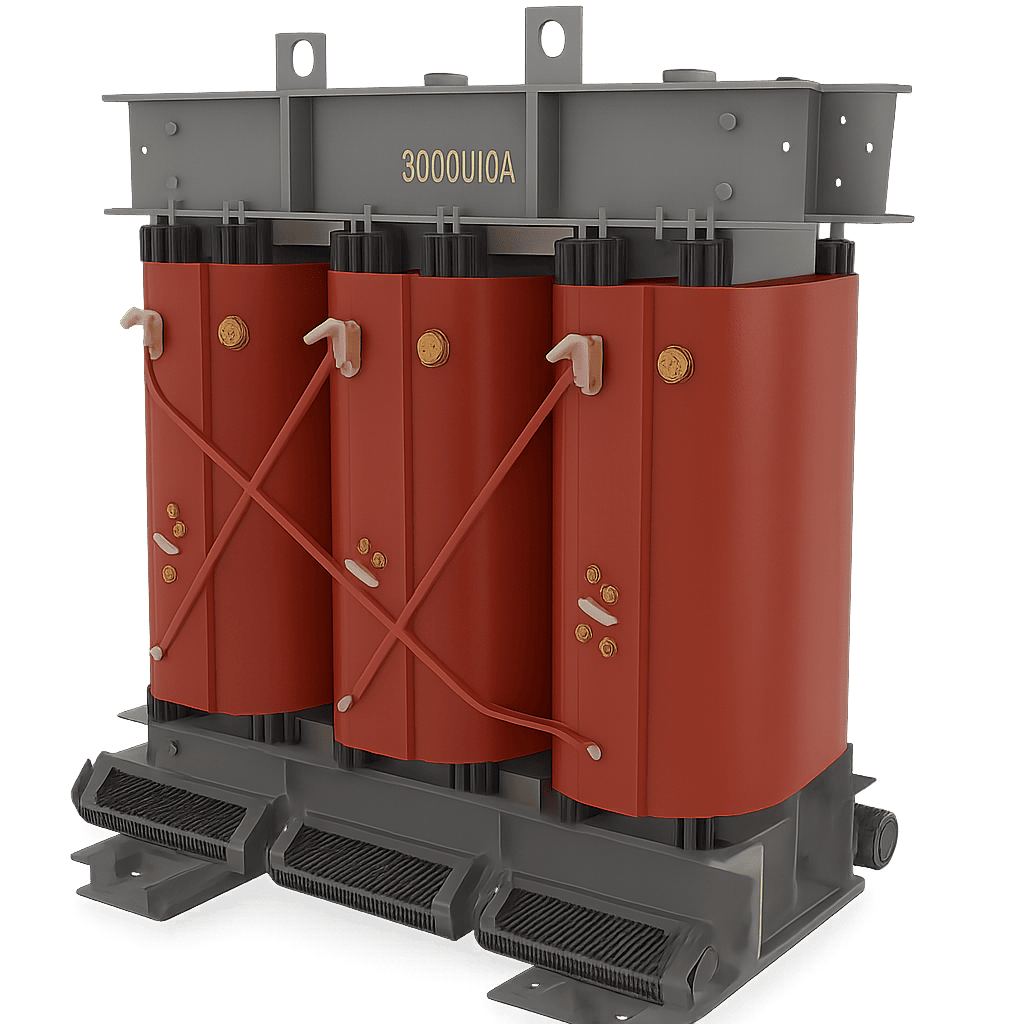
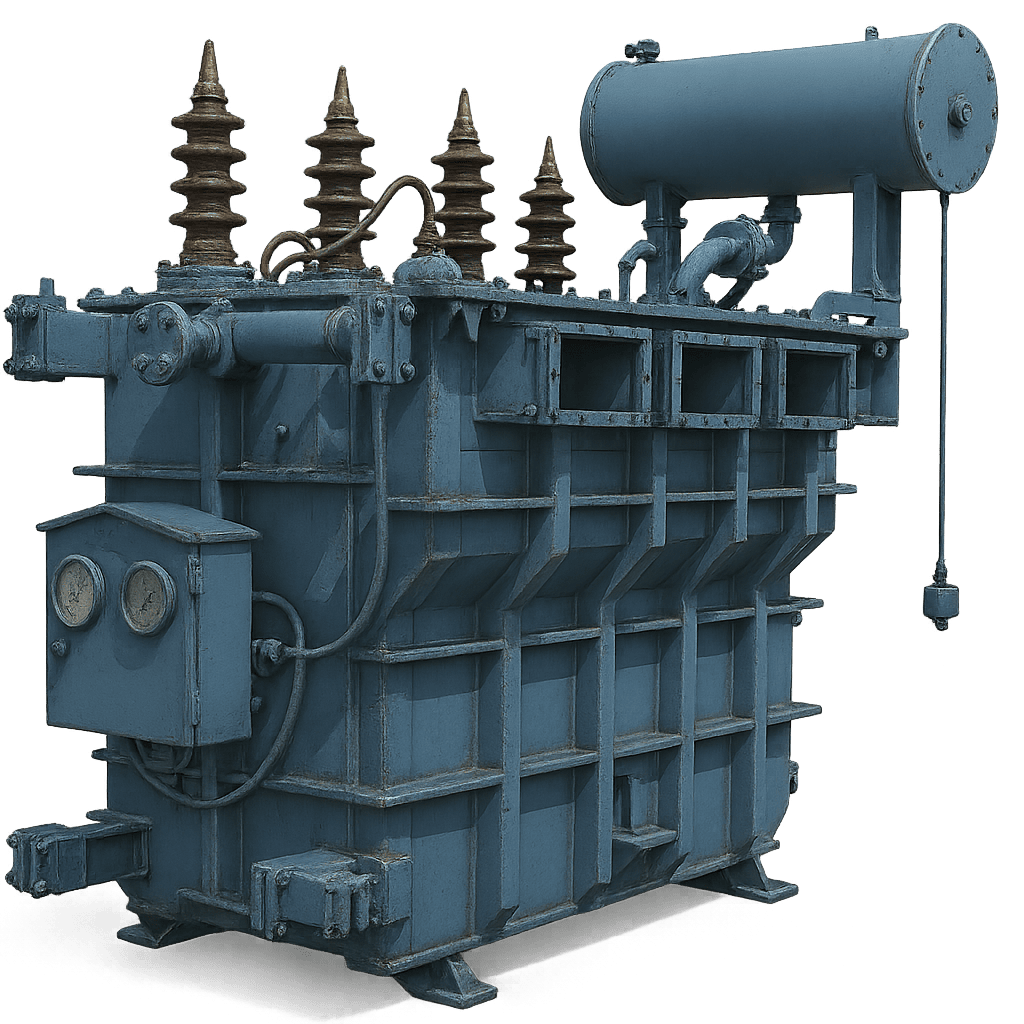
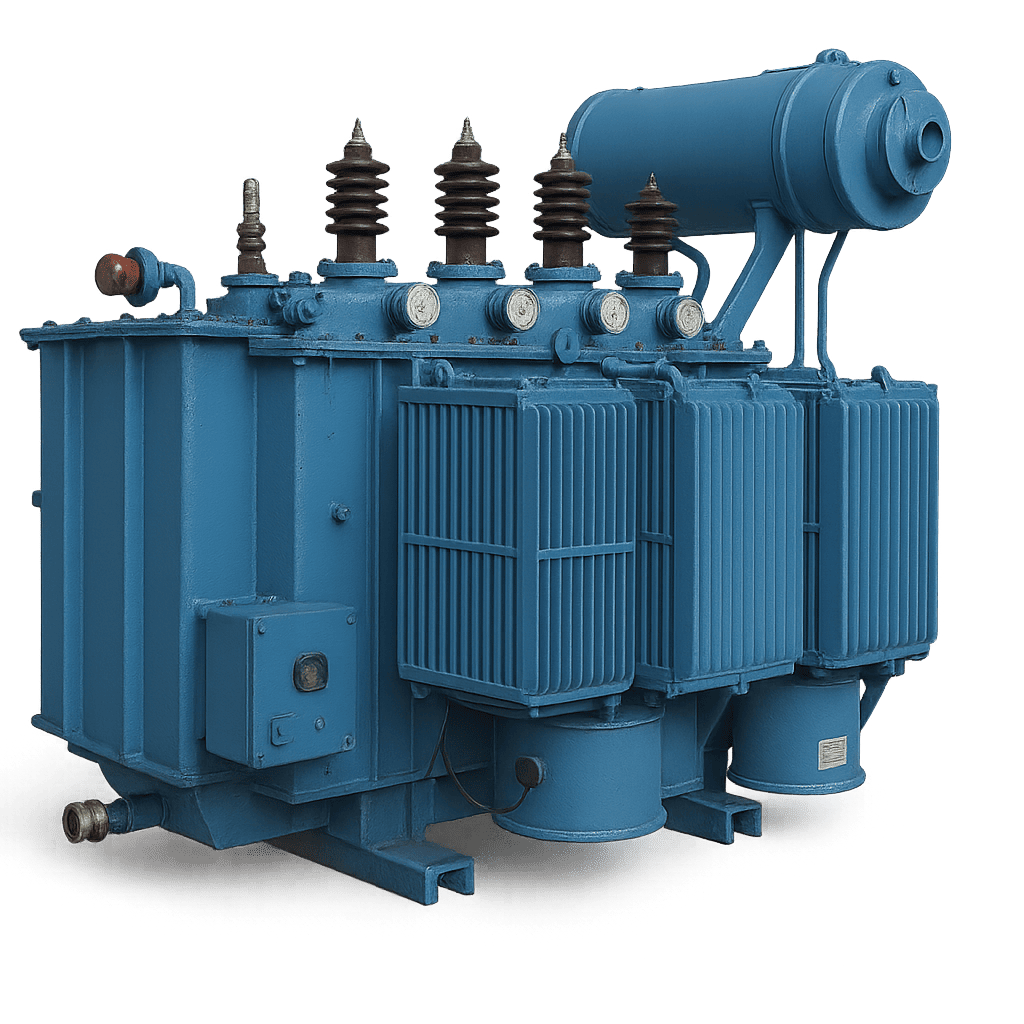
- Transformer Compartment: Contains either an oil-immersed distribution transformer (hermetically sealed or with conservator) or a dry-type cast resin transformer (CRT/VPI) custom-engineered for maximum thermal dissipation within enclosed kiosks.
- Low Voltage (LV) Compartment: Features main air circuit breakers (ACB), molded case circuit breakers (MCCB), busbars, power factor correction capacitors (APFC), and smart metering/telemetry devices.
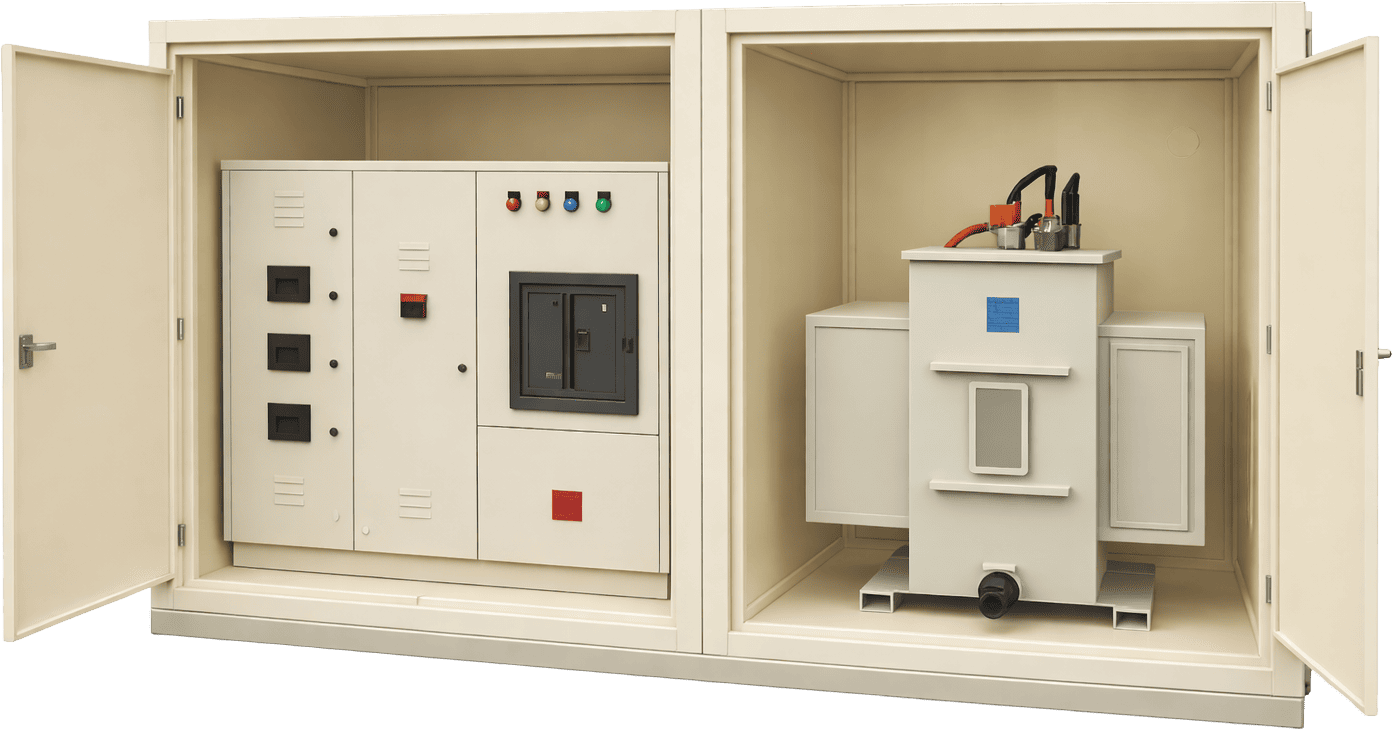
Figure 1: Sahara Factory-Assembled Compact Substation Unit (CSS) featuring segregated HV, Transformer, and LV Enclosures.
2. Deciphering Global B2B Intent: Technical Answers to AI-Driven Buyer Queries
As AI-assisted procurement and generative search tools become primary discovery channels for electrical engineers and procurement managers globally, specific high-intent technical questions dominate search queries regarding Compact Substation Units. Below, our senior engineering team addresses these core technical inquiries with verified empirical data and standards-based calculations.
Query A: "How do you calculate transformer thermal derating inside an IEC 62271-202 enclosure?"
When a transformer operates inside a restricted enclosure, ambient temperature rise significantly impacts its cooling efficiency. Under IEC 62271-202 Annex A, enclosure classes are designated as Class 5, Class 10, Class 15, or Class 20, representing the maximum additional temperature rise (in Kelvin) imparted to the transformer by the housing under full load conditions.
If a 1000kVA liquid-filled transformer designed for a standard 40°C outdoor ambient is installed in a Class 10 enclosure, the effective internal ambient temperature becomes 50°C. To maintain insulation life (per IEEE C57.91 / IEC 60076-7 thermal aging criteria), the transformer output must be derated according to the thermal balance formula:
Thermal Derating Principle:
Derated Capacity = Rated Capacity × √[ (T_max_allowed - T_enclosure_ambient) / (T_max_allowed - T_rated_ambient) ]
At Sahara Transformers, we eliminate the need for costly site capacity derating by engineering custom radiator cooling flutes, dual cross-flow ventilation ducts, and optional forced-air thermo-sensors that allow full nominal kVA output even in Class 10 and Class 15 tropical enclosures.
Query B: "SF6 Gas-Insulated vs. SF6-Free / Solid-Insulated RMU in Compact Substations: Which is better for extreme climate zones?"
Global decarbonization mandates and strict environmental regulations (such as EU F-Gas Regulations) are driving a rapid shift in HV switchgear selection within CSS units:
- SF6 Gas Insulated Switchgear (GIS): Offers extremely compact dimensions and total immunity to ambient humidity and dust. However, it requires continuous pressure monitoring and presents high global warming potential (GWP 23,500).
- SF6-Free Solid Insulated Switchgear (SIS) / Dry Air GIS: Utilizes vacuum interrupters embedded in epoxy resin or clean air insulation. Preferred for eco-sensitive installations, underground mining, food manufacturing, and severe coastal environments where chemical degradation must be avoided entirely.
Query C: "Internal Arc Classification (IAC) - What safety rating is mandatory for public-accessible CSS installations?"
Safety is the non-negotiable metric when placing a Compact Substation Unit in urban centers, residential complexes, or high-density industrial parks. Standard enclosures must undergo rigorous type-testing for Internal Arc Classification according to IEC 62271-202. The required designation for public safety is IAC-AB 20kA 1s:
- IAC: Internal Arc Classified.
- A: Authorized personnel protection (operators).
- B: General public protection (bystanders).
- 20kA 1s: Ability to withstand an internal fault current explosion of 20,000 Amperes for a full 1.0 second duration without structural rupture, door detachment, or external flame emission.
3. Technical Comparison Matrix: Compact Substation Unit (CSS) vs. Traditional Civil Substation
To assist EPC contractors and financial planners in conducting objective lifecycle cost-benefit analyses, the following engineering matrix highlights the operational and financial performance differences between a modular Compact Substation Unit and a site-built brick-and-mortar substation:
| Evaluation Parameter | Sahara Compact Substation Unit (CSS) | Traditional Civil Masonry Substation |
| Real Estate Footprint | Minimal (approx. 4.5 m² to 12 m²) — Up to 75% space reduction. | Large (approx. 30 m² to 80 m²) — Requires separate switch rooms & yards. |
| Manufacturing & Quality Control | 100% Factory-Assembled & Type-Tested under ISO 9001 quality management. | Field-Assembled from fragmented suppliers with high variable work quality. |
| On-Site Installation Time | 1 to 2 Days (Pre-tested Plug-and-Play drop placement). | 6 to 12 Weeks (Civil masonry, cable laying, component fitting, on-site testing). |
| Operator & Public Safety | Internal Arc Tested (IAC-AB 20kA 1s). Interlocked enclosures prevent accidental access. Open busbar risks, manual fence barrier dependency, higher explosion damage exposure. |
| Standards Compliance | IEC 62271-202, IS 14728, IS 1180 Level 1/2/3. | Multiple uncoordinated individual component standards. |
| Environmental Protection Rating | IP33, IP54, or IP55 metal/fiberglass enclosures; high UV and corrosion resistance. | Subject to brick weathering, roof leakage, humidity accumulation, and vermin intrusion. |
| Relocability & Scalability | Fully Mobile: Can be lifted via crane and relocated as project needs evolve. | Permanent Infrastructure: Cannot be moved; civil assets are written off. |
4. Recommended Product Configurations & Application Scenarios
Sahara Transformers custom-engineers Compact Substation Units tailored to severe operational conditions across global industrial sectors. Below are four primary product series deployed worldwide:
11kV / 33kV Outdoor Industrial Oil-Cooled CSS
Designed for heavy continuous duty in manufacturing plants, oil & gas refineries, and industrial parks. Integrates an IS 1180 Level 3 loss-optimized oil-filled transformer with ONAN cooling and SF6/VCB Ring Main Unit.
- Capacity: 250 kVA to 3000 kVA
- Voltage Rating: Up to 33 kV
- Protection: IP54 LV/HV, IP33 Radiator Compartment
Explore CSS Specifications Commercial Indoor Cast Resin (Dry-Type) CSS
Engineered specifically for high-rise commercial centers, data centers, hospitals, and underground railway networks where fire safety is paramount. Equipped with F1 fire-proof Cast Resin Dry Type Transformer.
- Capacity: 100 kVA to 2500 kVA
- Safety Class: F1 / C2 / E2 IEC 60076-11 certified
- Enclosure: Acoustic insulated powder-coated steel
Explore Dry-Type Solutions Solar & Renewable Energy Smart CSS Kiosk
Optimized for utility-scale solar farms and energy storage systems (BESS). Integrates multi-winding solar inverter duty transformers with smart RTU (Remote Terminal Unit) for real-time SCADA integration.
- Multi-Winding: 3-Winding / 4-Winding configurations
- Harmonic Withstand: K-Factor 13+ rated
- Telemetry: Modbus / IEC 60870-5-104 compatible
Explore Solar Duty CSS Mining & Heavy-Industry Heavy-Duty Mobile Substation
Engineered with reinforced skid bases, anti-vibration dampening mounts, and double-wall insulated enclosures designed to withstand mining operations, steel foundries, and extreme ambient fluctuations (-20°C to +55°C).
- Base Frame: Heavy channel skid mount
- Protection: Marine-grade polyurethane paint finish
- Custom Duty: Overload capacity per IEC 60076-7
Explore Heavy-Duty Units 5. Future Procurement & Technology Trends in Compact Substations (2025–2035)
The global energy landscape is undergoing structural changes driven by grid decentralization, renewable energy insertion, and stringent ESG decarbonization mandates. Electrical consultants and procurement directors must evaluate future technology vectors when specifying Compact Substation Units:
1. Transition to SF6-Free Eco-Friendly Switching Devices
SF6 (Sulfur Hexafluoride) has historically served as the standard insulating gas for MV switchgear. However, due to its global warming potential, international utilities are mandating **Clean Air**, **Vacuum in Nitrogen (N2)**, or **Solid Insulated Switchgear (SIS)** within CSS units. Procurement specifications now emphasize zero-GWP designs to align with corporate sustainability targets.
2. Smart Grid & Predictive IoT Telemetry Integration
Modern Compact Substations are no longer passive assets. The incorporation of **Edge-AI IoT Sensors** allows continuous online monitoring of critical physical parameters:
- Fiber-Optic Winding Temperature Sensors: Real-time hot-spot temperature measurement.
- Online Dissolved Gas Analysis (DGA) & Moisture Sensors: Early detection of insulation breakdown in oil-immersed CSS.
- Partial Discharge (PD) Wireless Monitoring: Continuous insulation integrity assessment inside HV switchgear compartments.
- Automated Motorized OLTC / Off-Load Tap Control: Remote voltage regulation synchronized with distribution SCADA networks.
3. EU EcoDesign & IS 1180 Energy Loss Optimization
Regulatory bodies across Europe, the Middle East, and Asia have tightened maximum allowable no-load (core) and load (copper) losses. Under India’s **IS 1180 (Part 1): 2014 Amendment No. 1**, Compact Substations must incorporate Level 2 or Level 3 loss-optimized cores constructed from high-permeability **CRGO (Cold Rolled Grain Oriented)** steel or **Amorphous Metal Cores**. This ensures maximum efficiency under partial load profiles, directly reducing operational carbon footprints.
6. Procurement FAQ: Essential Guidance for Global Buyers & EPC Engineers
Below are clear, technical answers to the most common questions raised during global tender preparations, factory acceptance testing, and equipment sourcing for Compact Substation Units.
Q1: What standards govern the manufacturing and type-testing of Compact Substation Units? ▼
Compact Substation Units (CSS) are designed, manufactured, and fully type-tested in compliance with IEC 62271-202 (High-voltage switchgear and controlgear – Part 202: High-voltage/low-voltage prefabricated substation) and Indian Standard IS 14728. Internal transformers adhere to IEC 60076 / IS 1180 (Part 1), while high-voltage switchgear complies with IEC 62271-100 (VCB) and IEC 62271-200 (Metal-enclosed switchgear).
Q2: What enclosure materials are available for harsh environmental conditions? ▼
Sahara Transformers offers three distinct enclosure material options depending on the installation site:
- Galvanized Sheet Steel (GI) / Electro-Galvanized Steel: Double-skin insulated polyurethane powder-coated enclosure suitable for standard industrial and commercial sites.
- Stainless Steel (Grade 304 or 316L): Engineered for high-salinity coastal areas, offshore platforms, and chemical processing facilities to prevent galvanic corrosion.
- Glass Reinforced Polymer (GRP / Fiberglass): Lightweight, non-conductive, highly corrosion-resistant material providing superior thermal insulation in extreme desert or arctic conditions.
Q3: How is natural ventilation achieved without compromising IP dust/water protection ratings? ▼
Enclosure ventilation louvers are designed with labyrinthic double-baffle structures combined with stainless-steel insect mesh and washable dust filter pads. This architecture permits high natural convection air movement (cooling up to Class 10/15 requirement) while maintaining an ingress protection rating of IP33 for transformer radiator compartments and IP54 / IP55 for sealed HV/LV control compartments.
Q4: Can a Compact Substation Unit be shipped inside standard ocean containers? ▼
Yes. Sahara Compact Substation Units up to 1500 kVA rating are dimensionally optimized to fit standard 20-foot and 40-foot High-Cube (HC) ISO sea containers, minimizing international freight overheads. Units above 1500 kVA up to 3000 kVA are dispatched as Flat-Rack shipments with full seaworthy export crating and anti-corrosion VCI vacuum wrapping.
Q5: What Factory Acceptance Testing (FAT) is performed prior to dispatch? ▼
Every CSS undergoes rigorous routine testing at our ISO-certified Pune manufacturing plant before dispatch, including:
- HV Insulation Resistance & Power Frequency Voltage Withstand Tests.
- Transformer Ratio, Vector Group, and Winding Resistance Measurements.
- HV RMU & LV ACB/MCCB Mechanical Interlock & Electrical Tripping Validation.
- Enclosure Earth Continuity & Protective Bonding Resistance Test.
- Functional verification of all protection relays, CT/PT ratios, and auxiliary control circuits.
7. Sahara Transformers: Corporate Credentials & E-E-A-T Excellence
Founded in 2007 in Pune, Maharashtra, India, Sahara Transformers has established a global engineering footprint as an ISO 9001:2015 certified designer and manufacturer of high-reliability power transformers, distribution units, dry-type cast resin transformers, solar inverter transformers, and packaged Compact Substation Units up to 33kV class.
Engineering Precision Since 2007
Over 17 years of specialized manufacturing experience delivering custom electrical distribution solutions across India, the Middle East, Africa, and Southeast Asia.
Full Type-Test Certifications
Products type-tested at nationally accredited laboratories (CPRI / ERDA) for short-circuit withstand, impulse voltage, temperature rise, and internal arc safety.
End-to-End Turnkey Capabilities
From technical site surveys and preliminary SLD (Single Line Diagram) drafting to factory acceptance testing, international logistics, on-site positioning, and lifecycle maintenance (AMC), Sahara Transformers serves as a complete power distribution partner for global buyers.
Proven Performance Across Critical Sectors
Power Distribution Utilities
Real Estate & Infrastructure
Ready to Optimize Your Power Infrastructure?
Connect directly with our senior application engineers for custom technical consultations, SLD evaluations, enclosure thermal calculations, and competitive global FOB/CIF price quotations.