Featured Industrial Step Down & Rectifier Transformers
Engineered to international IEC / IS standards for high-efficiency voltage step-down, industrial electroplating, cathodic protection, and heavy distribution networks across Nigeria.
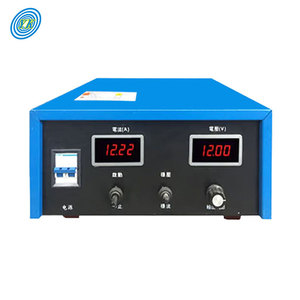
YUCOO Plating Rectifier 220V AC to 12V DC Electroplating Rectifier
High-precision step-down rectifier delivering continuous 50A to 1000A DC output. Features ripple-free current regulation ideal for anodizing, metal finishing, and industrial electroplating facilities.
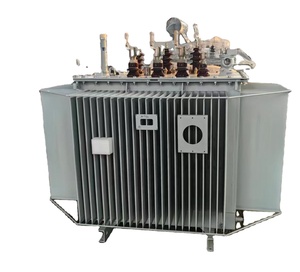
Three Phase Control Electrical Step Down Rectifier Transformer
Heavy-duty 3-phase step-down unit built for process control and variable DC conversion. Designed with high-thermal margin insulation for continuous operation in tropical climates.
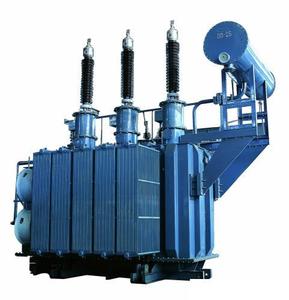
Oil Immersed 6300kVA Cathodic Protection Rectifier Transformer
High-capacity step-down unit engineered specifically for pipeline cathodic protection and petrochemical plants in coastal regions. Features ONAN cooling and hermetically sealed tanks.
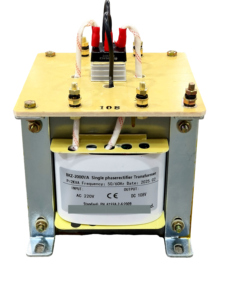
380V/220V to Low Voltage AC/DC Single-Phase Control Transformer
Multi-tap step-down transformer (6V to 60V DC/AC) for industrial automation panels, control circuits, and secondary power regulation in manufacturing assembly lines.
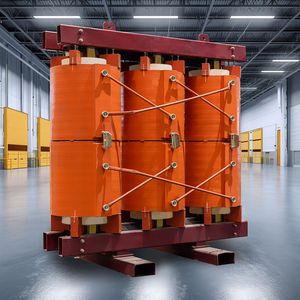
CEEG ZQSC(H)B 2000kVA 10kV Epoxy Cast Dry-Type Traction Rectifier
Flame-retardant dry-type cast resin transformer engineered for rail traction, subways, and mining substations requiring zero oil fire risk and high mechanical short-circuit strength.
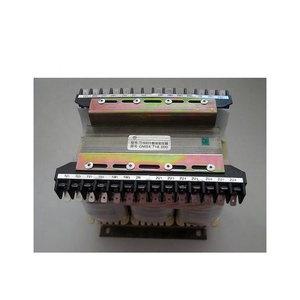
T6 Electric Power Rectifier Transformer for Generator Excitation
OEM-grade excitation power transformer engineered for generator static excitation systems. Ensures seamless voltage step-down regulation and transient overload protection.
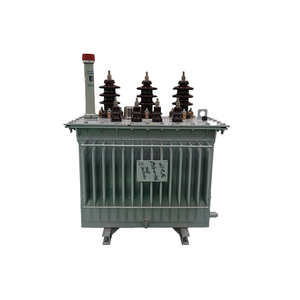
33kV High Voltage Step Down Distribution & Rectifier Transformer
Versatile 33kV to 415V/220V step-down transformer available from 160kVA to 1MW. Hermetically sealed design guards against dust ingress, moisture, and extreme ambient heat.
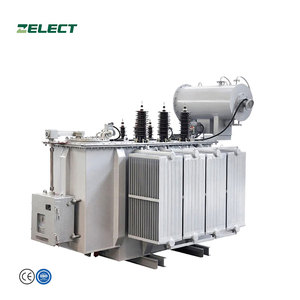
3-Phase Industrial Step Down & Rectifier Transformer (50kVA - 3000kVA)
Industrial power-class transformer with flexible step-down configuration options. Equipped with low-loss CRGO silicon steel cores for optimized operational energy savings.
Executive Summary: The Landscape of Step-Down Transformers in Nigeria
Nigeria’s industrial economy is undergoing a massive structural evolution. As West Africa’s largest market, the nation’s power grid—managed under the Transmission Company of Nigeria (TCN) and distributed via 11 Electricity Distribution Companies (DisCos)—operates primarily across 33kV and 11kV primary distribution lines. However, manufacturing plants, heavy machinery, processing facilities, commercial complexes, and telecommunications towers require stabilized, low-voltage power (typically 415V three-phase, 220V single-phase, or specialized low-voltage DC rectifications). This systemic delta creates a vital, non-negotiable demand for step-down transformers and high-current industrial rectifier systems.
Procuring step-down equipment in Nigeria involves navigating unique electrical challenges: severe line-voltage fluctuations, harmonic noise generated by heavy industrial loads, high ambient temperatures exceeding 45°C during hot seasons, and coastal atmospheric corrosion in petroleum-rich regions like the Niger Delta. To mitigate costly unplanned shutdowns and equipment burnout, Nigerian EPC contractors, facility managers, and government power engineers prioritize equipment built with superior dielectric strength, low-loss Cold-Rolled Grain-Oriented (CRGO) silicon steel cores, and robust tropicalization treatments.
Top 10 Step Down Factories & Exporter Servicing the Nigerian Market
Selecting an electrical equipment partner for Nigerian deployment requires evaluating engineering integrity, international certification compliance (ISO 9001, IEC 60076, SONCAP), and custom OEM/ODM delivery track records. Below is an authoritative technical benchmark of the leading 10 manufacturers and global exporters catering to Nigerian industrial needs:
- Sahara Transformers / Efron Electric (Global OEM Exporter): A premier ISO 9001:2015 certified manufacturer with over 17 years of specialized expertise. Known for producing custom 33kV and 11kV step-down transformers, dry-type cast resin units, and heavy-duty industrial rectifier transformers up to 10 MVA. Engineered specifically for high-efficiency operation under IS 1180 / IEC standards with custom tropicalization for West African environments.
- Schneider Electric Nigeria: Global energy management giant offering high-end distribution step-down transformers and localized grid automation systems, with strong support networks across Lagos and Abuja.
- ABB Power Grids (Hitachi Energy): A leader in utility-grade power transformation, offering high-reliability step-down substations and dry-type transformers for large-scale mining and industrial plants.
- Siemens Energy Nigeria: Specialized in heavy industrial distribution, providing oil-immersed step-down power units and advanced grid stabilization technologies tailored for power generation facilities.
- Elsewedy Electric Nigeria: Established regional manufacturer in West Africa providing local assembly and distribution of standard medium-to-low voltage step-down distribution transformers.
- CEEG (China Electric Equipment Group): Renowned global exporter specializing in dry-type cast resin transformers, traction rectifier transformers (such as the ZQSC Series), and explosion-proof mining step-down units.
- TBEA Co., Ltd.: Major international exporter supplying large-capacity power transmission step-down units and sub-station transformers for Nigerian federal grid expansion projects.
- YUCOO Network Energy Co.: Leading manufacturer of high-current DC plating rectifiers and step-down AC-to-DC power supply units widely deployed in Nigerian electroplating, battery charging, and chemical refining sectors.
- Hyundai Electric: Supplies excitation step-down transformers, generator auxiliary transformers, and industrial rectifier systems for power plants and heavy marine industries.
- Prolec GE: Global manufacturer offering reliable liquid-filled step-down distribution transformers suitable for industrial parks, commercial complexes, and utility networks.
Localized Application Scenarios Across Nigerian Industrial Hubs
Step-down transformers and power rectifiers do not operate in a vacuum; their design specs must strictly align with the local operating environment. Key industrial applications across Nigeria include:
- Lagos & Ikeja Industrial Estates (Manufacturing & FMCG): High-density manufacturing lines require 33kV/415V step-down transformers equipped with automatic tap changers (OLTC) to neutralize severe voltage dips caused by grid switching.
- Niger Delta Oil & Gas Refineries (Port Harcourt & Warri): Petrochemical extraction facilities utilize specialized oil-immersed cathodic protection rectifier transformers (like 6300kVA units) to protect submerged steel pipelines against galvanic corrosion in saline, humid soils.
- Nnewi & Aba Light Industrial Hubs (Metal Electroplating & Fabrication): Local automotive parts manufacturing relies on continuous 220V AC to 12V/24V DC high-current rectifiers (500A-1000A) for anodizing, chrome plating, and precision metal finishing.
- Abuja Commercial & Government Complexes: Indoor commercial hubs demand epoxy cast resin dry-type step-down transformers due to stringent fire safety codes prohibiting oil-filled units inside high-rise structures.
- Northern Agriculture & Food Processing (Kano & Kaduna): Agro-processing facilities require rugged, weather-sealed outdoor step-down transformers capable of stepping down rural 33kV feeds to 400V for heavy motor drives and irrigation pumps under dust-laden Harmattan conditions.
Energy Efficiency & Loss Standards for 11kV/33kV Step-Down Units
To assist Nigerian procurement engineers in technical evaluation, the table below details standard energy-efficiency loss metrics (compliant with IS 1180 / IEC 60076 standards) for distribution step-down transformers:
| Capacity (kVA) | Impedance (%) | Max Loss 50% Load (Level 1) | Max Loss 100% Load (Level 1) | Max Loss 50% Load (Level 3 - High Efficiency) | Max Loss 100% Load (Level 3 - High Efficiency) |
|---|---|---|---|---|---|
| 250 kVA | 4.50% | 1050 W | 3150 W | 920 W | 2700 W |
| 500 kVA | 4.50% | 1600 W | 4750 W | 1430 W | 4100 W |
| 1000 kVA | 5.00% | 3000 W | 9000 W | 2620 W | 7000 W |
| 1600 kVA | 6.25% | 4500 W | 13500 W | 3970 W | 11300 W |
| 2500 kVA | 6.25% | 6500 W | 20000 W | 5900 W | 17500 W |
* Note: Selecting Level 3 High-Efficiency step-down transformers significantly reduces lifetime operational costs (OPEX) by minimizing continuous thermal dissipation losses in high-ambient-temperature regions.
Emerging Trends in Nigerian Power Infrastructure & Step-Down Procurement
The Nigerian power sector is experiencing rapid technological and regulatory shifts driven by private sector investments, federal grid reforms, and off-grid renewable electrification programs:
1. Solar-Grid Hybrid Step-Down Inverter Integration
With rising diesel generation costs, Nigerian industrial parks are rapidly installing megawatt-scale solar PV arrays. This requires dual-vector step-down inverter duty transformers capable of handling multi-winding inputs and non-linear harmonic distortion created by high-capacity solar inverters.
2. Transition to Compact Substation Systems (CSS)
Urban real estate projects in Lagos and Port Harcourt face severe land space constraints. Factory-assembled, touch-safe Compact Substations integrating 33kV SF6 ring main units (RMU), dry-type step-down transformers, and low-voltage switchgear inside a single enclosure are rapidly replacing bulky open-air substations.
3. Strict Enforcment of Standards Organization of Nigeria (SONCAP)
The Nigerian Customs Service and SON now mandate rigorous SONCAP certificate verification for all imported power transformers to eliminate sub-standard, high-loss copper-clad aluminum (CCA) units from entering the market, favoring certified manufacturers with proven factory laboratory test records.
4. Adoption of High-Thermal Rating Vegetable Ester Oils
In environmentally sensitive regions like the Niger Delta mangrove zones, operators are replacing conventional mineral oil transformer fluid with biodegradable natural ester fluids, which offer a fire point above 300°C and superior protection against environmental soil contamination.
Why Global Engineering Projects Partner with Our Manufacturing Facilities
With an established international manufacturing pedigree spanning over 17 years, our enterprise delivers high-precision power transformers, step-down distribution units, and specialized rectifiers designed for uncompromising performance:
Full compliance with ISO 9001, ISO 14001, and IEC 60076 series standards. Every unit undergoes short-circuit withstand testing, impulse testing, and temperature rise verification prior to export dispatch.
We utilize exclusively high-purity, oxygen-free copper conductors for both primary HV and secondary LV windings, guaranteeing low DC resistance and exceptional short-circuit endurance.
Specifically engineered for West African heat and moisture. Fitted with UV-resistant polyurethane paints, anti-corrosion tank coatings, high-grade Buchholz relays, and silica gel breathers rated for 50°C ambient temperatures.
From dual-voltage primary taps (e.g., 33kV/11kV switchable step-down) to specialized multi-pulse rectifier transformers (6-pulse, 12-pulse, 24-pulse), our engineering team tailors solution parameters to exact project drawings.
Frequently Asked Questions (FAQ) for Step-Down Procurement in Nigeria
Q1: What are the primary grid voltage ratios for step-down transformers installed in Nigeria?
The Nigerian public electricity network operates primarily on a 33kV or 11kV primary distribution grid. Therefore, the standard step-down transformer configuration converts 33kV to 415V (for heavy industrial three-phase distribution) or 11kV to 415V/220V (for commercial and residential distribution). Specialized industrial step-down units may also step 33kV directly down to 11kV, or step down 415V AC to low-voltage DC (e.g., 12V, 24V, 48V) for electroplating and process rectifiers.
Q2: What regulatory documentation is required to clear imported transformers at Nigerian ports?
All imported transformers entering Nigerian sea or airports (such as Apapa Port, Tincan Island, or Murtala Muhammed Airport) must possess a valid SONCAP Certificate (Standards Organization of Nigeria Conformity Assessment Program). This requires a Product Certificate (PC) issued during manufacturing and an individual SONCAP Certificate issued upon verification of factory test reports (complying with IEC 60076 standards).
Q3: Should I choose an Oil-Immersed or Dry-Type Step Down Transformer for my factory in Lagos?
If your transformer is installed outdoors in a dedicated substation yard or exposed environment, an Oil-Immersed Transformer (ONAN cooling) is generally recommended due to superior heat dissipation and lower initial capital cost. However, if the unit must be located indoors within a multi-story building, hospital, or high-density factory floor, a Dry-Type Epoxy Cast Resin Transformer is mandated by safety codes to eliminate oil fire risks and toxic spill hazards.
Q4: How do voltage fluctuations in the Nigerian grid impact transformer life, and how is this mitigated?
Grid instability in Nigeria often causes input voltage variations exceeding ±15%. Operating a transformer continuously outside its design voltage stress limit causes core saturation, excessive heating, and insulation breakdown. To prevent this, step-down transformers should be specified with an Off-Circuit Tap Changer (OCTC) with ±2.5% to ±5% taps or an On-Load Tap Changer (OLTC) paired with an automatic voltage regulator (AVR) to maintain a steady 415V output regardless of primary grid swings.
Q5: What rated grid frequency is standard across Nigeria?
Nigeria’s electrical grid operates strictly at a rated frequency of 50Hz. All imported step-down transformers and rectifier power supplies must be custom-designed for 50Hz operation. Installing a 60Hz-rated unit on a 50Hz grid will cause core overheating due to increased magnetic flux density.
Q6: What is the typical lead time for custom transformer manufacturing and shipping to West Africa?
Manufacturing lead times for custom-engineered step-down transformers (up to 10 MVA, 33kV) typically range between 3 to 5 weeks depending on exact engineering specifications and factory load. Sea freight shipping from primary manufacturing ports to Lagos (Apapa/Tincan) typically requires an additional 25 to 35 days transit time.
Need Expert Technical Guidance on Your Transformer Project?
Consult with our senior electrical engineers to calculate voltage drop, select loss-efficiency classes, and request detailed commercial quotations for SONCAP-certified step-down and rectifier transformers.
Inquire Now