Featured Solar Inverter & Industrial Transformers
Precision-engineered transformers customized for utility-scale solar farms, industrial rectifiers, and severe ambient conditions across North Africa.
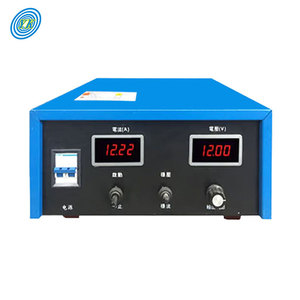
YUCOO High Current Plating Rectifier Transformer (220V AC to 12V DC 50A-1000A)
Designed for rigorous electrochemical processes and industrial DC converting stations. Features low loss copper windings and robust ripple suppression.
Send an Inquiry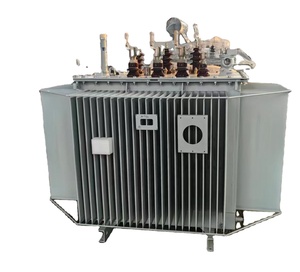
Factory Direct Three Phase Heavy Duty Control Rectifier Transformer
Engineered for precise step-down and current control. Built with electrostatic shielding between windings to mitigate high-frequency PWM inverter harmonics.
Send an Inquiry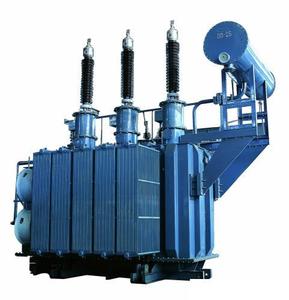
6300kVA Oil Immersed High Current Step-Up Transformer (33kV Class)
Optimized for utility-scale solar PV stations. Features multi-winding low voltage (LV) inputs to couple directly with central solar inverters up to 33kV ONEE grid voltage.
Send an Inquiry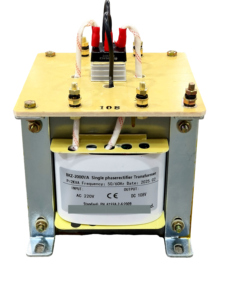
Single-Phase Auxiliary Control & Rectifier Transformer (380V/220V to 12V-60V)
Compact design for solar substation auxiliary power supplies, SCADA monitoring cabinets, and cathodic protection in harsh environments.
Send an Inquiry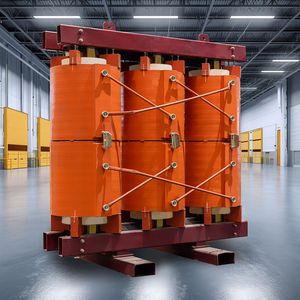
CEEG ZQSC(H) Series 2000kVA 10kV Epoxy Cast Resin Dry-Type Transformer
Flame-retardant, self-extinguishing Class H insulated dry transformer. Ideal for indoor solar substations, commercial rooftop PV, and industrial parks in Morocco.
Send an Inquiry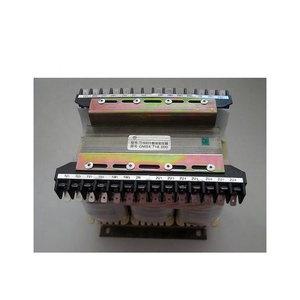
Heavy Duty T6 Power Rectifier Transformer for Generator Excitation Systems
Specialized excitation transformer engineered to withstand short-circuit electromagnetic stresses and fast transient overvoltages in power stations.
Send an Inquiry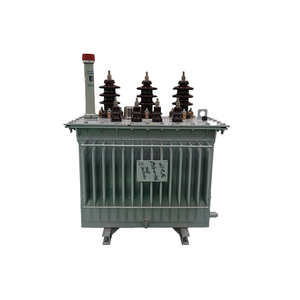
Hermetically Sealed 33kV Inverter Duty Transformer (300kVA to 1MW)
Completely sealed tank design preventing dielectric oil oxidation and moisture absorption. Perfect for remote Saharan solar installations with zero maintenance access.
Send an Inquiry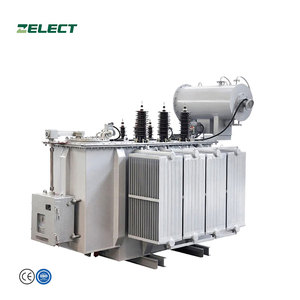
Modular 3-Phase Step-Up Solar Inverter Duty Transformer (50kVA to 3000kVA)
Full range customized step-up transformers complying with IEC 60076 and IS 1180. Features dual LV split windings for multi-string central solar inverters.
Send an InquiryExecutive Summary: Solar Inverter Duty Transformers in the Kingdom of Morocco
As the Kingdom of Morocco accelerates towards its ambitious National Energy Strategy target of deriving more than 52% of its installed electrical power capacity from renewable sources by 2030, the technical requirements for solar grid interconnection equipment have intensified. Solar Inverter Duty Transformers (IDTs) represent the single most critical electromagnetic node connecting photovoltaic (PV) generation blocks to Morocco's national transmission grid managed by ONEE (Office National de l'Électricité et de l'Eau Potable).
Unlike standard distribution units, Solar Inverter Duty Transformers operate under exceptionally harsh operational environments. They are subjected to continuous high-frequency pulse-width modulation (PWM) voltage harmonics, severe solar irradiation cycles, zero-load night energization stresses, and extreme ambient temperature fluctuations characteristic of Morocco’s Saharan and High Atlas regions (such as Ouarzazate, Midelt, Tarfaya, and Guelmim-Oued Noun). Selecting an established, ISO-certified manufacturer equipped with advanced electromagnetic modeling capabilities is paramount to ensuring 25-year operational lifespans with minimal levelized cost of energy (LCOE).
Technical Baseline: Standard Transformer vs. Solar Inverter Duty Transformer
A standard power transformer is designed for pure sinusoidal 50Hz AC grid voltage. In contrast, a Solar Inverter Duty Transformer must handle nonsinusoidal current waveforms laden with high-order harmonics (THD), DC bias current injection from central/string inverters, rapid dV/dt transient stress, and multi-winding electrostatic coupling without stray eddy current overheating.
Top Technical Considerations for Solar Transformers in Moroccan Climates
Deploying solar power infrastructure in North Africa demands rigorous customization to withstand environmental and electrical forces unique to the region. Manufacturers supplying the Moroccan market must address several specialized engineering challenges:
1. Saharan Extreme Temperature Derating
Moroccan desert sites routinely experience ambient shadows reaching 45°C to 50°C, with direct sunlight heating steel tanks up to 75°C. IDTs require specialized ONAN (Oil Natural Air Natural) radiator sizing, low temperature-rise design (45K/50K winding/top oil rise), and high thermal class insulation (Class H or hybrid Nomex) to prevent thermal degradation.
2. High Harmonic Mitigation (K-Factor 13 to K-20)
Solar inverters generate high-frequency current harmonics (3rd, 5th, 7th, 11th, and higher order switching frequencies). Transformers must feature optimized core laminations (high-permeability grain-oriented silicon steel), transposed conductor windings (CTC), and explicit K-factor ratings to prevent localized hotspot overheating.
3. Multi-Winding Split LV Configuration
To reduce balance-of-system (BOS) costs, modern Moroccan PV stations employ large central inverters (3.125 MVA to 6.25 MVA). IDTs are designed with dual, triple, or quadruple Low Voltage (LV) split windings coupled to a single High Voltage (HV 22kV or 33kV) output, isolated by grounded copper electrostatic shields.
Comparative Technical Specifications: Solar Inverter Duty Transformers
The following engineering matrix outlines standard technical parameters recommended for solar step-up transformers interconnected with Moroccan medium-voltage sub-grids:
| Specification Parameter | Utility Solar PV (Central Inverter) | Commercial & Industrial PV | Special Rectifier / Green H2 PV |
|---|---|---|---|
| Rated Power Capacity | 2,500 kVA to 8,800 kVA | 250 kVA to 2,000 kVA | 5,000 kVA to 12,500 kVA |
| High Voltage (HV) Rating | 22 kV / 33 kV / 60 kV (ONEE Standard) | 11 kV / 22 kV | 33 kV / 60 kV / 150 kV |
| Low Voltage (LV) Inputs | Split Dual/Quad LV (600V to 800V AC) | Single LV (400V to 690V AC) | Multi-Phase Rectifier Bridge Inputs |
| Cooling Type | ONAN / ONAF (Corrosion Resistant Radiators) | ONAN or Cast Resin Dry-Type (AN) | ONAF / OFAF Heavy Industrial |
| Harmonic Capability | K-Factor 13 / K-Factor 20 | K-Factor 4 / K-Factor 9 | K-Factor 20+ (Thyristor / IGBT) |
| Electrostatic Shielding | Copper Shield between HV/LV Windings | Optional Metallic Shield | Dual Grounded Faraday Shield |
| Enclosure Protection | IP55 / IP65 (Sand & Dust Filtration) | IP23 Indoor / IP54 Outdoor | IP66 Heavy Marine / Desert C5-M |
| Standard Compliance | IEC 60076-16, IS 2026, ONEE Grid Code | IEC 60076-11, IS 1180 Level 3 | IEC 60076-6, IEEE C57.18.10 |
Regional Applications Across Key Moroccan Renewable Energy Corridors
Morocco's geographical diversity requires tailored transformer configurations depending on site-specific altitude, humidity, sand exposure, and grid connection topologies:
1. Saharan Desert Mega-Projects (Ouarzazate, Midelt, Tata, Guelmim)
Projects located in regions adjacent to the Sahara experience high solar radiation accompanied by severe dust accumulation (Sirocco / Chergui winds) and large ambient temperature swings (ranging from sub-zero winter nights to >45°C summer days). Transformers deployed here require hermetically sealed corrugated oil tanks or rigid radiator banks fitted with dust-proof magnetic oil level gauges, silica gel breathers with oil seals, and anti-abrasion sand-resistant paint coatings (C5-M environment class according to ISO 12944).
2. Coastal Solar & Wind Hybrid Hubs (Tarfaya, Laâyoune, Dakhla)
Coastal installations benefit from consistent coastal winds but are subjected to high atmospheric salinity and humidity. Solar Inverter Duty Transformers intended for these zones must feature hot-dip galvanized radiator fins, stainless steel hardware (SS316), specialized anti-corrosion tank treatments, and high-creepage bushings (minimum 31mm/kV) to prevent flashovers caused by salt deposition.
3. Industrial Zones & Commercial Roofs (Tangier Med, Casablanca, Kenitra)
For rooftop PV installations and automotive/textile industrial parks in Tangier, Kenitra, and Casablanca, fire safety and spatial footprint are critical. Epoxy Cast Resin Dry-Type Transformers (CEEG series) rated up to 10kV or 22kV provide optimal solutions, eliminating oil-leakage risks, complying with Class F1 fire resistance standards, and requiring minimal maintenance downtime.
Key Information Gain: Evaluating Transformer Loss Efficiency (IS 1180 / IEC 60076-16)
When procuring solar step-up transformers for Moroccan solar projects, financial evaluation must account for lifetime operational losses rather than initial purchase price (CAPEX) alone. Solar inverter transformers operate at variable capacity factors tied to solar irradiance curves.
No-Load Losses (Core Losses / Iron Loss)
Occur continuously 24 hours a day, 365 days a year as long as the transformer remains energized from the grid (even at night when the solar inverter is idle). Utilizing high-grade cold-rolled grain-oriented (CRGO) silicon steel (such as M0H or Domain-Refined Laser-Scribed steel) significantly minimizes standby grid power consumption.
Load Losses (Winding Losses / Copper Loss)
Scale quadratically with current load during peak sunlight hours. Using electrolytic grade copper conductors (99.99% purity) with optimized cross-sectional area ensures minimal I²R losses, lowered internal temperature rise, and increased peak generation yield exported to the ONEE sub-station.
Why Choose Sahara Transformers for Morocco & International Exports
Sahara Transformers (ISO 9001:2015 & ISO 14001:2015 certified) is a recognized global manufacturer specializing in power, distribution, furnace, and specialized Solar Inverter Duty Transformers up to 10 MVA and 33kV class. With over 17 years of engineering expertise since 2007, Sahara Transformers brings deep technical advantages to EPC contractors, developers, and industrial buyers serving Morocco:
- Custom Electromagnetic Design: Fully tailored multi-winding LV configurations compatible with leading central inverter manufacturers (Sungrow, Huawei, SMA, ABB, Schneider, Power Electronics).
- Harmonic Mitigation Engineering: Integrated Faraday electrostatic copper shielding between HV and LV windings to divert high-frequency capacitive switching noise directly to ground.
- Rigorous Desert Proofing: Enclosures engineered for IP55/IP65 ratings, sand-proof breather assemblies, and C5-M extreme durability coating systems suitable for North African Saharan climates.
- Energy Efficiency Level 3 Compliance: Design options matching IS 1180 Amendment 1 Level 3 and IEC 60076-16 strict loss limits, guaranteeing maximum ROI over a 25-year plant lifecycle.
- Full Factory Acceptance Testing (FAT): Comprehensive routine, type, and special testing facilities including impulse voltage withstand testing, partial discharge measurement, temperature rise testing, and dissolved gas analysis (DGA).
- Global Logistics Capability: Expedited CFR/CIF export packaging and sea freight logistics directly to Major Moroccan ports (Casablanca Port, Tangier Med Port).
Frequently Asked Questions (FAQ) for Moroccan Solar Transformer Buyers
Ready to Engineer Your Solar Project in Morocco?
Contact our senior transformer engineering team today for technical consultation, single-line diagram (SLD) reviews, custom loss optimization, and fast-track RFQ quotations tailored for Moroccan grid compliance.