
Engineered Transformer & Rectifier Lineup
High-efficiency phase conversion, cathodic protection, traction rectifiers, and high-current transformers built to IEC 60076, NEK 400, and Statnett grid guidelines.
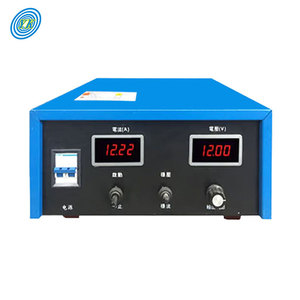
YUCOO Plating Rectifier 220V AC to 12V DC Electroplating Rectifier
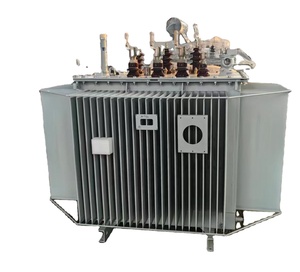
Three-Phase Control Electrical Rectifier Transformer
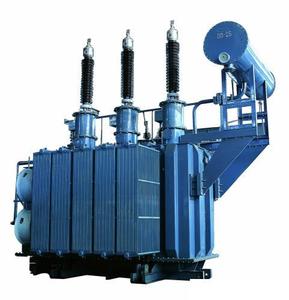
6300kVA Oil-Immersed Cathodic Protection Rectifier Transformer
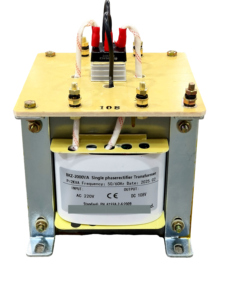
Multi-Tapped AC to DC Single-Phase Control Transformer
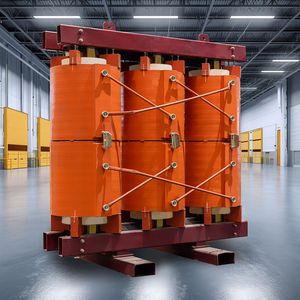
CEEG ZQSC(H)B 2000kVA/10kV Cast Resin Traction Rectifier Transformer
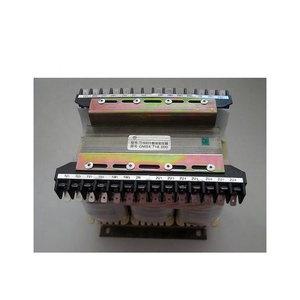
T6 Electric Power Rectifier Transformer for Excitation Systems
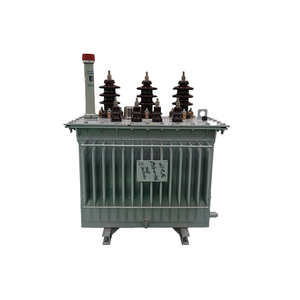
33kV High Voltage Hermetically Sealed Rectifier Transformer
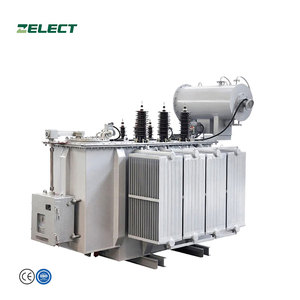
3-Phase High Capacity Step-Up Rectifier Transformer (50kVA - 3000kVA)
Engineering Fundamentals: Three-Phase to Two-Phase Phase Transformation Architecture
Converting a standard symmetrical three-phase grid supply into a balanced two-phase electrical system is a specialized power engineering requirement. In modern industrial power distribution, particularly across high-latitude jurisdictions like Norway, three-phase to two-phase transformation is critical for balancing heavy single-phase or two-phase electrical loads (such as electric furnaces, traction systems, and specialized electrochemical rectifiers) without creating severe phase unbalance on the upstream three-phase supply network.
1. The Scott-T Connection Topology
The Scott-T transformer topology remains the benchmark solution for converting three-phase alternating current into a balanced two-phase output. The configuration utilizes two single-phase transformers interconnected vectorially:
- The Main Transformer: Connected directly across two phases of the three-phase system (e.g., Lines B and C). The primary winding features a center tap (50% tap point), which serves as the physical connection point for the neutral connection of the teaser transformer.
- The Teaser Transformer: Connected between the remaining phase (e.g., Line A) and the center tap of the Main Transformer. To maintain exact scalar voltage equality between the two secondary phases, the teaser primary winding must be tapped precisely at 86.6% ($\frac{\sqrt{3}}{2}$) of the main transformer's total primary turns.
Vector Math Optimization: When two equal single-phase loads are connected to the secondary windings of a Scott-T transformer, the resulting secondary currents are $90^\circ$ out of phase. The vector sum of these currents reflects back onto the primary grid as completely balanced three-phase line currents, eliminating zero-sequence harmonics and neutral ground return currents.
2. The Le Blanc Connection Alternative
For applications where a single multi-limb transformer core structure is preferred over two distinct magnetic cores, the Le Blanc connection offers an exceptional alternative. By employing a standard three-limb core with specialized multi-section secondary windings, the Le Blanc transformer achieves identical $90^\circ$ two-phase displacement with superior mechanical compactness, making it an ideal candidate for offshore containerized substations and space-restricted maritime vessels operating along the Norwegian coastline.
| Topological Metric | Scott-T Transformer Connection | Le Blanc Transformer Connection |
|---|---|---|
| Core Construction | Two independent single-phase cores or 2-in-1 assembly | Single 3-limb magnetic core structure |
| Primary Winding Tap | Requires 50% Center Tap (Main) & 86.6% Tap (Teaser) | Standard 3-Phase Delta or Star Connection |
| Secondary Phase Shift | $90^\circ$ Electrical Phase Angle Separation | $90^\circ$ Electrical Phase Angle Separation |
| Grid Unbalance Factor | Near Zero (< 1.5% under balanced 2-phase load) | Near Zero (< 2.0% under balanced 2-phase load) |
| Maritime / Subsea Suitability | Excellent thermal isolation for rugged duty | Maximum space efficiency & footprint reduction |
Local Application Scenarios & Market Drivers in Norway
Norway represents one of the world's most unique electrical ecosystems. Powered overwhelmingly by hydroelectric generation (>90%), the Norwegian national grid (managed by Statnett) demands exceptionally high power quality, low harmonic pollution, and rigorous adherence to NEK standards. Furthermore, Norway's aggressive electrification of maritime transport, industrial smelting, and offshore energy platforms creates specialized demands for 3-phase to 2-phase conversion systems.
Fjord Aquaculture & Shore Power
Shore-to-ship power infrastructure along Norwegian fjords requires robust transformation to supply high-current DC feeding and two-phase auxiliary power systems for fish farming barges, preventing voltage dip on rural IT-grid networks.
Metallurgical Smelting & DC Refining
Industrial manufacturing plants in Sunndalsøra and Årdal utilize high-capacity rectifier transformers to drive heavy current electro-refining processes, requiring precise phase shifting to minimize 5th and 7th harmonic emissions.
Subsea Cathodic Protection
Offshore oil platforms and underwater natural gas pipelines in the North Sea rely on specialized oil-immersed low-voltage, high-current transformers to drive impressed current cathodic protection (ICCP) systems against saltwater corrosion.
Subzero Arctic Environmental Durability
Operating transformers in Northern Norway (such as Troms og Finnmark) requires specialized engineering to withstand extreme environmental challenges:
- Extreme Cold Thermal Management: Standard transformer insulating oils can experience viscosity degradation at subzero temperatures. Our transformers engineered for Norway utilize synthetic ester dielectric fluids (such as MIDEL 7131) featuring pour points down to -56°C, ensuring immediate cold-start capability without core thermal shock.
- Corrosion Protection Class C5-M: Coastal and offshore installations are continuously exposed to aggressive marine salt spray. All structural steel tanks undergo multi-layer epoxy powder coating complying with ISO 12944-6 C5-M (Marine High Corrosion category), delivering a maintenance lifespan exceeding 25 years.
- IT Grounding System Compatibility: Unlike many continental European grids using TN-S grounding, large portions of Norway's low-voltage distribution network still utilize 230V IT (Isolert Terra) isolated neutral topologies. Our custom transformers are built with enhanced primary-to-secondary galvanic isolation shielding to prevent ground fault propagation across IT grid boundaries.
Technical Specifications & Nordic Compliance Standards
All Sahara Transformers exported to Norway comply with rigorous European Norms (EN), International Electrotechnical Commission (IEC) standards, and regional Norwegian grid codes.
| Parameter / Specification | Standard Range / Technical Capability | Norwegian Compliance Baseline |
|---|---|---|
| Power Rating (kVA / MVA) | 25 kVA up to 10 MVA (Custom design available) | IEC 60076-1 / EU EcoDesign Tier 2 |
| Primary Input Voltage | 230V, 400V, 11kV, 22kV, 33kV (3-Phase, 50Hz) | Statnett Grid Code / NEK 400 Compliant |
| Secondary Output Topology | 2-Phase 3-Wire / 2-Phase 4-Wire / Multi-tap Rectified | Galvanically Isolated Output |
| Insulation Type | Cast Resin Dry-Type (Class H) or Synthetic Ester Liquid | IEC 60076-11 (Dry) / IEC 60076-14 (Ester) |
| Ambient Operating Temp | -40°C to +50°C Arctic Rated | NEK IEC 60076 Extreme Cold Class |
| Enclosure Protection Class | IP23 Indoor / IP56 Outdoor Marine / IP66 Subsea Container | EN 60529 / NEMA 4X Marine Specification |
| Corrosion Class Coating | C5-M Heavy Industrial & Coastal Corrosion Class | ISO 12944-6 Marine Compliance |
Sahara Transformers: Manufacturing Excellence & Global Export Capability
With over 17 years of specialized transformer manufacturing experience, Sahara Transformers (Efron Electric) has established itself as a global leader in high-reliability power equipment. Operating out of state-of-the-art ISO-certified production facilities in Pune, India, we offer Norwegian EPC contractors, energy utilities, and industrial plant managers an uncompromised blend of precision engineering, full compliance, and direct factory-direct cost efficiency.
1. Advanced Quality Assurance & Factory Acceptance Testing (FAT)
Every transformer built for export undergoes comprehensive Factory Acceptance Testing in our fully equipped high-voltage testing laboratory prior to dispatch. Inspection reports are delivered per IEC requirements and can be witnessed live by third-party inspection bodies such as DNV, Bureau Veritas, or Lloyd's Register:
- Routine Tests: Winding resistance measurement, voltage ratio & phase displacement check, short-circuit impedance & load loss, no-load loss & current measurement, dielectric routine tests (applied voltage & induced overvoltage).
- Type & Special Tests: Temperature rise test, Lightning Impulse Test (up to 200kV peak), Partial Discharge measurement for Cast Resin units (<10 pC), and Dissolved Gas Analysis (DGA) for synthetic oil units.
2. Complete Lifecycle Support & Refurbishment Services
Beyond new unit manufacturing, our technical division delivers complete engineering support for existing industrial power assets. Services include On-Load Tap Changer (OLTC) retrofitting, vacuum oil purification/filtration, winding re-engineering, and annual preventative maintenance support tailored to long-term operational peace of mind.