Industrial Substation & Transformer Solutions
Factory-engineered prefabricated substations and heavy-duty voltage regulation equipment designed for seamless integration across Azerbaijan's industrial and power distribution grids.
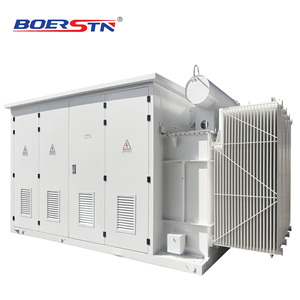
11KV 33KV IP66 Prefabricated Compact Combined Substation
- Voltage Rating: 11kV / 33kV to 120V/400V
- Protection Degree: Heavy Duty IP66 Weatherproof
- OLTC Compatibility: Integrated 17-step vacuum tap switch
- Target Application: Extreme outdoor industrial sites
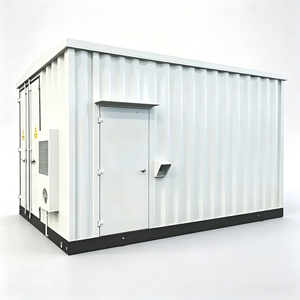
Containerized Substation Mobile Substation For Temporary Power
- Design: Modular 20ft/40ft ISO Containerized Chassis
- Tap Switch: On-Load Automatic Remote Tap Changer
- Mobility: Rapid deployment skid/trailer system
- Target Application: Oilfields, mine sites & emergency backup
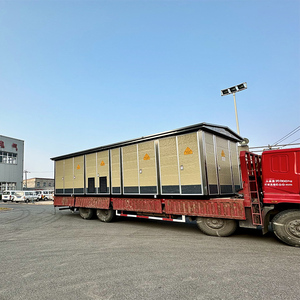
Box Type Substation 10kV 400V Certified Factory Prefabricated
- Standard Compliance: IEC 62271-202 / ISO Certified
- Capacity: Up to 2500 kVA step-down distribution
- Feature: Low-loss amorphous/CRGO core with OLTC
- Target Application: Urban distribution & industrial parks
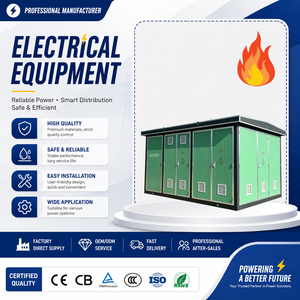
YBW Compact Substation High/Low Voltage Distribution System
- Frequency: 50Hz / 60Hz dual capability
- Switchgear: SF6 Insulated Ring Main Unit (RMU)
- Control: Microprocessor OLTC controller interface
- Target Application: Commercial hubs & renewable plants
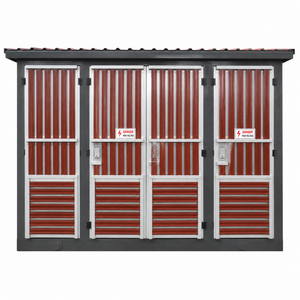
American Type Pad-Mounted Substation 10kV 35kV Sealed Unit
- Enclosure: Dead-front fully insulated construction
- Fluid Isolation: FR3 synthetic ester / Mineral oil
- OLTC Switch: Under-oil high endurance tap selector
- Target Application: Residential grids & high-rise complexes
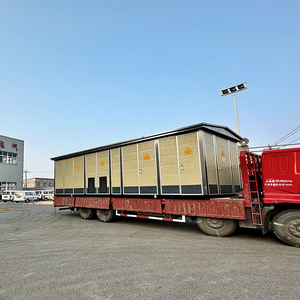
European European Compact Substation Set 600kVA - 2000kVA
- Rating Range: 600kVA, 1250kVA, 2000kVA to 10MVA
- Core Tech: Tier-2 Eco-design minimal load loss
- Monitoring: SCADA ready online DGA & OLTC sensors
- Target Application: Heavy industrial manufacturing
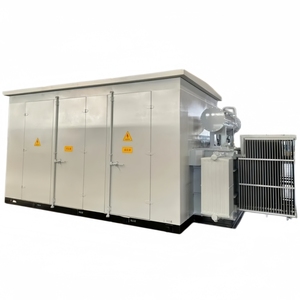
Containerized Outdoor Power Substation with Distribution Unit
- Protection Class: IP54 / IP65 anti-corrosion rated
- Cooling: ONAN / ONAF automated thermal control
- Regulator: On-Load Tap Changing voltage stabilizing switch
- Target Application: Sub-transmission utilities
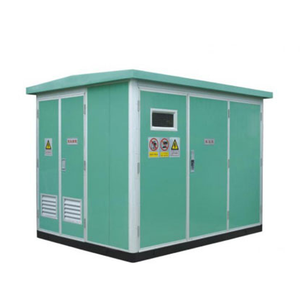
YBP 12kV 0.4kV IP4X Shockproof Anti-Corrosion Substation
- Customization: Full seismic & salt-spray coating (C4H)
- Voltage Level: 12kV primary / 0.4kV secondary
- Safety Features: Internal arc proof tested to IEC 62271
- Target Application: Caspian coastal & offshore facilities
On-Load Tap Changer (OLTC) Technology & Physics of Voltage Regulation
An On-Load Tap Changer (OLTC) represents the most mechanically intricate and electro-dynamically stressed sub-assembly within a high-voltage power transformer. Unlike off-circuit tap changers (DETC) which require complete transformer de-energization, an OLTC alters the effective winding turn ratio dynamically under active load conditions—ensuring continuous voltage stabilization across fluctuating grid conditions without interrupting power supply to critical industrial consumers.
Mechanics of On-Load Tap Changing: Diverter Switch vs. Selector Switch
Modern industrial OLTC systems function via a two-stage operational sequence designed to prevent short-circuiting between adjacent winding taps during transition:
- Tap Selector Unit: Pre-selects the intended voltage tap position while carrying no active breaking current. It operates under purely dielectric stress within the main oil compartment.
- Diverter Switch (Arcing Switch): Executes the high-speed transfer of load current from the active tap to the pre-selected tap using transition resistors or vacuum interrupter bottles to suppress electric arcing.
During the fraction of a second (typically 40ms to 60ms) when transition contacts engage, high thermal energy is generated. In conventional oil-diverter systems, this process degrades transformer oil through thermal cracking, releasing acetylene ($C_2H_2$), ethylene ($C_2H_4$), and hydrogen ($H_2$) gas while producing carbonized particulate sludge. Transitioning to advanced vacuum-type OLTC units isolates electric arcing inside hermetically sealed vacuum interrupters, completely preventing oil contamination and extending maintenance intervals up to 300,000 switching operations.
Critical Servicing Protocols & Diagnostic Testing Methodology
Servicing OLTC infrastructure requires a comprehensive diagnostic framework that complies with IEC 60214-1 and IEEE C57.131 standards. Qualified engineers utilize advanced non-destructive diagnostic suites to assess mechanical integrity and contact health:
| Diagnostic Test | Technical Objective | Critical Threshold / Tolerance | Operational Impact |
|---|---|---|---|
| Dynamic Resistance Measurement (DRM) | Evaluates contact switching timing, transition resistor continuity, and mechanical bounce. | Transition time deviation < 5%; Resistance delta < 2% across phases. | Detects broken transition springs, worn contacts, or mechanical binding. |
| Dissolved Gas Analysis (DGA) | Analyzes dissolved hydrocarbon gases in OLTC oil compartment to identify abnormal arcing/heating. | $C_2H_2 / C_2H_4$ ratio monitoring; Acetylene limit < 20 PPM in vacuum switch oil. | Prevents catastrophic dielectric flashover caused by excessive carbon build-up. |
| Acoustic Emission Profiling | Captures acoustic signatures during contact transfer cycle to detect structural wear. | Acoustic waveform peak matching against baseline fingerprint profile. | Identifies gear play, drive shaft backlash, and mechanism misalignment. |
| Dielectric Breakdown (BDV) & PPM Water | Measures insulating fluid dielectric strength and dissolved moisture saturation. | BDV > 60 kV (2.5mm gap); Moisture content < 15 PPM for >33kV class. | Protects internal insulation against dielectric tracking and flashover faults. |
Localized Application Scenarios across Azerbaijan’s Industrial Sectors
Azerbaijan stands as a pivotal energy hub connecting Europe and Central Asia. The country's aggressive industrialization and power grid expansion demand high-reliability voltage regulation systems capable of handling extreme climatic variations and heavy duty cycles. Factory-certified OLTC servicing and custom compact substations serve key strategic economic zones throughout Azerbaijan:
Baku & Abseron Offshore / Oil & Gas
Petrochemical plants, gas compression stations, and offshore drilling platforms surrounding Baku require heavy-duty IP66 compact substations fitted with explosion-proof OLTC drive mechanisms. Constant power quality is essential at processing hubs such as the Sangachal Terminal and Heydar Aliyev Oil Refinery, where voltage sags can trip high-voltage motor drives and cause multi-million dollar operational halts.
Sumqayit Chemical Industrial Park
The dense metallurgical, polymer, and heavy manufacturing facilities in Sumqayit impose severe harmonic distortion and rapid load spikes on local substations. Specialized 33kV distribution transformers featuring high-endurance OLTC diverter switches enable automated voltage stabilization, suppressing voltage flicker caused by electric arc furnaces and high-capacity induction motors.
Karabakh Green Energy Zone
As Azerbaijan expands utility-scale hydro, solar, and wind projects across the Karabakh region (such as the Khodaafarin and Giz Galasi hydro projects), specialized grid-tied transformers equipped with smart electronic OLTC controllers manage bi-directional power flows, smoothing out intermittent voltage surges before feeding clean energy into the 110kV/33kV national transmission system.
Strategic Development Trends in Azerbaijan’s Power Sector
Driven by the Azerbaijan 2030: National Priorities for Socio-Economic Development framework, the nation's energy grid is undergoing a digital and structural transformation. Industrial procurement and grid maintenance trends reflect several key vectors:
1. Transition to Smart Grid & Automated Voltage Control (AVR)
Major utility operators including Azerenerji OJSC and Azerishiq OJSC are modernizing aging regional substations by retrofitting mechanical OLTC units with digital Motor Drive Mechanisms (MDM) connected via IEC 61850 protocol. This allows central SCADA systems in Baku to monitor step position, oil temperature, and motor current in real-time, executing automated tap changes to optimize transmission line efficiency.
2. Resistance to Caspian Environmental Salinity & Thermal Extremes
Substations along the Caspian coastline face severe salt-fog corrosion, high humidity, and extreme summer temperatures exceeding +45°C. Equipment suppliers servicing Azerbaijan now prioritize C4H/C5 industrial anti-corrosion poly-urethane coatings, stainless-steel OLTC control cabinets, and synthetic ester insulating fluids that maintain high fire safety points (above 300°C) and superior oxidation stability under high thermal loads.
3. Integration of Eco-Design Low-Loss Substations
In line with global decarbonization goals emphasized during Baku's hosting of COP29, industrial facilities are replacing outdated GOST-standard transformers with energy-efficient units compliant with IS 1180 Amendment 1 (Energy Efficiency Level 3 / EU Tier 2 Eco-design). Installing low-loss core transformers with precision vacuum-switch OLTCs reduces no-load losses by up to 30%, delivering significant carbon reduction and energy savings.
Sahara Transformers: Enterprise Excellence & Technical Capabilities
Since 2007, Sahara Transformers has established itself as an ISO-certified leader in the engineering, manufacturing, and servicing of industrial power transformers, distribution units, and compact substations up to 10 MVA, 33kV class. Our solutions serve utilities, EPC contractors, and heavy industrials across international markets.
ISO-Certified Precision Manufacturing
Our state-of-the-art facility in Pune operates under stringent ISO quality systems. Every transformer and OLTC assembly undergoes 100% routine testing according to IEC 60076 and IS standards prior to export.
Custom Engineering & Retrofitting
We design and manufacture bespoke transformer units tailored to complex physical layouts, special voltage vectors (including Scott-Connected and 12-pulse furnace units), and harsh environmental constraints.
End-to-End Field Servicing
From complete OLTC contact overhaul, vacuum interrupter upgrades, and oil filtration to Dissolved Gas Analysis (DGA) and Tan-Delta diagnostic testing, our engineers provide complete lifecycle support.
Frequently Asked Questions (FAQ) for Azerbaijan Buyers
Yes. While our equipment is engineered to primary international standards (IEC 60076, IEC 60214, ISO 9001), our engineering team routinely customizes bushing layouts, protection relays, voltage vector groups, and tap ranges to ensure complete physical and electrical compatibility with Azerbaijan’s legacy GOST 11677 and modern Azerenerji/Azerishiq grid connection standards.
Substations destined for Baku or Caspian offshore facilities feature heavy-duty sandblasted steel enclosures (SA 2.5 standard) protected by a multi-coat zinc-rich epoxy primer and polyurethane finish meeting ISO 12944 C4-High / C5-Industrial anti-corrosion classes. OLTC drive housings, hardware, and fasteners utilize 316-grade stainless steel.
For traditional oil-arcing OLTCs, mechanical inspection and oil dielectric testing (BDV/PPM) are recommended every 1 to 2 years, or after 50,000 switching operations. Advanced vacuum-type OLTC units require minimal routine servicing—typically extending maintenance-free intervals up to 300,000 operations, significantly lowering total cost of ownership for remote industrial sites.
Our field servicing protocol includes Dynamic Resistance Measurement (DRM), OLTC timing profile analysis, Motor Drive Mechanism (MDM) current signature profiling, contact erosion thickness measurement, transformer oil Dissolved Gas Analysis (DGA), and insulating fluid dielectric breakdown voltage (BDV) testing.
Absolutely. Our containerized mobile substations integrate high-voltage switchgear, step-down transformers, OLTC automatic voltage regulators, and low-voltage distribution breaker panels inside reinforced 20ft or 40ft ISO shipping containers, providing rapid plug-and-play power deployment for oilfield developments and emergency grid recovery.
Procurement teams and engineering contractors can click the Send an Inquiry button on this page to submit single-line diagrams (SLD), voltage step requirements, load profiles, and site environmental conditions directly to our application engineering department for immediate review and formal technical quotation.