
Featured Solar & Industrial Rectifier Transformers
Engineered specifically for solar PV inverter integration, heavy-duty DC rectification, and high-voltage Australian utility grid-tie applications.
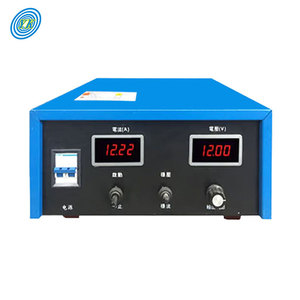
High-Current Solar DC Rectifier Transformer (220V to 12V 1000A)
Designed for high-amperage continuous duty DC power conversion in solar electrolysis, energy storage, and industrial plating applications.
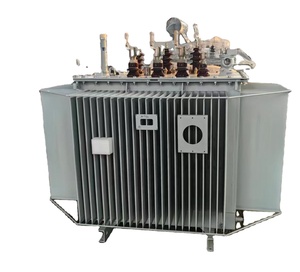
Three-Phase Inverter Control Rectifier Transformer
Factory direct three-phase control step-up/step-down transformer built to stabilize power conversion across multi-inverter solar arrays.
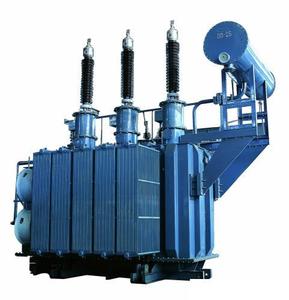
Oil-Immersed 6300kVA Solar Farm Step-Up Transformer
Utility-scale oil-immersed 33kV step-up transformer optimized for solar power plants, featuring low-loss CRGO silicon steel cores.
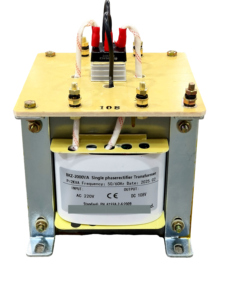
Single-Phase Industrial Control Transformer (5kVA AC to DC)
Precision step-down control transformer for auxiliary solar substation monitoring, cathodic protection, and battery storage management.
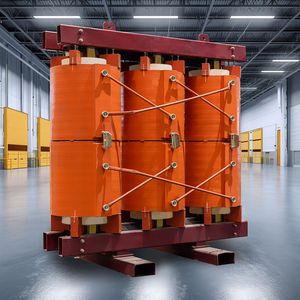
2000kVA Epoxy Cast Resin Dry-Type Solar Substation Transformer
Fire-retardant dry-type cast resin transformer engineered for commercial rooftop solar networks and urban Sydney indoor substations.
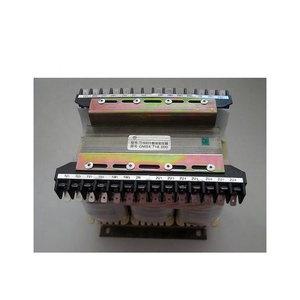
Excitation System Power Rectifier Transformer
Heavy-duty excitation rectifier transformer for synchronous solar-diesel hybrid systems and large-scale inverter station control units.
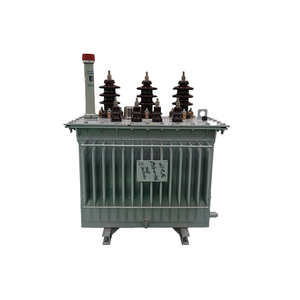
33kV / 1MW Hermetically Sealed Solar Grid Transformer
Hermetically sealed liquid-filled transformer engineered to prevent moisture ingress in coastal and high-humidity Sydney solar installations.
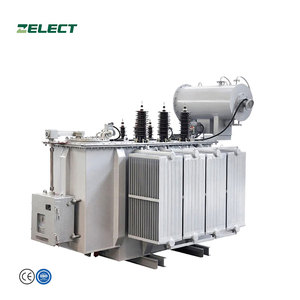
Multi-Winding 3-Phase Step-Up Solar Inverter Transformer (50kVA - 3000kVA)
Customizable multi-winding step-up transformer accepting dual or quad inverter inputs to boost solar yield directly into medium-voltage distribution grids.
Solar Power Plant Transformers for Sydney's Renewable Grid Infrastructure
A comprehensive analysis of thermal loading, harmonic mitigation, grid code compliance (AEMO & AS/NZS 60076), and coastal corrosion resilience for utility-scale solar farms in New South Wales.
Harmonic Voltage Stress & K-Factor Engineering
Utility-scale solar power plants rely heavily on central and string inverters to convert DC solar generation to AC grid power. However, pulse-width modulation (PWM) inverters introduce intense high-frequency harmonics (3rd, 5th, 11th, and 13th orders) into the low-voltage windings.
By utilizing stepped-turn windings and specialized foil-wound copper conductors, our transformers withstand high dV/dt voltage transients without risking insulation fatigue or localized hot-spotting.
Thermal De-rating & Western Sydney Solar Climates
Greater Sydney and regional NSW solar corridors (such as the Central-West Orana and New England Renewable Energy Zones) experience extreme summer ambient temperatures exceeding 45°C, combined with maximum solar irradiance.
Our engineering team applies specialized thermal modeling compliant with IEC 60076-7 / AS 60076.7 loading guidelines. We utilize extended radiator surface areas, high-flashpoint natural ester fluids (FR3 option), and ONAN/ONAF hybrid cooling configurations to guarantee continuous output at 50°C ambient without accelerating insulation aging.
Coastal Marine Protection (C5-M Rating for Port Jackson & Botany)
Solar installations deployed near Sydney's coastal zones—including commercial solar microgrids in Botany Bay, industrial rooftops in Brookvale, and coastal water treatment solar plants—are exposed to harsh, salt-laden marine atmospheres.
Without robust external protection, tank corrosion leads to oil leaks, moisture contamination, and catastrophic flashovers. Our Sydney-export transformers feature:
- C5-M Very High Marine atmospheric corrosion paint systems according to ISO 12944.
- Hot-dip galvanized radiator banks and stainless steel hardware fittings.
- Double-sealed nitrile/viton gaskets engineered for salt-fog exposure.
Multi-Winding Inverter Topology (1500V DC Systems)
Modern utility solar plants in Australia have transitioned from 1000V DC to 1500V DC solar topologies to reduce cable copper losses. This shift requires step-up transformers with multiple low-voltage windings (split-LV configuration) to connect two, three, or four separate inverters to a single transformer tank.
Our OEM manufacturing facility constructs split-phase Dy11y11 or Ynd11 vector group transformers with complete galvanic isolation between inverter inputs. This prevents circulating cross-currents between inverters, maximizing total solar energy harvesting efficiency into Ausgrid, Endeavour Energy, or Essential Energy grid connection points.
Technical Parameter Comparison: Standard Distribution vs. OEM Solar Inverter Duty Transformers
Engineering specifications optimized for Australian Grid Connection (AS/NZS 60076 & AEMO GPS Guidelines)
| Engineering Characteristic | Standard Distribution Transformer | Sahara OEM Solar Power Plant Transformer | Sydney EPC Benefit |
|---|---|---|---|
| Harmonic Capability | Designed for linear 50Hz loads (K-1) | K-Factor rated (K-13, K-20) with copper shielding | Prevents premature winding insulation failure from inverter PWM harmonics. |
| Thermal Rise Limit | 65°C Top Oil / 70°C Winding at 40°C Ambient | 50°C / 55°C Low Rise Design for 50°C Peak Ambient | Ensures full 100% solar power plant loading during hot Sydney summer afternoons. |
| LV Input Windings | Single Low-Voltage Winding | Dual, Triple, or Quad Split-LV Windings | Reduces total transformer footprint and station balance-of-plant (BOP) cost. |
| DC Offset Withstand | Unrated for DC bias current | Reinforced core saturation margins against DC bias | Eliminates core noise, vibration, and transformer tripping during cloud transients. |
| Corrosion Class | C3 Standard Industrial Powder Coat | C5-M Marine Grade Polyurethane / Galvanized Radiators | Guarantees 25+ year lifespan in Sydney coastal high-humidity environments. |
| Dielectric Liquid | Standard Mineral Oil (Class K1) | High-Flashpoint Natural Ester Fluid (FR3 option) | Enhances fire safety for urban Sydney rooftop and indoor utility substations. |
Solar & Microgrid Expansion Trends in Greater Sydney
Understanding the regulatory, environmental, and infrastructure drivers shaping power transformer procurement across New South Wales.
1. The NSW Electricity Infrastructure Roadmap & REZ Expansion
New South Wales is undergoing an unprecedented energy transition as aging coal-fired power stations (such as Liddell and Eraring) retire. The NSW Government's Electricity Infrastructure Roadmap aims to deliver 12 gigawatts of network capacity across designated Renewable Energy Zones (REZ).
Sydney serves as the financial, procurement, and engineering hub for these major EPC solar and energy storage developments. Utility contractors require reliable transformer supply chains with certified type-test reports to satisfy the Australian Energy Market Operator (AEMO) Generator Performance Standards (GPS).
2. Industrial Rooftop Solar & Western Sydney Aerotropolis
Across Western Sydney (Parramatta, Marsden Park, Badgerys Creek Aerotropolis), massive warehousing, logistics, and data center precincts are integrating multi-megawatt rooftop solar systems and battery storage (BESS).
Space-constrained urban sites demand compact substations (CSS) and cast resin dry-type transformers (such as our 2000kVA Epoxy Cast ZQSC Series) that deliver zero fire risk, low acoustic noise levels, and seamless step-up connection to 11kV or 33kV Ausgrid/Endeavour distribution feeders.
3. High DC-to-AC Overclocking & Heavy Duty Cycles
To maximize financial yield under Sydney solar feed-in tariffs and power purchase agreements (PPAs), solar developers routinely design solar arrays with DC-to-AC ratios up to 1.5:1. This means inverter transformers operate at maximum thermal output for extended daytime blocks.
Our OEM transformer designs feature low-loss CRGO silicon steel cores processed with precision step-lap miter shearing, ensuring low no-load losses and high power factor operating efficiency throughout extended peak solar windows.
4. Strict Compliance with AS/NZS 60076 Standards
Importing electrical infrastructure into Australia requires strict adherence to local regulatory frameworks. Equipment must comply with AS/NZS 60076 (Power Transformers), AS 2374, and local Service & Installation Rules of New South Wales.
Sahara Transformers supplies complete technical dossiers—including routine factory acceptance tests (FAT), short-circuit withstand validation, sound level tests, and insulation oil breakdown voltage (BDV) verification—giving Sydney buyers complete regulatory confidence.
Sahara OEM/ODM Manufacturing Excellence
Proven industrial manufacturing legacy delivering customized, high-reliability transformer engineering since 2007.
Our state-of-the-art production plant operates under ISO 9001:2015, ISO 14001, and ISO 45001 management systems, guaranteeing strict quality control at every phase of core winding, vacuum drying, tank assembly, and fluid impregnation.
We tailor primary/secondary voltage ratios (11kV, 22kV, 33kV down to 315V, 400V, 600V, 800V inverter outputs), vector groups, tap changers (OLTC/NLTC), enclosure protection levels (IP55/IP65), and specialized dimensions for containerized solar skid solutions.
Every transformer undergoes comprehensive testing before export: Winding Resistance, Voltage Ratio & Vector Group, Load Loss & No-Load Loss, Dielectric Withstand, Applied Voltage, Separate Source AC Withstand, and Dissolved Gas Analysis (DGA).
Constructed with premium high-permeability cold-rolled grain-oriented (CRGO) steel cores and electrolytic copper windings, delivering compliance with stringent global energy efficiency standards and reduced total cost of ownership (TCO).
We provide full export-ready packaging, sea-worthy heavy equipment crating, moisture-barrier vacuum wrapping, and streamlined ocean freight shipping directly to Port Botany (Sydney), Newcastle, or Wollongong ports with complete customs documentation.
From initial single-line diagram (SLD) evaluation and electromagnetic simulation to site commissioning guidance, spare parts availability, and annual maintenance advice, our technical engineering team supports Sydney projects worldwide.
Frequently Asked Questions by Sydney Buyers
Answers to key engineering, regulatory, and logistics queries from Australian solar developers, electrical contractors, and utility partners.
Are your solar power plant transformers fully compliant with Australian Standard AS/NZS 60076?
Yes. All OEM/ODM transformers manufactured for the Australian market are engineered in strict compliance with AS/NZS 60076 (Parts 1–11), including dielectric insulation requirements, temperature rise limits, short-circuit withstand capability, and external bushing specifications mandated by local network service providers (DNSPs) such as Ausgrid, Endeavour Energy, and Essential Energy.
What vector groups are recommended for multi-inverter solar farms in NSW?
For multi-inverter central solar stations (1500V DC architecture), the most common vector groups are Dy11y11 or Dy11y11y11 (split secondary LV windings). This provides 30-degree phase shift isolation between the solar inverter inputs and the medium-voltage grid (11kV, 22kV, or 33kV), minimizing harmonic distortion and preventing circulating neutral currents.
How do you handle transformer cooling in high ambient temperature regional solar sites?
We utilize specialized low thermal rise designs (50°C top oil / 55°C winding rise over a 50°C peak ambient) combined with high-grade mineral or natural ester insulating oils. Radiator banks are engineered with ONAN (Oil Natural Air Natural) and optional ONAF (Oil Natural Air Forced) fan systems controlled by multi-stage digital temperature indicators (WTI/OTI).
What protection measures are provided for solar transformers installed near Sydney coastal salt air?
Transformers designated for Sydney coastal or harbour regions feature a C5-M high-durability marine paint system compliant with ISO 12944. Tank surfaces undergo shot-blasting to Sa 2.5 rating followed by zinc-rich epoxy primer, intermediate vinyl coatings, and polyurethane finish coats. All hardware fasteners are 316 stainless steel or hot-dip galvanized.
Can you supply compact skid-mounted transformer substations for containerized solar solutions?
Absolutely. We manufacture fully integrated Compact Substations (CSS) housing the inverter step-up transformer, medium-voltage ring main unit (RMU / SF6 switchgear), low-voltage circuit protection panel, and auxiliary transformer inside a weatherproof, lockable enclosure engineered for fast plug-and-play site installation.
What is the typical shipping lead time from manufacture to Port Botany, Sydney?
Manufacturing lead time for customized 1000kVA to 6300kVA solar transformers typically ranges between 6 to 10 weeks depending on raw material specifications and custom tap-changer selection. Ocean shipping from our port to Port Botany, Sydney takes approximately 14 to 20 days, backed by full tracking and logistics support.
Do you provide custom OEM labeling, nameplates, and technical documentation?
Yes. As a dedicated OEM/ODM exporter, we provide customized stainless steel nameplates displaying your company branding, project identifiers, schematics, AS/NZS standard compliance markings, along with complete operating manuals and certified Factory Acceptance Test (FAT) reports.
How do I initiate a technical RFQ (Request for Quotation) for a Sydney solar project?
Simply click the "Send an Inquiry" button anywhere on this page to share your single-line diagram (SLD), required kVA rating, primary/secondary voltage, vector group, and site ambient conditions. Our senior transformer application engineers will respond within 24 hours with a detailed technical proposal and commercial quote.
Ready to Power Your Sydney Solar Project with OEM/ODM Precision?
Partner with an ISO-certified transformer manufacturer delivering low-loss, harmonic-shielded, and AS/NZS-compliant solar transformers designed for utility solar plants, microgrids, and industrial substations.