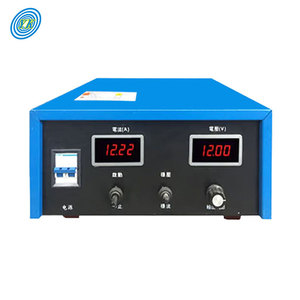
YUCOO Plating Rectifier 220V AC to 12V DC Electroplating Rectifier
Ratings: 50A / 500A / 1000A Output. High-efficiency DC voltage regulation for industrial surface finishing and electroplating plants.

Precision-engineered electrical transformers designed to meet rigorous industrial specifications, tropical climate demands, and international IEC/IEEE standards.
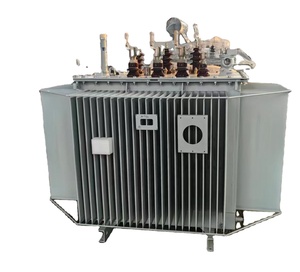
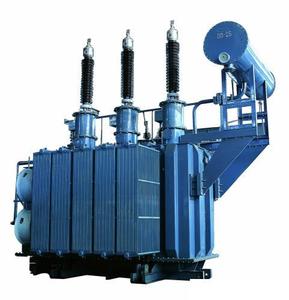
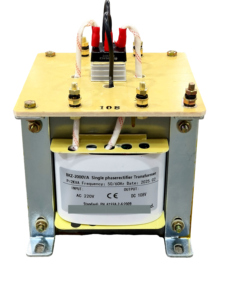
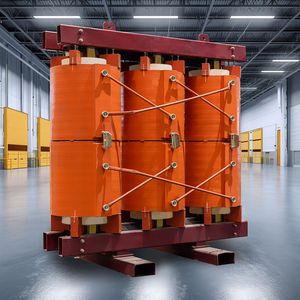
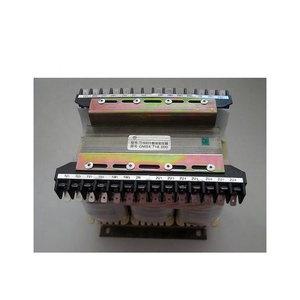
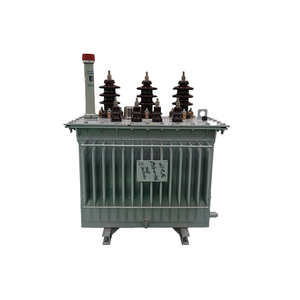
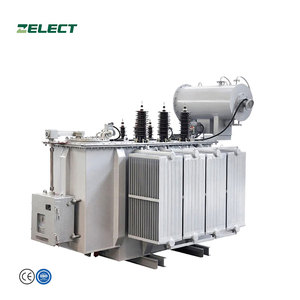
As the central geographical bridge of the Americas and a primary maritime logistics hub, the Republic of Panama maintains an electrical power grid characterized by high industrial loads, dense port operations, and expansive renewable power integrations. Maintaining high voltage (HV) power transformers, medium voltage (MV) distribution units, and specialized traction/rectifier transformers within Panama demands rigorous maintenance frameworks. The region's environmental baseline—defined by high relative humidity (frequently exceeding 85%), high ambient saline atmospheres along the Pacific and Caribbean coastlines, and elevated ambient thermal profiles—accelerates thermal, electrical, and chemical dielectric degradation inside oil-immersed and dry-type transformers alike.
Transformer longevity is primarily governed by the health of its solid cellulosic insulation (pressboard and kraft paper) and liquid dielectric insulation (mineral transformer oil or synthetic esters). In Panama's regional distribution hubs—such as Colón, Balboa, and the Panama City Metro Area—moisture ingress represents the single greatest threat to transformer dielectric strength.
When relative atmospheric humidity is elevated, breather silica gel rapidly saturates. Moisture introduced into the transformer tank hydrolyzes the cellulose polymer chains, lowering the Degree of Polymerization (DP) from a fresh baseline of ~1000–1200 down to critical threshold levels of <200. This degradation decreases mechanical tear strength, making transformer windings vulnerable to catastrophic failure under unexpected external short-circuit electrodynamic forces. Furthermore, dissolved moisture in oil drastically reduces the Breakdown Voltage (BDV) value from standard safe levels (>60 kV) to dangerous operation zones (<30 kV), increasing the risk of internal partial discharge (PD) flashovers.
To mitigate forced power outages across critical infrastructure in Panama—such as the Panama Canal locks pumping stations, container terminal cranes, and regional manufacturing zones—a structured predictive and corrective maintenance methodology is required.
Gas chromatography testing measuring Hydrogen ($H_2$), Methane ($CH_4$), Acetylene ($C_2H_2$), and Carbon Oxides. Enables early identification of arcing, partial discharge, and thermal hot spots inside sealed transformer tanks.
Evaluates the dissipation factor of winding insulation and HV bushings. Accurate detection of moisture contamination, aging, and dielectric loss deterioration before total breakdown occurs.
On-site two-stage oil filtration processing removing particulate matter, dissolved water down to <10 ppm, and dissolved air, restoring dielectric BDV strength to above 65 kV.
Unlike standard step-down distribution transformers, rectifier transformers supply power to heavy DC loads via solid-state semiconductor rectifiers (diodes or thyristors). These applications subject transformer windings to severe harmonic currents (e.g., 5th, 7th, 11th, and 13th harmonics), causing elevated eddy current losses, localized hot-spot heating, and severe voltage waveform distortion.
Our supplied rectifier transformer range—including three-phase high current units up to 6300kVA and epoxy cast resin dry-type traction transformers—integrates custom electro-magnetic shields, extended cooling ducts, and reinforced copper busbars. This specialized engineering mitigates stray flux heating and ensures high mechanical short-circuit withstand capabilities during frequent load surges common in electroplating, cathodic protection, and electric railway traction systems.
| Maintenance Activity | Target Component | Frequency Standard | Engineering Acceptance Threshold |
|---|---|---|---|
| Oil Breakdown Voltage (BDV) Test | Mineral Insulating Oil | Semi-Annual / Annual | > 50 kV (for <72.5kV equipment); > 60 kV (for >72.5kV) |
| Dissolved Gas Analysis (DGA) | Dielectric Fluid & Cores | Annual (Bi-annual for critical units) | IEC 60599 / IEEE C57.104 limits ($C_2H_2$ < 1 ppm) |
| Winding Resistance Measurement | Primary/Secondary Windings | Every 2 Years / Post-Fault | Max deviation < 2% between phases |
| Sweep Frequency Response (SFRA) | Core & Winding Geometry | Post Transportation / Major Short Circuit | Identical trace matching baseline signature |
| OLTC Contact & Oil Inspection | On-Load Tap Changer Mechanism | 50,000 Operations or 2 Years | Contact wear within OEM limits; clean diverter oil |
| Bushing Tan Delta & Insulation Test | HV / MV Porcelain & RIP Bushings | Every 2 to 3 Years | $\tan \delta < 0.5\%$ at 20°C ambient baseline |
Tailored power equipment deployments supporting Panama's critical maritime, municipal, mining, and renewable energy infrastructure.
The expansion of the Panama Canal and container terminal facilities in Colón and Balboa demands continuous power for high-capacity gantry cranes, water pumping substations, and shore-to-ship marine power systems. Our heavy-duty oil-immersed transformers and cathodic protection rectifier transformers prevent salt-fog corrosion while delivering uninterruptible step-down voltage conversion under 24/7 continuous duty.
Urban mass transit networks like Metro de Panamá require non-flammable, self-extinguishing sub-station equipment. The CEEG ZQSC(H)B series epoxy cast resin dry-type traction rectifier transformer provides high dielectric reliability, low acoustic noise, and zero liquid hazardous spill risk inside underground tunnels and dense passenger terminal stations.
Grid-tie renewable projects across Chiriquí and Coclé provinces utilize 3-phase step-up rectifier transformers ranging from 50kVA to 3000kVA+. These units step up inverter output voltages directly to the 34.5kV and 115kV ETESA regional transmission networks, incorporating electrostatic shielding to filter high-frequency inverter switching harmonics.
Extractive industries operating in remote regions require rugged, vibration-resistant transformers capable of enduring high thermal stress. Our high-current furnace transformers and sealed 33kV distribution units are built with anti-seismic bracing and hermetic tank sealing to prevent dust contamination and winding insulation degradation.
Empresa de Transmisión Eléctrica S.A. (ETESA) and regional power distributors (such as ENSA and Naturgy Panama) are enforcing strict grid interconnection compliance guidelines. Modernization efforts prioritize transformers with reduced no-load losses, lower noise emissions, and enhanced short-circuit withstand tolerances to maintain network stability during severe lightning storms and tropical weather events.
With growing environmental oversight around the Chagres River watershed and Panama Canal basin, commercial developers and industrial operators are actively replacing legacy PCB-laden mineral oil units with cast resin dry-type transformers or synthetic ester-filled transformers. Synthetic esters offer a flash point >300°C and 100% biodegradability, ensuring compliance with strict environmental safety laws.
The expansion of coastal marine structures has increased demand for automated SCR (Silicon Controlled Rectifier) and switch-mode rectifier transformers. Facilities across the Colón Free Trade Zone are upgrading to high-efficiency DC power supply systems (such as YUCOO plating rectifiers) to reduce operational energy costs while improving electro-chemical processing accuracy.
Backed by over 17 years of specialized manufacturing experience, our ISO-certified production facilities deliver end-to-end power transformer solutions engineered specifically for international exports.
Manufacturing capabilities up to 10 MVA and voltage classes through 33 kV, customized to exact client vector groups, voltage ratios, and cooling specifications (ONAN/ONAF/AF).
Every exported unit undergoes complete routine and type testing according to IEC 60076 / IEEE C57 standards, including impulse voltage withstand, temperature rise, and partial discharge tests.
Specialized anti-corrosion C4/C5 marine grade painting systems, hermetically sealed corrugated tanks, and tropicalized insulation impregnation designed to withstand humid coastal environments.
Comprehensive spare parts export (bushings, gaskets, Buchholz relays, OLTC parts) alongside complete retrofitting, oil filtration, and overhaul engineering support.
Established international shipping protocols ensuring safe sea-freight transport, containerized packing, and customs documentation tailored for seamless entry through Panama ports.
High-grade CRGO (Cold Rolled Grain Oriented) silicon steel cores and electrolytic copper windings designed for ultra-low core losses and maximized long-term operational ROI.
Direct technical answers for electrical procurement managers, plant engineers, and EPC contractors in Panama.
We apply a multi-stage surface treatment process starting with SA 2.5 shot blasting, followed by a zinc-rich epoxy primer and high-build polyurethane topcoat meeting ISO 12944 C4/C5 marine anti-corrosion classifications. Additionally, breather systems feature enlarged silica gel canisters or hermetically sealed nitrogen-cushioned tanks to prevent ambient moisture ingress.
Yes. Our transformers are fully compliant with IEC 60076 and IEEE C57 standards, which form the technical foundation for ETESA and regional distribution networks across Central America. We provide comprehensive factory test reports (FTR) certified by accredited laboratories prior to shipment.
For critical industrial units in high ambient humidity regions, oil insulation testing (BDV and moisture PPM) should be conducted every 6 to 12 months. Vacuum oil filtration and dehydration are recommended whenever dielectric BDV drops below 40 kV or water content exceeds 25 ppm.
Standard design and manufacturing typically take between 6 to 10 weeks depending on custom rating complexity. Ocean freight shipment from our port to major Panama container ports (such as Manzanillo International Terminal or Port of Balboa) generally takes 3 to 4 weeks.
Yes, our CEEG ZQSC(H)B series cast resin dry-type transformers are specifically engineered for high fire safety indoor applications. They are Class F or H insulated, non-flammable, self-extinguishing, and feature zero risk of dielectric fluid leakage, making them ideal for high-rise commercial structures and metro transit systems.
Absoluto. We offer retrofitting and OEM replacement designs (such as our T6 Electric Power Rectifier Transformer TI16933 for HYUNDAI HFC6 excitation systems). We custom match dimensional footprints, terminal positioning, voltage tap ranges, and impedance values to allow direct plug-and-play installation without field modifications.
Upon site arrival in Panama, we recommend performing: Insulation Resistance (Megger) testing, Winding Ratio and Vector Group verification, Dielectric Oil Breakdown Strength testing, and Sweep Frequency Response Analysis (SFRA) to confirm no internal core shift occurred during ocean freight transport.