Top-Rated Scott Connected & Industrial Rectifier Transformers for Export to South Korea
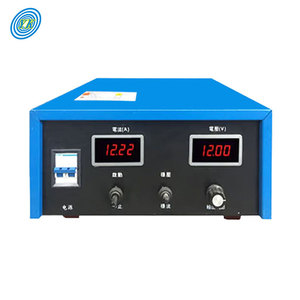
YUCOO Plating Rectifier 220v Ac to 12v Dc 50a 500a 1000 Amp Electroplating Rectifier
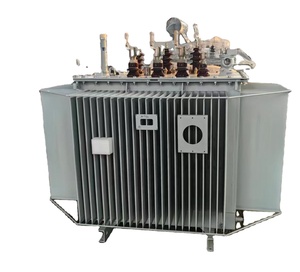
Factory Direct Sales Three Phase Control Electrical Rectifier Transformer
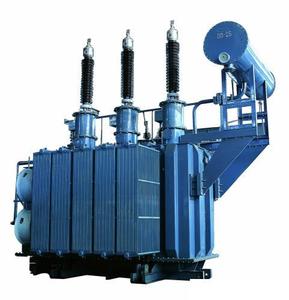
Oil Immersed High Current 6300kva Transformer Three Phase Cathodic Protection Rectifier Transformer
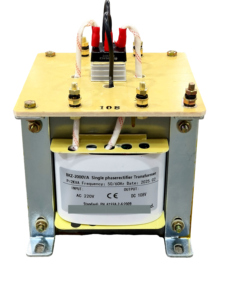
380V/220V to 60V 48V 24V 12V 6V AC to DC Transformers 2000VA 5KVA Single-phase Control Rectifier Transformer
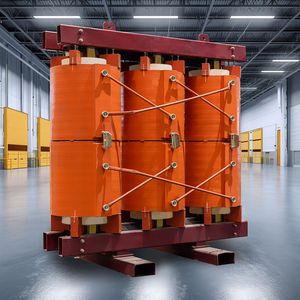
CEEG ZQSC(H)B SERIES 2000kVA/10kv EPOXY CAST TRACTION RECTIFIER DRY-TYPE Air-Insulated Rectifier Transformer
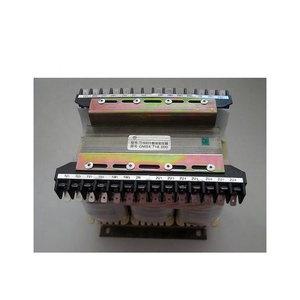
ORIGINAL T6 Electric Power Rectifier Transformer TI16933 For HYUNDAI HFC6 Excitation System
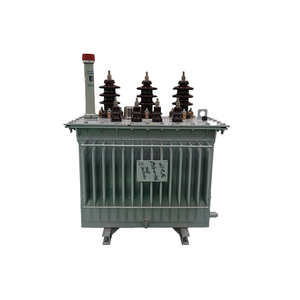
Control 33kv 300kva 1 Mw Voltage Transformer 220v to 110v 400kva High Quality 160kva Sealed Rectifier Transformer
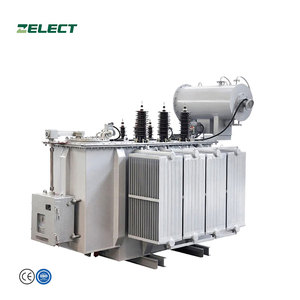
50KVA 100KVA 200KVA 250KVA 300KVA 400KVA 800KVA 1000KVA 3000KVA Transformador 3 Phase Step up Rectifier Transformer
Engineering Principles & Mathematical Fundamentals of Scott Connected Transformers
In the modern power distribution landscape of South Korea, managing severe phase unbalance caused by heavy single-phase or two-phase industrial loads on a balanced three-phase transmission network is a paramount engineering challenge. The Scott Connected Transformer (also known as the Scott-T Connection) remains the gold-standard electromagnetic solution for converting balanced three-phase AC power into a balanced two-phase AC supply, or vice-versa, without causing phase unbalance back into the primary utility grid operated by KEPCO (Korea Electric Power Corporation).
Core Electromagnetic Axiom: When two equal single-phase loads are connected across the secondary windings of a properly designed Scott Transformer, the primary side draws perfectly symmetrical, balanced three-phase currents from the main grid with zero negative-sequence component.
Winding Topology: Main Transformer & Teaser Transformer Mechanics
A standard Scott Connection relies on two specially configured single-phase transformers interconnected in a precise vector layout: the Main Transformer and the Teaser Transformer.
Main Transformer Core
Connected directly across two lines of the primary 3-phase supply (e.g., phases B and C). The primary winding is tapped at exactly 50% of its turn count ($N_1$) to form a central neutral connection point ($D$).
Teaser Transformer Core
Connected between the third primary phase (phase A) and the 50% tap point of the Main Transformer. To match the vector voltage triangle, the teaser primary winding is wound to exactly $\frac{\sqrt{3}}{2} \approx 86.6\%$ of the Main Transformer’s primary turns.
90° Orthogonal Output
The secondary windings of both Main and Teaser units yield two independent single-phase voltage vectors ($V_{M}$ and $V_{T}$) that are equal in magnitude and maintain a exact $90^\circ$ electrical phase shift.
Mathematically, if line-to-line voltage on the primary 3-phase system is $V_{LL}$, the voltage across the Main primary winding is $V_{BC} = V_{LL}$. The voltage vector from phase A to the center tap D is:
V_AD = V_A - (V_B + V_C)/2 = V_LL * (√3 / 2) ≈ 0.866 * V_LL
Because the turn ratio of the Teaser Transformer is scaled by factor 0.866, the induced secondary magnetomotive force (MMF) balances perfectly with the Main transformer secondary, guaranteeing that under equal loading of phase M and phase T, primary line currents $I_A$, $I_B$, and $I_C$ satisfy $I_A = I_B = I_C$ at a uniform power factor.
Localized Application Scenarios in South Korea's High-Tech & Heavy Industries
South Korea's industrial landscape is defined by world-class high-speed railway networks, massive semiconductor fabrication complexes, heavy shipbuilding yards, and intensive chemical electroplating hubs. Leading Chinese Scott Connected Transformer manufacturers have engineered specialized product series tailored to these local operational environments.
1. Railway Electrification (KTX & SRT Line Sub-Stations)
South Korea’s Korea Railroad Corporation (KORAIL) relies heavily on 25kV single-phase AC catenary power for KTX high-speed trains. Sourcing Chinese high-capacity dry-type and oil-immersed Scott Transformers allows sub-station operators to step down KEPCO’s 154kV 3-phase grid to two 25kV single-phase feeds for adjacent track sections, completely preventing phase unbalance and voltage flicker on national grids.
2. Semiconductor & Electronics Fabs (Pyeongtaek & Hwaseong)
In the microelectronics hubs of Gyeonggi-do, ultra-clean semiconductor processing relies on large-scale DC power plants and specialized excitation control circuits. Custom Chinese-made Original T6 Rectifier Transformers (such as TI16933 for Hyundai HFC6 excitation systems) ensure ripple-free, highly regulated DC power supplies for precision plasma etching and chemical vapor deposition machinery.
3. Electroplating & Surface Treatment (Ansan & Incheon Complexes)
PCB manufacturing and automotive metal finishing clusters in Banwol, Sihwa, and Incheon require massive high-current low-voltage rectifiers. Units such as the YUCOO 220V AC to 12V DC 1000A Electroplating Rectifier Transformer provide exceptional duty-cycle thermal stability and resistance against acidic ambient vapors.
4. Shipbuilding Cathodic Protection (Ulsan & Geoje Shipyards)
South Korea’s giant maritime shipyards employ massive oil-immersed 6300kVA cathodic protection rectifier transformers to prevent galvanic corrosion on steel hulls during dock fitting. These units feature reinforced hermetic sealing and high-grade mineral oil insulation to withstand salty coastal environments.
5. Commercial Building & Datacenter HVAC Systems
Large commercial complexes in Seoul require 3-phase to 2-phase conversion to power heavy single-phase industrial chillers, elevators, and server rack isolation units. Epoxy cast dry-type Scott transformers (such as the CEEG ZQSC series) deliver fire-retardant (F1 rating) safety for high-density urban buildings.
6. Electric Arc Furnace & Metallurgy (Pohang Steel Hubs)
Smelting and foundry applications demand high-current step-down rectifier transformers capable of handling up to 3000kVA continuously. Heavy-duty magnetic shielding prevents stray losses, while multi-tap OLTC (On-Load Tap Changer) mechanisms give precise voltage control under rapid thermal shocks.
South Korea Market Trends & KS C IEC Regulatory Standards
Procuring transformer equipment for installation in South Korea demands strict compliance with national energy efficiency regulations, safety codes, and local frequency requirements. B2B buyers and EPC contractors in South Korea evaluate Chinese manufacturers based on their technical adherence to the following critical parameters:
1. The 60Hz Frequency Operational Adjustment
Unlike mainland China which operates on a 50Hz electrical grid, South Korea operates exclusively on a 60Hz frequency grid. When Chinese factories export Scott and Rectifier transformers to Korea, core flux density ($B_{max}$) and winding turns calculation must be re-engineered:
- Core Saturation Prevention: Operating a standard 50Hz core design at 60Hz reduces magnetic flux density by approximately $16.7\%$ ($\frac{50}{60}$ ratio), which lowers core hysteresis losses. However, to optimize capital expenditure and transformer weight, premier Chinese factories recalculate magnetic core cross-sections using high-permeability CRGO (Cold Rolled Grain Oriented) silicon steel (e.g., Baosteel or WISCO 23Q110 grades) specifically tuned for 60Hz excitation.
- Impedance & Reactance Matching: Transformer reactance increases proportionally with frequency ($X_L = 2\pi f L$). Chinese engineering teams adjust winding geometries and leakage flux paths to ensure short-circuit impedance matches KEPCO grid interconnection limits ($4.5\% - 6.25\%$).
2. KS C IEC 60076 & KC Safety Compliance
Industrial equipment imported into South Korea must align with KS C IEC 60076 (Korean Industrial Standard equivalent to global IEC 60076) for power transformers:
| Standard Code | Technical Scope | Compliance Mandate for Imported Units |
|---|---|---|
| KS C IEC 60076-1 | General Specifications & Rating Requirements | Temperature rise limits: 65K for oil-immersed, 100K for Class H dry-type under 40°C Korean ambient summer conditions. |
| KS C IEC 60076-11 | Dry-Type Power Transformers | Mandatory F1 (Fire Risk), E2 (Environmental condensation), and C2 (Climatic withstand) certified epoxy casting. |
| KEPCO Transmission Code | Grid Connection & Harmonic Limits | Total Harmonic Distortion (THD) on primary grid voltage must remain below 3.0% at 22.9kV and 154kV substations. |
| KS C 4306 / 4317 | Distribution & Cast Resin Transformers | Minimum Efficiency Standard (MEPS) level verification to avoid operational penalties from the Korean Energy Agency. |
3. Low-Loss Green Transformers & RE100 Alignment
South Korea's commitment to RE100 (100% Renewable Energy) and strict carbon-neutral manufacturing policies has accelerated demand for high-efficiency transformers. Top Chinese factories exporting to Korea now integrate amorphous alloy cores (reducing no-load loss by up to 70% compared to conventional silicon steel) and bio-degradable synthetic ester transformer fluids (FALEX rated, flash point $>300^\circ\text{C}$).
Why South Korean Buyers Sourcing Scott & Rectifier Transformers Partner with Top Chinese Factories
China has established itself as the global manufacturing epicenter for specialized transformer equipment, combining unmatched supply chain integration, advanced robotic coil winding, high-vacuum casting infrastructure, and rigorous international quality control. Leading manufacturers (including industry pioneers like CEEG and YUCOO) provide compelling structural advantages for Korean industrial buyers:
Automated CNC Step-Lap Core Lamination
Utilizing German Georg CNC core shearing lines, Chinese factories produce step-lap miter-jointed core configurations that drastically minimize magnetic domain resistance, reducing acoustic noise levels below 55 dB and achieving optimal energy savings under 24/7 continuous operation.
Vacuum Pressure Impregnation (VPI) & APG Resin Casting
For dry-type Scott transformers deployed in moist coastal environments (e.g., Busan port facilities), automated Automatic Pressure Gelation (APG) vacuum epoxy casting (<1 mbar vacuum level) eliminates air voids, guaranteeing partial discharge levels under 5 pico-Coulombs (pC).
Custom OEM Replacement & Excitation Matching
Chinese engineers specialize in reverse-engineering and exact-fit replacement of legacy components. Devices such as the T6 Electric Power Rectifier Transformer TI16933 for Hyundai HFC6 systems are built with exact physical footprint dimensions, terminal busbar locations, and impedance characteristics for seamless drop-in installation.
Comprehensive Type Testing & CNAS Certification
Top-tier Chinese suppliers maintain in-house high-voltage testing laboratories certified by CNAS (China National Accreditation Service) and ILAC, providing full routine, type, and special test reports (Lightning Impulse Withstand, Short-Circuit Apparent Strength, Thermal Runaway) accepted worldwide.
Rapid Sea Transport Logistics to Busan & Incheon
Geographic proximity provides Chinese manufacturers with an unbeatable logistical edge. Direct shipping routes from Ningbo, Shanghai, or Qingdao ports reach Incheon Port or Busan New Port within 48 to 72 hours, drastically cutting project lead times compared to European or North American suppliers.
Unrivaled Cost-to-Performance Ratio
Through raw material scaling in copper, electrolytic aluminum, and transformer steel, Chinese factories offer price savings of 30% to 45% compared to domestic Korean OEMs without compromising raw material specifications or insulation class ratings (Class H 180°C standard).
Technical Specification Comparison: Scott Transformers vs. Rectifier Transformer Series
The table below provides industrial buyers, procurement managers, and electrical engineers in South Korea with a clear technical overview of primary product series exported from top Chinese factories:
| Transformer Type | Capacity Range (kVA) | Primary Voltage | Secondary Voltage / Output | Cooling Method | Primary Local Application in Korea |
|---|---|---|---|---|---|
| Dry-Type Scott Transformer | 50 kVA - 5,000 kVA | 3.3kV / 6.6kV / 22.9kV (3-Phase, 60Hz) | 220V / 380V / 6.6kV (2-Phase, 90°) | AN / AF (Air Natural / Forced) | KTX Traction Sub-stations, Commercial Chillers, Datacenter Power Isolation |
| Oil-Immersed Scott Transformer | 500 kVA - 10,000 kVA | 22.9kV / 154kV (3-Phase, 60Hz) | 25kV Single-Phase / 2-Phase | ONAN / ONAF | Heavy Rail Traction, Large Induction Heating, Metallurgical Arc Furnaces |
| Electroplating Rectifier Transformer | 10 kVA - 500 kVA | 220V / 380V / 440V (3-Phase, 60Hz) | 6V / 12V / 24V DC (Up to 10,000A) | Air Cooled / Forced Oil | Ansan & Incheon PCB Manufacturing, Automotive Surface Plating |
| Cast Resin Traction Rectifier (CEEG Series) | 1,000 kVA - 3,150 kVA | 10kV / 22.9kV (3-Phase) | 590V / 750V / 1500V DC (12-Pulse / 24-Pulse) | AN (Cast Resin IP20/IP23) | Seoul & Busan Metro Sub-stations, Light Rail Transit (LRT) Systems |
| Hyundai HFC6 Excitation T6 Unit | 10 kVA - 100 kVA | 380V / 415V (3-Phase) | Custom Rectified Excitation Output | AN (Air Natural) | Generator Excitation Control in Power Plants & Heavy Machinery Fabs |
| High-Current Cathodic Protection Rectifier | 500 kVA - 6,300 kVA | 6.6kV / 22.9kV | Low-Voltage High-DC Current | ONAN Hermetically Sealed | Ulsan & Geoje Shipyard Floating Docks, Offshore Oil Tank Protection |
Frequently Asked Questions by South Korean Procurement Managers
Addressing technical, regulatory, and commercial queries for importing Chinese-manufactured Scott Connected Transformers and Rectifier Transformer units into South Korea.
How does a Scott Connected Transformer solve 3-phase unbalance on KEPCO grids?
When a single-phase load is connected to a traditional 3-phase system, it draws high current from two lines while the third remains idle, causing high negative-sequence current that overheats utility generators and trips protection relays. A Scott Connected Transformer uses a Main and Teaser winding vector configuration to split the 3-phase supply into two 90° phase-shifted 2-phase outputs. If the two single-phase loads are equalized, the vector sum of currents on KEPCO’s 3-phase primary side is perfectly symmetrical, completely eliminating negative-sequence currents.
Can a transformer built in China for 50Hz operate safely on South Korea’s 60Hz grid?
Yes, but it must be properly designed. Operating a 50Hz transformer on a 60Hz supply at the same voltage actually reduces the core magnetic flux density ($B_{max}$ decreases by factor $50/60$), which decreases core losses and operating temperature. However, the total winding reactance increases by 20%, which can increase voltage drop under load. Leading Chinese manufacturers custom-calculate core dimensions, turns ratios, and copper conductor cross-sections specifically for South Korea’s 60Hz frequency to optimize both efficiency and voltage regulation.
What documentation is required for custom clearing transformers at Incheon or Busan Port?
Importing industrial transformers into South Korea requires standard commercial documentation (Commercial Invoice, Packing List, Bill of Lading, Certificate of Origin under RCEP or China-Korea FTA for duty preferences), along with Factory Acceptance Test (FAT) reports, KS C IEC 60076 compliance certificates, and safety datasheets (MSDS) for insulating oil in liquid-filled units. Top Chinese manufacturers handle all exports under FOB, CFR, or DDP terms with complete documentation.
Why are 12-pulse and 24-pulse secondary winding configurations used in traction rectifier transformers?
In electric traction systems (such as metro sub-stations or high-speed rail rectifiers), thyristor and diode bridges create heavy harmonic distortion back into the power network. By utilizing specialized 12-pulse or 24-pulse multi-phase secondary windings (such as delta-star dual secondary transformers), the lower-order harmonics (5th, 7th, 11th, 13th) cancel out vectorially, fulfilling KEPCO’s stringent grid total harmonic distortion (THD) limits without requiring expensive external active harmonic filters.
What is the difference between Cast Resin Dry-Type and Vacuum Pressure Impregnated (VPI) Scott Transformers?
Cast Resin dry-type transformers encapsulate the windings completely in solid epoxy resin mixed with silica powder under high vacuum, providing maximum mechanical strength, high short-circuit resistance, and superior fire safety (self-extinguishing F1 rating). VPI transformers use polyester or silicone varnish applied under alternating pressure and vacuum cycles over fiber-wound coils; they offer excellent flexibility for custom taps and are lighter in weight. Cast Resin is preferred for enclosed urban sub-stations, while VPI is ideal for industrial plant machine rooms.
How do Chinese manufacturers guarantee exact-fit replacements for Hyundai or legacy Korean excitation transformers?
Leading Chinese OEM factories possess extensive technical libraries for legacy systems (such as the Hyundai HFC6 excitation series). Engineering teams verify physical dimensions, mounting hole pitch, primary/secondary terminal busbar heights, primary tapping range, and short-circuit impedance matching. Replacement units (such as the T6 Electric Power Rectifier Transformer TI16933) are engineered for direct drop-in replacement with zero field modification required.
What insulation class and temperature rise limits apply to heavy industrial locations in Korea?
Standard industrial installations in South Korea adhere to Class H ($180^\circ\text{C}$) or Class C ($220^\circ\text{C}$) insulation materials with a design temperature rise limit of 90K or 100K above a $40^\circ\text{C}$ maximum ambient reference. For corrosive or humid coastal areas such as Pohang, Ulsan, or Yeosu, windings are further treated with anti-fungal and anti-salt-spray protective coatings.
What is the average lead time for custom Scott Connected Transformer manufacturing and delivery to South Korea?
Standard production lead time for custom-engineered dry-type or oil-immersed Scott transformers ranging from 100kVA to 3000kVA is typically 3 to 4 weeks after design drawing approval. Sea transit from major East China ports (Shanghai/Ningbo) to Busan or Incheon takes only 2 to 3 days, enabling total door-to-door delivery within 4 to 5 weeks—significantly faster than European or American supply chains.
Request Technical Specifications & Factory Direct Quotations
Partner with China’s premier Scott Connected Transformer and Rectifier Transformer manufacturing facilities. Custom-engineered for South Korea's industrial infrastructure, KEPCO 60Hz electrical standards, and high-tech manufacturing complexes.
Get Catalog