
Export-Grade Compact & Prefabricated Substations
Factory-assembled, type-tested combined substation units designed for seamless integration into Indian power distribution networks, renewable energy parks, and industrial corridors.
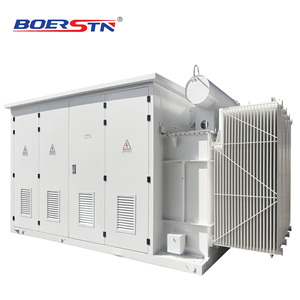
11KV 33KV 120V IP66 Outdoor Prefabricated Combined Substation
Heavy-duty YB series outdoor prefabricated distribution box engineered with IP66 ingress protection and multi-socket modular integration for rugged utility sites.
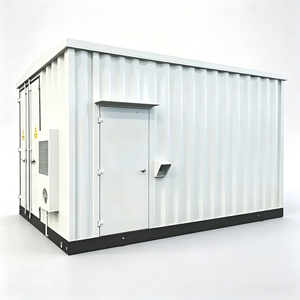
Containerized Mobile Substation For Temporary & Emergency Power
Durable ISO-containerized mobile power station designed for fast deployment across remote Indian mining, construction, and disaster recovery setups.
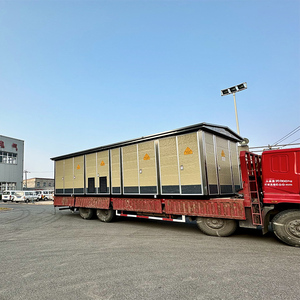
Box Type Substation 10kV 400V Integrated Outdoor Compact Substation
Certified factory-prefabricated box substation optimizing medium-to-low voltage transformation with low loss figures compliant with Indian standards.
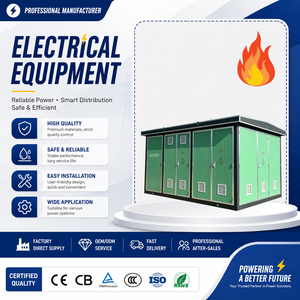
YBW Compact Substation High Low Voltage Distribution System
Dual-frequency (50Hz/60Hz) modular compact substation featuring isolated HV, switchgear, and LV transformer compartments for urban infrastructure networks.
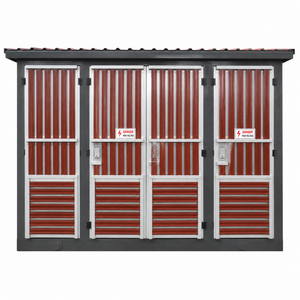
American Type Box Substation 10kV 35kV Fully Sealed IEC/ISO
Fully sealed dead-front design integrated loop-feed compact substation ideal for space-restricted industrial plants and commercial real estate projects.
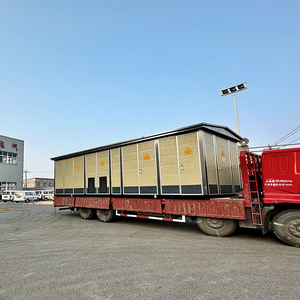
European Style 600kVA to 2000kVA Prefabricated Compact Substation
High-capacity European style package substation housing high-efficiency power transformers, SF6 ring main units (RMU), and custom distribution boards.
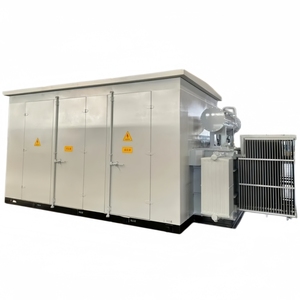
Outdoor Containerized Power Substation with Distribution Transformer
All-weather anti-corrosive containerized power substation equipped with internal HVAC environmental control for tropical Indian climatic conditions.
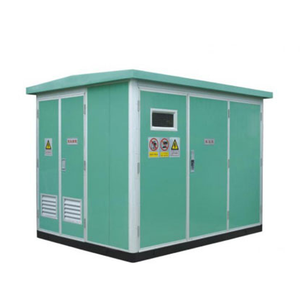
High Quality YBP 12kV 0.4kV IP4X Shockproof Anti-Corrosion CSS
Seismically qualified shockproof and anti-corrosion compact substation designed for high-humidity coastal zones and seismic-prone infrastructure sites.
Technical Whitepaper: Strategic Sourcing of Compact Substations (CSS) from China for Indian Infrastructure
As India experiences unprecedented growth across industrial corridors, solar power mega-parks, smart cities, and high-speed rail networks, electrical distribution infrastructure faces rigorous technical demands. The modern **Compact Substation (CSS)**—also known as a Prefabricated Substation or Package Substation—has emerged as the vital bridge between high-voltage utility grids and localized low-voltage consumption centers.
For Indian EPC contractors, State Electricity Boards (SEBs), private power utilities, and industrial plant procurement directors, sourcing Compact Substations from leading Chinese manufacturers offers a strategic balance of rapid scalability, superior technological maturity, and cost optimization. However, achieving successful operational deployment requires a granular understanding of **technical alignment between Chinese OEM designs and Indian regulatory mandates** (such as Central Electricity Authority guidelines, BIS IS 1180 standards, and IEC 62271-202 certification).
Key Takeaway for Indian Technical Auditors
Purchasing a Compact Substation is not merely an equipment acquisition—it is an integration of three distinct electrical compartments (High Voltage Switchgear, Step-down Distribution Transformer, and Low Voltage Switchboard) into a single, thermally validated enclosure capable of surviving India's extreme ambient heat and tropical monsoons.
1. Decoding the Architecture of Import-Ready Compact Substations
Chinese OEM export-grade compact substations are structurally engineered into three segregated, thermally insulated compartments separated by metallic or fire-rated non-metallic partitions:
- Medium Voltage (MV) / High Voltage (HV) Compartment: Integrates compact Ring Main Units (RMU) utilizing either SF6 gas-insulated switchgear (GIS) or solid insulated switchgear (SIS), outfitted with vacuum circuit breakers (VCB) or load break switches (LBS) rated for 11kV, 22kV, or 33kV networks at 50 Hz.
- Transformer Compartment: Accommodates either oil-immersed hermetically sealed transformers or dry-type cast resin transformers (CRT) rated up to 2500 kVA. Designs supplied to India are optimized for low temperature-rise performance under peak summer conditions exceeding 50°C.
- Low Voltage (LV) Compartment: Houses Air Circuit Breakers (ACB), Moulded Case Circuit Breakers (MCCB), busbar systems, power factor correction (APFC) capacitors, and smart metering devices interfaced with SCADA or IoT gateways via Modbus RTU / IEC 60870-5-104 protocols.
Localized Application Scenarios Across India
Tailored engineering configurations designed to overcome regional operational challenges in Indian industrial, urban, and remote environments.
Solar Renewable Energy Parks (Rajasthan, Gujarat, AP)
High ambient heat, airborne dust, and high inverter harmonic distortion characterize Indian solar farms. Our specialized 33kV Solar Inverter Duty Compact Substations incorporate multi-winding transformers, electrostatic shielding, and IP65 dust-proof enclosures with forced solar-powered ventilation.
Smart Cities & Commercial Real Estate (NCR, Bengaluru, Mumbai)
Severe footprint constraints in dense urban centers make traditional open-yard substations impossible. Compact European and American style box substations reduce physical footprint by up to 75%, offering aesthetic outdoor enclosures, low acoustic noise emissions (<58 dB), and child-safe dead-front construction.
Heavy Industrial Corridors & Manufacturing Parks
Automotive, chemical, and metallurgical plants in Maharashtra, Gujarat, and Tamil Nadu demand high short-circuit withstand levels (25kA/3s) and immune power continuity. Compact substations equipped with auto-transfer switches (ATS) and motorized RMUs guarantee zero-downtime feed switching.
Technical Specifications & Standards Alignment: Chinese Factory vs. Indian (CEA/IS) Requirements
To ensure frictionless customs clearance, grid connection approval from DISCOMs (such as MSEDCL, TATA Power, BESCOM, UBVNL), and long-term reliability, China-manufactured compact substations must strictly adhere to the technical parameters highlighted below:
| Technical Parameter | Standard Chinese Factory Spec (IEC) | Customized Spec for India (CEA / BIS) | Engineering Significance for Buyer |
|---|---|---|---|
| Rated Frequency | 50 Hz / 60 Hz | 50 Hz (± 3% variation) | Prevents magnetic core saturation and excessive heating. |
| HV Voltage Class | 10 kV, 20 kV, 35 kV | 11 kV, 22 kV, 33 kV | Matches Indian DISCOM primary distribution voltages. |
| LV Voltage Output | 400 V / 230 V | 415 V / 240 V (No-load 433V) | Compensates for line voltage drop in long industrial feeds. |
| Ambient Temperature Rating | 40°C Peak Standard | 50°C Tropical Design (55°C Max) | De-rates transformer thermal capacity to prevent insulation breakdown in summer. |
| Transformer Losses | IEC 60076 Standard Losses | IS 1180 (Part 1) Level 2 / Level 3 | Mandatory for BIS approval and energy efficiency compliance. |
| Enclosure IP Rating | IP23 Indoor / IP44 Outdoor | IP54 / IP55 Outdoor (IP65 for Solar) | Prevents ingress of monsoonal driving rain and fine abrasive dust. |
| Switchgear Insulation Medium | Air / SF6 Gas | SF6 GIS RMU or Green Eco-Gas | Maintenance-free, compact, sealed against hostile atmospheric pollutants. |
Key Technical & Industry Development Trends in India (2025–2030)
The Indian power sector is undergoing a rapid transition toward digital grid monitoring, stringent loss minimization, and environmental decarbonization. Sourcing managers must align their technical requisites with these industry trends:
1. Shift Toward BIS IS 1180 Energy Efficiency Level 3
The Bureau of Indian Standards (BIS) and the Bureau of Energy Efficiency (BEE) have tightened maximum allowable loss limits for transformers up to 33kV. Modern compact substations imported into India must feature ultra-low loss core laminations made from high-permeability Grain-Oriented Electrical Steel (CRGO) or Amorphous Metal Alloys, significantly reducing no-load losses (iron losses) and load losses (copper losses).
2. Transition to SF6-Free Eco-Friendly GIS Switchgear
With global sustainability mandates gaining momentum, Indian utilities are actively seeking alternatives to SF6 gas (which has a global warming potential 23,500 times higher than CO2). Chinese top-tier OEMs are leading the commercial supply of dry-air insulated and fluoronox-based green gas RMUs integrated directly into compact substations.
3. Integration of Smart IoT Sensors & SCADA Remote Telemetry
Unmanned substation operation is becoming the norm across Indian infrastructure projects. Advanced compact substations now incorporate fiber-optic temperature sensors, online DGA (Dissolved Gas Analysis) monitors for oil-filled units, micro-processor based numerical relays, and IoT gateways transmitting telemetry data to centralized control rooms via IEC 61850 protocol.
World-Class Engineering & Quality Rigor
Combining over 17 years of transformer building heritage with state-of-the-art automated production, serving tier-1 clients worldwide.
Fully Certified Factory Baseline
Operating under strict ISO 9001:2015, ISO 14001:2015, and ISO 45001:2018 management systems. Complete product range validated by independent international test labs (KEMA, CESI, CPRI equivalent reporting).
Bespoke Engineering & Tailored Ratios
Our dedicated R&D team customizes physical enclosure dimensions, structural base frames, internal busbar routing, and special primary/secondary voltage taps (+/- 2.5%, +/- 5% DETC/OLTC) precisely to client single-line diagrams (SLD).
Comprehensive In-House Testing
Every single manufactured CSS unit undergoes 100% routine testing prior to dispatch: winding resistance, voltage ratio, phase displacement, insulation resistance, partial discharge, and high-voltage dielectric withstand testing.
Frequently Asked Questions (FAQ) for Procurement Managers Sourcing CSS from China to India
Request Custom Engineering Drawing & Commercial Quote
Looking for factory-direct prices, technical Single Line Diagram (SLD) evaluation, or customized IS 1180 compliant Compact Substation solutions for your upcoming project in India?