Featured Low Voltage & Rectifier Transformer Portfolio
Discover factory-direct, ISO-certified low voltage rectifier transformers, electroplating power packs, and traction conversion units built for heavy-duty industrial loads and continuous duty cycles.
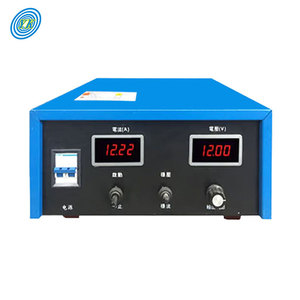
YUCOO Plating Rectifier 220V AC to 12V DC 50A-1000A
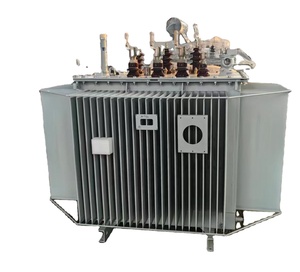
Three Phase Control Electrical Rectifier Transformer
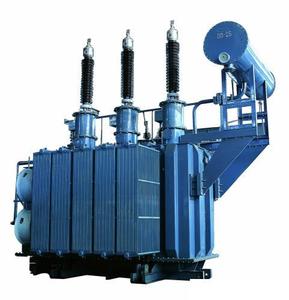
6300kVA Oil-Immersed Cathodic Protection Transformer
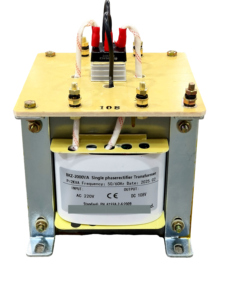
Single-Phase AC to DC Control Transformer 2kVA-5kVA
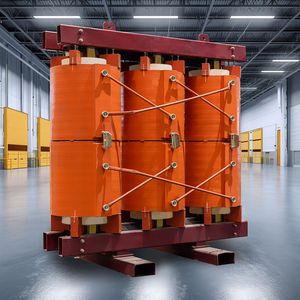
CEEG ZQSC(H)B 2000kVA/10kV Epoxy Cast Traction Transformer
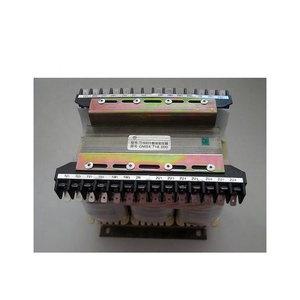
Original T6 Electric Power Rectifier Transformer (TI16933)
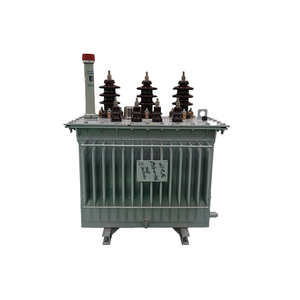
33kV / 300kVA to 1MW Hermetically Sealed Transformer
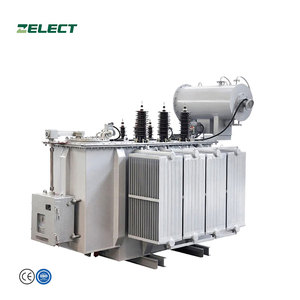
50kVA - 3000kVA 3-Phase Step-Up/Step-Down Rectifier Unit
Low Voltage & Rectifier Technological Evolution
How solid-state switching, high-frequency phase shifting, eco-friendly insulation, and smart grid monitoring are reshaping the low voltage power supply market.
Solid-State Rectification & IGBT Control
Traditional diode and thyristor bridge rectifiers are rapidly transitioning toward Silicon Carbide (SiC) MOSFETs and High-Power IGBT (Insulated Gate Bipolar Transistor) topologies. This technological shift yields ripple factors under 1%, near-unity power factor correction, and reduced thermal losses in heavy electroplating and electrolysis operations.
Harmonic Suppression & IEEE 519 Compliance
Non-linear low voltage industrial loads generate high Total Harmonic Distortion (THD). Modern rectifier transformers utilize 12-pulse, 18-pulse, and 24-pulse phase-shifting secondary windings. Combined with integrated passive/active harmonic filters, these designs satisfy strict grid code requirements including IEEE 519 and IEC 61000 standards.
Epoxy Resin Dry-Type Fire Safety
Urban infrastructure, metro transit networks, and high-density commercial complexes demand zero-flammability power equipment. Vacuum Pressure Cast Epoxy Resin (Class H & C rated) dry-type rectifier transformers eliminate oil contamination risks, provide self-extinguishing flame resistance, and require virtually zero maintenance.
Comprehensive Technical Whitepaper: Industrial Low Voltage Supply & Rectifier Engineering
In modern industrial manufacturing, power generation, electrochemical processing, and heavy infrastructure, Low Voltage (LV) distribution networks and Rectifier Transformers form the foundational architecture of operational stability. Low voltage systems—typically classified under international electrotechnical standards (IEC 60038) as operating below 1,000V AC or 1,500V DC—serve as the vital bridge between medium-voltage utility step-down substations and mission-critical end-user machinery.
When selecting top trusted low voltage suppliers and exporters, global engineering procurement and construction (EPC) managers must evaluate equipment against strict operational criteria: core thermal resilience, winding conductivity, dielectric breakdown strength, short-circuit withstand capability, and total cost of ownership (TCO). This technical document analyzes the engineering mechanics, design innovations, procurement trends, and regulatory landscapes governing next-generation industrial power equipment.
1. Understanding Rectifier Transformers & Low Voltage Conversion Dynamics
Unlike standard utility distribution transformers that operate on sinusoidal AC voltages with static step-down ratios, rectifier transformers are specifically engineered to feed solid-state rectifier bridges (such as silicon diodes, thyristors, or IGBT arrays). This duty cycle introduces severe operational stresses that standard transformers cannot endure:
- Severe Harmonic Loading: Solid-state switching causes non-sinusoidal current waveforms rich in 5th, 7th, 11th, and 13th harmonics. These high-frequency currents induce eddy current losses in core laminations and winding conductors, leading to localized thermal hot spots.
- DC Bias and Magnetic Saturation: Asymmetric firing angles in phase-controlled rectifiers can inject direct current (DC) components back into transformer windings, pushing the magnetic core into saturation and generating excessive magnetizing currents and acoustic noise.
- Frequent Mechanical Commutating Stresses: Short circuits, arc flashes, and rapid load transients inherent in electroplating tanks, electric arc furnaces, and traction systems subjects the winding assembly to massive electrodynamic forces (mechanical stress proportional to the square of peak current).
To combat these forces, leading low voltage transformer manufacturers utilize specialized core structures built from high-permeability, cold-rolled grain-oriented (CRGO) silicon steel (such as Grade M4 or laser-scribed domain-refined steel). Windings are constructed using high-purity Electrolytic Tough Pitch (ETP) copper or electrical-grade aluminum conductors, insulated with thermal Class H or Class C materials, and bound under high axial pressure to prevent mechanical displacement during short-circuit faults.
2. Technical Specifications & Energy Loss Benchmark Standards
Global regulatory bodies have mandated stringent energy efficiency levels to reduce industrial carbon footprints. Under India's Bureau of Energy Efficiency (BEE) and Bureau of Indian Standards (BIS) IS 1180 (Part 1): 2014 Amendment No. 1, distribution and low voltage step-down transformers up to 11kV must adhere to strict maximum total loss thresholds. The table below outlines standard performance metrics across Energy Efficiency Levels 1, 2, and 3:
| Rating (kVA) | Impedance (%) | Level 1 Max Losses (W) | Level 2 Max Losses (W) | Level 3 Max Losses (W) [Highest Efficiency] | |||
|---|---|---|---|---|---|---|---|
| 50% Load | 100% Load | 50% Load | 100% Load | 50% Load | 100% Load | ||
| 250 kVA | 4.50% | 1050 W | 3150 W | 980 W | 2930 W | 920 W | 2700 W |
| 315 kVA | 4.50% | 1100 W | 3275 W | 1025 W | 3100 W | 955 W | 2750 W |
| 400 kVA | 4.50% | 1300 W | 3875 W | 1225 W | 3450 W | 1150 W | 3330 W |
| 500 kVA | 4.50% | 1600 W | 4750 W | 1510 W | 4300 W | 1430 W | 4100 W |
| 630 kVA | 4.50% | 2000 W | 5855 W | 1860 W | 5300 W | 1745 W | 4850 W |
| 1000 kVA | 5.00% | 3000 W | 9000 W | 2790 W | 7700 W | 2620 W | 7000 W |
| 1600 kVA | 6.25% | 4500 W | 13500 W | 4200 W | 11800 W | 3970 W | 11300 W |
| 2500 kVA | 6.25% | 6500 W | 20000 W | 6150 W | 18500 W | 5900 W | 17500 W |
Sourcing products certified to Level 3 Efficiency reduces operational heat dissipation by up to 15-20%, resulting in lower power bills and reduced cooling load requirements in indoor plant substations.
3. Future Procurement Trends in Industrial Low Voltage & Rectifier Power Supply
The global procurement landscape for industrial electrical equipment is experiencing structural shifts driven by decarbonization, electrification of heavy transport, and renewable energy integration. Key sourcing trends include:
- Shift toward Total Cost of Ownership (TCO) Sourcing: Procurement officers no longer focus solely on Initial Capital Expenditure (CAPEX). TCO evaluation models incorporate no-load losses (core loss continuously incurred 8760 hours/year) and load losses (copper loss incurred during plant operation) capitalized over a 25-to-30-year lifecycle. High-efficiency transformers pay back their price premium within 24 to 36 months.
- Integration of On-Line Condition Monitoring & IoT Sensors: Industry 4.0 standards mandate intelligent power assets. Modern low voltage transformers are delivered with fiber-optic winding temperature sensors, online Dissolved Gas Analysis (DGA) monitors for oil-immersed units, digital oil level indicators, and smart current transducers linked to centralized SCADA or cloud-based predictive maintenance platforms.
- Customization for Green Hydrogen Electrolysis & DC Microgrids: Megawatt-scale green hydrogen projects require ultra-high current, low-voltage DC power. Multi-phase rectifier transformers (such as 24-pulse or 48-pulse setups) are engineered to deliver tens of thousands of continuous DC amperes with minimal ripple factor to maximize electrolyzer stack efficiency.
- Demand for Eco-Friendly Biodegradable Dielectric Liquids: Mineral oil is increasingly replaced by synthetic and natural ester fluids (such as FR3). Ester fluids offer higher fire points (>300°C vs 140°C for mineral oil), extending thermal insulation limits while being 100% biodegradable in marine or sensitive environmental zones.
4. Enterprise Manufacturing Excellence & Quality Engineering
As an ISO 9001 and ISO 14001 certified manufacturing partner with over 17 years of proven power engineering excellence, our enterprise operates state-of-the-art production and testing facilities engineered to handle power transformers, distribution transformers, dry-type cast resin units, furnace transformers, solar inverter duty units, and specialized rectifier systems up to 10 MVA and 33kV ratings.
Our competitive advantages reside in rigorous quality assurance protocol and specialized manufacturing capabilities:
- Vacuum Pressure Impregnation (VPI) & Epoxy Resin Casting: Coils undergo deep vacuum impregnation cycles to eliminate air voids and moisture entrapment, ensuring partial discharge levels below 10 pico-coulombs (pC) for long dielectric insulation life.
- In-House High-Voltage Testing Laboratory: Every single production unit undergoes full routine and type testing according to IEC 60076, IS 2026, ANSI C57, and IEEE standards. Testing includes winding resistance measurement, voltage ratio and vector group verification, short-circuit impedance check, separate source AC withstand voltage testing, induced overvoltage testing, impulse voltage tests up to 200kV BIL, and sound level measurement.
- Tailored OEM Engineering: We offer custom voltage ratio design (e.g., 33kV down to 110V/220V/400V or sub-100V high current output), custom tank dimensions for tight indoor footprints, marine-grade anti-corrosive polyurethane coating (C4/C5 environmental rating), and specialized tap-changer integration (On-Load Tap Changer / Off-Circuit Tap Changer).
Key Procurement Selection Criteria for Global Buyers
Strategic framework for evaluating industrial low voltage suppliers, technical compliance, and long-term asset reliability.
International Certification & Standard Adherence
Ensure your supplier maintains verified ISO 9001:2015 certification, along with type-test reports from accredited independent laboratories (such as KEMA, CESI, CPRI, or ERDA). Products must strictly comply with IEC 60076, IEEE C57.18.10 (for rectifier transformers), and regional grid safety codes.
Winding Material & Thermal Insulation Grade
Verify whether windings are constructed from 99.99% pure electrolytic copper or electrical grade aluminum with properly deburred edges. Insist on Class H (180°C) or Class C (220°C) Nomex insulation materials for dry-type units operating under high harmonic thermal stress.
Short-Circuit Mechanical Strength
Heavy low voltage currents generate immense electromechanical forces. Equipment must feature robust axial clamping structure, high-density pre-compressed pressboard spacers, and rigid core framing to survive direct short circuits without winding deformation.
Frequently Asked Questions (Low Voltage & Rectifiers)
Authoritative answers to critical engineering, installation, and procurement questions asked by industrial buyers.
What is the key structural difference between a standard transformer and a rectifier transformer?
A standard power transformer is designed for pure 50Hz/60Hz sinusoidal voltage and linear loads. A rectifier transformer is engineered with heavy electrostatic shielding between primary and secondary windings, reinforced thermal insulation, multi-phase phase-shifting secondary coils (such as delta-wye configurations for 12-pulse bridges), and higher mechanical clamping strength to withstand severe non-linear harmonic currents and DC bias without overheating or core saturation.
How do phase-shifting transformers eliminate harmonics in heavy rectifier systems?
Phase-shifting transformers introduce a specific electrical phase angle shift (such as +15° and -15°, or 30° displacement between secondary windings). When feeding dual 6-pulse rectifier bridges to form a 12-pulse or 24-pulse rectification system, the 5th and 7th harmonic currents generated by the bridges cancel each other out at the primary supply side, dramatically reducing Total Harmonic Distortion (THD) and preventing power quality degradation on the main grid.
Should I choose a dry-type cast resin or oil-immersed transformer for electroplating plants?
For corrosive indoor electroplating facilities, epoxy cast resin (dry-type) transformers with IP54 or stainless-steel enclosures are preferred because they resist acid vapors, eliminate oil leak hazards, and carry self-extinguishing fire ratings. However, for ultra-high current electroplating installations (above 5,000A to 10,000A DC), oil-immersed units equipped with external heat exchangers or forced oil/water cooling (OFAF/OFWF) offer superior heat dissipation density and lower capital cost per kVA.
What parameters must be provided when requesting a custom low voltage transformer quote?
Buyers should provide: 1) Primary input voltage, frequency, and phase count; 2) Secondary output voltage range under full load; 3) Rated capacity in kVA/MVA or continuous output current in Amperes; 4) Rectifier bridge configuration (e.g., 6-pulse, 12-pulse, IGBT switch-mode); 5) Insulation class & cooling method (ONAN, ONAF, AN, AF); 6) Enclosure IP rating and installation site ambient temperature and elevation.
How does IS 1180 Level 3 efficiency compliance impact long-term energy savings?
IS 1180 Level 3 mandates the lowest total allowable losses at both 50% and 100% load. For example, a 1000kVA Level 3 unit reduces full-load total losses to 7000W compared to 9000W for Level 1. In continuous 24/7 industrial plant operation, this 2000W reduction saves approximately 17,520 kWh annually per transformer, generating substantial operational expenditure savings over a 20-to-30-year operational life.
Why are cathodic protection rectifier transformers critical for pipeline infrastructure?
Cathodic protection transformers supply continuous, precisely regulated low-voltage direct current (DC) to underground steel pipelines, storage tanks, and offshore platforms. This negative electrical potential polarizes the metal surface, preventing galvanic oxidation and chemical corrosion. These transformers must feature high weatherproofing, wide output voltage adjustment taps, and continuous duty reliability in remote outdoor locations.
Partner with a Leading ISO-Certified Exporter
Need custom low voltage step-down units, heavy electroplating rectifiers, or traction conversion transformers engineered to your exact grid parameters? Contact our senior engineering team today for technical consultation, detailed CAD drawings, and direct manufacturer pricing.
Contact Us