
Certified Industrial & Distribution Transformers
Below are eight primary transformer configurations engineered by top-tier exporters to meet strict international standards (IEC 60076, IS 1180, ANSI/IEEE). Built for high reliability, thermal durability, and optimal power conversion efficiency.
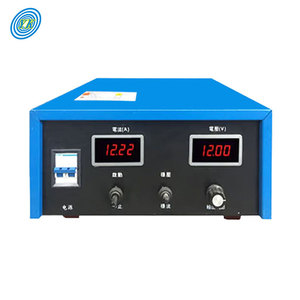
YUCOO Plating Rectifier 220V AC to 12V DC (50A–1000A)
High-precision electroplating rectifier transformer designed for continuous heavy-duty electro-chemical and metal-finishing operations. Features ultra-low ripple DC output, high energy conversion efficiency, and forced air/water cooling systems.
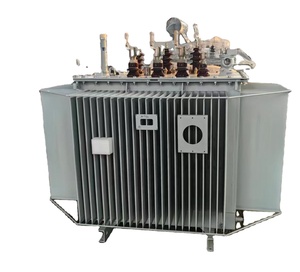
Factory Direct Three-Phase Control Electrical Rectifier Transformer
Robust 3-phase industrial control transformer optimized for step-down voltage regulation and switchgear power supplies. Built with vacuum pressure impregnated (VPI) copper windings to guarantee thermal stability under severe load surges.
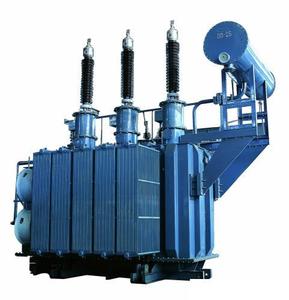
Oil-Immersed High Current 6300kVA Cathodic Protection Rectifier
Heavy-duty oil-immersed power transformer built for large-scale cathodic protection networks, oil/gas pipelines, and metallurgical refineries. Encased in a hermetically sealed IP65 corrugated tank with ONAN/ONAF cooling options.
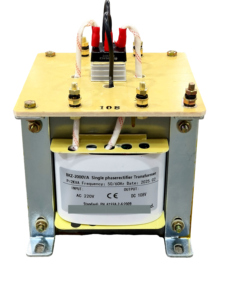
Single-Phase Control Rectifier Transformer (380V/220V to 60V–6V)
Versatile step-down control transformer engineered for motor control centers (MCC), automation systems, and low-voltage DC auxiliary power supplies. Features low excitation current, high dielectric breakdown strength, and minimal standby losses.
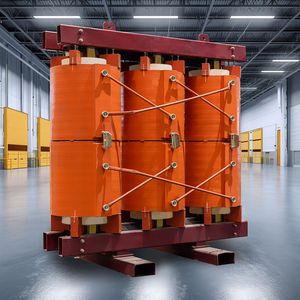
CEEG 2000kVA/10kV Epoxy Cast Traction Rectifier Dry-Type Transformer
Specialized traction transformer engineered for electric urban rail, metro networks, and heavy industrial haulage systems. Epoxy resin vacuum cast for extreme flame retardation, zero moisture absorption, and near-zero partial discharge (<5 pC).
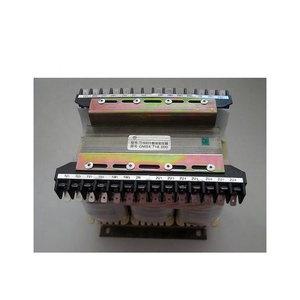
Heavy-Duty Power Rectifier Transformer for Generator Excitation
OEM-grade excitation power transformer engineered specifically for large alternator field excitation systems. Built to handle rapid load variations, transient fault currents, and severe continuous thermal stress in power utility plants.
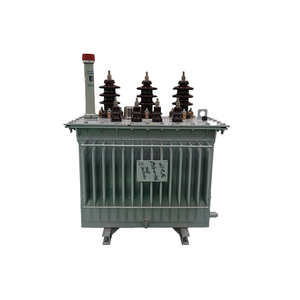
33kV Class High-Quality Sealed Voltage Control Rectifier Transformer
Hermetically sealed 33kV distribution and rectifier transformer built for sub-station step-down applications (300kVA to 400kVA range). Eliminates oil-to-air oxidation, minimizing dielectric degradation and extending maintenance intervals.
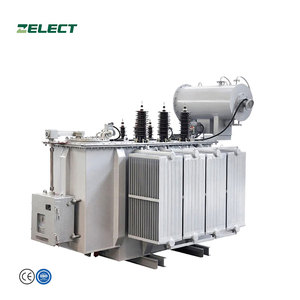
3-Phase Step-Up & Step-Down Distribution Transformer (50kVA–3000kVA)
Comprehensive distribution transformer platform adaptable from 50kVA up to 3000kVA. Engineered to comply with IS 1180 Energy Efficiency Level 3 standards. Ideal for industrial plant sub-stations, renewable solar integration, and utility grids.
Why Global EPCs Trust Leading Transformer Exporters
Top distribution transformer manufacturers combine advanced metallurgical engineering, precision CNC winding, and rigorous dielectric testing to ensure continuous operation in harsh industrial environments.
Stringent ISO Quality Control & FAT
Leading factories operate fully integrated test laboratories capable of performing routine, type, and special tests according to IEC 60076 and IEEE C57 standards. Every transformer undergoes insulation resistance testing, winding resistance, voltage ratio check, partial discharge measurement, and lightning impulse withstand verification before factory acceptance.
Premium Core & Winding Engineering
Efficiency starts at the core. Certified manufacturers utilize high-permeability Cold Rolled Grain Oriented (CRGO) silicon steel laminations (grades such as M0H and M4) and amorphous metal alloys. Cores feature step-lap mitred joints to reduce magnetic reluctance, lowering no-load losses (hysteresis and eddy currents) by up to 30%.
Global Export Compliance & OEM Customization
Exporters deliver custom power solutions tailored to regional electrical standards (50Hz / 60Hz), dual-voltage ratios, specialized vector groups (Dyn11, Ynd11, Dd0y11), and extreme ambient conditions (-25°C up to +55°C). Units are packaged in seaworthy export crates with nitrogen-purged tanks for overseas shipping.
11kV Distribution Transformer Energy Loss Benchmark
Energy efficiency is paramount for operational cost containment. Below is the technical matrix defining maximum permissible total losses for 11kV outdoor distribution transformers under IS 1180 (Part 1): 2014 Amendment No. 1.
| Rating (kVA) | Impedance (%) | Level 1: 50% Load (W) | Level 1: 100% Load (W) | Level 2: 50% Load (W) | Level 2: 100% Load (W) | Level 3: 50% Load (W) | Level 3: 100% Load (W) |
|---|---|---|---|---|---|---|---|
| 250 kVA | 4.50% | 1,050 W | 3,150 W | 980 W | 2,930 W | 920 W | 2,700 W |
| 315 kVA | 4.50% | 1,100 W | 3,275 W | 1,025 W | 3,100 W | 955 W | 2,750 W |
| 400 kVA | 4.50% | 1,300 W | 3,875 W | 1,225 W | 3,450 W | 1,150 W | 3,330 W |
| 500 kVA | 4.50% | 1,600 W | 4,750 W | 1,510 W | 4,300 W | 1,430 W | 4,100 W |
| 630 kVA | 4.50% | 2,000 W | 5,855 W | 1,860 W | 5,300 W | 1,745 W | 4,850 W |
| 1000 kVA | 5.00% | 3,000 W | 9,000 W | 2,790 W | 7,700 W | 2,620 W | 7,000 W |
| 1250 kVA | 5.00% | 3,600 W | 10,750 W | 3,300 W | 9,200 W | 3,220 W | 8,400 W |
| 2500 kVA | 6.25% | 6,500 W | 20,000 W | 6,150 W | 18,500 W | 5,900 W | 17,500 W |
Future Procurement Outlook & Technological Drivers
As global power grids transition toward renewable energy, high-density industrial electrification, and smart automation, procurement standards for distribution transformers are undergoing a paradigm shift.
1. Eco-Friendly Ester Fluids & Fire Safety
High-density urban installations and indoor industrial facilities are rapidly moving away from traditional mineral oil. Natural ester (vegetable-based) and synthetic ester fluids offer a flash point exceeding 300°C (K-class fire rating), virtually eliminating explosion risks while providing 100% biodegradability.
2. Smart Grid Integration & IoT Telemetry
Modern distribution transformers are transforming into intelligent edge devices. Factories now integrate real-time Dissolved Gas Analysis (DGA) sensors, fiber-optic winding temperature indicators (WTI), dynamic load-monitoring telemetry, and automated On-Load Tap Changers (OLTC) with SCADA connectivity.
3. K-Factor & Harmonic-Mitigating Designs
With the proliferation of non-linear loads—such as variable frequency drives (VFDs), solar inverters, electroplating rectifiers, and EV charging stations—standard transformers face thermal breakdown from eddy current loss spikes. Exporters are engineering K-13 and K-20 rated units with electro-static shielding.
Strategic Sourcing Insight: Total Cost of Ownership (TCO) Formula
Top engineering procurement directors look beyond the initial purchase invoice ($C_{purchase}$). Leading utilities evaluate global suppliers using the capitalized loss formula:
Where A represents the present value of 1 Watt of continuous core loss over 25 years (typically $6.00–$10.00/W), and B represents the capitalized value of load loss based on operational duty cycles ($2.00–$4.50/W). Exporters offering lower loss figures deliver significantly lower lifetime capital expenditure.
Tailored Solutions across Critical Sectors
Different industrial operations present distinct electrical stress profiles. Top exporters customize winding geometry, core saturation points, and tank protection accordingly.
Renewable Energy Plants (Solar & Wind)
Solar inverter duty transformers step up low voltage inverter outputs (315V, 400V, 600V, 800V) to 11kV, 22kV, or 33kV distribution grids. Featuring multi-winding secondaries (up to 4 separate LV windings) to connect multiple inverters to a single transformer without cross-talk harmonics.
Electro-Chemical & Metallurgical Industry
Rectifier duty transformers supply continuous heavy DC currents to electroplating, chlorine alkali electrolysis, arc furnaces, and aluminum smelting processes. Designed with phase-shifting windings (30° delta-wye offsets) for 12-pulse or 24-pulse rectifier operation to cancel grid harmonics.
Commercial Data Centers & High-Rises
Cast Resin Dry-Type transformers (CRT) are preferred for indoor installations due to zero oil leakage hazards, self-extinguishing epoxy resin, and high impulse withstand ratings. They meet strict noise level constraints (<55 dB) and fit compact substation (CSS) footprints.
B2B Procurement & Technical Compliance FAQ
Key engineering answers to assist procurement teams, EPC contractors, and plant engineers during supplier evaluation.
A standard distribution transformer is engineered for sinusoidal 50/60Hz AC utility loads. In contrast, a rectifier transformer directly feeds semiconductor rectifiers (diodes/thyristors) that convert AC to DC. Rectifier transformers must withstand severe harmonic distortion, high DC magnetic bias, phase imbalance, and rapid thermal cycling. They incorporate reinforced mechanical bracing and specialized electrostatic shields between windings.
Compliance is achieved through material selection and precision core geometry. Level 3 efficiency requires extremely low no-load and load losses. Factories utilize ultra-thin, high-permeability CRGO steel laminations (0.23mm–0.27mm thickness) or amorphous metal cores, combined with 99.99% pure electrolytic grade copper conductors and optimized step-lap mitred core joint construction.
Cast Resin Dry-Type transformers should be specified for indoor installations, underground substations, data centers, hospitals, and offshore platforms where fire safety and environmental hazard mitigation are critical. Oil-immersed units are generally preferred for outdoor substations, heavy power ratings (>5 MVA), high-voltage ratings (>33kV), and environments with heavy atmospheric pollution where sealed liquid tanks provide superior cooling and protection.
Standard FAT protocols under IEC 60076 include: (1) Winding Resistance Measurement, (2) Voltage Ratio & Vector Group Verification, (3) Measurement of No-Load Loss and Current, (4) Measurement of Load Loss and Short-Circuit Impedance, (5) Dielectric Routine Tests (Separate Source AC Voltage & Short-Duration Induced Overvoltage), (6) Insulation Resistance (Megger Test), and (7) Oil Dielectric Breakdown Voltage (BDV) test for liquid-filled units.
Rectifier bridges generate dominant harmonic currents ($5^{th}, 7^{th}, 11^{th}, 13^{th}$, etc.). By utilizing a rectifier transformer with dual secondary windings—one connected in Delta ($\Delta$) and the other in Wye ($Y$)—a 30-degree electrical phase shift is introduced. This configuration creates a 12-pulse system that naturally cancels out the $5^{th}$ and $7^{th}$ harmonic currents at the primary side, reducing grid THD significantly without requiring costly external passive filter banks.
Preventive maintenance includes periodic oil sampling for Dissolved Gas Analysis (DGA) to detect incipient thermal faults and arcing; oil moisture content testing; breakdown voltage (BDV) measurement; regular servicing of the silica gel breather or installing a maintenance-free air dryer; annual inspection of On-Load Tap Changer (OLTC) contacts; and thermal imaging (thermography) of external bushings and cable terminations.
Request a Technical Proposal & Factory Quote
Consult with experienced transformer design engineers. Whether you require standard distribution units, custom rectifier duty transformers, or IS 1180 compliant designs, our engineering export team provides complete technical support and transparent pricing.