
Industrial Rectifier & Power Transformer Cores
Direct factory supply of precision-engineered transformer units and magnetic cores built to IEC 60076, IEEE C57, and IS 1180 standards. Explore our high-efficiency solutions below.
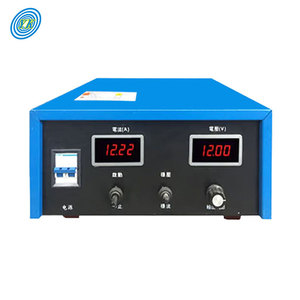
YUCOO Plating Rectifier 220v AC to 12v DC 50A-1000A Electroplating Rectifier
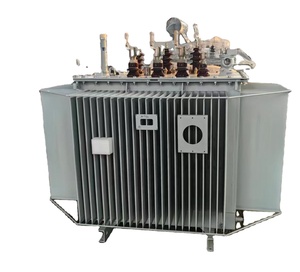
Factory Direct Three Phase Control Electrical Rectifier Transformer
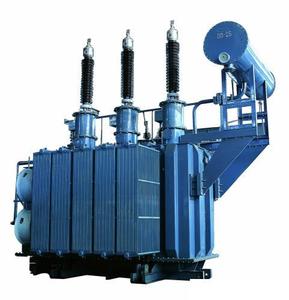
Oil Immersed 6300kVA High Current Cathodic Protection Rectifier Transformer
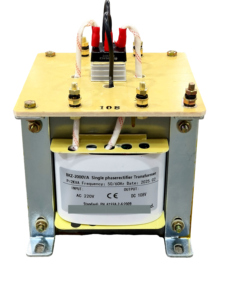
380V/220V to 60V-12V AC to DC Single-Phase Control Rectifier Transformer (2kVA-5kVA)
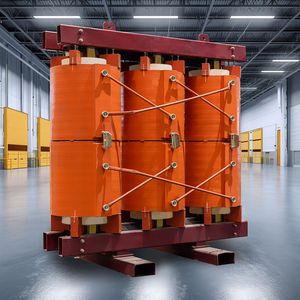
CEEG ZQSC(H)B Series 2000kVA/10kV Epoxy Cast Traction Rectifier Transformer
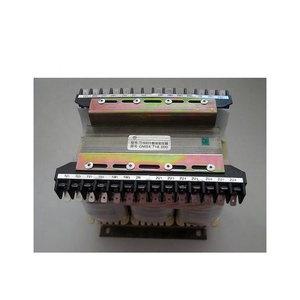
T6 Electric Power Rectifier Transformer TI16933 for HYUNDAI HFC6 System
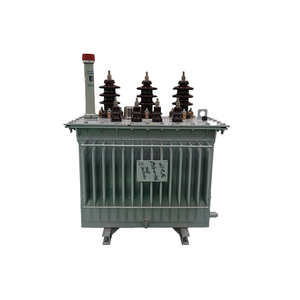
High Quality 33kV 160kVA-1MW Hermetically Sealed Control Rectifier Transformer
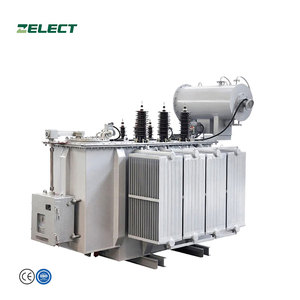
50kVA - 3000kVA Three Phase Step-Up / Step-Down Rectifier Transformer
Engineering Excellence: Next-Generation Transformer Core Technologies
As the global power distribution grid undergoes unprecedented modernization to accommodate renewable energy sources and intensive industrial loads, the electrical transformer core stands as the single most vital component determining operational efficiency, thermal stability, and overall lifecycle cost. As a premier China Transformer Core Manufacturer & Supplier, our engineering philosophy revolves around maximizing magnetic induction while aggressively minimizing no-load magnetic hysteresis and eddy-current losses.
Technical Insight: Core loss accounts for up to 70% of continuous electrical waste in distribution grids. Utilizing high-grade Cold-Rolled Grain-Oriented (CRGO) silicon steel and advanced Amorphous Metal alloys allows industrial operators to achieve significant total cost of ownership (TCO) reductions over a 30-year operational lifespan.
Metallurgical Comparison: CRGO Silicon Steel vs. Amorphous Alloys
The selection of transformer core material dictates the saturation flux density ($B_{max}$), no-load current, and physical footprint of the transformer assembly. Modern manufacturing capabilities encompass three main core steel variants:
| Core Material Type | Nominal Thickness | Max Flux Density ($B_{max}$) | Specific Core Loss (1.7T / 50Hz) | Primary Application Profile |
|---|---|---|---|---|
| High-Permeability CRGO (M0H / M1H) | 0.20 mm - 0.23 mm | 1.90 - 2.0 Tesla | 0.75 - 0.85 W/kg | High-capacity power transformers, EHV substations, high-current rectifier units. |
| Standard Domain Refined CRGO (M3 / M4) | 0.27 mm - 0.30 mm | 1.75 - 1.85 Tesla | 0.95 - 1.10 W/kg | Standard distribution transformers, commercial step-down units, industrial isolation. |
| Fe-Based Amorphous Ribbon (1k101) | 0.025 mm (25 µm) | 1.56 Tesla | 0.20 - 0.28 W/kg | Ultra-low loss green energy distribution, solar photovoltaic inverter duty transformers. |
| Nanocrystalline Soft Magnetic Core | 0.018 mm - 0.022 mm | 1.20 - 1.35 Tesla | < 0.15 W/kg (at high frequencies) | High-frequency switching rectifiers, EV fast charging, precision instrument transformers. |
Precision Fabrication & Step-Lap Mitred Lamination Stacking
The physical assembly of core laminations heavily influences the magnetic flux path. Traditional 90-degree butt-joint designs induce severe localized magnetic concentration, increasing reactive power draw and acoustic noise. Our facility utilizes automated CNC high-speed shearing and step-lap mitred lamination machinery:
- Full-Mitred 45° Step-Lap Joints: Staggered 5 to 7 step overlap configurations seamlessly transition flux lines across the lamination joints, reducing no-load losses by up to 12% and excitation current by up to 40%.
- Burr-Free Precision Shearing: Cutting tolerances maintained under 0.01mm eliminate micro-short circuits between adjacent insulated steel sheets, drastically diminishing inter-lamination eddy currents.
- Stress-Relief Annealing: Continuous protective atmosphere annealing furnaces operate at 800°C to eliminate residual mechanical stresses induced during cutting and slitting, fully restoring original crystal grain magnetic properties.
Custom Rectifier Transformer Core Architectures
Rectifier transformers subject core structures to high harmonic stress, heavy current surges, and complex phase-shifting profiles. Here is how our specialized core design overcomes extreme industrial operating conditions.
Harmonic Mitigation
Integrated multi-pulse core configurations (12-pulse, 18-pulse, 24-pulse) incorporate specialized phase-shifting tertiary windings. This cancels prominent low-order harmonics ($h_5, h_7, h_{11}, h_{13}$), stabilizing the core against stray eddy current heating and flux distortion.
Robust Mechanical Clamping
Under electroplating or arc furnace duty, high-current pulses exert intense dynamic electromagnetic forces. Our cores utilize non-magnetic heavy structural steel tie-rods, epoxy-coated clamping frames, and resin-bonded limb tapes to withstand severe mechanical short-circuit forces.
Thermal Management
Designed with engineered internal cooling ducts spaced strategically throughout the lamination stack. This allows natural or forced oil/air circulation, preventing localized hot spots even under continuous 150% overload conditions.
Global Procurement Trends & Industrial Market Outlook (2025–2030)
The global market for electrical power transformers and magnetic cores is undergoing a structural paradigm shift driven by stringent decarbonization targets, grid integration of massive renewable capacity, and aggressive industrial electrification. Enterprise procurement teams, EPC contractors, and system integrators must navigate several evolving procurement vectors when selecting a China Transformer Core Supplier.
1. Mandatory Eco-Design Regulations & Loss Efficiency Standards
Regulatory frameworks worldwide—such as the European Union Eco-design Directive (Tier 2), US Department of Energy (DOE 2016/2026 standards), and India's Bureau of Energy Efficiency (BEE IS 1180 Level 3)—now strictly enforce maximum allowable total losses. Procurement strategies are shifting away from evaluating initial purchase price toward analyzing Total Ownership Cost (TCO):
$$\text{TCO} = C_{\text{purchase}} + (A \times P_0) + (B \times P_k)$$
Where $C_{\text{purchase}}$ is capital expenditure, $P_0$ is No-Load (Core) Loss in kW, $P_k$ is Load Loss in kW, and $A, B$ represent capital evaluation values of electrical losses per kilowatt over the equipment lifecycle.
Because no-load core loss ($P_0$) occurs continuously 24/7/365 regardless of loading, high-grade CRGO and amorphous core transformers command a significant evaluation premium in global tenders.
2. Accelerated Demand in Hydrogen Electrolysis & Electroplating Infrastructure
The rapid expansion of green hydrogen production via water electrolysis, alongside booming demand for semiconductors, printed circuit board (PCB) electroplating, and EV battery foil manufacturing, has caused a surge in demand for specialized High-Current Rectifier Transformers. These units require custom core geometric aspect ratios to accommodate heavy secondary copper busbars capable of conducting up to 100,000 Amperes of direct current (DC).
3. Amorphous Ribbon Supply Dynamics & Regional Localization
While traditional grain-oriented electrical steel remain dominant for high-voltage power grids, amorphous metal cores are capturing significant market share in distribution networks up to 33kV. Enterprise buyers are increasingly forming direct strategic partnerships with integrated Chinese manufacturers who maintain stable upstream access to high-purity iron-boron-silicon raw ribbons, insulating against global supply chain volatility.
E-E-A-T Quality Assurance & Factory Testing Standard
Every transformer core and complete rectifier assembly undergoes rigorous laboratory inspection prior to dispatch. Our testing framework strictly adheres to international electrotechnical standards.
Comprehensive Testing Matrix
- No-Load Loss & Excitation Current Measurement: Performed via precision power analyzers to verify core loss figures ($P_0$) match design values.
- Dissolved Gas Analysis (DGA): Oil-immersed units undergo gas chromatography to detect early thermal or dielectric abnormalities.
- Induced Overvoltage & Dielectric Withstand: Validates insulation integrity between lamination layers and structural clamping frameworks.
- Tan Delta & Winding Resistance Testing: Guarantees minimum dielectric power factor and phase-to-phase equilibrium.
Certifications & Compliance Standards
Our manufacturing facilities and products hold global accreditations ensuring seamless international deployment:
We provide full routine, type, and special test certification packages stamped by independent third-party laboratories (KEMA, CESI, or CNAS accredited facilities) upon customer request.
Transformer Core Procurement & Technical FAQ
Expert answers to common engineering, procurement, and manufacturing inquiries regarding industrial transformer cores and rectifier units.
Need Custom Transformer Core Engineering or Direct Factory Quotes?
Consult with our senior metallurgical and electrical engineering team today. We provide comprehensive design assistance, rapid prototyping, and competitive direct-factory pricing for high-efficiency cores and industrial rectifier transformers.