
Featured Industrial Transformer Portfolio
Engineered to international IS/IEC, ANSI, and GB standards for power distribution, electroplating, traction, and high-current galvanic protection.
Technical Whitepaper: Engineering Architecture of High-Precision Instrument & Rectifier Transformers
In modern utility grids and heavy industrial complexes, electrical measurements, protection relays, and DC conversion equipment rely entirely on the integrity of specialized magnetic devices. As leading global EPC contracts migrate toward digital substations and energy-intensive manufacturing processes, the technical requirements for China instrument transformers and high-power rectifier transformers have evolved dramatically.
Instrument transformers—comprising Current Transformers (CTs) and Potential/Voltage Transformers (PTs/VTs)—serve as the vital sensors of power networks. They step down primary voltages and currents to standardized, manageable secondary values (such as 1A/5A for current loops and 100V/110V for potential loops) while providing galvanic insulation between high-voltage utility lines and sensitive digital metering microprocessors. Simultaneously, industrial rectifier transformers provide continuous DC power for electroplating, cathodic protection, metro rail traction systems, and industrial electrolysis plants.
Core Technical Classifications & Precision Standards
Achieving absolute measurement linearity and protection speed requires strict alignment with IEC 61869-2 (for CTs), IEC 61869-3 (for VTs), IEC 60076-11 (for Cast Resin Dry-Type Transformers), and IEEE C57.18.10 (for Rectifier Transformers). Depending on the grid application, distinct accuracy classes are mandated:
| Transformer Type | Accuracy / Protection Class | Primary Application Spectrum | Key Technical Parameter |
|---|---|---|---|
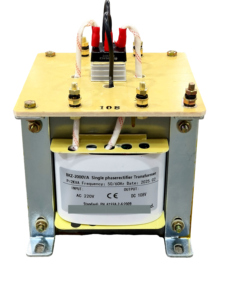
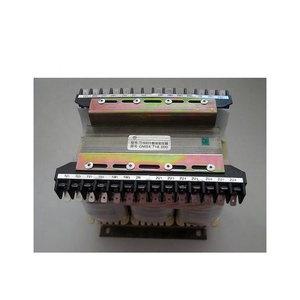
| Metering Current Transformer (CT) | Class 0.1 / 0.2S / 0.5 | Grid Interconnection, Commercial Revenue Metering | Instrument Security Factor (FS < 5), Low Phase Error |
| Protection Current Transformer | 5P20 / 10P20 / Class PX | Substation Differential & Overcurrent Protection | High Knee-Point Voltage ($V_k$), Non-Saturating Cores |
| Potential Transformer (VT/PT) | Class 0.2 / 0.5 / 3P | Busbar Voltage Monitoring, Synchronization Relays | Thermal Burden Capacity (up to 500VA), Voltage Factor |
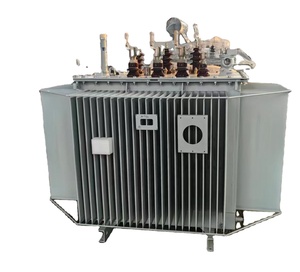
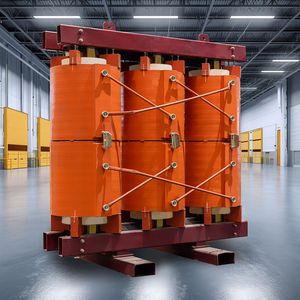
| Traction Rectifier Transformer | 12-Pulse / 24-Pulse Systems | Metro Urban Rail Transit, Substation Direct Current | Epoxy Cast Resin, Class H Insulation, Harmonic Dampening |
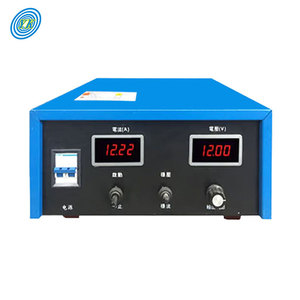
| Industrial Plating Rectifier | Galvanic DC Output (12V-60V) | Electroplating, Anodizing, Cathodic Protection | High Output Amperage (50A - 10,000A), Thyristor Control |
Core Topology and Saturation Control Engineering
The fundamental performance bottleneck in electromagnetic instrument transformers lies in hysteresis core saturation. Under severe asymmetrical short-circuit fault conditions, primary fault currents containing significant Direct Current (DC) offset components can drive conventional silicon steel cores into deep saturation within milliseconds. This results in severe secondary waveform distortion, triggering phase angle deviation and causing protective relays to either misoperate or fail to trip.
To overcome core saturation, modern Chinese manufacturing centers employ high-permeability Nanocrystalline ribbon alloys and Cold-Rolled Grain-Oriented (CRGO) steel cores with localized air gaps (Class TPZ and TPY cores). Nanocrystalline cores possess an ultra-low coercive force ($H_c < 2.0\text{ A/m}$) and a high saturation flux density ($B_s = 1.25\text{ T}$), which reduces the magnetizing current error by up to 70% compared to traditional Permalloy.
Dielectric Insulation Systems
Utilizing vacuum pressure impregnation (VPI) and epoxy resin cast technology. Achieves partial discharge levels under 5pC at 1.2Un, guaranteeing fire-retardant performance for indoor subway substations and hazardous chemical plants.
Multi-Pulse Harmonic Suppression
Designed with specialized secondary winding phase displacements (e.g., Extended Delta, Star-Delta shifts). Phase shifts cancel 5th, 7th, 11th, and 13th order current harmonics, protecting upstream grids from distortion.
Thermal & Dynamic Short-Circuit Strength
Reinforced axial clamping structures withstand intense mechanical electrodynamic forces during external dead short-circuits, verified by short-circuit withstand type testing per IEC 60076-5.
Future Sourcing & Global Procurement Trends (2025–2035)
As global industrial infrastructure accelerates toward electrification, decarbonization, and smart grid automation, procurement managers face new operational parameters when evaluating China Instrument Transformer Manufacturers. Procurement trends are moving away from simple initial purchase cost (CapEx) models toward comprehensive Total Cost of Ownership (TCO) and Lifecycle Reliability metrics.
1. The Rise of Optical Instrument Transformers & IEC 61850 Process Bus Integration
Traditional copper-wound electromagnetic VTs and CTs are increasingly giving way to Non-Conventional Instrument Transformers (NCITs) based on Faraday Effect optical fiber sensors and Rogowski coils. NCITs eliminate core saturation, eliminate catastrophic explosion risks caused by dielectric breakdown, and transmit digitalized sampled values (SV) directly to substation Merging Units via IEC 61850-9-2 Ethernet buses. Leading Chinese manufacturers are now integrating internal fiber-optic diagnostic ports into high-voltage dry-type sealed units to support smart substation retrofits.
2. High Harmonic Tolerance for Green Hydrogen & Electrolysis Plants
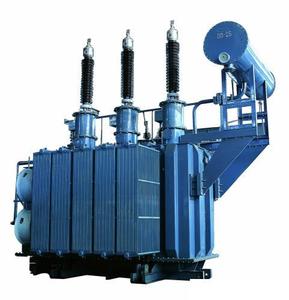
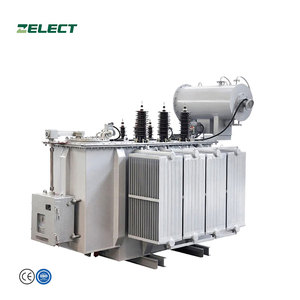
The global transition toward green hydrogen requires massive megawatt-scale direct current (DC) power supplies fed by multi-megawatt rectifier transformers. These rectifiers experience continuous harmonic thermal stresses caused by thyristor phase control. Modern procurement specifications strictly demand K-Factor rated transformers (K-13, K-20) equipped with forced oil/water cooling systems (ODAF/OFWF) and liquid-immersed copper shields to mitigate stray eddy-current heating in structural tank walls.
3. Environmental Sustainability: Biodegradable Ester Dielectrics
Environmental regulations across Europe, North America, and Australia are restricting mineral oil usage due to soil contamination risks and high flammability. Future-proof procurement tenders specify synthetic and natural ester liquids (such as FR3). Ester fluids offer high fire points (>300°C), self-extinguishing safety properties, and 100% biodegradability within 28 days, making them ideal for oil-immersed cathodic protection rectifiers installed in offshore platforms and ecologically sensitive river basins.
Technological Development Trends in Heavy Electrical Instrumentation
The engineering roadmap for China's transformer manufacturing sector is characterized by continuous material science breakthroughs, digital twin modeling, and precision manufacturing automation. Key technological vectors driving the next decade of power transformation include:
- Digital Twin Thermal & Magnetic Modeling: Utilizing Finite Element Analysis (FEA) and Computational Fluid Dynamics (CFD) software to simulate magnetic stray flux, hotspot temperature distribution, and mechanical stress under impulse voltages prior to physical casting or oil filling.
- Advanced Hybrid Insulation Materials: Integration of Nomex paper combined with epoxy cast resin matrix systems, allowing dry-type traction transformers to operate continuously under Class H ($180^\circ\text{C}$) thermal ratings with zero risk of insulation degradation during extreme overload events.
- Real-Time Online Dissolved Gas Analysis (DGA) Sensing: Miniaturized internal hydrogen, moisture, and carbon monoxide sensors embedded directly into high-voltage sealed transformer housings, enabling predictive maintenance algorithms via IoT cloud platforms.
- Nanocrystalline Core Annealing under Applied Magnetic Fields: Field-annealed magnetic cores engineered to exhibit perfectly flat hysteresis loops ($B-H$), maintaining stable linearity up to 300% of nominal rated current.
Enterprise Engineering Advantage & Quality Assurance Infrastructure
With over 17 years of specialized manufacturing experience (established 2007), our partner manufacturing facilities represent the pinnacle of industrial power engineering. Operating within ISO 9001:2015, ISO 14001, and ISO 45001 certified environments, every unit undergoes rigorous quality verification before factory release.
Comprehensive Factory Acceptance Testing (FAT) Capabilities
Our high-voltage testing laboratories are equipped with full-spectrum diagnostic instruments to perform routine, type, and special testing according to global specifications:
- Impulse Voltage Withstand Testing: Full-wave and chopped-wave lightning surge simulation up to 200kV BIL.
- Partial Discharge (PD) Measurement: High-shielded Faraday cage rooms ensuring background noise < 2pC for complete cast resin dry-type testing.
- Frequency Response Analysis (SFRA): Detecting microscopic winding displacements or structural core shifts during shipping.
- Temperature Rise Testing: Full-load thermal run tests under simulated environmental conditions to verify cooling system efficiency (ONAN/ONAF/AN/AF).
- Dissolved Gas Analysis (DGA) & Oil Dielectric Breakdown: Automatic oil BDV testers (up to 100kV) and gas chromatography for oil-filled cathodic protection units.
Procurement Engineering FAQ
Direct answers to common technical and commercial queries raised by utility engineers, EPC contractors, and industrial buyers.
How do I choose between a Metering CT (Class 0.2S) and a Protection CT (5P20)?
Metering CTs (Class 0.2S/0.5) are optimized for high accuracy around nominal current (1% to 120% In) and feature a low Instrument Security Factor (FS < 5) to protect delicate meters during grid faults. Protection CTs (5P20) are designed to maintain accuracy (5% error limit) up to 20 times the nominal rated current ($20 \times I_n$) without saturating, ensuring protective relays trip reliably during severe short circuits.
Why are multi-pulse (12-pulse / 24-pulse) designs necessary for rectifier transformers?
Multi-pulse rectifier transformers utilize specialized phase-shifting secondary windings (e.g., $+15^\circ$ and $-15^\circ$ vector shifts for 24-pulse). This phase cancellation eliminates low-order harmonic currents (5th, 7th, 11th, 13th) at the primary AC source, reducing Total Harmonic Distortion (THD) below 5% and satisfying IEEE 519 grid compliance standards without requiring heavy external passive harmonic filters.
What parameters are required to generate an accurate customized RFQ quote?
To receive a precision engineering quote, please provide: System primary voltage (kV), secondary voltage/current output, rated capacity (kVA/MVA or continuous DC Amps), frequency (50Hz/60Hz), insulation medium (Epoxy Cast Resin Dry-Type or Oil-Immersed), vector group/phase shift, installation environment (ambient temperature, altitude, IP rating), and governing standard (IEC, ANSI/IEEE, IS).
What is the operational lifespan and maintenance requirement for dry-type cast resin units?
When operated within design thermal limits (Class F or H rating), cast resin dry-type transformers feature a design lifespan exceeding 30 years. Because they are moisture-proof, self-extinguishing, and contain no liquid dielectrics, maintenance is minimal—requiring only periodic visual inspections and routine dust removal from cooling air channels.
How do China-manufactured transformers comply with international export certifications?
All units are manufactured under stringent quality management systems and are independently type-tested by accredited laboratories (such as KEMA, CNAS, or CESI). Full type-test certificates for short-circuit withstand, temperature rise, and lightning impulse are supplied with technical documentation for seamless customs clearings and local utility approvals worldwide.
What protection features are built into oil-immersed cathodic protection rectifiers?
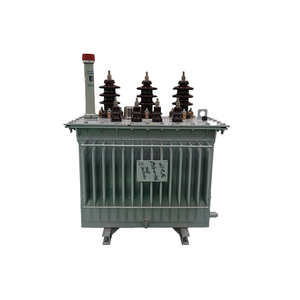
Our oil-immersed high-current cathodic protection rectifiers feature hermetically sealed corrugated steel tanks, Buchholz relays for gas accumulation detection, pressure relief valves (PRV), oil level indicators with alarm contacts, and integrated thyristor control units with automatic constant-current / constant-voltage regulation modes.