
Featured Industrial Transformer Tanks & Power Units
Explore our engineered spectrum of high-durability corrugated oil tanks, hermetically sealed enclosures, and compact substation housing designed to IS/IEC and IEEE standards.
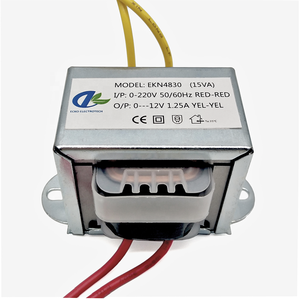
Halogen Lamp LED Electric Power Transformer 20w 12v 6v 24v Tank Unit
Precision-engineered miniature power transformer tank enclosure optimized for LED driver arrays and step-down lighting networks. Built with high thermal dissipation alloys for continuous operation.
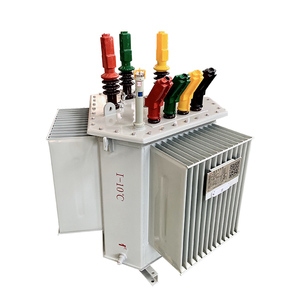
DH15 Series Single Phase Oil Immersed Distribution Transformer Tank 75 kVA
High-efficiency single-phase oil-immersed distribution transformer tank. Incorporates amorphous alloy core housing with robust anti-corrosion exterior coating for rural grid stabilization.
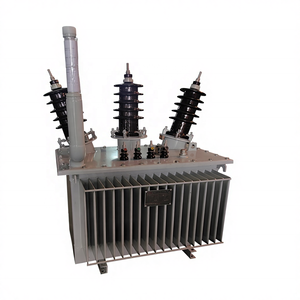
Three Phase 10KV/6KV Corrugated Tank Transformer for Mining & Construction
Heavy-duty 3-phase oil-immersed transformer with a reinforced corrugated tank body. Engineered to withstand intense vibration, dust, and aggressive mechanical loads on underground mining sites.
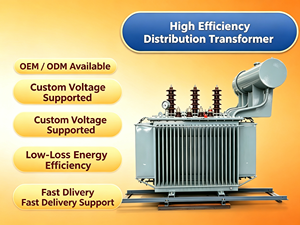
S22 Power Distribution Transformer with Corrugated Oil Tank for Infrastructure
Next-generation S22 ultra-low-loss distribution transformer equipped with custom corrugated cooling fins. Designed for urban infrastructure projects seeking minimal lifecycle operating costs.
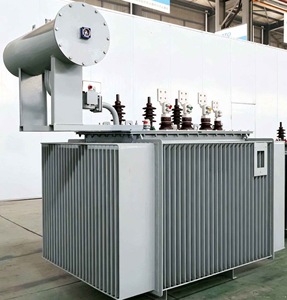
10kV Outdoor Compact Oil Immersed Transformer Tank Structure
Space-saving outdoor power transformer featuring an integrated oil tank body. Built for convenient pad-mounted installation in commercial complexes and municipal utilities.
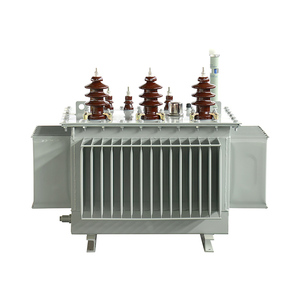
Ampereon S11 11kV/33kV Fully Sealed Corrugated Tank Transformer (Up to 10 MVA)
Heavy utility-grade power transformer tank rated up to 10 MVA at 33kV. Features robotic-welded corrugated sidewalls that flex dynamically under dielectric oil thermal expansion.
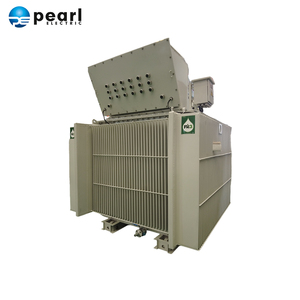
Hermetically Sealed 100kVA - 315kVA Oil Distribution Corrugated Tank
Maintenance-free hermetically sealed distribution transformer tank series. Prevents ambient atmospheric oxygen and moisture ingress, significantly extending insulating liquid life.
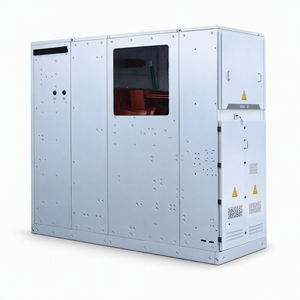
KYN61 40.5kV Galvanized Steel Solar Energy Storage Container Substation
Modular steel containerized transformer substation enclosure designed for large-scale solar power plants and Battery Energy Storage Systems (BESS). Integrated high-voltage switchgear.
Executive Summary: The Evolution of Transformer Tank Engineering
In modern high-voltage electrical distribution and power generation networks, the transformer tank is no longer merely a passive structural vessel containing insulating fluid. It has evolved into an active thermo-mechanical management system that governs operational safety, dielectric longevity, and environmental containment. Selecting the right transformer tank manufacturer & supplier directly influences a power asset’s mean time between failures (MTBF), total cost of ownership (TCO), and operational compliance with international standards such as IEC 60076, IEEE C57.12, and IS 1180.
As power grids transition toward decentralized renewable integration, solar inverter duty transformers, and intensive industrial electrification, transformer tanks face extreme harmonic distortion, rapid load fluctuation, and harsh environmental exposure (C4-H to C5-M atmospheric corrosion zones). This technical procurement whitepaper evaluates top manufacturing standards, critical design paradigms, corrugated fin structural mechanics, material selection, and global supplier evaluation criteria.
Corrugated transformer tanks utilize elastic steel fin walls that expand and contract dynamically with transformer oil volume fluctuations, completely eliminating the need for external conservator tanks and air-dehydrating breathers. This hermetically sealed environment stops oxidation and moisture contamination, extending dielectric breakdown strength up to 300% compared to conventional open-breather radiator tanks.
Comparative Technology Matrix: Transformer Tank Designs
Procurement directors and electrical engineering consultants must select transformer tank geometries based on thermal dissipation capacity, physical footprint, seismic zoning, and maintenance budgets:
| Tank Architecture Type | Cooling & Expansion Mechanism | Primary Voltage / Capacity Range | Sealing & Maintenance Requirement | Ideal Application Environment |
|---|---|---|---|---|
| Hermetically Sealed Corrugated Tank | Elastic corrugated fin expansion; dynamic thermal displacement | Up to 33 kV / 10 MVA | Fully sealed; Zero internal oil maintenance, no conservator tank | Compact substations, urban distribution, high humidity & coastal regions |
| Conventional Radiator Tank with Conservator | External detachable radiators; top oil conservator vessel with silica gel breather | 33 kV to 765 kV / Up to 500+ MVA | Periodic silica gel replacement, periodic DGA & oil filtration required | Main power transmission substations, heavy industrial plants |
| Smooth Sheet Steel Tank with Press-Welded Radiators | Rigid steel walls with panel radiators welded directly to tank body | 11 kV - 33 kV / 250 kVA - 3.15 MVA | Semi-sealed or open conservator; low-to-medium maintenance | Standard industrial distribution networks, indoor plant substations |
| Galvanized Containerized Substation Enclosure | Forced air HVAC / natural convection louvers surrounding tank & switchgear | Up to 40.5 kV / Custom BESS ratings | External weather housing; low structural maintenance | Utility-scale solar farms, wind power substations, battery storage (BESS) |
Technical Criteria for Evaluating Top Transformer Tank Suppliers
When shortlisting global transformer tank manufacturers and suppliers, engineering procurement teams must audit the vendor’s structural steel processing capability, automatic welding automation, surface treatment standards, and pressure integrity testing protocols. A high-quality tank directly prevents oil leakage—the leading root cause of transformer field failures.
1. Steel Quality & Gauge
Utilization of premium cold-rolled steel (CRCA) or ASTM A1011 structural grade steel plates. Corrugated fin thickness precision (typically 1.2mm to 1.5mm) ensures optimal mechanical elasticity without fatigue cracking.
2. Automated Fin Welding
Robotic seam welding lines ensure leak-proof joints along every corrugated fold. Submerged Arc Welding (SAW) and MIG/MAG welding according to AWS D1.1 and EN 287-1 certification.
3. Multi-Stage Surface Coating
Automated shot blasting to SA 2.5 cleanliness, followed by zinc-rich epoxy primers and polyurethane topcoats providing ISO 12944 C4-H/C5-M marine-grade corrosion endurance.
Sahara Transformers: Engineering Capabilities & OEM Manufacturing Excellence
Founded in 2007, Sahara Transformers has established itself as an ISO 9001:2015 certified premier manufacturer of industrial power transformers, distribution transformers, and custom corrugated transformer tank assemblies. Operating from a state-of-the-art manufacturing hub in Pune, India, the enterprise supplies utilities, EPC contractors, and heavy industrials across global markets.
ISO-Certified Quality Systems
Every transformer tank manufactured undergoes strict Quality Assurance protocols, compliant with IS 1180 (Part 1): 2014 Amendment No. 1, IEC 60076, and global utility specifications.
Advanced Pressure & Vacuum Testing
Tanks are tested under positive oil pressure (up to 0.35 bar) and full vacuum standing tests to ensure 100% hermetic integrity prior to transformer core insertion and oil filling.
Custom Engineering & Vector Adaptation
Custom tank dimensions for specialized Scott Connected, Furnace duty, and Solar Inverter duty transformers, supporting multi-winding multi-bushing configurations.
Sahara Transformers integrates energy-efficient design principles, meeting IS 1180 Level 1, Level 2, and Level 3 energy efficiency parameters. By utilizing high-permeability grain-oriented silicon steel (CRGO) cores and precision-fabricated corrugated tank enclosures, internal load losses (W) and no-load losses are reduced to industry-leading minimums.
Global Future Procurement Trends for Transformer Tank Manufacturing
As power grid modernization accelerates, global buyers are redefining procurement requirements for transformer tanks and enclosures. The following technical trends are dominating international supply chain specs:
1. Synthetic & Natural Ester Fluid Compatibility
With environmental regulations mandating non-toxic, high-fire-point insulating liquids, transformer tanks must be engineered to withstand the unique viscosity, oxidation dynamics, and chemical properties of ester fluids (FR3, synthetic esters). Internal tank paint coatings must be 100% chemically inert to ester bio-oils at operating temperatures exceeding 120°C.
2. Smart Tank Condition Monitoring Integration
Modern transformer tanks are increasingly pre-fitted with digital sensor ports to accommodate fiber-optic temperature sensors, online Dissolved Gas Analysis (DGA) valves, pressure relief devices (PRD) with digital contact outputs, and smart oil level gauges (MOG). Suppliers who offer factory-integrated sensor boss welds provide substantial value to smart grid utilities.
3. High-Seismic & Wind Load Structural Reinforcement
For installations in offshore wind sub-stations, mining territories, and earthquake-prone regions, corrugated tank walls must undergo Finite Element Analysis (FEA) modeling to verify structural resistance against seismic ground acceleration (up to 0.5g) and hurricane-force wind loads without fin deformation.
4. Ultra-Low-Noise Acoustic Barrier Enclosures
Urban substations located near residential zones mandate noise emission levels below 45 dBA. Modern tank suppliers are introducing double-walled acoustic dampening tanks and vibration isolation tank feet to absorb core magnetostriction noise before sound energy dissipates into the environment.