
Industrial-Grade Rectifier & Power Transformer Portfolio
Precision-engineered step-up, step-down, and heavy-current rectifier transformers designed to IS/IEC standards for global export and demanding OEM/ODM applications.
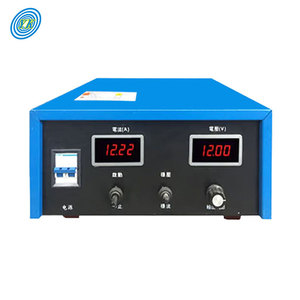
YUCOO Plating Rectifier 220V AC to 12V DC 50A-1000A Electroplating Rectifier
Contact Us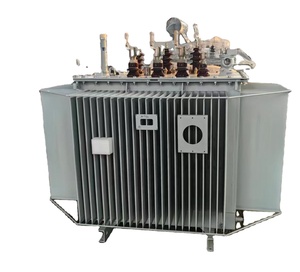
Factory Direct Sales Three-Phase Control Electrical Rectifier Transformer
Contact Us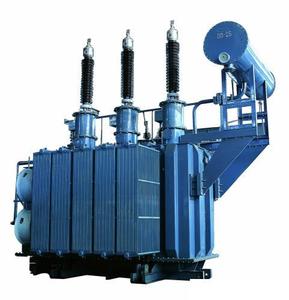
Oil Immersed High Current 6300kVA Three-Phase Cathodic Protection Transformer
Contact Us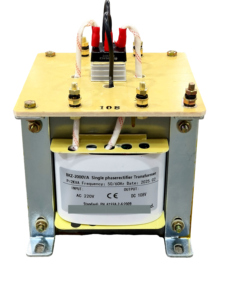
380V/220V to 60V-6V AC/DC 2000VA-5KVA Single-Phase Control Rectifier Transformer
Contact Us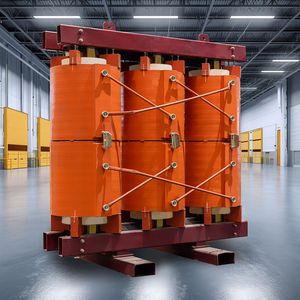
CEEG ZQSC(H) Series 2000kVA/10kV Epoxy Cast Resin Traction Dry-Type Transformer
Contact Us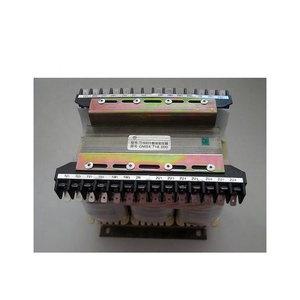
Original T6 Electric Power Rectifier Transformer TI16933 for Excitation Systems
Contact Us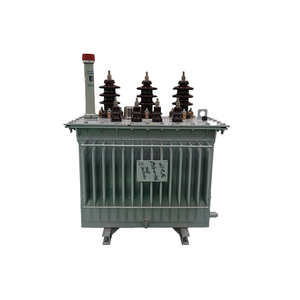
Control 33kV 300kVA-1MW Voltage Sealed Rectifier Transformer (160kVA-400kVA)
Contact Us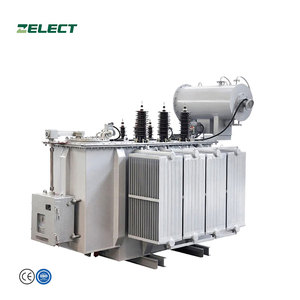
50kVA - 3000kVA Industrial Three-Phase Step-Up & Step-Down Rectifier Transformer
Contact UsEnterprise OEM/ODM Infrastructure & Engineering Footprint
Established as a premier power technology manufacturer since 2007, our advanced state-of-the-art facility situated in Pune, Maharashtra, operates under stringent ISO 9001:2015, ISO 14001:2015, and ISO 45001:2018 quality management protocols. Spanning specialized manufacturing bays for both oil-immersed and dry-type cast resin units up to 10 MVA at 33kV voltage classes, we serve as an essential OEM/ODM manufacturing partner and maintenance provider for international power utilities, metallurgical plants, electroplating lines, traction networks, and renewable solar installations.
Our manufacturing ethos combines heavy-gauge Cold Rolled Grain Oriented (CRGO) silicon steel core assembly with high-purity electrolytic grade copper/aluminum windings. By maintaining full vertical control over coil winding, core stacking, vacuum pressure impregnation (VPI), epoxy resin casting, and oil degasification, we ensure that every custom OEM transformer exhibits exceptional short-circuit withstand capabilities and minimal total loss profiles.
Custom OEM/ODM Engineering
Tailor-made primary and secondary voltage vector groups (Dyn11, Ynd11, Dd0y11) featuring phase-shifting capabilities for 6, 12, 18, and 24-pulse rectifier configurations to mitigate Total Harmonic Distortion (THD).
Full-Spectrum Maintenance Facilities
On-site and factory overhaul capability including vacuum thermal oil drying, Online Tap Changer (OLTC) refurbishment, active part re-tightening, bushing replacement, and insulation retrofitting.
Global Compliance & Quality Assurance
Fully compliant with international performance metrics including IEC 60076, IEEE C57, ANSI, and Indian Standards IS 1180 (Part 1) Amendment 1 Energy Efficiency Level 1, 2, and 3.
Industrial Maintenance Engineering Whitepaper: Rectifier Transformers & Maintenance Protocols
1. Operational Stress & Thermal Management in High-Current Rectifier Transformers
Industrial rectifier transformers—such as those operating in electroplating factories, zinc/aluminum electrowinning plants, and DC traction substations—are exposed to operational conditions significantly more severe than standard distribution transformers. The continuous presence of high-order current harmonics ($5^{\text{th}}, 7^{\text{th}}, 11^{\text{th}}, 13^{\text{th}}$) induces elevated stray eddy current losses in structural steel clamps, tank walls, and winding conductors.
Without specialized OEM design interventions, such as transposed conductors (CTC) and magnetic shielding, these eddy losses lead to local thermal hot-spots, accelerating the thermal degradation of cellulose insulation paper (Arrhenius rate equation: insulation degradation doubles for every 6°C to 8°C rise above thermal rating). OEM manufacturing requires rigorous calculation of the harmonic loss factor ($K$-factor) to dimension cooling ducts (ONAN, ONAF, OFWF) correctly.
2. Diagnostic Diagnostic & Overhaul Protocol Standards
Factory maintenance of oil-immersed high-current transformers requires systematically scheduled diagnostic sequences to evaluate dielectric strength, mechanical integrity, and thermal stability:
- Dissolved Gas Analysis (DGA): Gas chromatography tracking key fault gases: Acetylene ($\text{C}_2\text{H}_2$ indicates high-energy arcing), Ethylene ($\text{C}_2\text{H}_4$ indicates severe thermal degradation $>700^\circ\text{C}$), and Methane/Hydrogen ($\text{CH}_4/\text{H}_2$ indicating partial discharge).
- Dielectric Breakdown Voltage (BDV) & Water Content: Insulating oil must maintain a dielectric breakdown voltage $>60\text{ kV}$ (per IEC 60156) and moisture level $<10\text{ ppm}$ for high-voltage applications.
- Polarization Index (PI) & Dielectric Dissipation Factor (Tan $\delta$): Insulation resistance testing (2.5kV/5kV Megger) with PI ratio ($R_{10\text{min}} / R_{1\text{min}}$) must exceed 2.0 for Class F/H insulated windings, verifying freedom from moisture ingress and sludge buildup.
3. Benchmark Efficiency Standards: IS 1180 Part 1 (11kV Class Performance Matrix)
To assist global buyers and facility managers in evaluating OEM efficiency specifications, the table below outlines the maximum permissible total loss values at 50% and 100% continuous loading according to IS 1180 Amendment 1 energy efficiency benchmarks:
| Rating (kVA) | Impedance (%) | Level 1 (50% Load) | Level 1 (100% Load) | Level 2 (50% Load) | Level 2 (100% Load) | Level 3 (50% Load) | Level 3 (100% Load) |
|---|---|---|---|---|---|---|---|
| 250 kVA | 4.50% | 1050 W | 3150 W | 980 W | 2930 W | 920 W | 2700 W |
| 500 kVA | 4.50% | 1600 W | 4750 W | 1510 W | 4300 W | 1430 W | 4100 W |
| 1000 kVA | 5.00% | 3000 W | 9000 W | 2790 W | 7700 W | 2620 W | 7000 W |
| 1600 kVA | 6.25% | 4500 W | 13500 W | 4200 W | 11800 W | 3970 W | 11300 W |
| 2500 kVA | 6.25% | 6500 W | 20000 W | 6150 W | 18500 W | 5900 W | 17500 W |
Future Procurement Trends in Industrial Transformer Maintenance & OEM Export
The global transformer procurement landscape is undergoing a structural transition driven by decarbonization mandates, energy efficiency regulations, and continuous digitization. Strategic buyers and EPC contractors are moving beyond initial capital expenditure (CAPEX) evaluations toward Total Cost of Ownership (TCO) models.
Total Cost of Ownership (TCO) Sourcing
Procurement teams evaluate lifetime capitalized loss formulas ($TCO = A \cdot P_0 + B \cdot P_k + CAPEX$). Selecting high-efficiency (Level 3) units significantly lowers operational costs ($P_0$ no-load & $P_k$ load losses) over a 25-30 year service life.
Biodegradable Natural Ester Oils
Increasing shift from mineral oils to natural and synthetic ester fluids (K-class fluids, fire point $>300^\circ\text{C}$). Ester oils provide high fire safety, excellent moisture tolerance, and zero environmental bio-accumulation.
Integration of Smart Sensor Networks
Modern OEM specifications demand factory-integrated fiber-optic hot-spot sensors, online DGA monitors, and wireless vibration transducers linked to central SCADA/IoT monitoring dashboards.
Industry Technological Development Trends
A. Solid-State & Hybrid Rectifier Transformer Technologies
Traditional line-frequency (50/60 Hz) rectifier transformers are increasingly supplemented by high-frequency Solid-State Transformers (SSTs) and Silicon Carbide (SiC) semiconductor topology in low-to-medium power DC networks. However, for megawatt-scale heavy electrodeposition, steel melt shops, and railway traction power, magnetic-core rectifier transformers combined with IGBT active front-end (AFE) rectifiers remain the gold standard due to their robustness, overload capability, and galvanic isolation properties.
B. Advanced Epoxy Resin Formulation in Dry-Type Transformers
Dry-type cast resin technology (CEEG ZQSC Series class) has evolved through the utilization of alumina trihydrate (ATH) micro-filled epoxy mixtures cast under deep vacuum ($<1\text{ mbar}$). This process completely eliminates micro-voids, guaranteeing partial discharge levels $<10\text{ pC}$ at 1.2 times rated voltage. Class F ($155^\circ\text{C}$) and Class H ($180^\circ\text{C}$) thermal insulation classes ensure operation in harsh chemical environments, offshore rigs, and underground transit systems without risk of flammability or oil spillage.
C. Dynamic Condition Monitoring & Predictive Asset Management
Maintenance paradigms have shifted from reactive breakdown repairs and fixed interval calendar maintenance to AI-driven predictive condition-based monitoring. Cloud-integrated algorithms process real-time top-oil temperature, ambient thermal index, load profile history, and gas formation velocity to calculate real-time insulation health index and remaining useful life (RUL) projections for industrial power transformers.
Frequently Asked Questions (FAQ) — Engineering & Maintenance
Addressing core technical questions from procurement officers, plant managers, and electrical engineers regarding OEM transformer manufacturing and field servicing.
Why Global EPC Buyers & Factories Partner With Us
Partnering with an established OEM/ODM exporter ensures that your electrical distribution network and heavy industrial process lines maintain maximum operational uptime with optimized initial capital expenditure.
Custom Engineering Precision
Direct technical consultation with electrical design experts to engineer tailor-made winding geometries, custom physical dimensions for tight retrofit spaces, and specific primary/secondary tap combinations.
Turnkey Export & Maintenance Support
End-to-end global logistical support including seaworthy export packaging, customs documentation, on-site supervision of commissioning, transformer health audits, and rapid-response spare parts availability.
Proven Field Reliability Since 2007
Over 17 years of successful deployments across steel foundries, chemical electrodeposition facilities, solar energy plants, data centers, and municipal power distribution substations worldwide.