ISO 9001:2015 & IEC 60076 Compliant Manufacturing

OEM/ODM Step Up Manufacturers & Custom Rectifier Engineering

High-Efficiency Power Transformation, Advanced Cathodic Protection & Industrial Rectifier Solutions Engineered for Global Heavy Utilities and Metallurgy

Enterprise Product Lineup

Featured Industrial Step-Up & Rectifier Transformers

Engineered for extreme duty cycles, low total harmonic distortion (THD), maximum power density, and strict compliance with global IEC/IS standards.

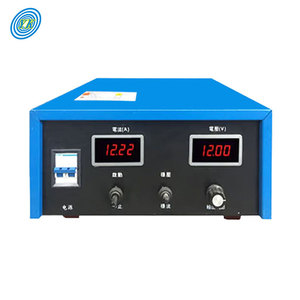
YUCOO Plating Rectifier 220v Ac to 12v Dc 50a 500a 1000 Amp Electroplating Rectifier

YUCOO Plating Rectifier 220V AC to 12V DC Electroplating Rectifier

Capacity: 50A - 1000A Output
Input/Output: 220V AC / 12V DC Constant
Application: Anodizing, Metal Finishing, Electroplating
Get a Quote
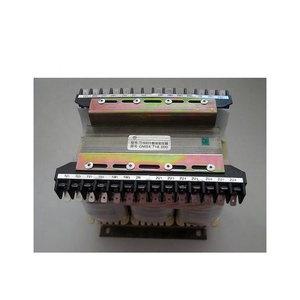
Factory Direct Sales Three Phase Control Electrical Rectifier Transformer

Three-Phase Control Electrical Rectifier Transformer

Control Type: Thyristor Phase-Controlled
Phase: 3-Phase Industrial Standard
Feature: High Efficiency, Low Voltage Dip
Get a Quote
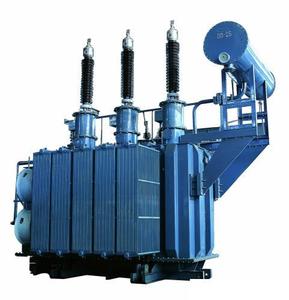
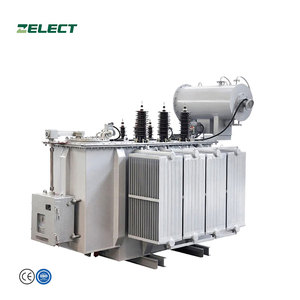
Oil Immersed High Current 6300kva Transformer Three Phase Cathodic protection Rectifier Transformer

Oil-Immersed High Current 6300kVA Cathodic Protection Transformer

Rating: Up to 6300kVA High Current
Cooling: ONAN / ONAF Oil-Immersed
Application: Cathodic Pipeline Protection
Get a Quote
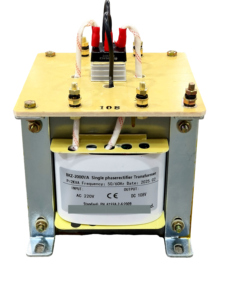
380V/220V to 60V 48V 24V 12V 6V AC to DC Transformers 2000VA 5KVA Single-phase Control Rectifier Transformer

Single-Phase Control Step-Down/Step-Up Rectifier Transformer

Power: 2000VA - 5KVA Multi-Tapped
Voltage: 380V/220V to 60V/48V/24V/12V DC
Customization: OEM Tappings Available
Get a Quote
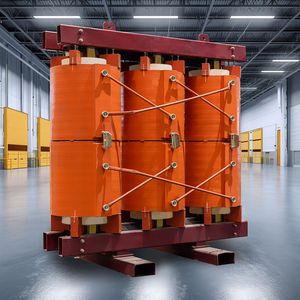
CEEG ZQSC(H)B SERIES 2000kVA/10kv EPOXY CAST TRACTION RECTIFIER DRY-TYPE Air-Insulated Rectifier Transformer

CEEG ZQSC(H)B Series 2000kVA/10kV Cast Resin Traction Rectifier

Type: Dry-Type Cast Resin Insulation
Rating: 2000kVA / 10kV Primary
Standard: IEC 60076-11 Fire Class F1
Get a Quote
ORIGINAL T6 Electric Power Rectifier Transformer TI16933 For HUNYDAI HFC6 Excitation system

T6 Electric Power Rectifier Transformer for Excitation Systems

Model: TI16933 OEM Replacement
Compatibility: Generator Excitation Units
Reliability: Heavy Duty Thermal Class H
Get a Quote
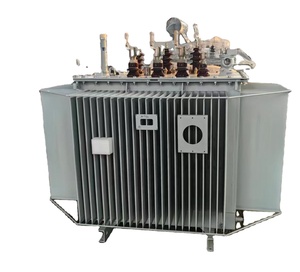
Control 33kv 300kva 1 Mw Voltage Transformer 220v to 110v 400kva High Quality 160kva Sealed Rectifier Transformer

33kV High Voltage Sealed Rectifier Step Up/Down Transformer

Capacity: 160kVA to 1MW (300kVA/400kVA)
Primary Voltage: Up to 33kV Substation Class
Enclosure: Hermetically Sealed IP65 Tank
Get a Quote
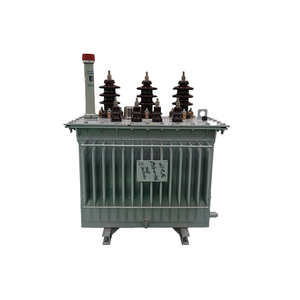
50KVA 100KVA 200KVA 250KVA 300KVA 400KVA 800KVA 1000KVA 3000KVA Transformador 3 Phase Step up Rectifier Transformer

3-Phase Industrial Step Up Rectifier Transformer (50kVA - 3000kVA)

Range: 50kVA to 3000kVA Modular
Winding Material: High-Purity Electrolytic Copper
Efficiency: IS 1180 Energy Level 3
Get a Quote
17+ Years
Engineering Excellence
10 MVA / 33kV
Maximum Power Capacity
ISO 9001:2015
Certified Quality Assurance
45+ Countries
Global Export Infrastructure
B2B Technical Sourcing Whitepaper

Engineering Principles & Semantic Criteria for OEM/ODM Step Up Rectifiers

A comprehensive guide for procurement officers, electrical consultants, and EPC contractors on selecting, customizing, and scaling heavy industrial step-up rectifier transformers.

1. Electromagnetic Topology & Harmonic Suppression

Step-up rectifier transformers represent a crucial bridge between raw AC power supply and high-DC load demands in electrochemical processes, traction power systems, and cathodic protection networks. Unlike standard distribution step-up units, a rectifier transformer is subjected to severe non-linear DC load currents that induce high harmonic frequencies (typically 5th, 7th, 11th, and 13th order harmonics).

As a premier OEM/ODM manufacturer, our design methodology incorporates extended delta phase-shifting techniques (such as 12-pulse, 18-pulse, and 24-pulse rectifier bridge configurations) to systematically cancel out lower-order harmonics. This prevents core saturation, drastically minimizes stray eddy current losses in structural clamp frames, and preserves overall grid power quality without requiring massive external harmonic filter banks.

2. Thermal Modeling & Winding Mechanical Strength

In heavy industrial step-up applications—such as 6300kVA cathodic protection transformers or high-amp electroplating rectifiers—the thermal and mechanical stresses are immense. Current surges during DC load switching generate electrodynamic forces that scale quadratically with current peaks ($F \propto I^2$).

Our engineering teams utilize Finite Element Analysis (FEA) to model magnetic flux leakage and thermal hotspots under full load conditions. We utilize high-purity, oxygen-free electrolytic copper conductors insulated with thermally upgraded Nomex or high-grade epoxy resin. Coils are radial-bound with epoxy-impregnated glass tape and vacuum-pressure impregnated (VPI) or vacuum-cast under high vacuum to eliminate internal air voids, guaranteeing short-circuit withstand withstand capability exceeding IEC 60076-5 standards.

3. Information Gain: Dielectric Optimization & Loss Ratings

Modern procurement requires clear evaluation of Total Cost of Ownership (TCO) rather than low initial capital expenditure. Energy losses in rectifier transformers consist of No-Load Core Losses ($P_0$) and Load Losses ($P_k$).

By adopting Cold-Rolled Grain-Oriented (CRGO) silicon steel laminations (Grade M0H to ZDMH) with laser-scribing technology, our step-up rectifier designs reduce hysteresis losses by up to 28%. When combined with synthetic ester fluids or Class-H cast resin systems, our units maintain operational integrity under ambient temperature extremes (-25°C to +55°C) while achieving compliance with IS 1180 (Part 1) Energy Efficiency Level 3 loss limits.

Technical Comparison Matrix

OEM vs. ODM Customization Breakdown for Global Buyers

Evaluating contract manufacturing capabilities, engineering flexibility, and structural tappings to align with specific project requirements.

Specification Parameter OEM (Original Equipment Manufacturing) ODM (Original Design Manufacturing) Sahara Custom Advantage
Design & Schematic Ownership Client provides complete electrical schematics & CAD models. Sahara engineers build full turnkey designs from client functional specs. Full CAD/3D BIM model delivery within 48 hours.
Primary Input Voltage Range Standard 220V, 380V, 415V, 11kV, 33kV. Custom step-up tap ratios (e.g., 220V to 600V, 10kV to 35kV). Wide-range Off-Load or On-Load Tap Changers (OLTC).
Rectification Phase Topology 6-Pulse Bridge / Standard 3-Phase. 12-Pulse, 18-Pulse, 24-Pulse phase-shifted configurations. Integrated interphase transformers (IPT) for current sharing.
Insulation & Fluid Class Mineral Oil (Class A) or Standard Dry Resin (Class F). Synthetic Bio-Ester Fluid (K-class) or High Temp Nomex (Class H). Fire-retardant, self-extinguishing eco-friendly insulating media.
Harmonic Mitigation (THD) Standard compliance (< 8% THD). Ultra-low THD (< 2.5%) via customized phase shifts. Eliminates external filter costs by 40%.
Enclosure & Protection IP20 Indoor to IP54 Outdoor. NEMA 4X Stainless Steel, C5-M Marine Anti-Corrosion Coating. Certified 1000-hour salt spray corrosion resistance.
Industry Sourcing Roadmap

Future Sourcing & Technology Trends in Step-Up Transformer Manufacturing

Key technological shifts shaping industrial power conversion, grid integration, and sustainable equipment sourcing over the next decade.

1. Silicon Carbide (SiC) & Hybrid Solid-State Integration

The power electronics industry is rapidly transitioning from traditional silicon thyristors to Wide Bandgap (WBG) semiconductors like Silicon Carbide (SiC) and Gallium Nitride (GaN). Future step-up rectifier transformers will operate at substantially higher switching frequencies (10kHz to 50kHz+).

This shift reduces transformer core footprint by 35% while increasing overall conversion efficiency to over 99.1%. As an ODM leader, Sahara is actively co-developing hybrid high-frequency step-up transformers optimized for next-generation SiC rectification bridges.

2. IoT-Enabled Smart Transformers & Predictive Maintenance

Unplanned downtime in heavy metallurgical factories or green hydrogen electrolysis plants can cost millions daily. Future B2B procurement mandates the inclusion of integrated IoT edge monitoring devices.

Our modern step-up rectifiers feature integrated fiber-optic temperature sensors, continuous Dissolved Gas Analysis (DGA) monitors, vibration accelerometers, and online dielectric moisture meters. Real-time telemetry data is streamed directly to industrial SCADA systems via Modbus TCP/IP or IEC 61850 protocols, enabling predictive maintenance AI models to prevent thermal breakdown before it occurs.

3. Decarbonization & Biodegradable Dielectric Liquids

Environmental, Social, and Governance (ESG) mandates are driving global buyers away from toxic mineral oils. The adoption of natural and synthetic ester fluids (derived from soybean or rapeseed oils) offers a flashpoint above 300°C—eliminating the need for complex fire deluge systems—and ensures 100% biodegradability within 28 days.

Sahara’s fluid-filled step-up rectifiers are fully compatible with K-class ester fluids, dramatically extending insulation paper life by absorbing moisture without degrading dielectric strength.

4. Supply Chain Resilience & Modular Construction

Global procurement strategies have shifted from "Just-in-Time" to "Just-in-Case" modular designs. Industrial buyers now demand standardized sub-components, universal busbar connection points, and skid-mounted compact substations (CSS) that allow rapid field swapping and easy expansion.

Sahara’s modular manufacturing framework reduces custom OEM build lead-times from 24 weeks down to 8–10 weeks, ensuring uninterrupted execution for critical utility projects.

Regulatory Standard Compliance

IS 1180 (Part 1) Amendment 1 Loss Benchmark Standards

Mandatory maximum energy loss limits for distribution & step-up transformers up to 11kV class as specified by international efficiency standards.

Rating (kVA) Impedance (%) Level 1 Efficiency (W) Level 2 Efficiency (W) Level 3 Max Efficiency (W)
50% Load 100% Load 50% Load 100% Load 50% Load 100% Load
250 kVA 4.50% 1050 W 3150 W 980 W 2930 W 920 W 2700 W
315 kVA 4.50% 1100 W 3275 W 1025 W 3100 W 955 W 2750 W
500 kVA 4.50% 1600 W 4750 W 1510 W 4300 W 1430 W 4100 W
630 kVA 4.50% 2000 W 5855 W 1860 W 5300 W 1745 W 4850 W
1000 kVA 5.00% 3000 W 9000 W 2790 W 7700 W 2620 W 7000 W
1600 kVA 6.25% 4500 W 13500 W 4200 W 11800 W 3970 W 11300 W
2500 kVA 6.25% 6500 W 20000 W 6150 W 18500 W 5900 W 17500 W
Enterprise Superiority

Why Global Industrial Buyers Partner With Sahara Transformers

Combining over 17 years of engineering heritage with rigorous quality assurance and advanced manufacturing automation.

Fully Automated Manufacturing Plant

Located in Pune’s industrial hub, our state-of-the-art facility features automated CNC core-cutting lines, computerized foil winding machinery, and automated vacuum drying ovens to eliminate human error during coil assembly.

NABL Accredited In-House Test Lab

Every transformer undergoes 100% routine testing including Winding Resistance, Voltage Ratio, Vector Group verification, Dielectric Breakdown Voltage (BDV), Tan Delta, and Induced Overvoltage testing prior to dispatch.

Global Turnkey Field Support

We support global contractors with complete site installation, oil filtration, OLTC servicing, retrofitting, and emergency annual maintenance contracts (AMC) across Asia, Africa, Europe, and the Americas.

Buyer Knowledge Base

Frequently Asked Questions (Procurement & Technical Specs)

Direct engineering answers to common technical queries encountered during the tender phase and procurement evaluation.

What is the structural difference between a standard step-up transformer and a step-up rectifier transformer?

A standard step-up transformer converts low AC voltage to high AC voltage for grid transmission, assuming smooth sinusoidal waveforms. A step-up rectifier transformer is specifically designed to feed diode or thyristor rectifiers that produce non-linear DC loads. It must feature reinforced insulation to withstand high DC bias voltage, harmonic cancellation phase-shift windings (e.g. Delta-Star/Extended Delta combinations), and heavy mechanical clamping to counteract pulse torque vibrations caused by current harmonics.

How does a 12-pulse or 24-pulse rectifier design impact grid power quality?

In a 6-pulse bridge, significant 5th and 7th order current harmonics are reflected back into the supply grid, causing total harmonic distortion (THD) that can disrupt sensitive electronic equipment. By using a 12-pulse configuration with a 30° phase shift between dual secondary windings (Star and Delta), the 5th and 7th harmonics cancel each other out electromagnetically. A 24-pulse design further eliminates the 11th and 13th harmonics, bringing supply current THD down below 3%, easily satisfying IEEE 519 and IEC 61000-2-4 compliance standards.

Can Sahara manufacture step-up rectifier units tailored for extreme environmental conditions (such as offshore or high-salinity zones)?

Yes. We offer specialized OEM/ODM customization for harsh operating environments. Options include C5-M ISO 12944 marine-grade anti-corrosion polyurethane paint systems, hermetically sealed IP65 or NEMA 4X stainless steel tanks, high-altitude bushing insulation extensions, and Class H cast-resin dry-type construction that operates reliably up to 55°C ambient temperatures without thermal derating.

What documentation and factory acceptance testing (FAT) are provided with OEM orders?

Every unit ships with a full quality dossier including NABL-accredited test reports (routine and type tests like Lightning Impulse and Temperature Rise tests), material test certificates for copper wire and silicon steel, 2D layout drawings, 3D STEP models, maintenance manuals, and ISO 9001 compliance certificates. Buyers or third-party inspection agencies (TUV, SGS, Bureau Veritas) are welcomed to witness FAT live in our facility.

What lead-time can be expected for custom ODM industrial rectifier transformers?

Standard OEM production runs typically require 4 to 6 weeks following approval of final engineering drawings. For complex ODM projects requiring custom 12/24-pulse winding configurations, specialized OLTC tap changers, or custom enclosures, lead-times range from 8 to 12 weeks. Emergency replacement units can be expedited upon request.

How do I request a custom quotation and engineering evaluation for my project?

You can initiate direct consultation with our senior engineering team by clicking any of the "Get a Quote" call-to-action buttons on this page. Provide your input voltage, output DC voltage/current requirements, pulse configuration, and installation environment, and our team will issue a comprehensive technical proposal within 24 hours.

Ready to Upgrade Your Industrial Power Infrastructure?

Partner with an ISO-certified OEM/ODM manufacturer. Request custom engineering schematics, loss calculations, and competitive factory-direct pricing today.

Get a Quote