
Industrial-Grade OEM/ODM Transformer Solutions
Explore our custom-engineered transformer lineup, certified to ISO, IEC 60076, IEEE C57, and IS 1180 standards. Built for maximum thermal endurance, minimal excitation losses, and long operational lifespans.
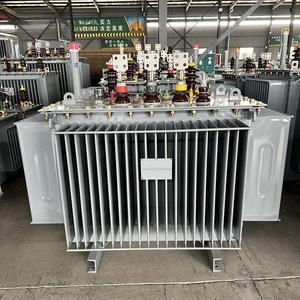
160kVA - 2500kVA High Efficiency Power Transformers (11kV / 15kV / 20kV / 33kV)
- Capacity: 160 kVA to 2500 kVA
- Primary Voltage: 6kV - 33kV (50/60Hz)
- Winding: High-Purity Electrolytic Copper/Aluminum
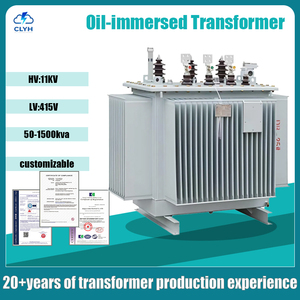
11kV to 415V 3-Phase Oil Immersed Industrial Step Down Distribution Transformer
- Capacity: 50kVA - 1500kVA
- Step-Down Ratio: 11kV to 415V / 400V
- Cooling: ONAN (Oil Natural Air Natural)
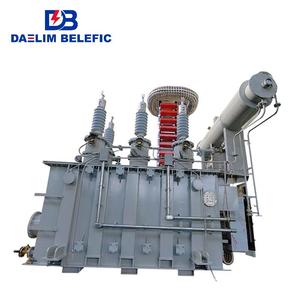
Heavy Load 200 MVA 132kV / 22kV Substation Transformer for Regional Grids
- Capacity: Up to 200 MVA
- Voltage Class: 132kV Primary / 22kV Secondary
- Features: OLTC Integration, Low Noise
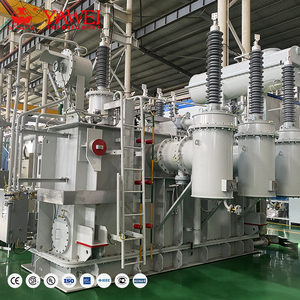
EHV 100MVA - 250MVA 220kV/33kV High Voltage 3-Phase Power Transformer
- Rated Power: 100 MVA to 250 MVA
- HV Rating: 220 kV Ultra-High Voltage
- Standards: IEC 60076 / IEEE Compliance
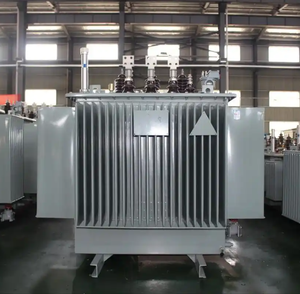
S13-M 100kVA 13.8kV to 400V 60Hz Oil Immersed Distribution Transformer
- Target Market: Latin America & 60Hz Grids
- Core Tech: Hermetically Sealed S13 Series
- Energy Rating: Level-3 Low Loss Design
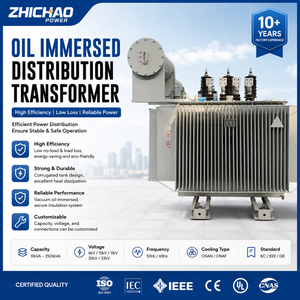
Custom OEM High Efficiency 3-Phase Oil Immersed Power Transformer (380V/220V)
- Service: 100% OEM/ODM Custom Design
- Voltage: Dual Low-Voltage Options
- Enclosure: IP54 Heavy Duty Weatherproof
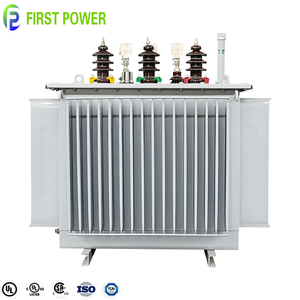
50kVA - 500kVA 20kV Medium Voltage Oil Immersed Distribution Transformer Series
- Voltage Class: 20kV Medium Voltage
- Capacity Modular Steps: 50kVA to 500kVA
- Loss Metrics: Meets Eco-Design Tier 2
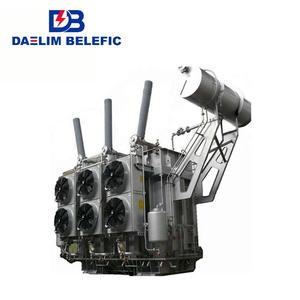
Factory Direct 16MVA - 50MVA 220kV/230kV Ultra High Voltage Oil Power Transformer
- High Voltage Rating: 220kV / 230kV
- Capacity: 16,000 kVA - 50,000 kVA
- Insulation Fluid: High-Flashpoint Mineral Oil
Why Global Procurement Officers Choose Our OEM/ODM Transformer Manufacturing Infrastructure
As a globally recognized industrial transformer manufacturer established in 2007, our company operates at the intersection of heavy electrical engineering precision and flexible OEM/ODM contract manufacturing. Modern industrial power distribution demands equipment capable of enduring continuous overloads, aggressive thermal switching, and harmonic-rich environments generated by modern power electronics.
Our ISO 9001, ISO 14001, and ISO 45001 certified manufacturing facility houses state-of-the-art automated core-lapping machines, high-precision vertical and horizontal winding bays, and ultra-high-vacuum drying chambers. We engineer electrical transformers tailored precisely to regional utility requirements, private industrial microgrids, heavy metallurgical plants, and solar/wind renewable integration.
Ultra-Low Loss CRGO Core Engineering
We utilize prime-grade, Cold-Rolled Grain-Oriented (CRGO) silicon steel laminations (M4, M3, and Hi-B grades) with step-lap joints. This minimizes hysteresis losses, eddy currents, and no-load magnetizing currents by up to 30% below standard thresholds.
Custom OEM/ODM Coil Configurations
From continuous disc and helical windings to foil-wound secondary coils for low-voltage/high-current application, our winding configurations utilize 99.99% oxygen-free electrolytic copper or high-conductivity aluminum with thermal insulation Class A, F, or H.
Rigorously Tested & Global Export Certified
Every unit undergoes strict Factory Acceptance Testing (FAT), including winding resistance, voltage ratio, phase displacement, short-circuit impedance, dielectric breakdown voltage (BDV), and partial discharge measurement in accordance with IEC 60076 and IEEE standards.
Industrial Transformer OEM Selection Matrix
Compare core technical attributes across primary industrial transformer types to optimize your capital expenditure (CAPEX) and total operational cost (OPEX).
| Transformer Architecture | Capacity Range (kVA/MVA) | Primary Voltage Class | Cooling Mechanism | Primary Industrial Applications | Key Efficiency Standard |
|---|---|---|---|---|---|
| Oil-Immersed Distribution | 50 kVA - 2,500 kVA | 11kV / 15kV / 20kV / 33kV | ONAN / ONAF | Industrial Manufacturing, Commercial Grids | IS 1180 Level 3 / IEC Eco-Design |
| EHV Utility Substation Power | 10 MVA - 250 MVA | 66kV / 132kV / 220kV / 230kV | ONAF / OFAF / ODAF | Regional Transmission Networks, Heavy Utilities | IEC 60076-1 / IEEE C57.12.00 |
| Dry-Type Cast Resin (CRT) | 100 kVA - 10,000 kVA | Up to 33kV | AN / AF (Air Natural/Forced) | Hospitals, Commercial Towers, Indoor Sub-stations | IEC 60076-11 (F1/E2/C2 Rated) |
| Solar / Wind Inverter Duty | 500 kVA - 12,500 kVA | 11kV / 33kV / 34.5kV | ONAN (Ester / Mineral Oil) | Photovoltaic Farms, Offshore Wind Farms | IEEE C57.159 (Harmonic K-Factor) |
| Electric Arc Furnace (EAF) | 1,000 kVA - 60,000 kVA | 11kV / 33kV | ONAF / OFWF (Oil Forced Water Forced) | Steel Foundries, Smelters, Chemical Processing | Custom Heavy Duty Duty-Cycle Standards |
Future Procurement Trends in the Global Industrial Transformer Market
The strategic sourcing of industrial transformers is undergoing a massive paradigm shift. Procurement managers, EPC contractors, and chief utility engineers are moving away from evaluating upfront purchase costs alone, shifting toward a Total Cost of Ownership (TCO) evaluation framework. Over a standard 30-year operational lifespan, the energy lost due to sub-optimal core and conductor design can equal up to three times the initial procurement price of the transformer.
Key procurement trends defining the market through 2030 include:
- Stricter Eco-Design Directives and Minimum Energy Performance Standards (MEPS): Governments worldwide are enforcing lower threshold losses. For example, India’s IS 1180 (Part 1) Amendment 1 mandates Level-2 and Level-3 efficiency ratings, while the European Union’s Tier-2 Eco-Design requirements enforce strict caps on No-Load Losses ($P_o$) and Load Losses ($P_k$). OEM suppliers who lack high-grade CRGO annealing and step-lap cutting technologies are rapidly losing market compliance.
- Transition to Natural and Synthetic Ester Insulating Fluids: Environmental regulations and fire safety protocols in dense urban hubs are driving a transition from conventional mineral oil to biodegradable ester fluids. Synthetic and natural esters offer a flashpoint above 300°C (K-class fluid classification), eliminating the need for expensive fire-deluge systems while substantially extending cellulose paper insulation life.
- Supply Chain Transparency & Standardized Component Modularization: Supply chain disruptions have heightened the demand for OEMs capable of providing standardized component configurations (such as standard MR or ABB On-Load Tap Changers, Qualitrol temperature indicators, and standardized porcelain or resin bushings). This ensures rapid availability of spare parts over decades of operation.
Technology & Development Trends Transforming Transformer Engineering
The accelerating transition toward renewable energy, industrial automation, and microgrid decentralized generation is redefining technical specifications for modern power distribution equipment. Industry development is anchored upon three technological pillars:
IoT-Enabled Smart Transformer Conditioning
Modern OEM units are increasingly equipped with integrated IoT sensor arrays for real-time Dissolved Gas Analysis (DGA), fiber-optic direct winding hot-spot temperature monitoring, and online moisture-in-oil tracking. This enables predictive maintenance algorithms that prevent catastrophic failures before insulation breakdown occurs.
Harmonic Suppression in Inverter Duty Duty
Solar PV stations and EV charging hubs introduce severe high-frequency harmonics (THD) and DC bias into step-up transformers. Advanced OEM designs utilize electrostatic shielding between primary and secondary windings, custom K-factor bracing, and multi-winding configurations (dual or triple secondary outputs) to ensure thermal stability under non-sinusoidal load profiles.
Amorphous Metal Cores & Eco Compact Substations
Amorphous metal alloy core technology is replacing conventional silicon steel in light-load distribution networks, reducing no-load losses by up to 70-80%. Concurrently, factory-assembled Compact Substations (CSS) housing SF6-free ring main units (RMU) and transformers are becoming the dominant solution for urban development.
Industrial Transformer Procurement & Technical FAQ
Answers to critical technical, engineering, and OEM customization questions faced by global procurement officers and electrical design engineers.
- Technical Specification Review: We analyze your single-line diagrams (SLD), voltage ratios, vector groups (e.g., Dyn11, Ynd11), short-circuit impedance percentage (%Z), tapping range, and site ambient conditions.
- Optimized Design Proposal: Our engineering team utilizes 3D CAD and electromagnetic FEA simulation software to calculate loss profiles ($P_o$ and $P_k$) and thermal dissipation, returning detailed GA (General Arrangement) drawings within 48-72 hours.
- Component Procurement & Fabrication: Core laminations are precision step-lap cut, windings are insulated, and tanks undergo shot-blasting, anti-corrosion zinc painting, and pressure testing.
- Factory Acceptance Test (FAT): The finished unit undergoes routine testing witnessed by your third-party inspectors (e.g., SGS, Bureau Veritas, TUV) prior to seaworthy packaging and delivery.
TCO = Initial Purchase Price + (A × P_o) + (B × P_k)
Where $P_o$ represents No-Load Loss (iron loss in kW, occurring continuously 8760 hours/year regardless of load), $P_k$ represents Load Loss (copper loss in kW at rated capacity), A is the capitalized value of no-load loss per kW (typically $4,000 - $8,000/kW based on local electricity tariffs), and B is the capitalized value of load loss per kW (typically $1,500 - $3,000/kW based on duty cycle factor). Our custom engineering allows buyers to request specific A and B capitalization values so we can optimize core material selection (M4 vs. Hi-B vs. Amorphous) to achieve the lowest overall lifecycle cost.
- ONAN (Oil Natural Air Natural): Thermal convection circulates oil through radiators, and ambient airflow cools radiator fins naturally. Used for baseline continuous operation.
- ONAF (Oil Natural Air Forced): External axial fans force airflow across radiators, increasing heat transfer efficiency and allowing the transformer to carry up to 125%-133% of its ONAN rating without exceeding dielectric temperature limits.
- OFAF (Oil Forced Air Forced): Internal oil pumps actively circulate dielectric fluid through heat exchangers while external fans force airflow. Essential for heavy utility transformers above 40MVA to maintain compact footprints under extreme load profiles.
- Heavy Duty K-Factor Design (K-4, K-13, or K-20 rating): Conductor cross-sections and core flux densities are derated to handle eddy current and stray load losses caused by harmonic currents.
- Electrostatic Shielding: Grounded copper shields installed between primary and secondary windings prevent high-frequency inverter noise and voltage transients from capacitive coupling into the MV grid.
- Multi-Winding Options: Dual-secondary (e.g., 33kV primary with two separate 630V low-voltage secondary windings) allow multiple solar central inverters to connect to a single step-up transformer without cross-coupling interference.
- De-Energized Tap Changer (DETC / Off-Circuit): Requires de-energizing the transformer to manually change tap ratios (typically ±2.5%, ±5%). Suitable for stable distribution networks where seasonal grid fluctuations are minimal.
- On-Load Tap Changer (OLTC): Automatically switches tapping steps under energized load conditions using vacuum or oil interruption switches coupled with automatic voltage regulators (AVR). Crucial for facilities with volatile grid supplies, heavy arc furnace operations, or continuous process plants (chemical/refining) requiring constant output voltage.
- Hermetically Sealed Corrugated Tanks: Flexible corrugated fins accommodate oil thermal expansion without an air-contacting conservator tank, eliminating moisture ingress.
- Specialized Painting Cycles: A multi-stage surface treatment including sandblasting to Sa 2.5 grade, zinc-rich epoxy primer coating, intermediate epoxy tie-coat, and a polyurethane topcoat with a total dry film thickness (DFT) exceeding 240 to 320 microns.
- Stainless Steel & Galvanized Hardware: High-grade Grade 316 stainless steel hardware, marshaling boxes, and hot-dip galvanized radiators ensure 30+ year corrosion resistance.
Ready to Accelerate Your Transformer Procurement Project?
Partner with an ISO-certified industrial transformer manufacturer. Consult with our senior application engineers for custom GA drawings, technical parameter optimization, and factory-direct pricing tailored to your exact grid requirements.