Procurement Knowledge Base
Frequently Asked Questions (FAQ)
Essential technical and commercial insights for engineers, procurement managers, and system integrators.
Q1:
What are the primary technical advantages of custom OEM/ODM dry-type transformers over standard off-the-shelf units?
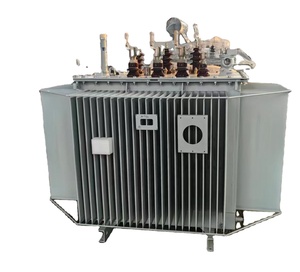
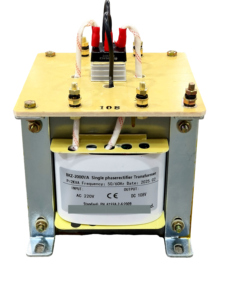
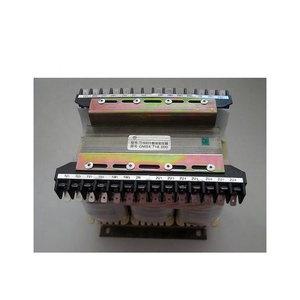
Custom OEM/ODM dry-type transformers are specifically engineered to match your system’s exact voltage ratios, vector groups, ambient temperature extremes, enclosure IP ratings, and harmonic spectrums. Standard off-the-shelf transformers often suffer from thermal overheating when exposed to non-linear thyristor/SCR rectifier loads or fast voltage transients. Custom units integrate specialized phase-shifting windings (e.g., 12-pulse or 24-pulse topologies), reinforced insulation systems (Class H Nomex®), and customized mechanical busbar arrangements for direct integration into your machinery.
Q2:
How do cast resin dry-type transformers prevent fire hazards in indoor and subterranean installations?
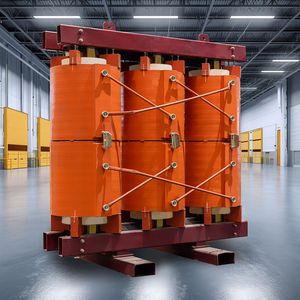
Cast resin dry transformers utilize epoxy resin filled with quartz powder to completely encapsulate the high-voltage windings under vacuum. This material is non-flammable, self-extinguishing, and free of toxic halogen gas emissions (F1 fire performance certification). Because they contain no flammable transformer oil, they require no expensive fire-extinguishing systems, oil containment pits, or fire-segregated vaults, making them ideal for high-rise buildings, underground metro stations, hospitals, and chemical processing facilities.
Q3:
What K-Factor rating should be specified for electroplating, variable speed drives, and rectifier duty transformers?
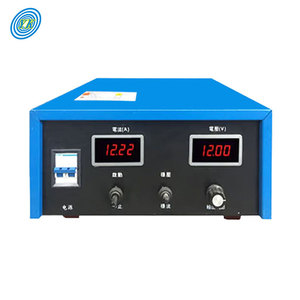
For electroplating rectifiers, electrolysis units, VFDs, and heavy industrial power electronic loads, a standard K-1 transformer is inadequate. Depending on the harmonic spectrum (THD), a rating of K-13 (for standard 6-pulse SCR rectifiers) or K-20 to K-30 (for heavy 12-pulse rectifiers and high-frequency switching power supplies) should be specified. Elevated K-factor transformers feature double-sized neutral conductors, electrostatic shielding between primary/secondary windings, and optimized winding strand geometry to mitigate eddy current losses.
Q4:
What factory routine and type tests are performed on custom dry-type transformers prior to dispatch?
Every transformer undergoes 100% factory routine testing in accordance with IEC 60076-11 and IS 2026/1180 standards. Routine tests include Winding Resistance Measurement, Voltage Ratio & Vector Group Verification, Separate Source AC Withstand Voltage Test, Induced Overvoltage Test, No-Load Loss & Current Measurement, Load Loss & Impedance Measurement, and Partial Discharge Measurement (<10 pC for cast resin units). Type and special tests—such as Lightning Impulse Withstand, Temperature Rise Test, Short-Circuit Withstand, and Sound Level Measurement—are performed upon buyer request.
Q5:
Can OEM dry transformers be customized for high-humidity, marine, or corrosive chemical environments?
Yes. For extreme ambient conditions, dry transformers are manufactured with E3 (environmental) and C2 (climatic) certified cast resin encapsulations or multi-dip anti-corrosive VPI varnish coatings. Furthermore, heavy-duty stainless steel (SS304 / SS316) or powder-coated CRCA steel enclosures rated from IP23 (indoor drip-proof) to IP54/IP65 (weatherproof outdoor/coastal) are available, complete with anti-vibration dampers and space heaters to prevent internal moisture condensation.
Q6:
What is the lead time for custom engineered OEM/ODM dry transformers?
Standard OEM custom dry transformers (up to 2500 kVA) typically feature a manufacturing lead time of 3 to 5 weeks following GA drawing approval. Fast-track production lines are available for urgent retrofitting or plant shutdown projects. Comprehensive engineering approval drawing packages (including 3D CAD/STEP models, schematic diagrams, and foundation layouts) are provided within 3 to 5 business days of contract placement.