
Industrial Rectifier & Auto Transformer Product Portfolio
Custom OEM/ODM Electromagnetic Equipment Designed for Electroplating, Cathodic Protection, Traction Power, and High-Current Industrial Rectification
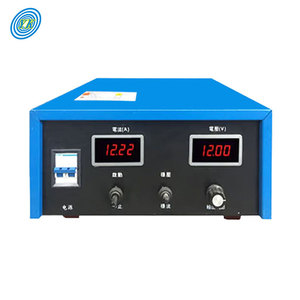
YUCOO High-Current Electroplating Rectifier Transformer Unit
- Input Voltage: 220V AC Single/Three Phase
- Output DC Current: 50A to 1000A Continuous
- Stepless Voltage Regulation: 0-12V DC
- Application: Anodizing, Electroplating & Electrolysis
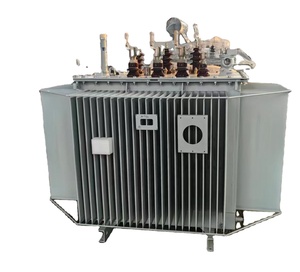
Industrial Three-Phase Control Electrical Rectifier Transformer
- Primary Voltage: Up to 11kV Custom OEM
- Secondary Output: High Precision Low Losses
- Vector Group: Dyn11 / Ynd11 Available
- Cooling Standard: ONAN / ONAF Forced Air
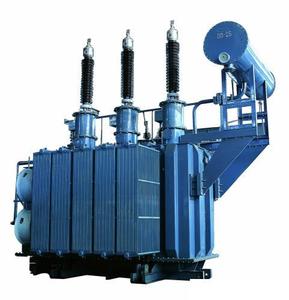
Oil-Immersed 6300kVA High-Current Cathodic Protection Rectifier
- Rated Capacity: 6300 kVA Heavy Duty
- Protection Rating: IP55 Sealed Tank
- Duty Cycle: 100% Continuous Full Load
- Target Industry: Offshore & Pipeline Protection
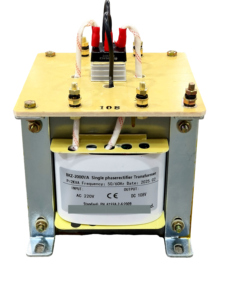
Single-Phase Control Rectifier Step-Down Transformer (2000VA - 5KVA)
- Input Taps: 380V / 220V AC Dual Voltage
- Multi-Tap DC Outputs: 6V, 12V, 24V, 48V, 60V
- Insulation Class: Class H (180°C Rated)
- Core Design: Grain-Oriented Silicon Steel
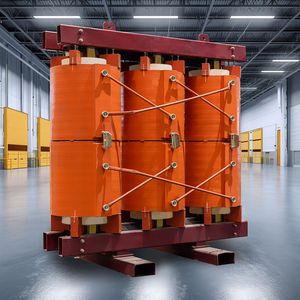
CEEG ZQSC(H)B 2000kVA/10kV Epoxy Cast Resin Traction Transformer
- Rated Capacity: 2000 kVA / 10kV HV System
- Technology: Vacuum Pressure Epoxy Cast
- Harmonic Endurance: K-Factor K-13 / K-20
- Compliance: IEC 60076-11 Air-Insulated
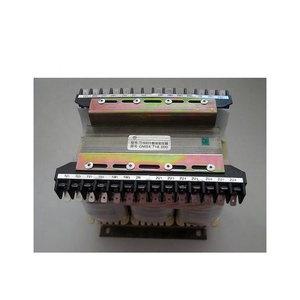
T6 Precision Power Rectifier Transformer TI16933 for Excitation Systems
- OEM Match: Generator Excitation Retrofit
- Dynamic Response: Fast Transient Recovery
- Short Circuit Strength: High Mechanical Stress Class
- Dielectric Test Strength: Enhanced Impulse Ratings
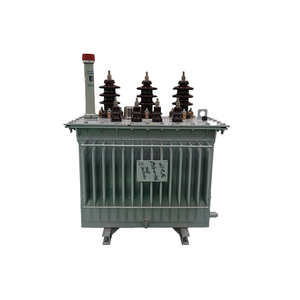
33kV High-Voltage Control & Sealed Rectifier Transformer Unit
- HV Input Rating: 33kV Class Primary
- Capacity Options: 160kVA to 1MW (1000kVA)
- Enclosure Type: Hermetically Sealed Tank
- Voltage Conversion: 33kV Step Down to 400V/220V/110V
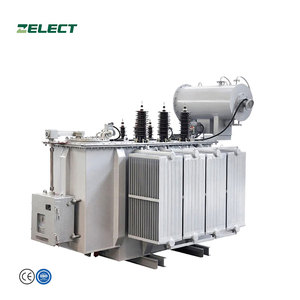
Three-Phase Step-Up Rectifier Transformer (50kVA - 3000kVA)
- Modular Capacity: 50kVA to 3000kVA Range
- Configuration: Step-Up / Step-Down Custom
- Winding Material: 99.99% Electrolytic Copper
- Standard Compliance: IEEE C57 & IEC 60076
Industrial Auto Transformers & Rectifier Systems: Electromagnetic Architecture & Loss Reduction Engineering
In modern electrical distribution networks and heavy industrial rectification applications, selecting between isolated double-winding transformers and specialized auto transformers represents a pivotal engineering trade-off. An auto transformer utilizes a single, continuous electromagnetic winding wrapped around a high-permeability magnetic core, functioning simultaneously as both the primary and secondary circuit. This direct electrical connection enables physical copper volume reductions ranging from 30% to 50% compared to traditional isolated transformers when the primary-to-secondary transformation ratio approaches unity (e.g., voltage ratios within 1:2 or 2:1).
Multi-Pulse Rectifier Transformer Topology & Harmonic Suppression
For heavy direct current (DC) industrial processes—such as zinc/copper electrowinning, high-amperage aluminum smelting, electroplating, and cathodic pipeline protection—rectifier transformers operate under severe non-linear loading conditions. High-power semiconductor thyristors and silicon diodes inject significant current harmonics back into the supply grid, creating thermal stress and severe voltage waveform distortion.
As a premier OEM/ODM manufacturer, our engineering team custom-designs multi-pulse phase-shifting rectifier transformers (12-pulse, 18-pulse, 24-pulse, and 48-pulse systems). By utilizing specialized primary or secondary phase-shift vector configurations (such as Extended Delta, Zig-Zag, Star-Delta dual-secondaries with $\pm 15^\circ$ or $\pm 7.5^\circ$ angular shifts), low-order harmonic currents—specifically the 5th, 7th, 11th, and 13th harmonics—are vectorially cancelled within the transformer windings before reaching the main utility busbars. This mitigates Total Harmonic Distortion (THD) in compliance with strict international grid codes like IEEE 519-2022 and IEC 61000-2-4.
High K-Factor Endurance
Engineered specifically for non-linear load spectra (K-13, K-20, K-30 ratings) utilizing stray-loss reduction techniques, transposition conductors, and electrostatic shields between windings.
Thermal & Dielectric Integrity
Vacuum Pressure Impregnation (VPI) with Class H (180°C) or Class R (220°C) resin systems, ensuring zero moisture absorption and superior dielectric breakdown resistance during heavy overload cycles.
Custom OEM Vector Groups
Full customization of voltage regulation taps (ON-Load Tap Changers OLTC or Off-Circuit Tap Changers OCTC), dual-secondary phase angles, and step-up/step-down transformation profiles.
Global Sourcing Trends & Next-Gen Technologies in Industrial Transformers
The international electrical equipment market is undergoing a rapid transition driven by industrial decarbonization, the surge in green hydrogen production, massive expansion of EV ultra-fast charging hubs, and stricter energy efficiency mandates (such as Europe's Tier 2 Ecodesign Directive EU 2019/1783 and India's IS 1180 Energy Efficiency Level 3). As international procurement managers and EPC contractors evaluate long-term equipment lifecycle costs, three major technological shifts dominate the market:
1. Adoption of Amorphous Alloys & High-Grade CRGO Steel Laminations
Traditional Cold-Rolled Grain-Oriented (CRGO) silicon steel cores are increasingly being replaced or augmented by ultra-thin Amorphous Metal Cores (25 microns thickness). Amorphous cores exhibit a non-crystalline atomic structure that lowers core magnetic hysteresis losses by up to 70% to 80% compared to standard M4 or M5 grade silicon steel. For continuous duty auto transformers and utility distribution units, this translates to massive long-term kilowatt-hour savings over a 25-year operational lifespan.
2. Biodegradable Synthetic Ester Oils Replacing Conventional Mineral Oils
Environmental compliance and fire safety standards inside urban substations and marine installations have accelerated the demand for natural and synthetic ester transformer fluids (K-class liquids with flash points exceeding 300°C). Unlike conventional mineral oils, synthetic ester liquids are readily biodegradable, non-toxic to aquatic life, and capable of absorbing moisture out of cellulose insulation papers without degrading dielectric strength—substantially extending transformer service life.
3. IoT-Enabled Smart Transformers with Embedded Fiber-Optic Sensing
Unplanned downtime in heavy manufacturing facilities can incur catastrophic financial losses. Future-ready OEM/ODM transformer procurement mandates the integration of real-time online diagnostic suites. Modern auto transformers and rectifier units now feature embedded direct fiber-optic temperature sensors inside critical winding hot-spots, online Dissolved Gas Analysis (DGA) monitors, micro-moisture sensors, and RS485 / Modbus / IEC 61850 communication gateways for predictive AI maintenance.
Comparative Analysis: Auto Transformers vs. Isolated Rectifier Transformers
The table below outlines key technical parameters to assist industrial buyers, plant electrical engineers, and EPC procurement leads in specifying the optimal electromagnetic equipment for their operational requirements:
| Performance Specification | Industrial Auto Transformer | Dry-Type Epoxy Rectifier Unit | Oil-Immersed High-Current Rectifier |
|---|---|---|---|
| Primary Application | Grid interconnect, voltage regulation, motor auto-starting | Indoor industrial plants, traction power, clean environments | Heavy electroplating, electrowinning, outdoor substations |
| Galvanic Isolation | No (Direct electrical path between primary/secondary) | Yes (Complete primary-to-secondary physical isolation) | Yes (Full galvanic isolation + electrostatic shielding) |
| Relative Physical Footprint | Extremely Compact (30-50% smaller) | Medium (Requires structural ventilation enclosure) | Large (Includes radiator banks & conservator tanks) |
| Peak Electrical Efficiency | 99.2% – 99.6% (Minimal transformed loss) | 98.0% – 98.8% (Depending on VPI/Cast resin) | 98.5% – 99.1% (Optimized copper busbars) |
| Harmonic Endurance Rating | Standard Sinusoidal Loads (Linear) | High Non-Linear Loading (K-13 up to K-30) | Severe Pulsating DC Duty (24/48 Pulse Systems) |
| Cooling Designation | AN / AF (Air Natural / Forced) | ANAN / ANAF (Cast Resin Cooling) | ONAN / ONAF / OFAF (Mineral or Ester Oil) |
| OEM Customization Level | Custom Taps, Auto-start steps, Voltage Ratios | Multi-phase shifts, Epoxy colors, IP Enclosures | Heavy DC bus bar layout, OLTC, Outdoor NEMA 4X |
Why Partner With Us: Direct OEM/ODM Factory Infrastructure
As a verified leader in heavy electrical manufacturing with over 17 years of specialized production experience, our state-of-the-art facility combines advanced automated core-stacking machinery, precision CNC copper winding equipment, high-vacuum oil filling systems, and a certified full-range high-voltage testing laboratory.
100% Electrolytic Copper Windings
We utilize high-purity (99.99%) Oxygen-Free Copper (OFC) wire and continuously transposed conductors (CTC) to minimize eddy current losses and withstand massive short-circuit mechanical forces.
Rigorous FAT Testing Protocol
Every single unit undergoes complete Routine & Type Testing according to IEC 60076 standards: Winding Resistance, Voltage Ratio & Vector Group, Insulation Resistance, Breakdown Voltage (BDV), Partial Discharge, and Induced Overvoltage Withstand.
Fast-Track Custom Engineering
Our dedicated R&D electrical team uses 3D FEA (Finite Element Analysis) magnetic flux simulation software to rapidly produce custom OEM/ODM mechanical CAD drawings, technical datasheets, and short production lead times.
Frequently Asked Technical & Sourcing Questions
Q1 What is the primary technical difference between an auto transformer and a standard isolation transformer?
The fundamental distinction lies in winding configuration and electrical isolation. An auto transformer features a single continuous winding per phase that is shared between the input (primary) and output (secondary) circuits, meaning there is direct electrical conduction between them. Standard isolation transformers possess completely separate, physically isolated primary and secondary windings that transfer energy exclusively via magnetic induction. Auto transformers are significantly lighter, smaller, more efficient, and cost-effective when the transformation ratio is close to 1:1 or 2:1, whereas isolation transformers are mandatory when complete electrical separation or high noise isolation is required between circuits.
Q2 How do phase-shifting rectifier transformers reduce harmonic distortion in DC power systems?
Phase-shifting rectifier transformers introduce precise angular phase displacements (e.g., $+15^\circ$ and $-15^\circ$ or $30^\circ$ separation) between multiple secondary windings supplying separate semiconductor bridge rectifiers. In a 12-pulse or 24-pulse configuration, the current harmonics created by one rectifier bridge are exactly $180^\circ$ out of phase with the corresponding harmonics produced by the parallel bridge. Consequently, low-order harmonic currents (such as the 5th, 7th, 11th, and 13th) vectorially cancel out inside the primary winding, producing a clean, smooth, near-sinusoidal current waveform on the high-voltage supply grid.
Q3 What factors determine the ideal K-Factor rating for a non-linear industrial transformer?
The K-Factor rating quantifies a transformer's capability to withstand harmonic currents without exceeding safe thermal operating limits. Calculating the required K-Factor involves determining the harmonic load spectrum created by connected non-linear equipment (VFDs, SCR rectifiers, UPS systems, induction furnaces). A standard linear load requires a K-1 rating. Moderate harmonic environments (variable speed drives, commercial IT loads) typically utilize K-4 or K-13 rated transformers, while heavy industrial rectifier installations, electric arc furnaces, and traction substations demand K-20 or K-30 ratings featuring double-sized neutral conductors, electrostatic shielding, and specialized transposed copper windings.
Q4 Can your factory provide custom OEM/ODM voltage ratios, enclosures, and vector configurations?
Yes, full OEM/ODM customization is our core factory expertise. We engineer auto transformers and rectifier units according to exact client specifications, including non-standard input/output voltages (from 110V up to 33kV), multi-tap secondary connections, specific vector groups (Dyn11, Ynd11, Dd0y11, Star/Delta extended), custom mechanical footprints for tight retrofit rooms, and protective enclosures ranging from standard indoor IP20 dry-type units up to fully sealed outdoor IP65/NEMA 4X stainless steel tanks designed for hostile coastal or chemical environments.
Q5 What standard factory acceptance tests (FAT) are executed prior to international export shipment?
Prior to dispatch, every transformer manufactured in our facility undergoes strict Routine Testing according to IEC 60076 and IEEE C57 standards. These tests include: Cold Winding Resistance Measurement, Voltage Ratio and Phase Displacement Verification, No-Load Loss ($P_{fe}$) and No-Load Current Test, Short-Circuit Impedance ($Z_k$) and Load Loss ($P_{cu}$) Measurement, Dielectric Insulation Resistance (IR) & Polarization Index (PI) Testing, Separate Source AC Withstand Voltage Test, and Induced Overvoltage Withstand Test. Third-party inspection reports (from SGS, TÜV, Bureau Veritas) and certified test certificates are provided with all export orders.
Q6 What is the typical lead time for custom engineered industrial auto transformers and rectifier units?
Standard OEM/ODM production lead times generally range from 3 to 5 weeks following technical drawing approval, depending on equipment capacity, raw material specifications (such as specialized copper CTC or custom ester fluid requirements), and required testing certifications. For urgent industrial projects or emergency replacements, our flexible manufacturing lines can accommodate fast-track production programs.
Ready to Request a Technical Custom Quote?
Partner with an established OEM/ODM factory supplier. Consult directly with our senior transformer application engineers to receive CAD drawings, datasheets, and competitive factory-direct pricing for your next power project.