
OEM High-Current Rectifier & Retrofit Solutions
Engineered for seamless physical fitment, ultra-low harmonic distortion, high dielectric strength, and rigorous compliance with IS 1180 / IEC 60076 standards.
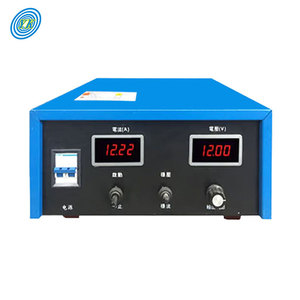
YUCOO Plating Rectifier 220V AC to 12V DC (50A - 1000A)
Heavy-duty electroplating switch-mode power supply transformer designed for continuous high-ampere DC output, zero voltage dip, and optimal power factor conversion.
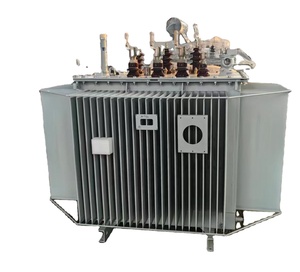
Three-Phase Industrial Control Rectifier Transformer
Factory-direct precision three-phase voltage step-down and rectification unit, custom winding designs for continuous duty-cycle industrial machinery.
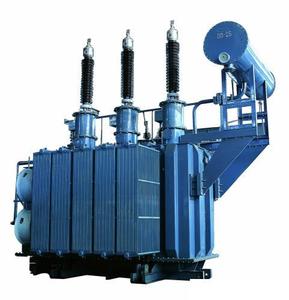
6300kVA Oil-Immersed Cathodic Protection Rectifier Unit
High-capacity oil-cooled rectifier transformer engineered for pipeline cathodic protection, steel plant electrolysis, and severe outdoor environment duty.
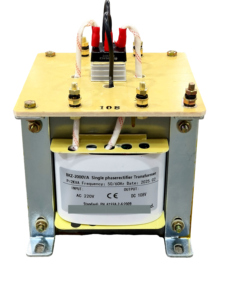
Single-Phase Multi-Tap Control Rectifier (2000VA - 5kVA)
Multi-range output steps (6V to 60V DC) tailored for precision control circuits, battery charging racks, and industrial process automation cabinets.
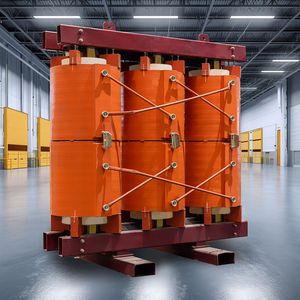
CEEG ZQSC(H)B 2000kVA/10kV Cast Resin Traction Rectifier
Epoxy cast flame-retardant dry-type air-insulated rectifier transformer designed for metro transit systems, heavy rail substations, and cleanroom applications.
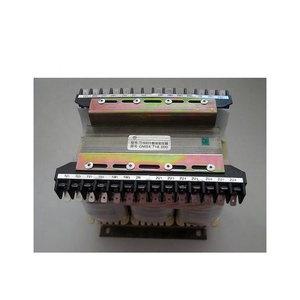
T6 Excitation Power Rectifier Transformer (HYUNDAI HFC6 OEM)
Exact drop-in replacement OEM excitation transformer designed for synchronous motor excitation systems and industrial power generator controls.
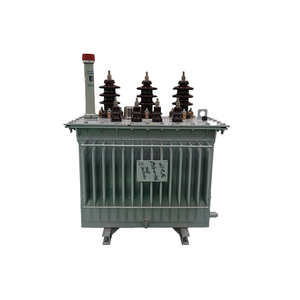
33kV High-Voltage Sealed Rectifier Transformer (160kVA - 1MW)
Hermetically sealed liquid-immersed power conversion transformer optimized for 33kV primary power grid step-down in mining and smelting facilities.
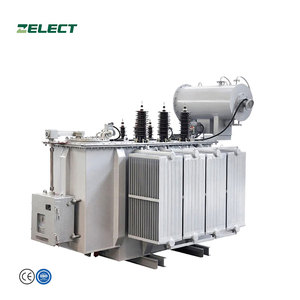
3-Phase Step-Up Custom Rectifier Transformer (50kVA - 3000kVA)
Versatile step-up transformer configuration engineered for dynamic industrial loads, renewable solar inverter integration, and heavy furnace duty.
The Engineering Economics of Transformer Retrofitting vs. Total Replacement
In modern industrial manufacturing, power distribution networks, and heavy metallurgical facilities, electrical transformers represent long-term capital investments. However, as operating environments evolve—driven by increased production capacity, heightened energy efficiency standards (such as IS 1180 Part 1 Level 3), and strict decarbonization mandates—aging transformer assets become bottlenecks. Plant asset managers face a critical decision: complete asset decommissioning and replacement versus custom OEM transformer retrofitting.
Custom OEM transformer retrofitting provides an economically superior and technically robust pathway for extending operational lifespan by 20 to 30 years while reducing Capital Expenditure (CAPEX) by 40% to 65% compared to purchasing new units. Retrofitting involves upgrading core internal components, re-engineering primary and secondary copper windings, enhancing insulation class standards, and retrofitting advanced On-Load Tap Changers (OLTC) or high-efficiency solid-state rectifier bridges—all while preserving existing civil infrastructure and busbar alignments.
| Evaluation Parameter | Full Asset Replacement | Custom OEM Retrofit Solution | Engineering Benefit |
|---|---|---|---|
| CAPEX Investment | 100% Baseline Cost | 35% – 55% of Baseline | Massive capital allocation savings |
| Civil Infrastructure Impact | High (Foundation & Cable Rerouting) | Zero (Drop-in Physical Match) | No disruption to substation footprint |
| Manufacturing & Lead Time | 26 to 40 Weeks | 6 to 12 Weeks | 60% reduction in procurement downtime |
| Energy Losses (Total Load Loss) | Standard Efficiency Class | Optimized to IS 1180 Level 3 | Lower OPEX via ultra-low loss core steels |
| Carbon Footprint Impact | High Embodied Carbon (New Steel/Copper) | Circular Economy Optimization | Aligns with global ESG sustainability targets |
By leveraging high-permeability, Grain-Oriented Electrical Steel (CRGO) or amorphous core materials during the core retrofitting process, transformer efficiency can be restored to exceed original nameplate ratings. Furthermore, custom retrofitting addresses specific harmonic distortions generated by modern variable frequency drives (VFDs) and heavy thyristor rectifiers in electroplating and arc furnace operations.
State-of-the-Art Technical Architecture & Retrofit Capabilities
With over 17 years of specialized manufacturing experience, our OEM infrastructure provides full-spectrum custom retrofitting, structural engineering, and comprehensive diagnostic refurbishment for power transformers, distribution units, dry-type cast resin designs, furnace transformers, and specialized traction/electroplating rectifiers up to 33kV and 10 MVA ratings.
Precision CRGO Core Stacking
Utilizing laser-cut, step-lap CRGO steel laminations to minimize no-load losses, acoustic noise emissions, and magnetizing currents under continuous high-voltage duty.
Electrolytic Copper Windings
High-purity, oxygen-free copper conductors insulated with thermally upgraded paper or Nomex® insulation, guaranteeing short-circuit withstand capabilities under extreme thermal surges.
Vacuum Pressure Impregnation
Advanced VPI processes for dry-type and cast resin transformers, ensuring void-free dielectric insulation, IP54 enclosure options, and maximum moisture resistance.
Custom Terminal Busbar Adapters
3D CAD-modeled copper busbar drop-in kits engineered to interface existing legacy substation connections directly with upgraded transformer bushings.
Advanced Harmonic Suppression
Integrating K-Factor rated winding topologies and specialized inter-phase transformers to handle complex non-linear DC rectifier loads without thermal degradation.
Hermetic Oil Sealing & Protection
Refurbishment with nitrogen-padded tanks, corrugation cooling panels, synthetic ester insulating fluids, and modern Buchholz relay protection systems.
Custom OEM Retrofit Scope of Work:
- Electrical Engineering Audit: Comprehensive winding resistance, turn-ratio testing, Tan Delta insulation diagnostic, and Dissolved Gas Analysis (DGA).
- Custom Core & Winding Re-engineering: Complete redesign of primary/secondary coils to adjust turns ratio, vector group (e.g., Dyn11 to Ynd11), or auxiliary voltage taps.
- Thermal Optimization: Upgrading oil cooling from ONAN (Oil Natural Air Natural) to ONAF (Oil Natural Air Forced) to boost transformer overload capabilities by 25-30%.
- Solid-State Rectifier Upgrades: Retrofitting legacy mercury-arc or silicon rectifiers with modern IGBT or thyristor-based high-frequency switching rectifiers for electroplating and traction power systems.
Future Development & Procurement Trends in Retrofitting & Rectifier Tech
As power grids worldwide transition toward smart grid topologies, decentralized renewable energy generation, and severe energy efficiency regulations, the transformer manufacturing landscape is undergoing rapid technological evolution. B2B procurement officers and engineering executives must align their asset management strategies with these industry shifts:
1. Integration of Natural and Synthetic Ester Insulating Oils
Environmental regulations and municipal fire safety mandates are accelerating the phase-out of traditional mineral oils in favor of biodegradable synthetic and natural ester fluids. Ester liquids possess significantly higher fire points (>300°C), classifying transformers as fire-resistant (K-class). OEM retrofits increasingly incorporate tank modifications and gasket re-engineering to handle high-viscosity ester fluids, extending paper insulation thermal lifetime by up to 100%.
2. IoT-Enabled Smart Online Diagnostic Bushings & Sensors
Procurement specifications for customized retrofits now overwhelmingly mandate smart sensor integration. Modern retrofitted transformers incorporate real-time online DGA sensors, fiber-optic direct winding temperature indicators, micro-water content sensors, and automated OLTC vibration monitoring units. These IoT sensors communicate via Modbus/IEC 61850 protocols directly into supervisory control and data acquisition (SCADA) systems for predictive maintenance scheduling.
3. High-Frequency Solid-State Pulse Rectifier Conversion
In electroplating, industrial electrolysis, and cathodic protection sectors, traditional low-frequency thyristor rectifiers are being systematically upgraded to high-frequency IGBT pulse rectifiers. Retrofitting legacy transformers with solid-state rectifier bridges dramatically reduces ripple factor (<1%), boosts power conversion efficiency past 96%, and provides microsecond response times for precise current control during electro-chemical processes.
4. Stringent Energy Loss Standards (IS 1180 Amendment 1 / IEC 60076)
Energy regulatory bodies are enforcing strict maximum allowable total loss limits. Retrofit engineering must achieve compliance with IS 1180 Level 2 and Level 3 loss figures. For example, a 1000kVA transformer operating at 11kV must limit total losses at 50% load to under 2620 Watts and at 100% load to under 7000 Watts (Level 3 standards). OEM re-winding with high-grade copper foil and low-loss CRGO cores allows legacy tanks to conform fully with modern efficiency compliance codes.
Frequently Asked Procurement & Engineering Questions (FAQ)
What engineering data is required to request a custom OEM transformer retrofit design?
To prepare an exact engineering proposal, our technical team requires: original nameplate drawing data, dimensional tank drawings, primary/secondary voltage ratings, vector group, impedance percentage (%Z), current tap-changer specification, cooling class (ONAN/ONAF), thermal class rating, and load profile (including harmonic content/K-factor if retrofitting for rectifier duty).
How does an OEM retrofit guarantee physical drop-in alignment with existing substation infrastructure?
Our engineering team utilizes laser scanning and 3D CAD modeling of your existing transformer footprint. Replacement core-and-coil assemblies or modified tanks are fabricated specifically to match existing high-voltage (HV) and low-voltage (LV) busbar centerline dimensions, cable box flanges, and concrete foundation anchor bolts, eliminating on-site civil adjustments.
Can a dry-type cast resin transformer be retrofitted into an existing liquid-immersed transformer housing?
Yes. Many industrial facilities convert oil-filled units to cast resin dry-type transformers to satisfy indoor fire safety standards (IEC 60076-11). We custom-engineer dry-type active parts into ventilated IP23 or IP54 enclosures designed to drop directly onto the original oil transformer’s concrete pad.
What quality testing standards do your retrofitted rectifiers and transformers undergo prior to dispatch?
All retrofitted units undergo 100% factory acceptance routine testing per IEC 60076 / IS 2026 standards, including: Winding Resistance, Voltage Ratio & Vector Group Check, Separate Source Voltage Withstand Test, Induced Overvoltage Test, Insulation Resistance (IR) & Tan Delta measurement, Oil Breakdown Voltage (BDV), and Full Load Loss & No-Load Loss Measurement.
What is the typical manufacturing lead time for custom OEM transformer retrofits?
While standard new transformer procurement can take 24 to 36 weeks, custom OEM retrofit solutions are typically engineered, manufactured, tested, and dispatched within 6 to 10 weeks, significantly limiting plant production downtime during turnaround turnarounds.
How does retrofitting handle increased harmonic loads from heavy electroplating rectifiers?
During retrofitting, we incorporate electrostatic shielding between primary and secondary windings, utilize multi-strand transposition conductors to reduce eddy current losses, and specify K-13 or K-20 rated insulation assemblies designed specifically to absorb high harmonic heat loads generated by 6-pulse, 12-pulse, or 24-pulse rectifier operations.
Partner with a World-Class OEM Transformer Manufacturer
Whether you need custom electroplating rectifiers, traction substations, furnace transformer upgrades, or complete 33kV distribution retrofits, our engineering team provides end-to-end technical consultation and rapid factory execution.
Inquire Now