
Heavy-Duty Oil-Immersed & Industrial Rectifier Units
Precision-engineered electrical power conversion systems built to custom industrial specifications for electroplating, cathodic protection, traction, and primary grid distribution.
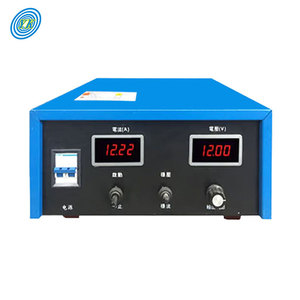
YUCOO Plating Rectifier 220v AC to 12v DC 50a 500a 1000 Amp Electroplating Rectifier
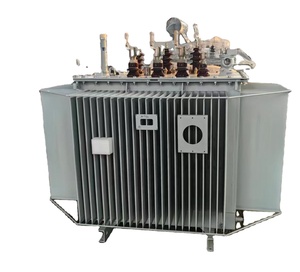
Factory Direct Sales Three Phase Control Electrical Rectifier Transformer
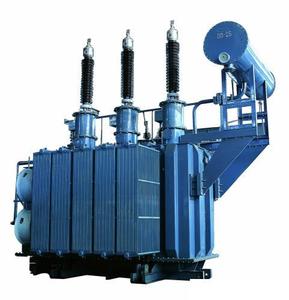
Oil Immersed High Current 6300kva Cathodic Protection Rectifier Transformer
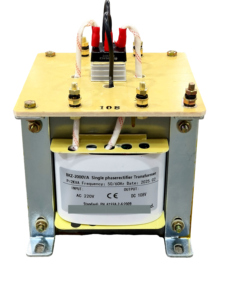
380V/220V to 60V 48V 24V 12V 6V AC to DC 2000VA 5KVA Single-phase Transformer
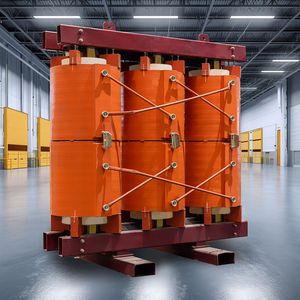
CEEG ZQSC(H)B SERIES 2000kVA/10kv Epoxy Cast Traction Rectifier Transformer
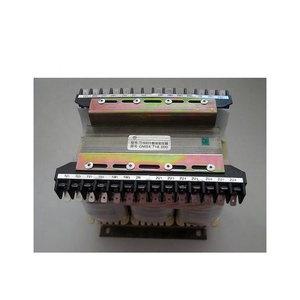
ORIGINAL T6 Electric Power Rectifier Transformer TI16933 For Excitation System
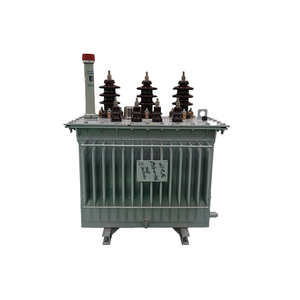
Control 33kv 300kva 1 MW Sealed Rectifier Step-Down Power Transformer
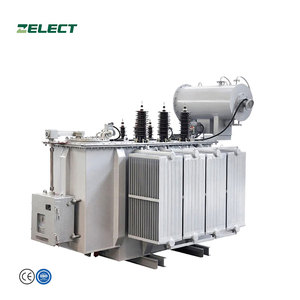
50KVA to 3000KVA Transformador 3 Phase Step-Up & Step-Down Rectifier Transformer
Engineering Principles of Custom OEM Oil-Immersed Transformers
An exhaustive technical evaluation of dielectric fluid dynamics, magnetic core geometries, harmonic mitigation in rectifier circuits, and thermal optimization for heavy industrial plants.
Dielectric Liquid Insulation & Thermal Dissipation Dynamics
In liquid-filled transformer architecture, the dielectric medium serves a dual role: providing high breakdown voltage insulation (typically >60 kV across a standard 2.5 mm gap) and acting as the primary thermal transfer fluid. Custom OEM oil-immersed factories utilize highly refined naphthenic mineral oils conforming to IEC 60296 or synthetic/natural ester fluids (such as FR3) matching IEC 62770. Natural convection (ONAN - Oil Natural Air Natural) drives hot oil upward through precision-wound copper windings into perimeter radiators, dissipating heat via corrugated tank walls or external panel radiators. For severe overload conditions, forced cooling options (ONAF / OFAF) integrate automated axial fans to suppress hot-spot temperatures below 98°C, preventing thermal degradation of Kraft cellulose insulation.
Harmonic Mitigation in High-Current Rectifier Transformers
Rectifier transformers powering electroplating lines, chlorine electrolysis, or industrial DC excitation systems operate under non-sinusoidal current waveforms rich in harmonics ($h = pn \pm 1$). Standard distribution transformers rapidly overheat under such stress due to stray eddy current losses in the conductors and tank walls. OEM factory custom designs counter this by implementing 12-Pulse, 18-Pulse, or 24-Pulse phase-shifting secondary windings (e.g., Extended Delta or Star-Delta combinations). By shifting secondary phase angles by 30° or 15°, 5th and 7th order harmonics are canceled at the primary bus. Furthermore, windings are engineered with low-loss transpose cable (CTC) and specified with a K-Factor rating of K-13 to K-20, suppressing Total Harmonic Distortion (THD) below 5%.
Comparative Matrix: Liquid-Filled vs. Cast Resin Dry-Type Systems
Selecting the correct transformer topology for high-duty manufacturing and processing facilities requires evaluating key physical, electrical, and thermal attributes:
| Engineering Attribute | Oil-Immersed (Mineral Oil) | Oil-Immersed (Synthetic Ester) | Cast Resin Dry-Type (CEEG ZQSC) |
|---|---|---|---|
| Dielectric Strength (BDV) | High (> 60 kV) | Very High (> 70 kV) | Medium (Solid Dielectric Epoxy) |
| Thermal Flash / Fire Point | 145°C (Standard Class O) | > 300°C (K-Class Fire Safe) | Non-flammable (F1 Self-Extinguishing) |
| Short-Circuit Withstand Capability | Superior (Liquid Cushion & Dynamic Coil Support) | Superior (Liquid Cushion & Dynamic Coil Support) | High Rigid Strength (Prone to Thermal Cracking) |
| Overload Tolerance | Excellent (High Thermal Time Constant) | Exceptional (High Thermal Time Constant) | Moderate (Faster Hot-Spot Buildup) |
| Maintenance Cycle | Annual Oil BDV & DGA Sampling | Extended (High Oxidation Resistance) | Periodic Dust Cleaning & Terminal Torque |
| Typical Capital Expenditure (CapEx) | Baseline (Most Economical) | 1.25x - 1.35x Baseline | 1.40x - 1.60x Baseline |
Future Procurement Trends in Industrial Transformer Manufacturing
Analyzing global supply chain shifts, regulatory efficiency updates, and smart grid technological integrations reshaping B2B transformer sourcing.
1. Decarbonization & Green Ester Bio-Oils
Environmental regulations across North America, the European Union, and Asia-Pacific are compelling industrial plant operators to phase out traditional petroleum-derived mineral oils in favor of biodegradable natural esters (derived from soybean or rapeseed oils). Ester fluids offer 100% biodegradability within 28 days, virtually eliminating soil contamination risks during accidental spills. Furthermore, their elevated fire point (>300°C) allows plant engineers to install high-capacity oil-immersed transformers indoors or adjacent to production lines without constructing costly explosion-proof containment vaults.
2. IoT Smart Monitoring & Predictive DGA
Procurement teams are moving away from reactive scheduled maintenance toward AI-driven predictive asset management. Modern custom OEM transformers are increasingly ordered with integrated Online Dissolved Gas Analysis (DGA) sensors, optical fiber winding temperature probes, and continuous partial discharge (PD) monitoring nodes. These devices stream real-time data to factory SCADA systems via Modbus or IEC 61850 protocols, detecting micro-ppm changes in hydrogen ($H_2$), acetylene ($C_2H_2$), and ethylene ($C_2H_4$) gases long before catastrophic insulation breakdown occurs.
3. Compliance with Ultra-Low Loss Standards
Global energy efficiency directives—such as India's IS 1180 (Part 1) Level 3 loss guidelines, EU EcoDesign Tier 2, and US DOE 2016 efficiency mandates—are elevating core material requirements. OEM factories are shifting exclusively to high-permeability, domain-refined Cold-Rolled Grain-Oriented (CRGO) Silicon Steels (e.g., 23ZH085 or 20ZH075) and Amorphous Metal alloys. By reducing no-load core losses by up to 70%, industrial facility managers achieve total cost of ownership (TCO) payback within 24 to 36 months of continuous operation.
4. Modular & Hermetically Sealed Construction
To drastically minimize maintenance in harsh chemical plants, marine ports, and remote mining sites, demand is surging for Hermetically Sealed Oil-Immersed Transformers. Unlike traditional conservator-type transformers exposed to ambient air exchange via silica gel breathers, hermetically sealed units utilize elastic corrugated cooling fins that flex to absorb oil thermal expansion. This completely eliminates oil contact with oxygen and atmospheric moisture, extending oil dielectric lifetime to over 25 years without requiring degassing or filtration.
Custom OEM Manufacturing Capabilities & Quality QA/QC
Why Tier-1 industrial buyers, EPC contractors, and global power utilities partner with our factory for custom oil-immersed transformers and rectifier units.
Precision Engineering & Electromagnetic Design
Our dedicated R&D engineering team utilizes advanced finite element analysis (FEA) software to simulate magnetic flux density distribution, short-circuit mechanical stress, and thermal hot spots. Every custom transformer—whether an 11kV step-down distribution unit or a 6300kVA high-current electroplating rectifier—is tailored with optimal vector groups (e.g., Dyn11, Dyn5, Ynd11), custom primary tap-changer ranges (±2x2.5% or On-Load OLTC), and specified primary/secondary terminal bushings (cable box, plug-in, or open porcelain).
High-Vacuum Processing & Tank Fabrication
Transformer longevity depends heavily on moisture elimination. Our modern factory facility features automated vacuum drying ovens capable of bringing moisture content in cellulose insulation down to less than 0.5% by weight. Transformer tanks are shot-blasted to SA 2.5 cleanliness ratings and coated with multi-layer C4 or C5-M grade epoxy marine paint systems to guarantee corrosion resistance in humid, saline, or aggressive acidic chemical atmospheres.
100% Rigorous Factory Acceptance Testing (FAT)
Every unit dispatched from our assembly plant undergoes comprehensive routine testing in accordance with IEC 60076 and IEEE C57 standards in an ISO 17025 accredited high-voltage laboratory:
- Winding Resistance Measurement across all tap positions.
- Voltage Ratio & Vector Group Verification for exact phase alignment.
- Measurement of No-Load Loss & Excitation Current at rated voltage.
- Measurement of Short-Circuit Impedance & Load Loss at principal tap.
- Separate-Source AC Withstand Voltage & Induced Overvoltage Test.
- Oil Dielectric Breakdown (BDV) & Dissolved Gas Analysis (DGA) baseline test.
- Optional Type Tests: Full-Wave Lightning Impulse (BIL) & Temperature Rise Test.
Industrial Procurement Frequently Asked Questions (FAQ)
Addressing key engineering, compliance, and commercial questions for international B2B transformer procurement buyers.
What is the standard lead time for custom OEM oil-immersed transformers?
Standard production lead time for customized distribution and rectifier transformers ranging from 100 kVA to 3000 kVA is typically 4 to 6 weeks from approval of final electrical approval drawings. For large power transformers (up to 10 MVA, 33kV) requiring special voltage tap-changers or non-standard vector configurations, typical production cycles range from 8 to 10 weeks, inclusive of complete Factory Acceptance Testing (FAT).
How do you handle heavy DC ripple currents in electroplating rectifiers?
Electroplating processes require smooth, low-ripple direct current to ensure uniform metal deposition. Our rectifier transformer packages combine multi-phase secondary windings with external or internal interphase transformers (IPTs) and heavy-duty LC filter banks. This configuration reduces DC output voltage ripple factor to under 2% to 5% across full load conditions, preserving plating quality while maximizing energy efficiency.
Can your factory produce transformers compliant with specific national standards?
Yes. While our standard manufacturing line adheres to IEC 60076 and IS 1180 standards, our engineering team regularly custom-designs units complying with IEEE C57 / ANSI (North America), BS EN (UK), GOST (Eurasian region), and AS/NZS (Australia/New Zealand). We can accommodate specific primary/secondary voltage steps (e.g., 33kV, 11kV, 6.6kV, 3.3kV to 415V/220V/110V) and specialized insulation classes upon request.
What ambient site conditions must be specified during inquiry?
To ensure optimal thermal design and insulation rating, buyers should provide: 1) Maximum and average ambient air temperatures, 2) Installation altitude above sea level (if >1000 meters, derating factors apply), 3) Pollution severity class (to size bushing creepage distances, e.g., 25mm/kV or 31mm/kV for coastal areas), and 4) Seismic zone classification for structural tank reinforcement.
What is the difference between Off-Circuit Tap Changer (OCTC) and On-Load (OLTC)?
An Off-Circuit Tap Changer (OCTC) requires the transformer to be completely de-energized before manually adjusting tap positions (typically ±2.5% to ±5%) to compensate for seasonal grid voltage drift. An On-Load Tap Changer (OLTC) features automatic motor-driven switching mechanisms that adjust voltage ratios seamlessly while the transformer remains fully energized and supplying load, ideal for sensitive industrial plants with fluctuating grid inputs.
How are units packaged to prevent damage during sea export freight?
Export units are secured in heavy-duty, heat-treated ISPM-15 compliant wooden cases or steel crate frames. Radiator panels, conservator tanks, and delicate ceramic or polymer bushings are dismantled, vacuum-sealed in moisture-barrier aluminum foil with desiccant bags, and packed separately. Transformer main tanks are nitrogen-pressurized or fully oil-filled during transit, equipped with shock recorder indicators to track acceleration forces during marine shipment.
Request a Custom Factory Quotation Today
Consult directly with our senior transformer application engineers for custom OEM designs, budget estimations, detailed technical datasheets, and official factory price bids within 24 hours.