
Industrial Aluminum Winding Product Catalog
Precision-engineered with EC-grade high-purity aluminum foil and round/rectangular wire. Optimized for thermal dissipation, harmonic resilience, and long-term operating efficiency in extreme duty cycles.
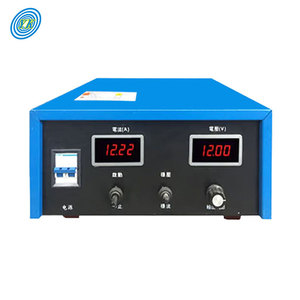
YUCOO Plating Rectifier 220V AC to 12V DC Electroplating Rectifier
High-current, low-voltage switch-mode electroplating rectifier featuring precision aluminum strip winding coils. Custom-engineered for anodizing, electroplating, and electrolysis applications.
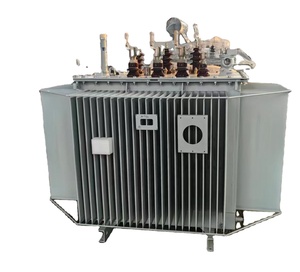
Factory Direct Three-Phase Control Electrical Rectifier Transformer
Heavy-duty industrial control transformer with multi-tap aluminum windings. Engineered for precise DC voltage regulation in variable speed drives and power conversion modules.
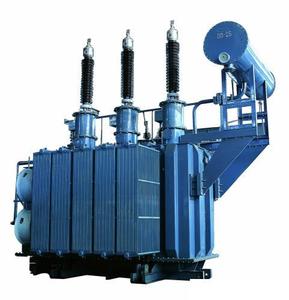
Oil-Immersed High Current 6300kVA Cathodic Protection Rectifier Transformer
Extra-high capacity oil-immersed transformer designed for impressed current cathodic protection (ICCP) and heavy industrial chemical electrolysis processes.
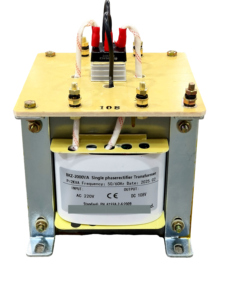
Single-Phase AC to DC Step-Down Control Rectifier Transformer
Compact step-down rectifier transformer utilizing high-grade insulated aluminum magnet wire. Ideal for low-voltage industrial control, battery charging, and auxiliary power supplies.
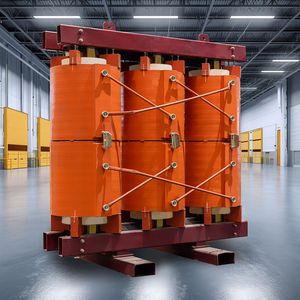
CEEG ZQSC(H)B 2000kVA/10kV Epoxy Cast Resin Traction Rectifier Transformer
Flame-retardant, self-extinguishing cast resin dry-type rectifier transformer tailored for electric traction substations, metro systems, and heavy rail power grids.
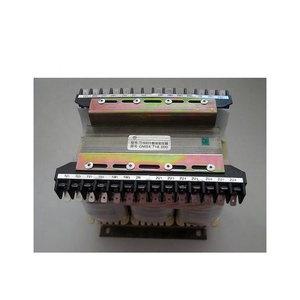
ORIGINAL T6 Excitation System Rectifier Transformer (TI16933 Compatible)
Specialized excitation transformer engineered for power plant generator static excitation units. Features tight coupling aluminum foil windings for low leakage inductance.
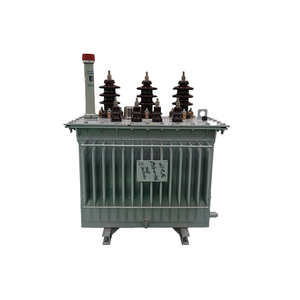
33kV High Voltage Hermetically Sealed Rectifier Transformer (300kVA - 1MW)
Fully sealed, oil-immersed power rectifier transformer constructed with loss-optimized aluminum coils. Built for harsh industrial environments, mining, and outdoor substations.
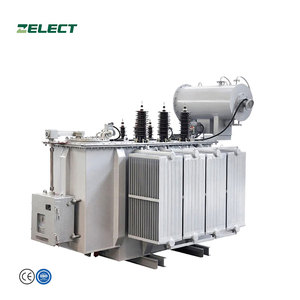
3-Phase Industrial Step-Up Rectifier Transformer (50kVA - 3000kVA)
Versatile heavy-duty step-up rectifier transformer available in multiple voltage configurations. Designed for steel mills, arc furnace power units, and solar inverter integration.
Why Global Procurement Leaders Partner with Our OEM Aluminum Winding Division
Bridging material science, precision winding topology, and automated quality assurance to manufacture custom electrical equipment that optimizes Capital Expenditure (CAPEX) while delivering maximum Operational Efficiency (OPEX).
EC-Grade Aluminum Foil & Wire Precision Winding
We utilize premium Electrical Conductor (EC) grade aluminum (minimum 99.7% purity, EC 1350/8000 series) with optimized cross-sectional symmetry. Our state-of-the-art automatic foil winding machinery ensures precise tensioning, zero edge burrs, and optimal space fill factors, drastically reducing hot-spot risks inside transformer cores.
ISO 9001:2015 & Global Compliance Framework
Our manufacturing facility in Pune, India, operates under stringent ISO quality management protocols. Every aluminum winding, dry-type coil, and oil-immersed rectifier transformer undergoes rigorous routine and type testing according to IEC 60076, IS 1180 (Part 1): 2014 Amendment 1, ANSI C57, and IEEE standards before dispatch.
Energy Efficiency Level 3 / Star 5 Loss Optimization
Our engineering team leverages finite element analysis (FEA) to minimize stray load losses and eddy current heating. By optimizing primary-to-secondary electromagnetic coupling, our customized aluminum winding transformers fully meet and exceed stringent energy loss thresholds set by global regulatory bodies.
Engineering Principles: Aluminum Winding Optimization in Power Transformers
An exhaustive technical evaluation of electrical conductivity, thermal dynamics, mechanical short-circuit withstand capabilities, and joint integrity in industrial transformers.
1. Electrical Conductivity and Cross-Sectional Optimization
Electrical-grade aluminum (EC 1350) possesses an IACS (International Annealed Copper Standard) conductivity rating of approximately 61% to 62%. To achieve the equivalent ampacity and thermal performance of a copper coil, the conductor cross-sectional area of an aluminum winding must be increased by a factor of 1.61. While this increases the physical volume of the coil, modern aluminum sheet and strip winding technologies compensate by achieving a volumetric space fill factor approaching 95%, compared to 70-80% in conventional round copper wire coils. Consequently, the overall dimensional footprint of an aluminum-wound transformer core assembly expands by only 10% to 15%, while delivering a 40% to 50% reduction in total winding raw material cost.
2. Thermal Dissipation and Uniform Heat Distribution
One of the primary failure modes in heavy-duty industrial rectifier transformers is localized axial hot-spotting caused by unbalanced current distribution. Aluminum strip winding eliminates axial helical hot spots entirely. Because each turn of aluminum foil spans the entire axial height of the coil, current density remains uniform across the width of the conductor. Thermal heat generated during continuous high-load operations is conducted uniformly out to the cooling ducts, minimizing thermal stress on inter-layer Nomex or Class H insulating paper and extending operational life expectancy beyond 25–30 years.
3. Short-Circuit Mechanical Withstand Capacity
During external system short-circuits, transformers experience severe radial and axial electrodynamic forces proportional to the square of the fault current ($I^2$). In traditional wire-wound transformers, axial forces tend to collapse the winding end turns. Foil-wound aluminum coils possess superior mechanical stability because full-width aluminum sheets eliminate axial magnetic forces. Furthermore, modern cold-cured epoxy resin impregnation creates a monolithic solid block structure upon curing, providing exceptional resistance against mechanical resonance and seismic vibration stresses.
4. Bimetallic Corrosion Mitigation at Terminations
The interface between aluminum windings and external copper busbars presents a potential risk of galvanic corrosion due to differences in standard electrode potential (+0.34V for Cu vs -1.66V for Al). Sahara Transformers resolves this engineered vulnerability by utilizing state-of-the-art ultrasonic cold-welding and molecular friction-welded bimetallic transition plates (Cu-Al). This guarantees a hermetically sealed, oxide-free junction with zero galvanic potential differential, preventing oxidation growth and maintaining ultra-low contact resistance across decades of thermal cycling.
Technical Comparison: EC-Aluminum vs. ETP-Copper Windings
A head-to-head material science analysis demonstrating how optimized aluminum windings deliver superior thermal performance and cost efficiency in industrial power equipment.
| Engineering Metric | EC-1350 Electrical Aluminum | ETP-C11000 Copper | OEM Design & Performance Impact |
|---|---|---|---|
| Electrical Conductivity (% IACS) | 61.8% | 101.0% | Aluminum requires 1.61x conductor area; offset by 95% foil fill factor. |
| Mass Density (g/cm³) | 2.70 g/cm³ | 8.89 g/cm³ | Aluminum coils weigh ~50% less, reducing structural loading & transport cost. |
| Specific Heat Capacity (J/kg·K) | 900 J/kg·K | 385 J/kg·K | Aluminum absorbs more thermal energy per kg during transient overloads. |
| Thermal Conductivity (W/m·K) | 237 W/m·K | 398 W/m·K | Substantially equal thermal dissipation when scaled to equivalent ampacity cross-section. |
| Cost per Unit Conductivity ($/Amp) | 30% - 40% Lower | Baseline High | Delivers massive CAPEX savings for OEM industrial buyers and utility contractors. |
| Short-Circuit Stress Profile | Uniform Radial Distribution | Helical Axial Forces | Full-width aluminum foil windings eliminate destructive axial coil displacement. |
Reference Standards: IS 1180 (Part 1): 2014 Maximum Total Loss Standards (11kV Class)
| Rating (kVA) | Impedance (%) | Energy Efficiency Level 1 | Energy Efficiency Level 2 | Energy Efficiency Level 3 (Premium) | |||
|---|---|---|---|---|---|---|---|
| 50% Load (W) | 100% Load (W) | 50% Load (W) | 100% Load (W) | 50% Load (W) | 100% Load (W) | ||
| 250 kVA | 4.50% | 1050 W | 3150 W | 980 W | 2930 W | 920 W | 2700 W |
| 500 kVA | 4.50% | 1600 W | 4750 W | 1510 W | 4300 W | 1430 W | 4100 W |
| 1000 kVA | 5.00% | 3000 W | 9000 W | 2790 W | 7700 W | 2620 W | 7000 W |
| 2000 kVA | 6.25% | 5400 W | 17000 W | 5050 W | 15000 W | 4790 W | 14100 W |
| 2500 kVA | 6.25% | 6500 W | 20000 W | 6150 W | 18500 W | 5900 W | 17500 W |
Future Sourcing & Technology Trends in Aluminum Transformer Manufacturing
Strategic shifts reshaping global transformer supply chains, decarbonization mandates, and high-frequency renewable power integration.
1. Accelerating Shift toward Total Cost of Ownership (TCO) Procurement
Global EPC contractors and electrical utilities are moving away from evaluated bid models focused solely on initial purchase price. Sourcing metrics now prioritize Total Cost of Ownership over a 30-year operational horizon. Because aluminum winding technology offers an upfront capital expenditure discount of 25–35% while matching copper's loss evaluation metrics when properly engineered to Level 3 efficiency standards, procurement demand for custom OEM aluminum transformers is projected to grow at a CAGR of 7.8% through 2030.
2. Green Hydrogen & Solar Inverter Duty Specialization
The global push for green hydrogen electrolysis and utility-scale solar PV installations requires rectifier transformers capable of handling severe total harmonic distortion (THD). Modern OEM aluminum winding designs incorporate electrostatic shields between primary and secondary layers alongside multi-pulse vector configurations (12-pulse, 18-pulse, 24-pulse) to neutralize harmonic heating and prevent grid pollution.
3. Advanced Cast Resin Epoxy Impregnation & Fire Safety
Urban infrastructure projects, data centers, and underground metro networks increasingly demand non-flammable dry-type cast resin transformers. OEM aluminum winding technologies are leading this shift by combining vacuum pressure impregnation (VPI) with Class F (155°C) and Class H (180°C) epoxy resins, eliminating oil spill risks and delivering self-extinguishing safety compliance.
4. Smart Grid Integration with Real-Time IoT Thermal Monitoring
Future-ready OEM aluminum transformers are now equipped with embedded fiber-optic temperature sensors directly within the aluminum foil layers. Connected to smart grid supervisory systems (SCADA), these sensors monitor hot-spot temperature variations in real-time, providing predictive maintenance alerts and dynamic load forecasting to prevent unplanned downtime.
Step-by-Step OEM Manufacturing & Testing Workflow
Our standardized 6-stage manufacturing protocol ensures every custom aluminum coil and assembled transformer meets international quality benchmarks.
Raw Material Inspection
Spectro-analysis of incoming EC-1350 aluminum strip and cold-rolled grain-oriented (CRGO) silicon steel core laminations to verify electrical purity and core loss coefficients.
Precision Automated Winding
Winding of primary and secondary coils using computer-controlled foil winding machines equipped with automatic edge alignment, deburring, and inter-sheet insulating layer placement.
Friction-Weld Termination
Ultrasonic and molecular friction welding of copper-aluminum bimetallic leads to guarantee zero-resistance, corrosion-immune internal connections.
STAGE 04
Core Assembly & VPI Treatment
Core-coil assembly under controlled humidity, followed by Vacuum Pressure Impregnation (VPI) or resin casting to eliminate internal voids and partial discharge risks.
Hermetic Tanking & Oil Filtration
For liquid-filled units: pressure testing of shot-blasted, polyurethane-coated steel tanks, followed by high-vacuum oil filling with degassed insulation fluid.
Factory Acceptance Testing (FAT)
100% routine testing including Winding Resistance, Voltage Ratio, Vector Group verification, Insulation Resistance, Breakdown Voltage (BDV), and Full Load Loss measurements.
Frequently Asked Sourcing & Engineering Questions
Clear, authoritative answers addressing common technical queries from industrial buyers, electrical consultants, and procurement managers.
Request a Custom OEM Aluminum Winding & Transformer Quotation
Partner with an ISO-certified leader in custom aluminum winding and transformer manufacturing. Send us your technical specifications, vector requirements, or single-line diagrams (SLD) today for an immediate engineering assessment and competitive commercial proposal.