
OEM / ODM Product Catalog
Heavy-Duty Electrical Rectifiers & Insulation Transformers
Precision-engineered step-up, step-down, and electroplating rectifier transformers utilizing state-of-the-art dielectric insulation materials for high current and thermal endurance.
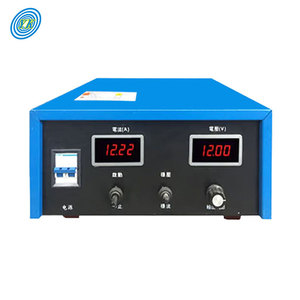
Factory Direct Sales Three Phase Control Electrical Rectifier Transformer
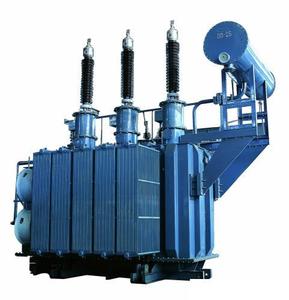
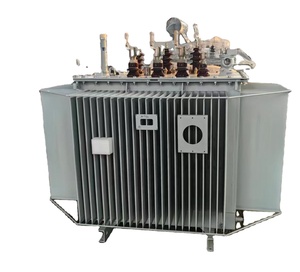
Oil Immersed High Current 6300kva Transformer Three Phase Cathodic Protection Rectifier Transformer
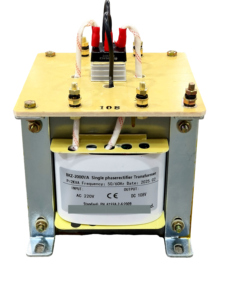
380V/220V to 60V 48V 24V 12V 6V AC to DC Transformers 2000VA 5KVA Single-phase Control Rectifier Transformer
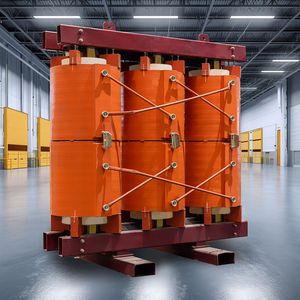
CEEG ZQSC(H)B SERIES 2000kVA/10kv EPOXY CAST TRACTION RECTIFIER DRY-TYPE Air-Insulated Rectifier Transformer
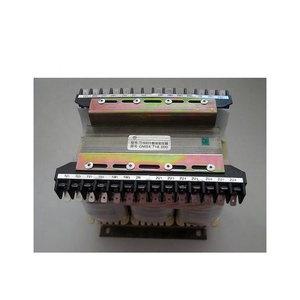
ORIGINAL T6 Electric Power Rectifier Transformer TI16933 For HUNYDAI HFC6 Excitation system
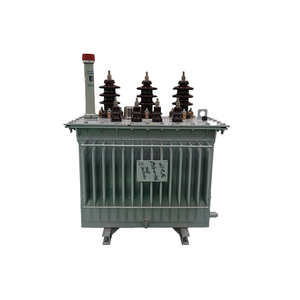
Control 33kv 300kva 1 Mw Voltage Transformer 220v to 110v 400kva High Quality 160kva Sealed Rectifier Transformer
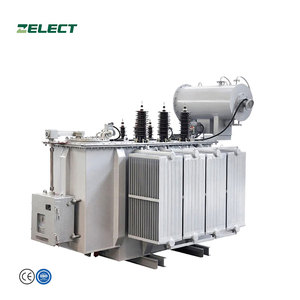
50KVA 100KVA 200KVA 250KVA 300KVA 400KVA 800KVA 1000KVA 3000KVA Transformador 3 Phase Step up Rectifier Transformer
High-Voltage Transformer Insulation: Fundamentals, Dielectric Physics, and System Architecture
In electrical power transmission, heavy industrial rectification, and renewable grid interconnection, the longevity and operational safety of a transformer depend primarily on the structural integrity of its insulation system. As a premier China wholesale transformer insulation manufacturer and supplier, our engineering core focuses on the thermal degradation mechanics, dielectric stress resistance, and partial discharge mitigation within both liquid-immersed and dry-type cast resin power systems.
Transformer insulation systems perform two critical functions: electrical isolation between high-voltage (HV) windings, low-voltage (LV) windings, and grounded core structures; and thermal dissipation of copper ($\text{I}^2\text{R}$) and iron core losses. The dielectric strength of an insulation barrier must withstand continuous nominal operating voltages, transient switching surges, lightning impulse withstand voltages (BIL), and severe mechanical short-circuit forces.
Technical Insight: According to the Arrhenius reaction rate theory, the thermal degradation of cellulose pressboard insulation doubles for every 6°C to 8°C rise in continuous operating temperature above its design thermal class limit. Choosing optimized solid insulation (such as aromatic polyamide Nomex® paper or thermally upgraded kraft paper) directly doubles equipment lifetime expectancy.
Solid vs. Liquid Dielectric Insulation Systems
Industrial power transformers utilize either solid-liquid composite dielectric architectures or solid cast-resin/air-insulated configurations:
1. Liquid-Immersed Insulation Systems: Consisting of high-density cellulose pressboard, electrical grade craft paper, laminated wood clamping components, and dielectric liquid (mineral transformer oil, synthetic ester, or natural ester). The liquid serves a dual role as high-dielectric breakdown media (typical breakdown voltage > 70 kV at 2.5 mm gap per IEC 60156) and primary convective coolant.
2. Dry-Type Cast Resin Systems (Class H & Class C): Utilizing epoxy resin formulations filled with silica flour, reinforced with fiberglass matting, and vacuum pressure impregnated (VPI) with high-temperature silicone or polyester varnishes. Class H (180°C operating rating) and Class C (220°C operating rating) resin systems provide superior fire safety, self-extinguishing characteristics (F1 fire performance rating), and environmental resilience (E2/C2 climate endurance).
Core Technical Advantages of Our China Transformer Insulation Manufacturing
Our state-of-the-art production base integrates advanced European winding technology, precision slitting machinery, and automated vacuum pressure impregnation plants. Below are the key engineering pillars embedded in our transformer insulation products:
Low Partial Discharge (< 5 pC)
Our epoxy cast resin and dry-type insulation undergo rigorous partial discharge testing under 1.3 to 1.5 times nominal voltage, maintaining void-free microstructures below 5 picocoulombs to prevent internal corona degradation.
Synthetic & Natural Ester Compatibility
Insulation pressboards and spacer components are chemically modified to resist ester hydrolysis, allowing safe operating temperatures up to 175°C with high fire-point (>300°C) biodegradable fluids.
Short-Circuit Mechanical Rigidity
High-density pre-compressed pressboard blocks (density 1.15–1.30 g/cm³) provide extreme radial and axial compressive strength, preventing winding distortion under electromagnetic short-circuit stress.
Thermal Class 180°C to 220°C (H & C)
Featuring aromatic polyamide Nomex® hybrid insulation matrices, enabling compact transformer footprint, higher surge overloading capacities, and zero risk of insulation charring under harmonic heavy loads.
Precision Slitting & Edge Rounding
All insulating crepe paper tubes, slot liners, and interlayer sheets are slit with burr-free rotary cutters, eliminating sharp mechanical edges that could induce dielectric stress concentration points.
Global Standard Compliance
Fully compliant with IEC 60076, IEC 60641 (Pressboard), IEEE C57.12.00, and IS 1180 Amendment 1 energy efficiency loss limits. Exported to over 65 countries worldwide.
Energy Efficiency Loss Limits & Dielectric Performance Standards Matrix
To assist global procurement directors and EPC engineering consultants, the table below provides technical data for 11kV distribution and rectifier transformer insulation classes under standard IS 1180 (Part 1) Amendment No. 1 and IEC 60076 guidelines:
| Rating (kVA) | Impedance (%) | Insulation Class | Level 1 Max Loss (W) | Level 2 Max Loss (W) | Level 3 Max Loss (W) | |||
|---|---|---|---|---|---|---|---|---|
| 50% Load | 100% Load | 50% Load | 100% Load | 50% Load | 100% Load | |||
| 250 kVA | 4.50% | Class A / F | 1050 W | 3150 W | 980 W | 2930 W | 920 W | 2700 W |
| 315 kVA | 4.50% | Class F / H | 1100 W | 3275 W | 1025 W | 3100 W | 955 W | 2750 W |
| 500 kVA | 4.50% | Class H / C | 1600 W | 4750 W | 1510 W | 4300 W | 1430 W | 4100 W |
| 630 kVA | 4.50% | Class H Cast Resin | 2000 W | 5855 W | 1860 W | 5300 W | 1745 W | 4850 W |
| 1000 kVA | 5.00% | Epoxy Cast / VPI | 3000 W | 9000 W | 2790 W | 7700 W | 2620 W | 7000 W |
| 1600 kVA | 6.25% | Heavy Rectifier Class H | 4500 W | 13500 W | 4200 W | 11800 W | 3970 W | 11300 W |
| 2500 kVA | 6.25% | Ultra-Low Loss Class C | 6500 W | 20000 W | 6150 W | 18500 W | 5900 W | 17500 W |
Future Procurement & Sourcing Trends in Transformer Insulation (2025–2030)
As the global power sector transitions toward high-density renewable microgrids, electric vehicle (EV) megawatt charging stations, and energy-intensive data centers running AI workloads, procurement criteria for transformer insulation materials are undergoing a fundamental transformation. B2B buyers must align their procurement strategies with four key emerging industry trends:
1. Rapid Adoption of Biodegradable Ester Fluids (K-Class Dielectrics)
Traditional mineral oils are increasingly restricted in urban, indoor, and environmentally sensitive installations due to their low flashpoint (~140°C) and poor biodegradability. Modern power utilities are mandating synthetic esters (such as MIDEL 7131) and natural vegetable esters with fire points exceeding 300°C (Class K liquid rating). This transition requires solid insulation materials—such as high-density kraft paper and pressboard—to feature low moisture affinity and enhanced chemical stability against ester hydrolysis.
2. High Harmonic Tolerant K-Factor Insulation Design
Non-linear loads generated by solid-state rectifiers, industrial variable frequency drives (VFDs), and solar/wind grid inverters introduce severe harmonic currents ($h_5, h_{11}, h_{13}, h_{23}$). These harmonics cause elevated eddy current losses in conductor windings and localized thermal hot spots. Next-generation transformer insulation specifies elevated thermal class barriers (Class H 180°C and Class C 220°C) and hybrid Nomex-epoxy composites to safely withstand continuous harmonic thermal stress without premature embrittlement.
3. Smart Insulation Monitoring & Embedded Fiber-Optic Hot-Spot Sensing
Industrial asset management is shifting from reactive maintenance to real-time predictive health monitoring. High-value rectifier and power transformers are now specified with embedded GaAs (Gallium Arsenide) fiber-optic temperature sensors directly integrated into the insulation spacers of the innermost high-temperature winding layers. Combined with online Dissolved Gas Analysis (DGA) monitoring hydrogen ($\text{H}_2$), acetylene ($\text{C}_2\text{H}_2$), and carbon monoxide ($\text{CO}$), smart insulation architectures allow plant operators to prevent catastrophic dielectric breakdown months before failure occurs.
4. Strict Environmental Decarbonization & Circularity Regulations
Global supply chain audits now evaluate Scope 3 carbon emissions associated with raw material extraction and resin synthesis. Leading European and North American buyers prioritize insulation manufacturers using solvent-free epoxy resins, halogen-free flame retardants, and 100% recyclable cellulose pressboards produced via closed-loop water filtration systems.
Why Partner with Our Manufacturing Base in China?
With over 17 years of OEM and ODM excellence, our manufacturing facilities integrate rigorous quality assurance protocols to guarantee zero-defect insulation performance. We provide global industrial partners with unmatched competitive advantages:
• Complete End-to-End Vertical Integration: From raw pressboard calendering, crepe paper tube winding, to automated epoxy resin casting and drying vacuum ovens, we control every stage of dielectric material synthesis.
• Severe Environment Customization: We supply specialized anti-corrosion, humidity-resistant, and seismic-proof insulation systems tailored for offshore marine platforms, electroplating shops, and high-altitude mining applications.
• Comprehensive Factory Acceptance Testing (FAT): Every batch of insulation materials undergoes rigorous laboratory testing, including dielectric breakdown voltage testing (ASTM D877/D1816), tensile strength measurement, moisture content Karl Fischer titration (< 0.5%), and lightning impulse withstand verification.
Request Custom Insulation Technical Specifications & Wholesale Pricing
Consult with our senior dielectric engineering team for custom voltage ratings, thermal class calculations, or instant factory-direct B2B quotes for rectifier transformers.
Contact Us
Procurement & Engineering Knowledge Base
Frequently Asked Questions by Industrial Buyers
Detailed technical answers to common queries regarding dielectric performance, factory testing standards, custom ordering, and global supply chain logistics.
What is the dielectric breakdown voltage of your standard transformer pressboard insulation?
Our high-density transformer pressboards (manufactured to IEC 60641-3-1 Type B.3.1 standards) deliver an oil-impregnated dielectric breakdown voltage exceeding 70 kV/mm at 25°C. In air, the dry dielectric strength maintains a minimum rating of 12 kV/mm to 15 kV/mm depending on thickness and density calibration.
How does Class H (180°C) insulation differ from traditional Class F (155°C) in dry-type transformers?
Class H insulation utilizes advanced aromatic polyamides (such as DuPont Nomex®) and specialized silicone-based resin matrices capable of continuous operation at a hot-spot temperature of 180°C. Compared to Class F (155°C), Class H allows up to a 20% higher power capacity within the same dimensional footprint and offers superior thermal surge resistance under high harmonic current loads.
Can your rectifier transformer insulation withstand high harmonic distortion from electroplating rectifiers?
Yes. Electroplating, electrolysis, and VFD rectifier transformers experience significant harmonic heating (specifically 5th, 11th, and 13th harmonics). Our insulation systems utilize reinforced layer insulation, electrostatic copper shielding, and elevated thermal class materials designed specifically for K-Factor ratings (K-13 to K-20), preventing localized hot-spot degradation.
What partial discharge limits are guaranteed for your epoxy cast resin transformers?
We guarantee partial discharge levels under 5 picocoulombs (pC) when tested at 1.3 times the maximum continuous operating voltage ($U_m$). Testing is performed in a shielded high-voltage laboratory in full accordance with IEC 60076-11 standards.
What moisture level is maintained in your solid cellulose insulation upon delivery?
Prior to shipping, all solid pressboard, crepe paper tubes, and insulation components undergo high-vacuum oven drying to achieve a moisture content of less than 0.5% by weight. Items are hermetically sealed in vacuum-packed moisture-barrier poly-aluminum bags to ensure zero moisture absorption during international ocean transit.
Do you offer custom dimensions and pre-formed insulation components for transformer repair and retrofitting?
Yes, we provide custom CNC machining, waterjet cutting, and hot-pressing for specialized transformer insulation components. This includes custom duct strips, angle rings, end-collar insulation, stepped core insulation blocks, and threaded insulating rods built to client-provided CAD/STEP technical drawings.
How do synthetic ester fluids impact the lifetime of solid transformer pressboard insulation?
Synthetic esters possess a higher water saturation limit (~2700 ppm at 20°C) compared to standard mineral oil (~55 ppm). This moisture scavenging capability absorbs water away from the solid cellulose insulation, reducing thermal hydrolysis rates and extending the mechanical aging lifetime of the pressboard by up to 200%.
What quality management and international standards certifications govern your manufacturing plant?
Our facilities operate under ISO 9001:2015 Quality Management, ISO 14001:2015 Environmental Management, and ISO 45001:2018 Occupational Health and Safety systems. Product lines carry CE compliance, UL thermal system recognition, and type test reports from accredited independent laboratories (KEMA / CESI / CNAS).
What is your typical production lead time for wholesale B2B insulation material orders?
Standard raw insulation materials (pressboard sheets, crepe paper, insulation tubes) are maintained in stock for immediate dispatch within 3 to 7 days. Custom-machined insulation components or fully assembled rectifier transformers typically require 15 to 35 business days depending on engineering complexity and factory schedule.
How do I initiate a technical inquiry or obtain a wholesale price quote?
Click the "Contact Us" live chat button anywhere on this page to immediately connect with a technical sales engineer, or submit your bill of materials (BOM) and transformer design specification sheets through our live consultation pop-up window.