
Featured Rectifier & Industrial Transformers
Explore our top-tier range of high-current, oil-immersed, and dry-type rectifier transformers, custom-engineered for global electroplating, traction, excitation, and cathodic protection systems.
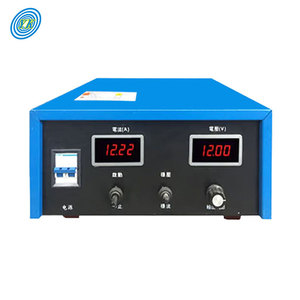
YUCOO Plating Rectifier 220V AC to 12V DC Electroplating Unit
Efficiency: ≥95% High DC Output
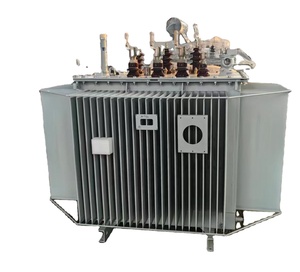
Three Phase Control Electrical Rectifier Transformer
Insulation Class: H / F Grade
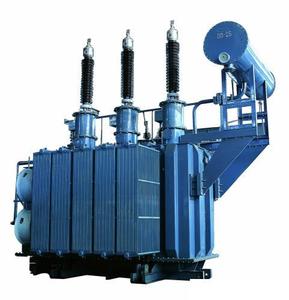
Oil Immersed 6300kVA High Current Cathodic Protection Transformer
Cooling Method: ONAN / ONAF Oil-Cooled
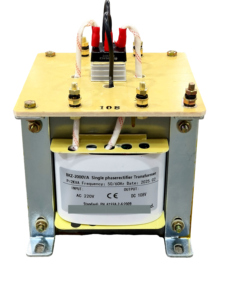
Single-Phase Control AC to DC Rectifier Transformer (2000VA-5KVA)
Application: Industrial DC Control
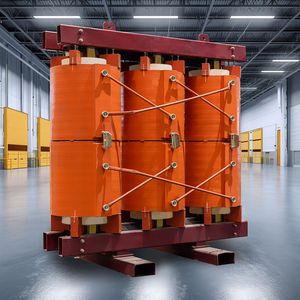
CEEG ZQSC(H)B 2000kVA/10kV Epoxy Cast Traction Dry Rectifier
Feature: Fire-Resistant Cast Resin
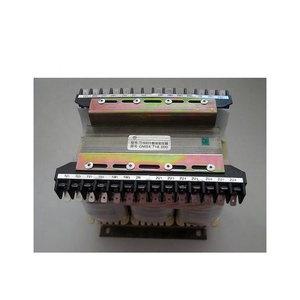
T6 Electric Power Rectifier Transformer for Excitation System
Duty: Continuous Power Excitation
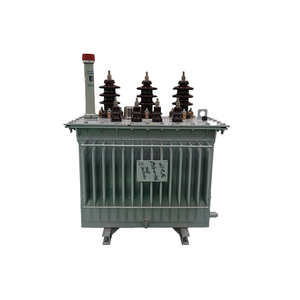
33kV / 300kVA High Voltage Hermetically Sealed Rectifier Unit
Design: Fully Sealed Maintenance-Free
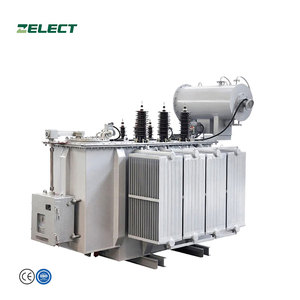
Industrial 3-Phase Step-Up Rectifier Transformer (50kVA - 3000kVA)
Core Type: High-Grade CRGO Steel
Executive Summary: Navigating China’s Transformer Oil & Liquid-Immersed Equipment Supply Chain
In high-voltage electrical engineering, dielectric fluids and liquid-immersed transformers constitute the structural backbone of modern grid distribution, industrial electrochemical processing, and renewable energy integration. Selecting a verified China top transformer oil factory & supplier requires an authoritative understanding of physical chemistry standards, core insulation mechanics, and supply chain logistics. China has evolved into the world's primary manufacturing hub for both high-grade naphthenic mineral insulating oils and custom-engineered oil-immersed rectifier transformers ranging from 50kVA step-up units to 6300kVA multi-phase heavy-duty electrochemical systems.
This whitepaper provides procurement directors, electrical consulting engineers, and plant operations managers with an exhaustive evaluation of dielectric insulating oil specifications, manufacturing quality benchmarks, future technology roadmaps, and strategic procurement frameworks designed to minimize total cost of ownership (TCO) while adhering to strict E-E-A-T (Experience, Expertise, Authoritativeness, and Trustworthiness) standards.
Part 1: Technical Standards & Quality Parameters of High-Voltage Transformer Oil
Insulating oils used in high-capacity rectifier transformers and distribution units must perform dual critical roles: insulating electrical conductors under intense electromagnetic fields and rapidly dissipating thermal stress generated by core hysteresis and copper winding losses ($I^2R$). Premium Chinese suppliers conform strictly to international benchmarks including IEC 60296, ASTM D3487, and national standard GB 2536.
1. Dielectric Breakdown Voltage (BDV) & Moisture Control
Dielectric breakdown voltage measures an oil's capacity to withstand electrical stress without sparkover. Virgin transformer oil supplied by top Chinese refineries exhibits a BDV exceeding 60 kV to 70 kV (tested per IEC 60156 with a 2.5 mm gap). Moisture absorption is the chief cause of dielectric degradation. Advanced factory filling procedures utilize deep vacuum degasification (under 0.1 Torr) to maintain moisture levels below 10 ppm prior to factory dispatch.
2. Viscosity and Thermal Dissipation Performance
Heat transfer efficiency relies on kinematic viscosity. At 40°C, high-grade naphthenic transformer oil maintains a viscosity of $\le 11.0\text{ mm}^2/\text{s}$, facilitating rapid natural convection (ONAN) or forced convection (ONAF/OFAF) through cooling radiator banks. Dynamic viscosity at -30°C remains sufficiently low to prevent cold-start dielectric starvation in Arctic installations.
3. Oxidation Stability & Inhibitor Content
Under continuous thermal stress and contact with oxygen, uninhibited oil forms acidic sludge that damages cellulose insulation paper. China's leading factories fortify dielectric oil with Synthetic Inhibitors (such as DBPC - 2,6-di-tert-butyl-p-cresol) up to 0.30% mass, ensuring induction times exceeding 180 minutes under IEC 61125 oxidation acceleration tests.
| Physical / Chemical Property | IEC 60296 Standard | ASTM D3487 (Type II) | China Factory Quality Benchmark |
|---|---|---|---|
| Breakdown Voltage (BDV) | ≥ 30 kV (as received) | ≥ 35 kV | ≥ 70 kV (Fully Degassed) |
| Water Content (Moisture) | ≤ 30 mg/kg (ppm) | ≤ 25 mg/kg (ppm) | ≤ 10 mg/kg (ppm) |
| Kinematic Viscosity (40°C) | ≤ 12 mm²/s | ≤ 12 mm²/s | ≤ 9.8 mm²/s |
| Flash Point (Closed Cup) | ≥ 135°C | ≥ 145°C | ≥ 150°C |
| Dissipation Factor (Tan $\delta$ at 90°C) | ≤ 0.005 | ≤ 0.005 | ≤ 0.0015 |
Part 2: Enterprise Strengths & Manufacturing Capability Analysis
Evaluating a Chinese manufacturer requires analyzing their internal quality management systems, core component sourcing, and testing infrastructure. Original equipment manufacturers (OEMs) specializing in oil-immersed power and rectifier transformers deploy end-to-end processing environments designed to prevent dielectric contamination.
Baosteel CRGO Steel Cores
Utilizing high-permeability, domain-refined Cold Rolled Grain Oriented (CRGO) silicon steel sheets (0.23mm to 0.27mm thickness) to achieve no-load energy loss reductions of up to 30% compared to standard electrical steels.
Oxygen-Free Copper Windings
Constructed with 99.99% pure oxygen-free electrolytic copper conductors insulated with thermally upgraded Kraft paper or epoxy glass cloth, delivering maximum short-circuit mechanical strength.
Vacuum Pressure Impregnation
Fully automated VPI drying chambers and oil processing plants extract trapped air bubbles, reducing partial discharge (PD) levels to strictly less than 5 pC at rated operating voltage.
Part 3: Technological Trends & R&D Horizons in Transformer Manufacturing
The global energy landscape is transitioning toward higher operational efficiency, decarbonization, and smart digital integration. Top Chinese suppliers are pioneering three primary technology trends:
1. Biodegradable Synthetic & Natural Ester Dielectric Fluids
While mineral oil remains dominant, vegetable oil-based natural esters (such as refined soybean or rapeseed oil) and synthetic esters are gaining rapid market share. Natural esters feature flash points exceeding 300°C (Class K fire rating), enabling transformers to operate safely in high-density urban substations or offshore platform environments while offering 100% biodegradability within 28 days.
2. Low-Harmonic Rectifier Transformer Architectures
Industrial rectifiers used in electroplating (e.g., YUCOO 12V 1000A DC units) and heavy electrolysis generate high-order current harmonics ($5^{\text{th}}, 7^{\text{th}}, 11^{\text{th}}, 13^{\text{th}}$). Advanced Chinese factory designs employ phase-shifting secondary windings (Extended Delta or Zig-Zag configurations) to create 12-pulse, 18-pulse, or 24-pulse rectification systems that naturally suppress harmonic feedback into the primary AC grid.
3. Integrated IoT & Dissolved Gas Analysis (DGA) Sensors
Modern 33kV and 6300kVA oil-immersed transformers now leave Chinese factories fitted with optical fiber thermal sensors and online Dissolved Gas Analysis (DGA) monitors. These smart sensors continuously analyze hydrogen ($H_2$), acetylene ($C_2H_2$), and methane ($CH_4$) concentrations inside the oil tank, predicting thermal hotspots or insulation degradation before catastrophic breakdown occurs.
Need Custom Technical Specifications for Your Power Project?
Our engineering team delivers customized transformer oil formulations and heavy-duty rectifier equipment compliant with IEC, IEEE, ANSI, and GB standards.
Part 4: Future Procurement Trends & Strategic Sourcing Guide (2025–2030)
Procuring transformers and dielectric fluids from China requires navigating evolving regulatory regimes, international freight requirements, and total lifecycle economics. B2B buyers should structure procurement contracts around three key trends:
1. Total Cost of Ownership (TCO) vs. Initial Capital Outlay
Savvy EPC contractors evaluate equipment not by purchase price alone, but by evaluated load loss ($P_k$) and no-load loss ($P_0$) capitalization formulas:
Where $A$ represents the capitalized financial value of core continuous loss (\$/W), and $B$ represents the capitalized value of copper load loss under duty cycle (\$/W). Chinese Level-1 Energy Efficiency transformers drastically reduce TCO over a 25-year operational life.
2. Factory Acceptance Testing (FAT) & Third-Party Verification
Leading Chinese transformer manufacturers provide comprehensive FAT routines witnessed by independent inspection agencies such as SGS, TÜV Rheinland, or Bureau Veritas. Essential routine and type tests include Lightning Impulse Voltage Withstand, Temperature Rise Test, Short-Circuit Withstand Capability, and Acoustic Sound Level Measurement.
Part 5: Comprehensive Buyer’s Procurement FAQ
Below are critical technical questions resolved by our senior power systems engineering team regarding transformer oil procurement and oil-immersed transformer operations:
What is the difference between Naphthenic and Paraffinic Transformer Oil?
Naphthenic oil flows better at lower temperatures without wax precipitation and breaks down into soluble sludge that doesn't restrict cooling oil ducts. Paraffinic oil forms insoluble wax deposits at low temperatures, making high-grade naphthenic oil the preferred standard for top Chinese export transformers.
How are oil-immersed transformers shipped safely overseas?
Large units (>3150kVA) are typically drained of oil and filled with positive-pressure dry nitrogen ($N_2$) gas to prevent moisture ingress during sea transport. The oil is shipped separately in sealed steel drums or ISO tanks and refilled onsite under vacuum filtration.
Why choose a Rectifier Transformer over standard distribution transformers?
Rectifier transformers are specially reinforced to handle high harmonic heating, extreme current ripple, and frequent load short circuits inherent to DC electroplating, industrial drive excitation, and electrolysis duty cycles.
What is the recommended maintenance schedule for dielectric oil?
Oil samples should undergo BDV and moisture testing annually for standard units, and semi-annually for high-duty units. Complete Dissolved Gas Analysis (DGA) is recommended every 12 to 24 months to detect internal arching or thermal breakdown early.
Conclusion & Strategic Sourcing Action Plan
Establishing a procurement relationship with a leading China transformer oil factory and transformer manufacturer empowers global industrial enterprises to secure high-efficiency, durable, and international-standard power assets. By adhering to rigorous design standards, insisting on high BDV dielectric fluids, and choosing phase-optimized rectifier configurations, engineering teams ensure decades of continuous grid stability and process reliability.
Explore our full technical documentation and custom engineering catalog today.