
Featured Substation & Rectifier Transformers
Custom-engineered step-up, step-down, and industrial rectifier transformers built for high operational stability, harmonic suppression, and extreme thermal resilience.
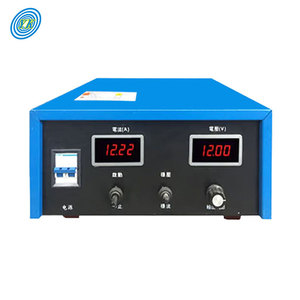
YUCOO Plating Rectifier 220V AC to 12V DC Electroplating Unit
Heavy-duty switch-mode power supply optimized for 50A, 500A, and 1000A industrial electroplating and electrolysis operations.
Contact Us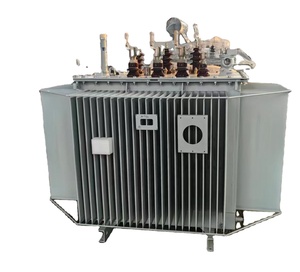
Three-Phase Control Electrical Rectifier Transformer
Direct-from-factory 3-phase industrial transformer featuring precise voltage regulation and low core losses for heavy manufacturing.
Contact Us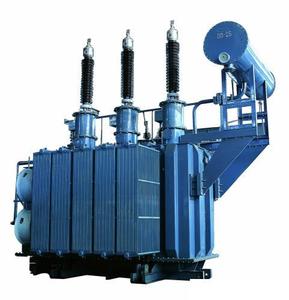
6300kVA High-Current Oil-Immersed Cathodic Protection Transformer
Engineered for large-scale cathodic protection, featuring high thermal withstand capability and robust oil-immersed insulation.
Contact Us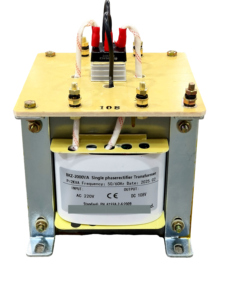
Single-Phase Control AC to DC Transformer (2000VA - 5kVA)
Multi-tap voltage conversion (380V/220V to 60V-6V) for delicate industrial control systems, excitation panels, and automation setups.
Contact Us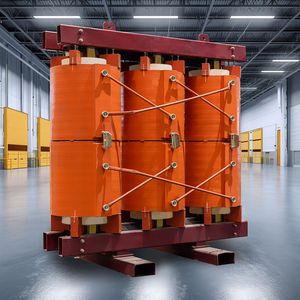
2000kVA/10kV Epoxy Cast Resin Traction Rectifier Dry-Type Transformer
CEEG ZQSC(H)B Series air-insulated dry-type unit engineered for metro traction, railway electrification, and high-safety indoor substations.
Contact Us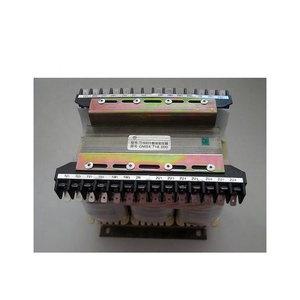
T6 Power Rectifier Transformer TI16933 for HYUNDAI HFC6 System
Precision OEM-grade power rectifier transformer specifically designed for HYUNDAI HFC6 generator excitation control modules.
Contact Us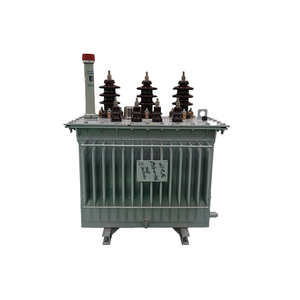
33kV / 300kVA - 1MW Hermetically Sealed Voltage Rectifier Transformer
High-voltage sealed transformer offering superior dielectric strength, zero maintenance design, and stable step-down conversion.
Contact Us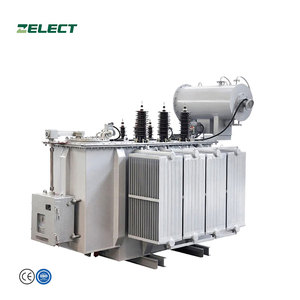
3-Phase Step-Up & Rectifier Transformer Array (50kVA - 3000kVA)
Versatile industrial transformer range designed for step-up power transmission, solar inverter duty, and heavy DC rectifier loads.
Contact UsWhy Leading Global Utilities & EPC Contractors Partner With Us
With over 17 years of specialized transformer manufacturing experience, our state-of-the-art facility integrates advanced electromagnetic engineering, strict ISO 9001/14001 quality frameworks, and full compliance with IEC 60076, IEEE C57, and IS 1180 international standards.
Custom Electromagnetic Topology
Every substation transformer is engineered using 3D finite element analysis (FEA) to model magnetic flux distribution. This minimizes stray losses, prevents localized core hot-spots, and optimizes short-circuit dynamic force resistance.
Ultra-Low Loss Core Stepping
Utilizing top-grade Cold-Rolled Grain-Oriented (CRGO) silicon steel or advanced Amorphous Alloy cores with multi-stage step-lap stacking, achieving no-load loss reductions of up to 30% compared to standard industry baselines.
Extreme Environment Endurance
Whether deployed in high-humidity coastal sites, desert regions with ambient temperatures exceeding 50°C, or seismic-prone zones, our hermetically sealed tanks and specialized epoxy cast insulation guarantee uninterrupted lifecycle performance.
Substation & Rectifier Transformer Architecture Comparison
An in-depth technical analysis for electrical engineers, plant directors, and procurement executives evaluating oil-immersed vs. dry-type cast resin substation technologies.
| Parameter / Feature | Liquid-Immersed Substation Units | Epoxy Cast Resin Dry-Type | Multi-Pulse Rectifier Transformer |
|---|---|---|---|
| Voltage Rating Range | Up to 33kV / 66kV / 132kV | Up to 11kV / 35kV Class | Custom Dual/Triple Secondary (Up to 33kV) |
| Cooling Medium & Class | ONAN / ONAF / OFAF (Mineral or Ester Oil) | AN / AF (Air Natural / Air Forced) | ONAN / OFWF (Oil-to-Water Forced) |
| Thermal Insulation Class | Class A (105°C) or Class A+ (Ester 120°C) | Class F (155°C) / Class H (180°C) | Class B / F depending on enclosure |
| Harmonic Withstand Capability | Standard K-Factor (K-1 to K-4) | Medium K-Factor (K-4 to K-13) | High K-Factor (K-13 to K-30+) |
| Fire & Explosion Safety | Requires fire barriers & containment pits | Self-extinguishing (F1 rating), zero risk | Nitrogen injection fire suppression optional |
| Maintenance & Lifecycle | Oil DGA & BDV testing every 12 months | Virtually maintenance-free (visual inspection) | OLTC & Rectifier Bridge diode monitoring |
Engineering Formula: K-Factor & Eddy Current Losses under Non-Linear Loads
When procuring transformers for rectifier or solar inverter duty, standard design fails due to harmonic overheating. The internal stray loss under harmonic conditions is calculated via:
Our engineering team applies specialized secondary phase-shifting (e.g., Extended Delta, Zig-zag, or Dual Wye-Delta configurations) to achieve 12-pulse, 18-pulse, or 24-pulse rectification. This cancels out low-order harmonics at the source, reducing Total Harmonic Distortion (THD) below 5% without relying entirely on bulky external filter banks.
Future Substation Transformer Procurement Trends
Key macroeconomic factors, regulatory shifts, and technical paradigms reshaping global transformer acquisition strategies over the next decade.
1. Shift Towards Biodegradable Synthetic & Natural Ester Oils
Environmental regulations across North America and Europe are driving a rapid transition away from traditional mineral oil toward natural and synthetic ester fluids. Ester fluids boast a fire point exceeding 300°C (K-class classification), drastically reducing substation insurance premiums while rendering oil spills non-toxic and 99% biodegradable within 28 days.
2. Smart Transformers with Real-Time Online DGA Diagnostics
Unplanned grid outages cost industrial facilities millions. Procurement directives now mandate IoT-enabled online condition monitoring. Modern substation units integrate fiber-optic hot-spot sensors, real-time Dissolved Gas Analysis (DGA) monitors (detecting $H_2, C_2H_2, CO$), and automated moisture-in-oil sensors transmitting data via IEC 61850 protocol to central SCADA systems.
3. High-Efficiency Standards (EU EcoDesign Tier 2 & US DOE 2026)
Government authorities worldwide are tightening efficiency thresholds. Energy efficiency standards such as EU Tier 2, US Department of Energy (DOE) 2026, and India IS 1180 Level 3 enforce aggressive loss limits. Buyers must procure transformers engineered with high-permeability CRGO steel and optimized copper conductor cross-sections to mitigate lifetime operational carbon footprints.
4. Specialized Rectifiers for Hydrogen Electrolysis & EV Mega-Hubs
The global push for green hydrogen production via proton exchange membrane (PEM) and alkaline electrolyzers demands ultra-high-current DC power supplies. Substation transformers are evolving into integrated high-power multi-phase units capable of delivering tens of thousands of Amperes at precise low DC voltages with minimal ripple factor.
Next-Generation Engineering Innovations in Manufacturing
How China's leading OEM factories are pioneering breakthrough materials and digital twin modeling to revolutionize transformer longevity and performance.
Hybrid Insulation Systems & High-Temperature Materials
Traditional cellulose paper insulation degrades rapidly when transformer winding temperatures exceed 105°C. Advanced manufacturing now incorporates Nomex® aramid insulation paper in combination with ester fluids. This hybrid insulation system allows transformers to operate continuously at overload capacities up to 130% without accelerating thermal degradation or sacrificing dielectric insulation life expectancy.
Digital Twin Electromagnetic & CFD Thermal Modeling
Before raw materials enter production, physics-based Digital Twins simulate fluid dynamics (CFD) of the cooling oil flow through internal winding ducts. This ensures zero stagnant oil zones and prevents localized hot-spots that are the primary cause of premature insulation breakdown in heavy-duty 33kV substation transformers.
Low-Noise Core Geometry & Anti-Vibration Structural Dampening
Magnetostriction in silicon steel cores creates low-frequency acoustic noise ($100\text{Hz} / 120\text{Hz}$) that presents environmental challenges in urban substations. By applying resin-bonded core clamping structures, high-damping elastomeric pads, and precision 45-degree mitered step-lap joint technology, our manufacturing process reduces acoustic emissions by 8 to 12 dB(A) below standard IEC 60076-10 requirements.
Frequently Asked Procurement & Engineering Questions (FAQ)
Clear, authoritative answers to common inquiries encountered during technical specification, tender preparation, and international procurement.
Ready to Engineer Your Substation Transformer Infrastructure?
Connect directly with our senior power engineering consultants for full technical reviews, single-line diagram (SLD) evaluations, custom vector group configurations, and direct factory pricing.