
CE Certified Transformer & Substation Portfolio
Engineered to rigid IEC 60076, IS 1180 Amendment 1, and European Conformity (CE) parameters. Built for high operational durability, minimum dielectric losses, and severe fault withstand capabilities.
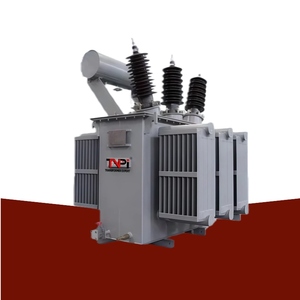
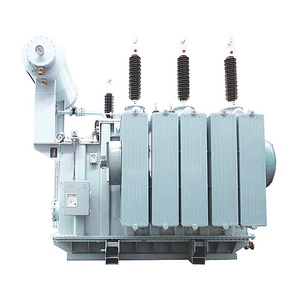
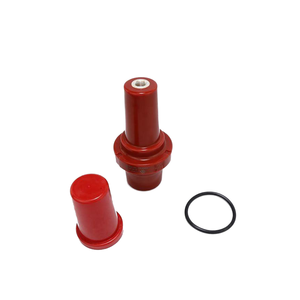
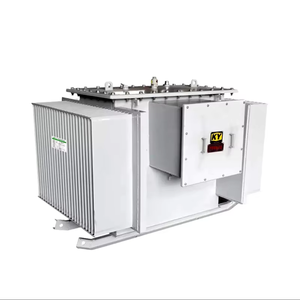
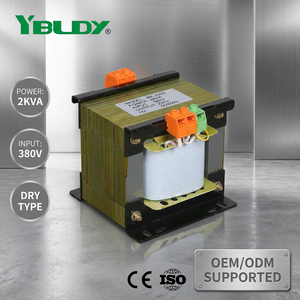
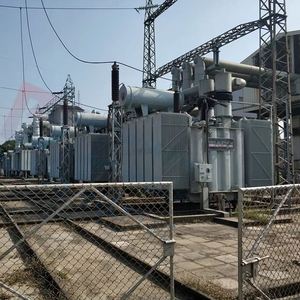
Why Global Utilities & EPC Contractors Rely On Our Manufacturing Infrastructure
Operating from state-of-the-art manufacturing facilities certified to ISO 9001:2015, ISO 14001:2015, and ISO 45001:2018 standards, we deliver end-to-end quality assurance for electrical grid components. Every accessory and complete transformer unit undergoes stringent routine, type, and special testing protocols before dispatch.
- CE Directive Compliance: Low Voltage Directive (2014/35/EU) and Electromagnetic Compatibility (EMC 2014/30/EU) verified.
- Material Integrity: High-grade cold-rolled grain-oriented (CRGO) steel cores and 99.99% pure electrolytic grade copper windings.
- Custom Engineering: Bespoke dielectric designs, non-standard voltage ratios, severe outdoor climate coatings (C5-M rated), and high-altitude adaptations.
IS 1180 (Part 1) & IEC 60076 Standard Energy Efficiency Loss Benchmarks
Technical baseline metrics for 11kV distribution category equipment across energy efficiency tier levels.
| Rating (kVA) | Impedance Voltage (%) | Max Losses @ 50% Load (Level 1) | Max Losses @ 100% Load (Level 1) | Max Losses @ 50% Load (Level 3 - High Eff) | Max Losses @ 100% Load (Level 3 - High Eff) |
|---|---|---|---|---|---|
| 250 kVA | 4.50% | 1050 W | 3150 W | 920 W | 2700 W |
| 500 kVA | 4.50% | 1600 W | 4750 W | 1430 W | 4100 W |
| 630 kVA | 4.50% | 2000 W | 5855 W | 1745 W | 4850 W |
| 1000 kVA | 5.00% | 3000 W | 9000 W | 2620 W | 7000 W |
| 2500 kVA | 6.25% | 6500 W | 20000 W | 5900 W | 17500 W |
Technical Whitepaper: Engineering Criteria for Modern Transformer Accessories
In electrical power distribution and transmission substations, a transformer is only as reliable as its peripheral accessories and protective safety devices. While core laminations and primary copper windings establish electromagnetic efficiency, accessories govern operational safety, environmental immunity, online diagnostic precision, and thermal management. As a primary manufacturer and global exporter of CE-certified transformer accessories, our engineering department provides this technical analysis to assist utility engineers, EPC procurement managers, and plant operations directors in optimizing asset procurement decisions.
1. High-Voltage Bushings & Single-Pass Connectors
High-voltage bushings serve as insulated conduits transferring electrical energy from external overhead lines or busbars into the transformer oil tank without flashover to the grounded metal tank structure. Key engineering evaluation parameters include:
- Creepage Distance Optimization: In polluted industrial, coastal, or desert environments, outdoor porcelain and composite silicone bushings must provide a minimum creepage distance of 25mm/kV to 31mm/kV to prevent tracking currents and moisture-induced insulation breakdown.
- Basic Impulse Level (BIL): Accessories must withstand severe transient lightning surges and switching overvoltages. For 33kV system rated voltage, BIL ratings must meet or exceed 170kV peak impulse withstand.
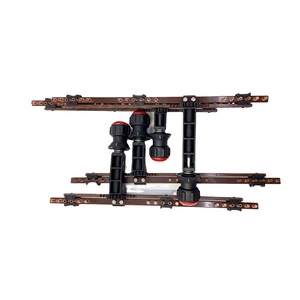
- Single-Pass Connectors: Modern MV/HV transformers utilize plug-in single-pass bushing connectors (such as the Hangen S20 series) to simplify modular maintenance, minimize field termination labor, and ensure touch-safe enclosed connection points in compact substations.
2. Off-Circuit & On-Load Tap Changers (OLTC / DETC)
Voltage regulation is achieved by altering the active turns ratio of the high-voltage winding via tap changers. Selecting the correct switching architecture determines both capital cost efficiency and operational stability:
- De-Energized Tap Changers (DETC / WST Series): Operated exclusively when the transformer is completely isolated from the grid. Our WST non-excitation tap changers utilize PA66 glass-reinforced polyamide housings combined with self-cleaning aluminum or silver-plated copper contacts. This structural material prevents oil sludge formation and guarantees low electrical contact resistance across decades of static operation.
- On-Load Tap Changers (OLTC): Designed for continuous grid regulation without power disruption. High-speed vacuum switch technology is increasingly preferred over traditional oil-arc switching to prevent carbon contamination of dielectric oil and extend maintenance intervals past 300,000 operations.
3. Moisture Control & Dehydrating Breather Architecture
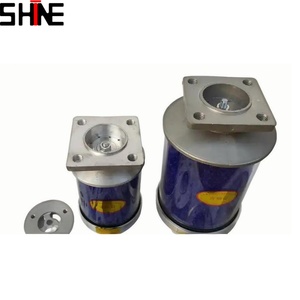
Transformer dielectric oil degrades rapidly when exposed to atmospheric moisture. During expansion and contraction cycles caused by daily thermal load changes, air is drawn into the conservator tank. Dehydrating moisture absorbers (breathers) strip airborne moisture before it reaches the oil reservoir:
- Double-Breathing Systems: Feature dual-chamber silica gel beds coupled with an oil seal cup that traps dirt and prevents continuous air contact during non-breathing static periods.
- Self-Regulating Smart Breathers: Integrate internal heating elements powered by digital humidity sensors to automatically regenerate silica gel crystals when saturation thresholds are breached, eliminating manual desiccant replacement trips in remote solar plants or offshore substations.
4. Protective Safety Devices: Buchholz Relays & Pressure Relief Valves
Preventative protective relays act as the primary defense against catastrophic internal transformer failures:
- Buchholz Relays: Positioned in the pipe run between the main tank and conservator. Dual-float mechanisms detect slow gas accumulation (indicative of minor inter-turn insulation degradation or localized partial discharge) and trigger early warning alarms. In severe short-circuit events, rapid oil surge velocities displace the lower float, initiating instant circuit breaker tripping.
- Qualitrol-Style Pressure Relief Devices (PRD): Engineered to open within milliseconds if an internal arc causes explosive oil vapor expansion. Modern PRDs incorporate mechanical directional shields and limit switches to send instant digital alarm signals to SCADA control centers.
Substation Mounting Hardware
Hot-dip galvanized steel cross-arms, transformer platform brackets, and anti-vibration rubber dampers manufactured to ASTM A123 corrosion resistance standards for 30+ year outdoor service lives.
Temperature Indicators (OTI / WTI)
Bourdon-tube Oil Temperature Indicators (OTI) and Winding Temperature Indicators (WTI) equipped with capillary tubes, microswitches for multi-stage fan control, and 4-20mA SCADA retransmission outputs.
Hermetic Liquid Level Gauges
Magnetic liquid level indicators (MLLI) offering dial-face isolation from internal oil tanks, preventing oil leakage risks while providing high/low level alarm contact activation.
Future Procurement Trends in Global Transformer Accessories
The global power infrastructure landscape is undergoing a structural transition driven by renewable energy integration, grid digitalization, and stringent environmental decarbonization policies. Procurement directors must anticipate technical shifts to avoid premature asset obsolescence.
Trend 1: Smart Accessories & IoT-Enabled Condition Monitoring
Traditional passive transformer accessories are being rapidly replaced by smart, sensor-integrated components. Future-proof procurement now prioritizes accessories equipped with Modbus RS485, IEC 61850 protocol compliance, and fiber-optic temperature sensors embedded directly into winding layers. Digital breathers, smart Buchholz relays with online Dissolved Gas Analysis (DGA) microsensors, and electronic oil sight glasses transmit real-time health metrics to centralized utility Asset Performance Management (APM) software, transitioning maintenance strategies from reactive to predictive.
Trend 2: Transition to Bio-Based Ester Fluids & Compatible Accessories
As utilities phase out mineral oil in favor of biodegradable synthetic and natural ester dielectric liquids (K-class fluids with flash points >300°C), accessory compatibility has become a crucial engineering threshold. Ester fluids exhibit different viscosity profiles and chemical reactivity compared to mineral oil. Procurement teams must verify that all rubber gaskets (NBR, Viton, Fluorosilicone), tap changer seals, and breather valves are explicitly rated for long-term ester fluid exposure without polymer degradation or swelling.
Trend 3: Stringent CE Certification & EU EcoDesign Tier 2 Mandates
Global export regulations are tightening. European and global markets strictly enforce EU Directive 2009/125/EC (EcoDesign Tier 2), setting demanding upper limits on load and no-load losses for power transformers. Consequently, accessories like tap changers and bushings are evaluated for their micro-loss contributions. Low-loss copper contacts, non-magnetic gland plates to mitigate stray eddy currents, and high-efficiency cooling fan assemblies are now mandatory requirements for CE compliance and international bidding eligibility.
Strategic Product Development Trends (2025–2035 Roadmap)
To maintain a competitive edge, our factory R&D team focuses on four key engineering vectors designed to address emerging electrical grid challenges:
Composite Polymer Insulation
Transitioning from heavy, brittle electrical porcelain to high-strength Cycloaliphatic Epoxy (CEP) and silicone rubber insulators. Offers superior seismic resistance, anti-vandalism durability, and 40% weight reduction.
Modular Plug & Play Substation Kits
Developing factory-pre-assembled, pre-tested accessory harnesses including pre-wired junction boxes, standardized DIN rail terminal blocks, and quick-connect blind-mate oil fittings to reduce field installation time by 60%.
Severe Environment Coatings
Applying advanced fluoropolymer powder coatings and hot-dip galvanized finishes designed to withstand ISO 12944 C5-M extreme marine corrosive environments, preventing surface rust in offshore wind applications.
Low-Noise Cooling Systems
Designing ultra-quiet aerofoil-blade radiator cooling fans and silent submersible oil pumps operating under 50 dBA to comply with strict urban residential substation noise pollution codes.
Deployments Across Diverse Sectors
Our CE certified transformer components are integrated across high-reliability global infrastructure projects.

Power Generation & Distribution Utilities

Manufacturing & Heavy Automotive

Real Estate & Infrastructure Projects

EPC Turnkey Substation Contracting

Hospitals, Data Centers & IT Parks

Government Grid Modernization

Oil, Gas & Hazardous Petrochemical

Solar & Renewable Energy Plants
Frequently Asked Questions (FAQ)
Expert technical answers regarding compliance, material testing, custom OEM manufacturing, and export logistics.
Partner with a Certified Global Transformer Accessories Manufacturer
Request a comprehensive technical catalog, factory audit documentation, or an instant factory-direct price quotation for your transformer production or grid maintenance project.