
Industrial Rectifier & Galvanic Isolation Transformers
Engineered in compliance with CE Low Voltage Directive 2014/35/EU, EMC Directive 2014/30/EU, and IEC 61558-2-4 standards for global export.
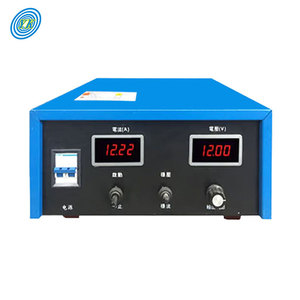
YUCOO Plating Rectifier 220v Ac to 12v Dc 50a 500a 1000 Amp Electroplating Rectifier
High-current galvanic isolation rectifier transformer designed for continuous electroplating, anodizing, and electrolysis processes with ultra-low ripple voltage.
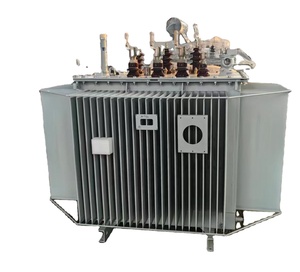
Factory Direct Sales Three Phase Control Electrical Rectifier Transformer
Precision-tuned 3-phase control rectifier units featuring integrated Faraday shielding for transient spike protection in heavy automated machinery.
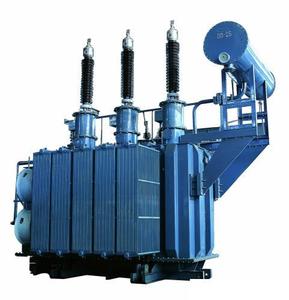
Oil Immersed High Current 6300kva Transformer Three Phase Cathodic Protection Rectifier Transformer
Heavy-duty oil-immersed power isolation transformer built for high-capacity cathodic protection systems, pipeline corrosion control, and subsea structures.
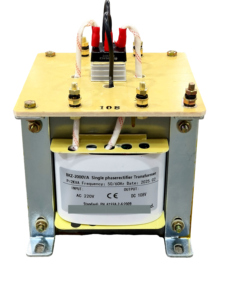
380V/220V to 60V 48V 24V 12V 6V AC to DC Transformers 2000VA 5KVA Single-Phase Control Rectifier
Versatile step-down isolation control transformer featuring multi-tap output voltages for cabinet control circuits, DC power supplies, and automation instrumentation.
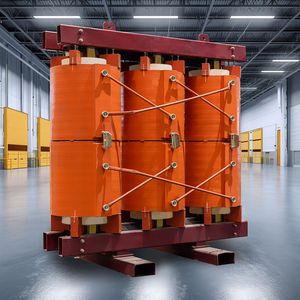
CEEG ZQSC(H)B SERIES 2000kVA/10kv EPOXY CAST TRACTION RECTIFIER DRY-TYPE Transformer
Class H epoxy resin cast dry-type air-insulated isolation transformer tailored for metro rail traction power, heavy industrial drives, and zero-fire-hazard indoor substations.
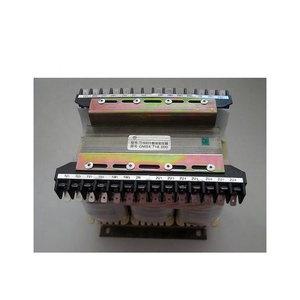
ORIGINAL T6 Electric Power Rectifier Transformer TI16933 For HYUNDAI HFC6 Excitation System
OEM-equivalent power rectifier transformer designed specifically for generator excitation control systems, delivering ultra-reliable field voltage isolation.
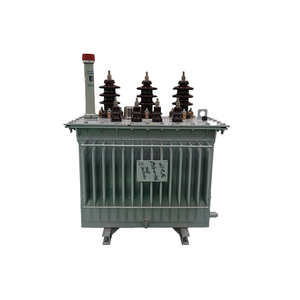
Control 33kv 300kva 1 MW Voltage Isolation Rectifier Transformer (Sealed Design)
High-voltage sealed isolation transformer operating up to 33kV for utility substations, renewable grid ties, and large-scale industrial voltage transformation.
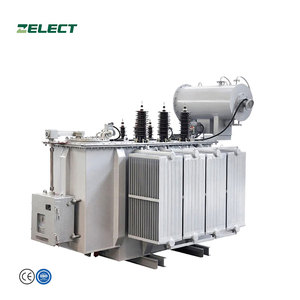
50KVA to 3000KVA Transformador 3-Phase Step-Up/Down Rectifier Isolation Transformer
Custom industrial 3-phase isolation transformers spanning 50kVA to 3000kVA ratings, engineered with K-factor load harmonic withstand capabilities.
1. Technical Foundation: The Architecture of Industrial Galvanic Isolation
In modern industrial electrification, electrical isolation is not merely a safety precaution—it is an operational imperative. An Isolation Transformer isolates the secondary circuit from the primary alternating current (AC) power supply, blocking the transfer of DC signal components, transient voltage surges, and high-frequency common-mode noise while allowing electromagnetic power transfer through mutual induction.
Unlike standard autotransformers—where primary and secondary windings share a common metallic conductor—our CE-certified isolation transformers feature completely decoupled, galvanically isolated physical windings. This independent magnetic coupling establishes a fresh neutral-to-ground reference on the secondary output side, eliminating ground loops, reducing leakage currents, and isolating sensitive downstream equipment such as Variable Frequency Drives (VFDs), Programmable Logic Controllers (PLCs), medical imaging devices, and high-current electroplating rectifiers.
Engineering Insight: Common-Mode vs. Transverse-Mode Noise Attenuation
By incorporating copper Faraday electrostatic shielding between the primary and secondary windings, capacitive coupling between high-voltage input lines and low-voltage control circuits is reduced to under 0.005 pF. This achieves a common-mode noise attenuation rating exceeding 120 dB at 100 kHz, safeguarding sensitive digital control circuits against catastrophic lightning surges and switching transients.
2. Regulatory Compliance & CE Certification Framework (EN 61558-2-4)
As a certified global manufacturer and exporter, our engineering facilities operate under rigorous international quality management systems (ISO 9001:2015, ISO 14001:2015). Every export unit bearing the CE mark is fully compliant with essential European Union directives:
- Low Voltage Directive (LVD) 2014/35/EU: Compliant with IEC/EN 61558-1 and IEC/EN 61558-2-4 standards governing general-purpose safety and isolation transformers up to 1000V primary rating, guaranteeing dielectric breakdown resistance exceeding 4000V RMS.
- Electromagnetic Compatibility (EMC) Directive 2014/30/EU: Designed with optimized magnetic flux densities ($B_{max} \le 1.65\text{ Tesla}$) to prevent core saturation, electromagnetic interference emission, and harmonic distortion back-feed into the utility grid.
- EU EcoDesign Directive Tier 2 Compliance: Utilizing high-permeability, cold-rolled grain-oriented (CRGO) M4/M3 silicon steel or amorphous metal alloys to reduce no-load losses ($P_o$) and load losses ($P_k$) by up to 30% relative to standard market alternatives.
Technical Comparison of Industrial Isolation Topologies
Compare performance parameters across Dry-Type VPI, Epoxy Cast Resin, and Oil-Immersed Isolation Rectifier Transformers.
| Performance Specification | Vacuum Pressure Impregnated (VPI) Dry-Type | Epoxy Cast Resin Dry-Type | Oil-Immersed Rectifier Class |
|---|---|---|---|
| Power Range | 1 kVA – 2,500 kVA | 100 kVA – 10,000 kVA (10 MVA) | 500 kVA – 25,000 kVA |
| Highest Voltage Class | Up to 1.1 kV / 11 kV | Up to 33 kV Class | Up to 66 kV Class |
| Thermal Insulation Rating | Class H (180°C) / Class C (220°C) | Class F (155°C) / Class H (180°C) | Class A (105°C) ONAN/ONAF |
| Harmonic K-Factor Rating | K-4, K-9, K-13, K-20 (Custom) | K-4, K-13, K-20 | Specially Designed 12/24-Pulse Rectifier |
| Noise Attenuation (Faraday Shield) | 60 dB – 120 dB Rejection | 80 dB – 120 dB Rejection | 40 dB – 80 dB Rejection |
| Environmental Classification | IP20 / IP23 Indoor Cabinets | IP31 / IP54 (E2, C2, F1 Fire Safe) | IP65 NEMA 4X Sealed Outdoor Tank |
| CE Compliance Status | CE EN 61558-2-4 | CE EN 60076-11 | CE EN 60076-1 |
Harmonic Distortion & K-Factor Thermal Engineering
How custom winding geometries overcome skin effect and eddy current heating caused by non-linear industrial rectifier loads.
K-Factor Rating Optimization
Non-linear loads such as SCR electroplating rectifiers generate high harmonic currents ($h = 5, 7, 11, 13$). Our K-factor transformers ($K = \sum (I_h)^2 h^2$) incorporate neutral conductors sized at 200% phase current to handle triplen harmonics without overheating.
Stray & Eddy Current Loss Mitigation
High-frequency harmonic currents cause severe eddy current losses in windings due to skin effect. We utilize transposed foil conductors and parallel litz wire structures to minimize $I^2R$ thermal dissipation and extend insulation service life.
Phase-Shifting 12/24-Pulse Rectifier Topologies
By engineering phase-shifting isolation transformers with Delta-Wye ($\Delta/Y$) and Delta-Delta ($\Delta/\Delta$) secondary winding combinations, 5th and 7th harmonic currents cancel out at the primary side, maintaining clean sinusoidal utility power input.
Future Procurement & Technological Trends in Isolation Magnetics
Key engineering shifts shaping global B2B transformer procurement over the next decade.
1. Decarbonization & EU EcoDesign Tier 2 Mandates
Global industrial procurement policies now prioritize total life-cycle energy consumption over initial capital expenditure (CapEx). Under the EU EcoDesign Directive Tier 2 standards, industrial transformers must demonstrate minimal no-load core losses. Exporters who provide high-permeability amorphous core isolation transformers gain up to a 40% reduction in continuous energy losses, significantly lowering lifetime Total Cost of Ownership (TCO).
2. Wide-Bandgap (SiC & GaN) Power Converter Integration
The rapid rise of Silicon Carbide (SiC) and Gallium Nitride (GaN) solid-state rectifiers introduces fast voltage switching rates ($dv/dt > 50\text{ kV/}\mu\text{s}$). Isolation transformers must now be designed with specialized inter-winding dielectric barriers, high insulation breakdown stress margins, and low inter-layer capacitance to withstand intense electrical stress without partial discharge degradation.
3. Smart IoT Diagnostics & Real-Time Condition Monitoring
Modern procurement specifications increasingly demand integrated digital twin sensors. Future-ready isolation transformers feature fiber-optic winding hot-spot sensors, online dissolved gas analysis (DGA) for oil units, and continuous insulation resistance (IR) telemetry. These smart diagnostics connect directly to plant SCADA systems via Modbus/IEC 61850 protocols, enabling predictive maintenance and preventing catastrophic grid downtime.
4. Transition to Biodegradable Ester Fluids & Flame-Retardant Cast Resin
Environmental safety standards are pushing industrial buyers away from traditional mineral oil transformer fluids. Synthetic and natural ester dielectric liquids offer high flash points (>300°C) and 100% biodegradability. Concurrently, Class H (180°C) Nomex-insulated dry-type cast resin isolation units are becoming mandatory for high-density urban environments, offshore wind platforms, and underground mining operations.
Why Global EPC Contractors & OEMs Choose Our Manufacturing Infrastructure
Proven engineering authority backed by world-class routine and type testing facilities.
100% In-House Testing Laboratory
Every isolation transformer undergoes strict factory routine testing prior to export packing: Winding Resistance, Voltage Ratio & Phase Verification, Short-Circuit Impedance, Separate-Source AC Dielectric Withstand (up to 70kV), Induced Overvoltage, and Partial Discharge Analysis.
Custom Mechanical & Electrical Engineering
We provide complete OEM/ODM engineering customization. From custom vector group configurations ($\text{Dyn11}, \text{Ynd11}, \text{Dd0}, \text{Dy11}$) to multi-tap secondary voltages, NEMA 3R/4X/12 enclosures, and seismic-rated structural bracing for hazardous industrial locations.
Global Export Packaging & Logistics
With 17+ years of international export experience, our products are shipped worldwide in vacuum-sealed moisture-proof barrier bags enclosed within heavy-duty ISPM-15 compliant seaworthy wooden crates, ensuring zero transit corrosion or mechanical damage.
Frequently Asked Questions for B2B Isolation Transformer Procurement
Expert answers addressing critical technical, compliance, and purchasing considerations.
Q1: What is the fundamental difference between an Isolation Transformer and an Autotransformer?
An autotransformer utilizes a single continuous magnetic winding shared between primary and secondary circuits, providing no physical or galvanic separation. In contrast, an Isolation Transformer features entirely separate, physically insulated primary and secondary copper/aluminum windings. This galvanic isolation establishes a newly grounded neutral, prevents ground loops, stops common-mode electrical noise propagation, and protects operating personnel from dangerous direct-to-ground shock hazards.
Q2: Why is CE certification mandatory for exporting isolation transformers to international markets?
CE certification demonstrates strict compliance with European Union safety, health, and environmental protection standards—specifically the Low Voltage Directive (LVD 2014/35/EU) and Electromagnetic Compatibility Directive (EMC 2014/30/EU). In accordance with harmonized standard IEC/EN 61558-2-4, CE-marked isolation transformers undergo rigorous verification of dielectric breakdown strength, insulation creepage distances, thermal temperature rise limits, and electromagnetic interference suppression, ensuring seamless customs clearance and legal deployment across Europe, the Middle East, and global markets.
Q3: How do I determine the correct K-Factor rating for an isolation transformer powering heavy rectifier loads?
The K-factor rates a transformer’s capability to handle non-linear harmonic load currents without exceeding design temperature limits.
• K-1: Standard linear loads (motors, resistive heating).
• K-4: Standard office equipment, variable speed drives, or 6-pulse rectifiers with low harmonic content.
• K-13 / K-20: Heavy industrial thyristor/SCR rectifiers, electroplating power supplies, induction furnaces, and high-density UPS systems generating severe 5th, 7th, 11th, and 13th harmonic currents. Selecting the correct K-factor prevents core saturation, neutral conductor burn-out, and premature thermal insulation failure.
Q4: What role does electrostatic Faraday shielding play in isolation transformers?
A Faraday shield is a grounded sheet of high-conductivity copper positioned physically between the primary and secondary windings. It acts as an electrostatic barrier that intercepts high-frequency transient voltage spikes, switching surge noise, and lightning impulses, shunting them directly to earth ground. This reduces inter-winding capacitive coupling to under 0.005 pF, delivering a common-mode noise attenuation rating of 60 dB to 120 dB, which is essential for protecting automated PLC control systems and high-precision electronic rectifiers.
Q5: What routine tests are conducted prior to factory dispatch?
Prior to export shipment, 100% of our production units undergo comprehensive routine testing in accordance with IEC 60076 and IEC 61558 standards. Tests include: Winding Resistance Measurement, Voltage Ratio & Vector Group Verification, Short-Circuit Impedance & Load Loss Test, No-Load Loss & Current Test, Separate-Source Applied Voltage Test (Dielectric Withstand), and Induced Overvoltage Test. Type test reports (including Temperature Rise and Lightning Impulse withstand) are available upon project request.
Q6: Can your isolation transformers be engineered for multi-voltage industrial power grids?
Yes. We specialize in custom multi-tap primary and secondary winding configurations. Whether your project requires stepping down high-voltage utility power (e.g., 33kV, 11kV, 6.6kV) or adapting regional industrial system voltages (e.g., 480V, 415V, 380V, 220V, 200V to 60V/48V/24V DC rectifier inputs), our engineering team designs bespoke vector groups and tap-changers (Off-Circuit or On-Load Tap Changers) to match your exact electrical network requirements.
Request a Custom Isolation Transformer Quotation
Consult with our Senior Electrical Magnetics Engineers today for customized technical proposals, detailed dimensional drawings, and competitive direct factory pricing for your upcoming industrial project.