
0%

Global electricity systems are expanding faster, while available land and construction time continue to shrink. The International Energy Agency’s Electricity 2024 report forecasts global electricity demand growth of about 4% annually through 2026. Meanwhile, IRENA reported 585 GW of renewable capacity additions in 2024. These figures reveal a practical challenge: new generation requires flexible, reliable, and space-efficient distribution infrastructure.

Compact Substation Units offer a focused response. They combine medium-voltage switchgear, transformers, and low-voltage equipment inside a factory-engineered enclosure. This arrangement can reduce site work, simplify transport, and shorten installation schedules. On a constrained urban site, the difference may be a smaller foundation and fewer exposed cable routes. In a remote solar project, it may mean faster commissioning with fewer specialized crews.

Industry practice still demands careful verification. IEC 62271-202 provides important requirements for high-voltage and low-voltage prefabricated substations, including service conditions and enclosure performance. However, compliance alone does not guarantee project success. Engineers must assess ambient temperature, humidity, seismic exposure, ventilation, fire protection, maintenance access, and local grid codes. A compact design can save space, yet poor thermal planning may reduce transformer life.

This is where experience matters. Project teams should compare lifecycle cost, not only purchase price. They should also confirm spare-parts availability and local service capability before selecting a supplier. Compact Substation Units are not a universal answer. They are a disciplined option for global projects that need repeatable engineering, controlled quality, and dependable deployment under real site constraints.
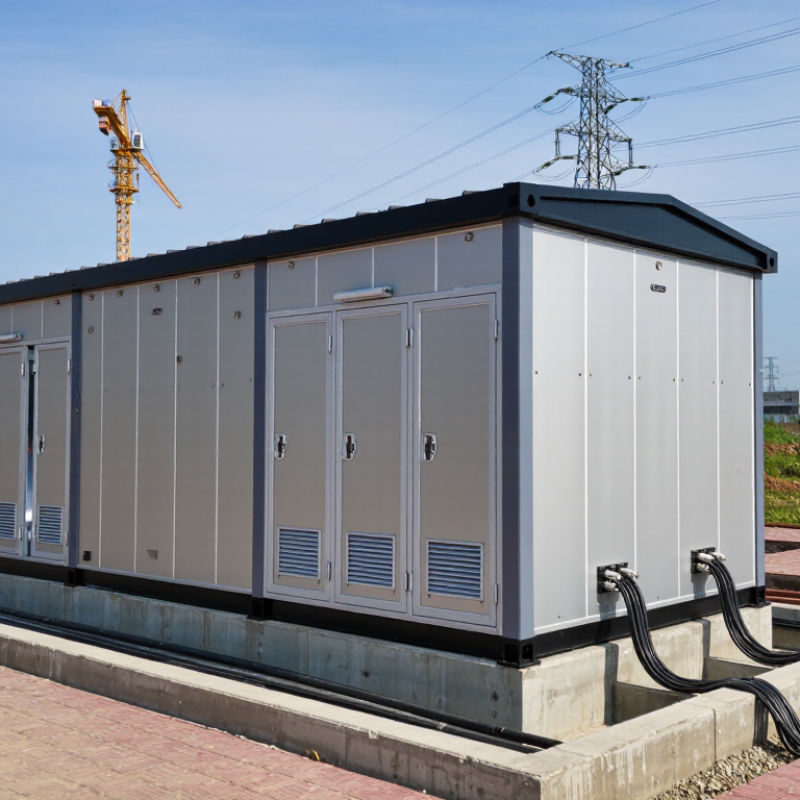
Why Choose Compact Substation Units for Global Projects?

Compact Substation Units: Definition and Core Components

Why Choose Compact Substation Units for Global Projects?

Compact substation units combine medium-voltage switchgear, a transformer, low-voltage distribution, protection systems, and metering in one enclosed package. Their enclosure protects equipment from dust, rain, salt, and accidental contact. IEC 62271-202 provides a useful reference for prefabricated substations, while IEC 60076 covers transformer performance. In practical projects, this integrated design can reduce site wiring and shorten installation work.

The International Energy Agency reports that the world may need over 80 million kilometres of new or refurbished grids by 2040. Its 2023 grid report also estimates annual grid investment must exceed 600 billion US dollars by 2030. These figures explain the demand for repeatable, space-efficient equipment.

A compact unit can arrive factory-tested, then connect to cables, earthing, and control networks at site. That matters in solar farms, remote mines, industrial parks, and temporary construction zones.

However, compact does not mean universally suitable. Heat, altitude, humidity, fault levels, and local maintenance skills can change the specification. Field engineers should verify transformer cooling, ventilation, ingress protection, and spare-part access before approval.

Communication modules also need compatibility with the project’s protection and monitoring systems. A smaller footprint may hide a larger service challenge. That detail deserves more attention.

How Compact Substations Operate in Global Power Networks

Compact substation units are designed to make power transformation closer, faster, and easier to control. In a typical arrangement, medium-voltage switchgear receives incoming power. A transformer then reduces the voltage. Low-voltage boards distribute electricity to buildings, factories, or renewable-energy assets. Protection relays isolate faults within milliseconds, while sensors send operating data to a control system. The equipment works as one coordinated enclosure.

This matters as electricity networks expand. The IEA’s Electricity 2024 report forecasts average global electricity-demand growth of about 4% annually from 2024 to 2026. IRENA reported 473 GW of renewable capacity additions in 2023, representing 86% of all new power capacity. Many of these projects need reliable conversion between generation sites and local distribution systems. Compact units reduce cable distances and simplify installation in remote or space-limited locations. They can also support different grid frequencies, voltage levels, and protection settings when engineered correctly.

The details are demanding. Engineers must assess altitude, salt exposure, dust, flooding, cooling, and local maintenance skills. A sealed enclosure may protect sensitive equipment, but it can make repairs less convenient. Compact does not automatically mean better. Poor thermal calculations can shorten transformer life. In practice, commissioning teams should verify relay coordination, earthing, insulation performance, and remote alarms before energization. International standards help, but field conditions still challenge the design. That gap deserves more attention.

Key Benefits for International Infrastructure Projects

Why Choose Compact Substation Units for Global Projects?

Key Benefits for International Infrastructure Projects

International infrastructure projects face different voltages, climates, transport limits, and approval procedures. Compact substation units can reduce these challenges through factory-assembled equipment. Protection devices, transformers, and low-voltage panels arrive as one coordinated system. This approach can shorten installation time at airports, industrial parks, ports, and renewable energy sites. Less site wiring means fewer connection errors. That matters in remote locations.

Standardized manufacturing also supports consistent quality control. Engineers can inspect insulation, protection settings, enclosure strength, and functional performance before shipment. For overseas projects, this creates clearer inspection records and easier communication between contractors. Sealed enclosures can protect internal components from dust, humidity, salt air, and temperature changes. However, enclosure performance depends on correct ventilation and local environmental calculations. A small design oversight can create heat problems.

Compact units also simplify transportation and future maintenance. Their smaller footprint can preserve valuable land in crowded urban developments. Lifting points, cable entries, and access doors should match the available vehicles and installation tools. Project teams need to check local grid standards early. Imported equipment may require different testing methods, metering layouts, or emergency clearances. Adaptation takes planning.

They are not a universal fix. Very large loads, unusual protection schemes, or difficult foundations may require a custom arrangement. Experienced engineers should review short-circuit levels, climate data, maintenance access, and spare-part availability before approval. A practical design is not merely compact; it must remain safe, serviceable, and understandable to local operators.

Design Factors Across Different Grid and Climate Conditions

Why Choose Compact Substation Units for Global Projects?

Compact substation units can simplify deployment when space, labor, and commissioning time are limited. Yet their design cannot be copied unchanged between countries. Grid voltage, frequency, fault levels, and earthing methods vary widely. A unit suited to a mild urban network may fail under a high-altitude feeder. Field experience shows that interface details often cause delays. Enclosure type, cable entry, protection settings, and transformer rating need early verification.

Climate conditions are equally important. High temperatures reduce transformer capacity and accelerate insulation aging. Designers may need larger radiators, improved ventilation, or derating calculations. Cold regions require heaters, flexible seals, and materials that resist cracking. Coastal sites demand corrosion protection against salt-laden air. Dusty or humid locations need suitable ingress protection and condensation control. Wind, flooding, earthquakes, and restricted access also affect foundations and maintenance clearances. It is easy to underestimate these factors. A first design may look efficient on paper, yet become difficult to service.

Tips: Confirm utility rules before selecting equipment. Check altitude, temperature, short-circuit current, and grounding conditions. Use applicable national standards and verified specifications. Test protection coordination with the actual network model. Leave safe working space around cable chambers and switchgear. Independent factory and site testing can reveal weaknesses early.

Installation, Maintenance, and Safety Considerations

Why Choose Compact Substation Units for Global Projects?

Compact substation units simplify power distribution where space, schedules, and site access are limited. Their enclosed design can reduce installation work, but careful planning remains essential. A detailed site survey should confirm soil strength, drainage, cable routes, lifting access, and required working clearances. Local electrical codes must guide earthing, protection settings, ventilation, and fire separation. These requirements vary between countries, so one standard drawing may not fit every project.

Installation teams should inspect the enclosure before lifting. Check doors, seals, bushings, labels, and cable compartments for damage. A level foundation matters. Poor alignment can stress cable connections and allow water to collect. After connection, qualified personnel should test insulation resistance, phase sequence, protection functions, and earthing continuity.

Lockout procedures and suitable personal protective equipment are necessary during energization. Keep unauthorized people away.

Maintenance is simpler when records are accurate. Inspect joints, vents, earth connections, and warning labels at scheduled intervals. Thermal imaging can reveal loose connections before they create dangerous heat. Dust and moisture still matter, even inside sealed equipment. One overlooked detail can become a costly failure. Maintenance plans should include local climate, salt exposure, flooding risk, and spare-part availability. Sometimes, project teams rush commissioning and discover that the inspection checklist was too general. That deserves honest review. Safety improves when procedures reflect the actual site, not only the equipment manual.

FAQS

What is a compact substation unit?

It combines medium-voltage switchgear, a transformer, low-voltage boards, sensors, and protection equipment in one enclosure. Power enters, changes voltage, and leaves for local loads.

How does a compact substation operate?

Medium-voltage switchgear receives incoming electricity. The transformer reduces voltage. Low-voltage boards distribute power to buildings, factories, or renewable-energy systems. Protection relays isolate faults within milliseconds.

Why are compact substations useful for global projects?

They reduce cable distances and simplify installation. This helps in remote areas, crowded sites, and locations with limited construction space.

Can one design work in every country?

No. Voltage, frequency, fault levels, grounding methods, and utility rules differ between networks. A design suitable for a mild urban site may fail at high altitude.

Which climate conditions affect compact substations?

High temperatures can reduce transformer capacity and age insulation faster. Coastal air can cause corrosion. Dust, humidity, flooding, wind, earthquakes, and cold weather also require specific protection.

What should engineers check before selecting equipment?

They should confirm voltage, frequency, altitude, temperature, short-circuit current, grounding, and maintenance conditions. Cable entries and enclosure protection need early review.

What testing should happen before energization?

Teams should verify relay coordination, earthing, insulation performance, and remote alarms. Factory testing and site testing can expose weaknesses before operation begins.

Does a smaller enclosure always provide better performance?

Not automatically. Compact does not mean superior. Poor cooling calculations may shorten transformer life, while tight access can make repairs slower. This trade-off deserves honest review.

How can maintenance remain practical in a compact design?

Leave safe working space around cable chambers and switchgear. Provide suitable access, lighting, ventilation, and clear maintenance instructions. A sealed enclosure protects equipment, but repairs may become inconvenient.

Conclusion

Compact Substation Units are integrated power distribution systems that combine essential equipment such as transformers, medium-voltage switchgear, protection devices, and control components within a compact, enclosed structure. By receiving electricity at a higher voltage, transforming it to a usable level, and safely distributing it to local loads, these units support reliable power networks in residential, commercial, industrial, and infrastructure projects worldwide. Their modular design makes them suitable for locations where space, construction time, and operational efficiency are important.

For international projects, Compact Substation Units offer flexible installation, reduced site requirements, simplified transportation, and faster deployment. Their design can be adapted to different grid standards, voltage levels, environmental conditions, and climate challenges, including heat, humidity, dust, cold, and coastal exposure. Careful planning should consider enclosure protection, ventilation, grounding, accessibility, and compatibility with local regulations. Proper installation, routine inspection, equipment testing, and clear safety procedures are essential for long-term performance, worker protection, and dependable operation across diverse global environments.

Amelia

Amelia

Amelia is a professional marketing specialist with a strong understanding of product strategy, customer needs, and digital communication. As a key contributor to the company’s content and marketing initiatives, she regularly publishes insightful articles on the company website, helping readers......