
Industrial Transformer Blog & Resources
Expert articles, maintenance guidelines, and technical standards for power distribution engineering.
China Top Industrial Power Transformers Manufacturers?
Table of Contents
- Industrial Power Transformer Types and Ratings Under IEC 60076
- China’s Transformer Industry Scale and Grid Demand Based on NEA Data
- Top Chinese Manufacturers by Capacity, Technology, and Product Range
- Efficiency, Load Loss, and No-Load Loss Compared Under GB/T 6451
- Manufacturer Evaluation Through Type Tests, Certifications, and Service Coverage
- FAQS
- Conclusion
- Related Posts
Choosing among China’s top Industrial Power Transformers manufacturers requires more than comparing brochures and quoted prices. Buyers should examine engineering depth, production controls, testing records, and after-sales support. A reliable manufacturer can explain its design choices clearly, from copper winding arrangements to insulation systems and cooling methods.
This guide introduces leading Chinese suppliers through a practical procurement lens. It considers transformer capacity, voltage class, efficiency, noise control, temperature rise, and operating environment. Factory facilities also matter. Look for controlled winding rooms, vacuum drying equipment, oil treatment systems, and traceable component records. Independent inspections and factory acceptance tests can reveal details that marketing pages often miss.
Real projects rarely follow a perfect template. No list is perfect. Product quality may vary between factories, product lines, and production batches. Delivery performance can also depend on customization, testing schedules, and export experience. Therefore, buyers should request recent references, verified certifications, routine test reports, and clear warranty terms. Compliance with applicable IEC or national standards should be confirmed for each project, not assumed from a company profile.
The manufacturers discussed here are assessed for technical capability, documented reliability, manufacturing scale, and service responsiveness. Their strengths may differ. One supplier may offer strong grid experience, while another may specialize in renewable-energy substations or compact industrial units. Careful comparison remains essential. A dependable transformer supplier should support the project before shipment, during installation, and throughout long-term operation.
Industrial Power Transformer Types and Ratings Under IEC 60076
China Top Industrial Power Transformers Manufacturers?
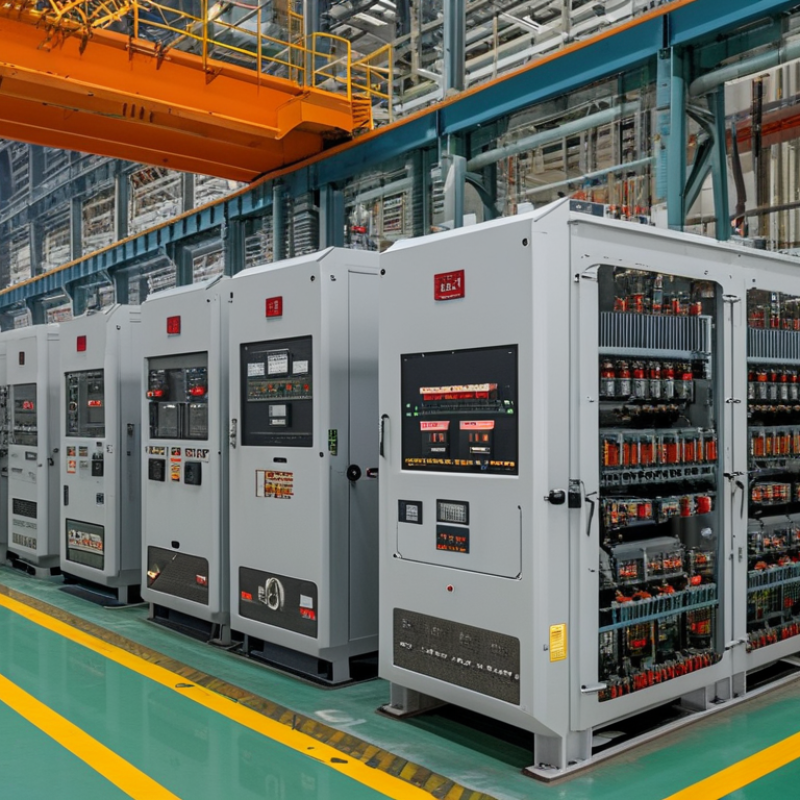
Industrial power transformers must be selected against operating conditions, not catalogue appearance. Under the IEC 60076 series, common types include oil-immersed, dry-type, three-phase, and autotransformers. Each type suits a different environment. Oil-immersed units often support high ratings and outdoor substations. Dry-type units reduce liquid-related risks in buildings, tunnels, and process areas.
Ratings require careful reading. Engineers should verify rated power in kVA or MVA, primary and secondary voltage, frequency, vector group, insulation level, impedance, and temperature rise.
Tap-changer range also matters when the grid voltage changes. IEC 60076 testing may include routine, type, and special tests, covering winding resistance, ratio accuracy, losses, dielectric performance, and short-circuit strength.
A low purchase price means little if the test report lacks traceable data.
Tips:
Request certified test records, material traceability, and drawings before approval. Compare guaranteed losses at the actual load profile, not only at full load. Check altitude, ambient temperature, humidity, seismic conditions, and transport limits.
A perfect selection rarely exists. Some specifications remain incomplete, especially future load growth and harmonic content. That uncertainty deserves a design margin, but excessive margin can increase losses and cost.
For evaluating leading Chinese manufacturers, review IEC 60076 compliance, factory inspection procedures, repair support, and documented experience with similar ratings. Supplier claims should be checked against independent inspection results and project references.
China’s Transformer Industry Scale and Grid Demand Based on NEA Data
China’s transformer industry is expanding with electricity demand, renewable integration, and grid modernization. The National Energy Administration reported China’s total electricity consumption reached about 9.85 trillion kWh in 2024, rising 6.8% year on year. That increase creates steady demand for power transformers, distribution units, and specialized equipment for wind and solar connections.
Grid demand is becoming more technical. New transmission corridors require high-voltage transformers with stronger insulation, lower losses, and stable performance under changing loads. Urban renewal also supports replacement demand, especially for compact distribution transformers in dense districts. In procurement work, buyers should examine tested efficiency, temperature rise, noise levels, service records, and delivery controls. Factory capacity alone proves little.
The picture is strong, but not perfectly clean. NEA electricity data measures consumption, not transformer sales directly. Market estimates therefore need careful interpretation. Regional investment can also move unevenly, leaving some manufacturers with idle capacity while others face long production schedules. A reliable supplier should provide traceable test reports, clear technical tolerances, and evidence from comparable grid projects. Cheap pricing may look attractive. It can hide lifecycle costs.
Top Chinese Manufacturers by Capacity, Technology, and Product Range
China’s leading industrial power transformer manufacturers compete through capacity, engineering depth, and product variety. Large facilities can produce distribution units, furnace transformers, and high-voltage grid transformers under one production system. Some factories handle units above 500 kV, while others focus on compact equipment for factories, rail systems, and renewable-energy sites.
Capacity matters, but it can be misleading. Published annual output may combine small and large transformers. A serious buyer should inspect welding bays, coil-winding machines, drying ovens, and final testing areas. Modern plants often use vacuum pressure impregnation, automated winding control, and online quality records. Their laboratories may perform impulse, temperature-rise, short-circuit, and partial-discharge tests. Test evidence is more useful than impressive brochures.
Product range also reveals technical maturity. Strong manufacturers commonly offer oil-immersed, dry-type, cast-resin, rectifier, traction, and special industrial transformers. They can adjust insulation levels, cooling methods, tap changers, and enclosure designs for harsh environments. However, customization can expose weaknesses. Delivery estimates sometimes ignore testing queues or imported components. Factory audits should review raw-material traceability, routine-test records, spare-parts support, and field-service response. I would not judge reliability from factory size alone. Real operating data, installation experience, and transparent corrective actions deserve equal attention.
Efficiency, Load Loss, and No-Load Loss Compared Under GB/T 6451
China’s leading industrial transformer manufacturers compete on efficiency, load loss, and no-load loss. Under GB/T 6451, these values require careful comparison, not attractive catalog claims. Efficiency depends on both loss categories and the operating load. A transformer may achieve excellent efficiency near rated capacity, yet perform less economically under light demand.
Load loss mainly comes from winding resistance and leakage effects. It rises sharply as current increases. During factory acceptance, engineers should check the test current, reference temperature, connection method, and measurement uncertainty. For oil-immersed units, load loss is commonly assessed at a specified reference temperature. A small test difference can change the purchasing decision. Keep the test records.
No-load loss exists whenever the transformer remains energized. It comes from the magnetic core, even when the secondary circuit supplies no load. This loss matters in substations operating continuously at low demand. Core steel quality, joint design, flux density, and manufacturing accuracy all influence the result. I have seen projects focus heavily on rated efficiency and overlook overnight energization losses. That was costly. Ask manufacturers for guaranteed no-load loss, load loss, impedance, temperature-rise data, and routine test reports under the applicable GB/T 6451 edition. Compare values at the same capacity, voltage ratio, frequency, and tolerance. A lower loss figure is useful, but not sufficient. Cooling performance, insulation quality, noise, service conditions, and maintenance access also deserve practical review. The best technical offer may still need refinement after site data becomes available.
China Top Industrial Power Transformers Manufacturers? - Efficiency, Load Loss, and No-Load Loss Compared Under GB/T 6451
| Reference Transformer Rating | Typical Voltage Class | Typical No-Load Loss (W) |
Typical Load Loss at 75°C (W) |
Total Loss at 75% Load (W) |
Estimated Efficiency at 75% Load (PF 1.0) |
Load-Loss / No-Load-Loss Ratio | Typical Application |
|---|---|---|---|---|---|---|---|
| 1,000 kVA | 10/0.4 kV, three-phase oil-immersed | 1,300 | 10,300 | 7,094 | 99.30% | 7.9 : 1 | Industrial distribution |
| 2,500 kVA | 10/0.4 kV, three-phase oil-immersed | 2,800 | 21,800 | 15,063 | 99.40% | 7.8 : 1 | Factories and commercial plants |
| 6,300 kVA | 10/0.4 kV, three-phase oil-immersed | 6,000 | 39,500 | 28,219 | 99.55% | 6.6 : 1 | Large industrial facilities |
| 10,000 kVA | 35/10 kV, three-phase oil-immersed | 8,500 | 56,000 | 40,000 | 99.60% | 6.6 : 1 | Substations and process plants |
| 16,000 kVA | 35/10 kV, three-phase oil-immersed | 12,000 | 76,000 | 54,750 | 99.66% | 6.3 : 1 | Utility and heavy manufacturing |
| Method note: Values are manufacturer-neutral engineering reference figures for comparison and are not assigned to any company or brand. Total loss at 75% load is calculated as no-load loss + 0.75² × load loss. Estimated efficiency is calculated as output power ÷ (output power + total loss), assuming unity power factor. Actual guaranteed values depend on the rated voltage, transformer design, impedance, cooling method, material grade, and the applicable edition and loss schedule of GB/T 6451. | |||||||
Manufacturer Evaluation Through Type Tests, Certifications, and Service Coverage
China Top Industrial Power Transformers Manufacturers?
Evaluating an industrial transformer manufacturer requires more than comparing prices. The IEA Electricity 2024 report projects global electricity demand to grow by about 4% annually through 2026. This growth increases pressure on transformer reliability and delivery. Buyers should request type-test reports aligned with IEC 60076 or equivalent national standards. Tests should cover temperature rise, lightning impulse, short-circuit withstand, sound level, and partial discharge. Ask for test dates, laboratory accreditation, and the tested transformer’s rated parameters. Generic certificates are weak evidence.
Certification should match the installation market. Verify quality, environmental, and occupational safety systems through valid certificates and audit records. Factory acceptance tests should include oil analysis, ratio measurement, winding resistance, insulation checks, and leak inspection. The U.S. Department of Energy has reported longer transformer lead times and supply-chain constraints in recent years. Therefore, production capacity matters, but documented process control matters more. Fast delivery can hide weak inspection.
Service coverage is often the practical difference. Require a commissioning plan, remote troubleshooting, spare-parts availability, and trained field engineers. Response times should be written into the contract. The manufacturer should explain maintenance intervals and oil-monitoring methods. A five-year service promise sounds useful. It means little without local contacts and escalation rules. My checklist is not perfect; operating conditions can expose failures that laboratory tests miss. Real project references, failure records, and corrective-action reports deserve equal attention. I would also inspect packaging, lifting points, and site manuals before shipment. Small details often decide whether installation stays on schedule.
China Top Industrial Power Transformer Manufacturers: Evaluation Framework
A neutral evidence checklist for comparing manufacturers through type tests, certifications, and service coverage. The figures count representative procurement evidence items rather than company scores, market share, or brand performance.
Reference framework: IEC 60076-1, IEC 60076-3, IEC 60076-5, and IEC 60076-10 for transformer design and testing evidence; ISO 9001, ISO 14001, and ISO 45001 for management-system certification evidence. Service coverage includes commissioning, warranty support, spare-parts availability, and technical response capability.
FAQS
Electricity consumption reached about 9.85 trillion kWh in 2024. It increased 6.8% year on year. This supports demand for power, distribution, and renewable-connection transformers. Demand is steady, but not identical in every region.
Wind and solar connections create more variable electrical loads. Transmission projects need strong insulation and stable high-voltage performance. Transformers should also control losses during changing operating conditions. Site data matters.
No. Electricity consumption measures energy use, not equipment purchases. Sales estimates require grid investment, replacement activity, and regional procurement data. Some manufacturers may have idle factories. Others may face long production schedules.
Review tested efficiency, temperature rise, noise, service records, and delivery controls. Request traceable routine test reports and clear technical tolerances. Comparable grid project evidence is also useful. Factory size alone proves little.
Load loss mainly comes from winding resistance and leakage effects. It rises as current increases. During acceptance testing, confirm test current and reference temperature. Also check the connection method and measurement uncertainty. Keep the records.
No-load loss occurs whenever the transformer remains energized. The magnetic core consumes energy, even when the secondary circuit supplies no load. This matters in substations operating overnight or during light demand. Core steel, joints, flux density, and manufacturing accuracy affect the result.
Compare units with the same capacity, voltage ratio, frequency, and tolerance. Check load loss at the same reference temperature. Review guaranteed no-load loss, impedance, and temperature-rise data. A lower catalog number may not tell the whole story.
Not completely. Efficiency changes with operating load. A transformer may perform well near rated capacity but poorly under light demand. Cooling, insulation, noise, maintenance access, and service conditions also affect lifecycle cost. I once focused too heavily on rated efficiency. That judgment needed correction.
Conclusion
This article explains how Industrial Power Transformers are classified and rated under IEC 60076, covering common designs, voltage levels, capacity ranges, cooling methods, and application requirements. It also examines China’s transformer industry in relation to national grid expansion and electricity demand, using the type of indicators typically reported by the National Energy Administration. The discussion highlights how manufacturers can be evaluated by production capacity, engineering capability, technology development, and the breadth of their product portfolios.
In addition, the article compares transformer efficiency, load loss, and no-load loss with reference to GB/T 6451, helping readers understand the relationship between energy performance, operating costs, and long-term reliability. It presents a practical evaluation framework based on type-test performance, relevant certifications, quality control, customization capability, delivery support, maintenance resources, and service coverage. This approach helps buyers identify suitable suppliers according to technical requirements, project conditions, lifecycle value, and grid safety expectations.

Blog Tags: