
0%

China has become a major center for power equipment manufacturing, supported by mature supply chains and large-scale electrical projects. This article introduces China’s top 10 Electric Distribution Transformers manufacturers and explains why they deserve attention from global buyers.

The selection considers manufacturing experience, product range, testing capability, export service, and technical support. It also examines practical details, including transformer capacity, insulation systems, cooling methods, noise control, and enclosure design. Details matter. A reliable manufacturer should provide clear specifications, routine test reports, traceable materials, and responsive engineering communication. These points help utilities, contractors, and industrial users compare suppliers with greater confidence.

The companies discussed may serve different market segments. Some focus on oil-immersed transformers for outdoor substations. Others develop dry-type models for hospitals, commercial buildings, factories, and renewable energy projects. Their strengths can differ in customization, delivery speed, pricing, certification, and after-sales service. A strong reputation is useful, but it should not replace document review or factory evaluation.

This overview is intended as a practical starting point, not an unquestionable ranking. Manufacturing capabilities change, and published information may become outdated. Buyers should verify current certifications, production capacity, warranty terms, and project references before placing an order. That caution matters. Site conditions, grid standards, climate, and maintenance practices can affect transformer performance as much as the brand itself. A careful comparison can reduce procurement risks and support safer, more efficient distribution networks.
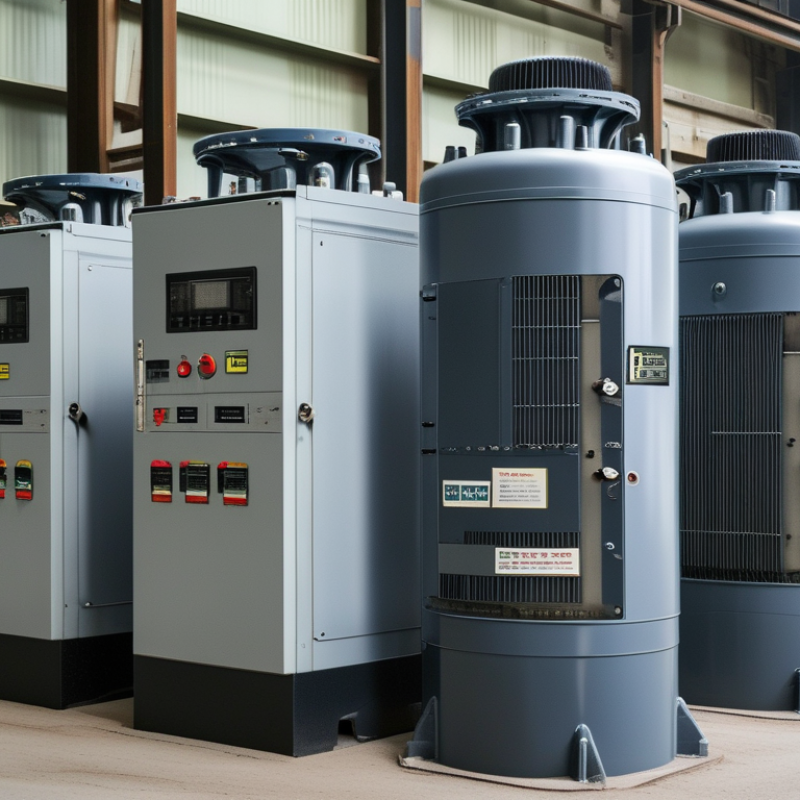
China Top 10 Electric Distribution Transformer Manufacturers

What Is an Electric Distribution Transformer?

An electric distribution transformer is a static device that transfers electrical energy between circuits through electromagnetic induction. It usually lowers medium-voltage electricity to usable levels for homes, offices, farms, and workshops. Inside, copper or aluminum windings surround a magnetic core. Insulating oil or solid materials separate energized parts and control heat. The enclosure, bushings, tap changer, and protective devices complete the working system. It sounds simple. It is not.

During site inspections, technicians check oil temperature, winding connections, grounding, noise, and leakage signs. A healthy transformer should deliver stable voltage while handling changing loads. However, poor ventilation can raise temperatures quickly. Repeated overloads may weaken insulation and shorten service life. Moisture is another quiet threat. It can enter through damaged seals and reduce dielectric strength. Measurements matter, but context matters too. A single reading cannot explain every failure.

Choosing a distribution transformer requires more than comparing rated capacity. Engineers should review voltage ratio, frequency, impedance, efficiency, cooling method, installation altitude, and expected load growth. Short-circuit conditions and local electrical codes also deserve attention. In coastal or dusty areas, enclosure protection needs careful consideration. Routine maintenance may include infrared scans, oil testing, torque checks, and cleaning. Some maintenance plans look complete on paper, yet miss seasonal demand. That weakness should be questioned before equipment is commissioned. Reliable performance depends on details.

How China’s Top Manufacturers Are Evaluated

China Top 10 Electric Distribution Transformer Manufacturers

How China’s Top Manufacturers Are Evaluated

Evaluating China’s leading electric distribution transformer manufacturers requires more than reading capacity figures. Experienced buyers inspect factory records, engineering controls, and field performance. They review efficiency, temperature rise, noise levels, insulation strength, and short-circuit resistance. A transformer leaving the line may look flawless. Actual reliability appears after years of heat, humidity, dust, and uneven loads.

Independent laboratories and accredited testing reports provide stronger evidence than promotional claims. Evaluators compare designs with applicable IEC, GB, or project-specific requirements. They also check whether test samples match routine production units. This detail matters. A perfect prototype proves little if production discipline changes later. Factory audits should examine winding cleanliness, core clamping, oil processing, welding quality, and material traceability.

Delivery capability is judged through more than export volume. Reviewers assess engineering response, spare-parts planning, documentation, installation guidance, and service response times. Site references can reveal overheating, oil leakage, delayed parts, or unclear manuals. Not every evaluation is clean. Some public data is incomplete, and customer feedback may reflect installation errors rather than manufacturing defects. A careful review records uncertainty instead of hiding it. The strongest candidates show measurable results, transparent limitations, and willingness to investigate failures.

China Top 10 Electric Distribution Transformer Manufacturers - How China’s Top Manufacturers Are Evaluated

No. Evaluation Dimension Industry-Grounded Data or Benchmark Recommended Weight Verification Method
1 Compliance with Transformer Standards Products should be designed and tested in accordance with the IEC 60076 series and the corresponding Chinese GB/T 1094 series for power transformers. 15% Review type-test, routine-test, and special-test reports issued under the applicable standard.
2 Rated Voltage and Frequency Coverage Chinese distribution networks commonly use 50 Hz systems, with medium-voltage applications frequently based on 10 kV or 20 kV classes and low-voltage output around 0.4 kV. 10% Compare the published product range with the project voltage, frequency, insulation level, and connection requirements.
3 Capacity Range and Application Fit Distribution transformer portfolios commonly cover utility, commercial, industrial, renewable-energy, and infrastructure applications across multiple kVA and MVA ratings. 10% Check available ratings, impedance options, vector groups, tap arrangements, and enclosure configurations.
4 No-Load and Load Loss Performance Transformer efficiency is evaluated through no-load loss, load loss, total loss, and energy-efficiency grade requirements. Actual allowable values depend on rated capacity and the applicable national or project standard. 15% Compare guaranteed losses with certified test results and the applicable efficiency regulation or tender specification.
5 Insulation and Dielectric Strength Evaluation includes power-frequency withstand voltage, lightning impulse withstand voltage, partial-discharge performance where applicable, and insulation coordination. 10% Review routine and type-test results, insulation-level declarations, and test voltage values for the specified voltage class.
6 Temperature Rise and Thermal Design Thermal performance is assessed through winding and top-liquid temperature-rise limits, cooling method, ambient conditions, and overload capability. 10% Verify temperature-rise test data, cooling designation, ambient-temperature assumptions, and derating curves.
7 Short-Circuit Mechanical Strength The design should withstand mechanical and thermal stresses caused by prospective short-circuit currents for the duration specified by the applicable standard and utility requirement. 10% Review short-circuit calculations, design documentation, and certified short-circuit or equivalent validation reports.
8 Material and Manufacturing Quality Key quality controls cover electrical steel, conductor insulation, winding tension, core assembly, vacuum drying, oil processing, sealing, welding, and final inspection. 10% Audit incoming-material records, process-control plans, calibration records, traceability documents, and final-test procedures.
9 Environmental and Safety Features Relevant factors include fire risk, oil containment, acoustic noise, corrosion protection, environmental operating conditions, recyclability, and compliance with hazardous-substance requirements. 5% Check enclosure ratings, oil specifications, noise-test results, environmental certificates, and site-specific safety documentation.
10 Delivery, Service, and Lifecycle Support A complete evaluation should consider engineering support, spare-parts availability, installation guidance, commissioning, warranty terms, maintenance instructions, and after-sales response. 5% Assess documented lead times, service coverage, warranty conditions, reference projects, and lifecycle-maintenance procedures.
Total Evaluation Weight 100% Use weighted scoring only after verifying technical documents and test evidence.

Reference framework: IEC 60076 series, GB/T 1094 series, applicable Chinese energy-efficiency requirements, project specifications, and utility procurement standards. Benchmark values should be confirmed against the latest edition of the applicable standard and the purchaser’s technical specification.

Profiles of China’s Top 10 Electric Distribution Transformer Manufacturers

China’s top ten electric distribution transformer manufacturers reflect the country’s broad grid equipment capacity. Their profiles usually differ by product focus, production scale, and project experience. Some specialize in oil-immersed units for urban substations, while others emphasize dry-type transformers for hospitals, factories, and commercial buildings.

The China Electricity Council reported continued investment in transmission and distribution infrastructure during 2024. This supports demand for reliable medium-voltage equipment. Industry research also indicates that Asia-Pacific remains the largest regional market for distribution transformers. The leading Chinese manufacturers respond with sealed tanks, low-loss cores, online temperature monitoring, and compact cabinet designs. A 10 MVA unit, for example, may require careful cooling design, noise control, and factory testing before delivery.

Quality evidence matters more than a polished catalogue. Strong manufacturers typically show compliance with IEC 60076, documented type tests, traceable materials, and field-service records. Many also produce amorphous-core transformers, which can reduce no-load losses during long operating periods. However, published efficiency claims deserve independent verification. Real performance can change with loading, climate, installation, and maintenance. My assessment would also examine factory automation, oil testing procedures, failure-response time, and export certification. One weakness remains: public information is often inconsistent, making direct comparison difficult.

Product Types, Technologies, and Industry Applications

China Top 10 Electric Distribution Transformer Manufacturers

China’s electric distribution transformer sector covers several practical product types. Oil-immersed transformers remain common in outdoor substations and rural networks. They offer strong cooling performance and manageable operating costs. Dry-type transformers suit hospitals, commercial buildings, tunnels, and other indoor locations. Their reduced fire risk supports installation near occupied spaces. Pole-mounted units serve scattered loads, while pad-mounted models fit urban underground systems.

Modern designs increasingly use low-loss silicon steel or amorphous metal cores. These materials reduce no-load losses during long energization periods. Sealed tanks help limit moisture entry and reduce routine maintenance. On-load or off-circuit tap changers support voltage adjustment under changing demand. Digital sensors can monitor temperature, oil level, load current, and partial discharge. Useful data, but sensors still need calibration.

Applications vary by local grid conditions. Industrial plants require stable voltage for motors, furnaces, and automated equipment. Renewable projects often need transformers that manage fluctuating generation and reverse power flow. Data centers demand high reliability, careful harmonics control, and rapid fault isolation. Coastal installations require stronger corrosion protection. High-altitude projects may need derating because air cools less effectively.

Specification work is not always perfect. A lower-loss design may cost more initially or require special servicing. Engineers should compare total ownership cost, noise, footprint, and maintenance access. Field experience matters here. A transformer that performs well in a factory may struggle in a humid, dusty village substation. Careful site data usually prevents expensive surprises.

China Top 10 Electric Distribution Transformer Manufacturers: Product Types, Technologies, and Industry Applications

The chart compares representative distribution transformer capacity levels used across major application sectors in China. Oil-immersed transformers are commonly selected for utility and industrial networks, while dry-type transformers are widely used in commercial buildings, transport facilities, and other indoor installations. Actual ratings depend on load demand, voltage class, energy-efficiency requirements, and site conditions.

How to Select a Suitable Chinese Manufacturer

China Top 10 Electric Distribution Transformer Manufacturers

Choosing a suitable Chinese manufacturer requires more than comparing prices. The IEA’s Electricity 2024 report estimates that annual global grid investment must rise from about USD 400 billion to USD 600 billion by 2030. This pressure increases demand for efficient, reliable distribution transformers. Ask for IEC 60076 and relevant GB/T compliance. Request type-test reports, routine-test records, and traceable material certificates. Check no-load loss, load loss, temperature rise, insulation level, and partial-discharge results. Numbers matter.

Factory capability matters too. Visit the production line when possible. Observe winding cleanliness, drying equipment, oil treatment, and final inspection. A manufacturer should explain its core steel, conductor material, tank design, and quality controls clearly.

The U.S. Department of Energy links transformer efficiency with reduced lifetime energy losses in its 2024 conservation-rule materials. A cheaper unit may create higher operating costs. That is easy to overlook.

Tips: Compare total ownership cost, not only the purchase price. Confirm factory acceptance testing, packing standards, spare-part support, and response times in writing. Request references from projects with similar voltage, capacity, climate, and installation conditions. Check whether the supplier can provide local technical support and stable export documentation. I would not trust a perfect presentation alone. Real evidence is better. Lead time should also be tested against a written production schedule, because optimistic promises sometimes fail during material shortages.

FAQS

What types of distribution transformers do Chinese manufacturers commonly produce?

They commonly produce oil-immersed units for urban substations and dry-type units for hospitals, factories, and commercial buildings. Some offer amorphous-core designs. These cores may reduce no-load losses during long operating periods.

What standards and test documents should buyers request?

Ask for IEC 60076 and relevant GB/T compliance. Request type-test reports, routine-test records, and traceable material certificates. Also check insulation levels and partial-discharge results. Numbers matter. Paperwork alone is not enough.

Which technical data deserves close comparison?

Compare no-load loss, load loss, temperature rise, cooling method, noise control, and rated capacity. A 10 MVA unit may need careful cooling and factory testing. Published efficiency can change with loading, climate, and maintenance.

How can buyers evaluate factory capability?

Visit the production line when possible. Inspect winding cleanliness, drying equipment, oil treatment, and final inspection. Ask how the factory controls core steel, conductors, tanks, and material traceability. A polished showroom proves little.

Why should buyers compare total ownership cost?

A cheaper transformer may create higher lifetime energy costs through avoidable losses. Include purchase price, operating losses, maintenance, spare parts, and service response. Efficiency matters over years, not delivery day. This is easy to miss.

What project references should a manufacturer provide?

Request references from projects with similar voltage, capacity, climate, and installation conditions. Field-service records may reveal failure patterns and response quality. One successful project is not a complete verdict.

What should be confirmed before ordering?

Confirm factory acceptance testing, packing standards, spare-part support, and response times in writing. Require a production schedule with material and delivery milestones. Optimistic lead times sometimes fail during shortages. Get details documented.

How should export and technical support be assessed?

Check export documents, certification, local technical support, and replacement-part availability. Ask who handles commissioning, troubleshooting, and urgent failures. Support arrangements can matter as much as the transformer. Public information remains inconsistent. Direct verification is still necessary.

Conclusion

This guide explains the role of Electric Distribution Transformers in modern power systems, focusing on how they reduce voltage for safe and efficient delivery to homes, commercial facilities, and industrial users. It outlines the main evaluation criteria for China’s leading manufacturers, including product quality, technical capability, energy efficiency, manufacturing capacity, testing procedures, certifications, customization options, delivery reliability, and after-sales support. The article also presents a structured overview of ten leading manufacturers without focusing on brand promotion, helping readers understand the strengths and production focuses commonly found in the Chinese market.

In addition, the guide compares key product types and technologies, such as oil-immersed and dry-type transformers, smart monitoring systems, low-loss designs, and solutions for renewable energy, infrastructure, manufacturing, and distribution networks. It concludes with practical advice for selecting a suitable Chinese manufacturer by considering operating conditions, capacity requirements, safety standards, total cost, maintenance needs, communication efficiency, and long-term service capabilities.

Amelia

Amelia

Amelia is a professional marketing specialist with a strong understanding of product strategy, customer needs, and digital communication. As a key contributor to the company’s content and marketing initiatives, she regularly publishes insightful articles on the company website, helping readers......