
Industrial Transformer Blog & Resources
Expert articles, maintenance guidelines, and technical standards for power distribution engineering.
2026 Best 33kV Power Distribution Transformers Buying Guide
Table of Contents
- What a 33kV Power Distribution Transformer Is and How It Works
- Key Specifications for Selecting a 33kV Distribution Transformer
- Transformer Types, Materials, and Configuration Options
- How to Compare Manufacturers, Standards, Prices, and Lead Times
- Installation, Testing, Maintenance, and Lifecycle Considerations
- FAQS
- Conclusion
- Related Posts
Buying 33kV Power Distribution Transformers is a long-term infrastructure decision, not a simple equipment purchase. These transformers support substations, industrial plants, renewable projects, and utility networks where reliability matters every hour. A poor specification can create overheating, unexpected outages, excessive losses, or difficult maintenance. The consequences may remain hidden until demand peaks.
Dr. S. V. Kulkarni, a respected transformer engineering author, states, “A transformer must be designed for its actual duty, not merely its nameplate rating.” This principle should guide every 2026 purchasing decision. Buyers must examine load profiles, ambient temperature, altitude, fault levels, cooling methods, insulation coordination, noise limits, and installation conditions. Compliance with relevant IEC 60076 requirements also deserves careful verification. Documentation matters. So does factory testing.
This guide compares the practical factors behind dependable 33kV Power Distribution Transformers. It considers oil-immersed and dry-type designs, copper and aluminium windings, energy efficiency, protection accessories, online monitoring, delivery support, and lifecycle cost. Purchase price alone can mislead. A cheaper unit may demand more maintenance or lose more energy over twenty years. However, not every advanced feature provides equal value. That deserves honest reflection. Buyers should question impressive claims, request test evidence, and inspect references from similar operating environments. Some project assumptions will be incomplete. That is normal. Good decisions improve when engineers revisit them before final approval.
What a 33kV Power Distribution Transformer Is and How It Works
2026 Best 33kV Power Distribution Transformers Buying Guide
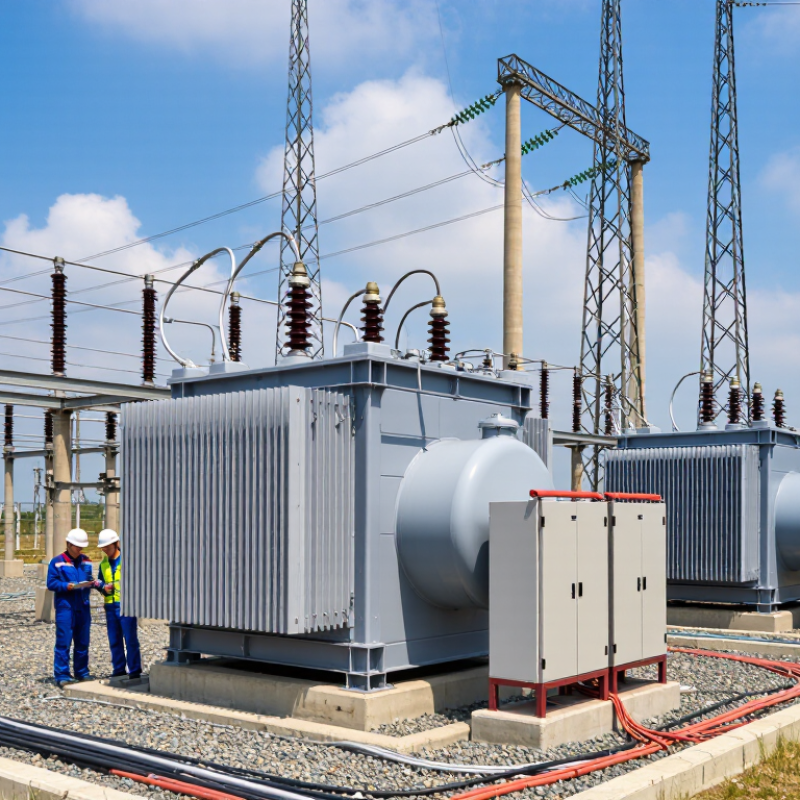
A 33kV power distribution transformer transfers electrical energy between medium-voltage networks. It usually reduces 33kV to a usable secondary voltage, such as 11kV, 400V, or another site-specific level. The core and windings perform this change through electromagnetic induction. Alternating current creates a magnetic flux in the laminated steel core. That flux induces voltage in the secondary winding.
The voltage ratio follows the turns ratio. More secondary turns produce higher voltage, while fewer turns produce lower voltage. Insulation, winding arrangement, cooling, and impedance then determine safe operation. On-load tap changers can correct voltage during demand changes. Protection systems monitor temperature, pressure, current, and internal faults. IEC 60076 provides the main technical framework for transformer design and testing.
The IEA Electricity 2024 report expects global electricity demand to grow by about 4% annually through 2026. That growth increases pressure on aging distribution equipment. The IEA World Energy Outlook 2024 also indicates that annual grid investment must rise substantially by 2030.
A 33kV transformer therefore needs more than a suitable nameplate rating. Engineers should examine load diversity, short-circuit levels, altitude, harmonics, and future expansion. Field conditions rarely behave neatly. A transformer can pass factory tests yet perform poorly with poor ventilation or unbalanced loads. Buyers should review test records, temperature-rise results, losses, noise data, and maintenance access before approval. Sometimes, the cheapest unit becomes the least predictable asset.
Key Specifications for Selecting a 33kV Distribution Transformer
A 33kV distribution transformer should match the network, not only the load forecast. Check rated power, frequency, primary and secondary voltage, and insulation levels. The lightning impulse withstand level matters in exposed substations. Confirm the required vector group and neutral arrangement before requesting quotations.
Impedance affects fault current and voltage regulation. A higher value can limit fault energy, but may increase voltage drop. Compare guaranteed load losses, no-load losses, temperature rise, and cooling method.
For outdoor installation, review enclosure protection, corrosion resistance, oil containment, and the site’s highest ambient temperature. IEC 60076 provides a useful technical framework, but local grid rules still control the final specification. A tidy datasheet can hide a serious mismatch.
Tips: Ask for routine and type-test records. Verify tap-changer range, sound level, bushings, surge protection, and pressure-relief devices. Check whether maintenance access fits the actual substation layout.
Measure cable lengths and fault levels early. Small omissions become expensive later. One practical mistake is selecting capacity from present demand alone.
Seasonal peaks, motor starting current, distributed generation, and future expansion can change the result. Yet oversizing is not automatically safer; it may increase idle losses and reduce efficiency. Review the design with an independent protection engineer before purchase.
Transformer Types, Materials, and Configuration Options
Choosing a 33kV power distribution transformer starts with the load, site, and maintenance reality. Oil-immersed units suit outdoor substations and high-capacity service, while cast-resin transformers support cleaner indoor installations. Dry-type designs still need careful ventilation and dust control. In projects I have reviewed, the cheapest option often became expensive after access, noise, or cooling problems appeared. That lesson still deserves attention.
Materials influence efficiency, service life, and safety. Grain-oriented electrical steel can reduce core losses when manufacturing quality is consistent. Copper windings provide strong conductivity, while aluminum windings may reduce weight and initial cost. The choice should consider temperature rise, connection quality, and expected loading. A two-winding configuration fits many standard networks. Three-winding units can serve separate voltage levels, but they require more complex protection and testing. On-load tap changers support voltage control under changing demand. Off-circuit taps are simpler, but adjustment requires isolation.
Buyers should match impedance, vector group, neutral arrangement, and cooling method with the complete network design. I recommend checking routine test records, insulation levels, short-circuit withstand data, and applicable IEC or IEEE requirements. Factory acceptance testing matters. So does transport planning. A well-designed transformer can still fail early if moisture enters during storage or cable termination is poorly prepared. No specification is perfect. I once underestimated future harmonics in a commercial load, and the later assessment became unnecessarily difficult. Allow spare capacity, but avoid paying for unused performance without evidence.
2026 Best 33kV Power Distribution Transformers Buying Guide
For a 33kV transformer, the typical IEC equipment class is 36kV, because the highest system voltage is 36kV. The chart compares standardized power-frequency withstand and lightning impulse withstand levels for common IEC voltage classes.
When selecting a transformer, evaluate the transformer type, cooling method, winding conductor material, insulation system, vector group, tap-changer configuration, short-circuit impedance, and installation environment. Copper windings generally provide compact designs and high conductivity, while aluminum windings can reduce material weight and cost. ONAN cooling is common for smaller units, while ONAF or other forced-cooling arrangements support higher continuous ratings.
How to Compare Manufacturers, Standards, Prices, and Lead Times
2026 Best 33kV Power Distribution Transformers Buying Guide
Comparing 33kV transformer manufacturers requires more than checking nameplate capacity and price. Confirm compliance with IEC 60076 or the applicable IEEE standards, then review routine and type-test records. Ask for measured losses, temperature-rise results, impulse-test evidence, and factory acceptance procedures. A credible supplier should explain winding material, insulation system, tap-changer design, and enclosure protection clearly. References from similar utility or industrial projects matter.
Price comparisons should use total ownership cost, not only the purchase order. The International Energy Agency’s Electricity Grids and Secure Energy Transitions report says annual grid investment must rise from about 300 billion dollars to over 600 billion dollars by 2030. This pressure may increase demand for transformers and essential materials. Compare no-load losses, load losses, oil requirements, transport, installation, and warranty support. A cheaper unit can become expensive after years of avoidable energy loss.
Lead time deserves written evidence. The U.S. Department of Energy’s 2022 transformer supply-chain assessment described lead times exceeding one year for many distribution transformers, with large units taking considerably longer. Request a production schedule, material reservation, inspection dates, and shipping assumptions. “In stock” may only mean the core steel is available. I would also challenge fixed delivery promises when copper, electrical steel, or testing capacity remains uncertain. My own procurement checklist is not perfect; regional standards and site conditions can expose gaps, so an independent technical review is worthwhile.
Installation, Testing, Maintenance, and Lifecycle Considerations
A 33kV transformer needs more than a low purchase price. Installation quality shapes decades of performance. IEC 60076 requires verified electrical and thermal characteristics before energization. Check the foundation, cable terminations, clearances, earthing, oil level, and torque records. Perform ratio, winding resistance, insulation resistance, and vector-group tests. Record baseline results before loading. Small errors become expensive faults.
The IEA Electricity 2024 report expects global electricity demand to grow by about 3.4% annually through 2026. This supports careful load forecasting and spare-capacity planning. The U.S. Department of Energy reports that distribution transformers may serve for 25–40 years, depending on loading, temperature, and maintenance. Monitor oil quality, dissolved gases, moisture, bushing condition, and abnormal noise. Infrared inspections can reveal hot connections before failure. However, field records are often incomplete. That weakness should be treated as a lifecycle risk.
Tips: Specify guaranteed losses, sound levels, temperature rise, and test certificates in the purchase contract. Keep a digital asset history. Review loading during seasonal peaks. No schedule is perfect. Oil sampling intervals should reflect site conditions, duty cycles, and previous results. Budget for testing, logistics, emergency spares, oil treatment, and responsible end-of-life handling—not only the initial equipment cost.
2026 Best 33kV Power Distribution Transformers Buying Guide - Installation, Testing, Maintenance, and Lifecycle Considerations
| Category | Data Dimension | Typical 33kV Transformer Guidance | Acceptance or Decision Criteria | Lifecycle Consideration |
|---|---|---|---|---|
| Specification | Rated primary voltage | 33 kV nominal system voltage; specify the highest system voltage and insulation level according to the network design. | The transformer rating must match the utility connection requirements, earthing method, fault level, and protection scheme. | Allow for future network voltage changes and tap-range requirements where applicable. |
| Specification | Rated secondary voltage | Common distribution outputs include 11 kV, 6.6 kV, 3.3 kV, 415 V, or another project-defined voltage. | Select the secondary voltage based on load equipment, voltage-drop calculations, and downstream protection coordination. | Confirm compatibility with future motors, drives, renewable generation, and low-voltage equipment. |
| Specification | Rated power | Typical distribution sizes range from approximately 1 MVA to 40 MVA, subject to cooling, enclosure, network, and installation requirements. | Choose a rating that supports maximum demand, permissible loading, ambient conditions, harmonics, and planned expansion. | A moderate spare-capacity margin can reduce early replacement risk, but excessive oversizing may increase losses and cost. |
| Specification | Transformer type | Oil-immersed transformers generally suit outdoor substations and higher ratings; cast-resin dry-type units may suit indoor or fire-sensitive locations. | Evaluate fire risk, ventilation, environmental containment, noise, footprint, altitude, humidity, and access restrictions. | Oil-filled units require oil condition management and spill control; dry-type units require cleanliness and thermal ventilation management. |
| Specification | Frequency and phase | Normally three-phase, 50 Hz or 60 Hz, according to the electrical system. | Frequency, phase sequence, vector group, and neutral arrangement must match the network design. | Incorrect vector-group selection can prevent parallel operation and create circulating currents. |
| Specification | Impedance voltage | Common distribution-transformer impedance values are approximately 4% to 12%, depending on rating and design. | Verify short-circuit current, voltage regulation, motor starting performance, and protection coordination. | Higher impedance limits fault current but can increase voltage drop during heavy loading. |
| Specification | Tap changer | Off-circuit tap changers are common for distribution applications; on-load tap changers are used where voltage regulation is required during operation. | Confirm tap range, step size, operating mechanism, interlocks, and permissible operating conditions. | Tap position should be recorded after commissioning and checked after network changes. |
| Installation | Foundation and access | The foundation must support the complete operating mass and accommodate cable bending radius, lifting points, radiators, and maintenance clearances. | Check civil drawings, anchor locations, level tolerance, transport route, lifting plan, and safe working space. | Good access reduces future outage duration and lowers lifting or handling risk. |
| Installation | Earthing and bonding | Connect the tank, enclosure, cable screens, neutral, surge arresters, and supporting steelwork to the substation earthing system as designed. | Verify continuity, touch-voltage design, earth-grid connections, and documented test results. | Inspect for corrosion, loose joints, and changes caused by civil or cable modifications. |
| Installation | Oil containment and fire protection | Oil-filled installations may require bunds, drainage controls, fire separation, extinguishing systems, or oil-water separation based on local regulations. | Containment capacity, drainage route, fire rating, and emergency access must be approved before energization. | Inspect bund integrity, drain valves, alarms, and spill-response equipment periodically. |
| Installation | Cable and bushing connections | Use correctly rated terminations, stress-control components, clearances, phase identification, and manufacturer-specified tightening torques. | Check phase sequence, screen bonding, termination condition, torque records, and mechanical strain relief. | Poor terminations are a common source of partial discharge, overheating, and service failure. |
| Testing | Insulation resistance | Measure winding-to-earth and winding-to-winding insulation resistance using a suitable test voltage and temperature-corrected method. | Results should be consistent with factory data, historical trends, temperature, transformer design, and applicable test procedures. | Trend results over time rather than relying on one isolated measurement. |
| Testing | Winding resistance | Measure each phase and tap position using a stabilized direct-current test method. | Compare phase results and tap-to-tap values with factory records and temperature-corrected expectations. | Unexpected deviation may indicate loose connections, tap-changer problems, or winding damage. |
| Testing | Transformer ratio and vector group | Verify the transformation ratio at all tap positions and confirm polarity, phase displacement, and vector group. | Measured values must comply with the nameplate, approved drawings, and applicable tolerance requirements. | Essential before parallel operation or connection to existing switchgear. |
| Testing | Oil quality and dissolved-gas analysis | For oil-filled units, test dielectric strength, moisture, acidity, interfacial tension, and dissolved gases using an appropriate sampling procedure. | Interpret results by applicable standards, transformer age, load history, gas trends, and supporting electrical tests. | Trend-based analysis can identify overheating, arcing, insulation aging, or paper deterioration before failure. |
| Testing | Protection and functional checks | Test overcurrent, earth-fault, differential, temperature, pressure, oil-level, Buchholz where fitted, and trip/alarm circuits. | Confirm pickup values, time delays, interlocks, trip-circuit supervision, alarm indications, and breaker operation. | Protection settings should be reviewed after changes in fault level, load, or network configuration. |
| Maintenance | Routine visual inspection | Check oil leaks, corrosion, abnormal noise, vibration, temperature indicators, silica-gel condition, cable boxes, radiators, and bushings. | Frequency should be risk-based; monthly to quarterly inspections are common for critical installations. | Record observations with photographs and compare against previous inspections. |
| Maintenance | Thermal condition | Monitor top-oil and winding temperatures, loading profile, ambient temperature, cooling equipment, and hotspot indicators where installed. | Investigate persistent high temperature, phase imbalance, blocked cooling paths, or abnormal load patterns. | Thermal aging accelerates significantly with sustained overheating; load management can extend insulation life. |
| Maintenance | Electrical connection maintenance | Inspect and, when required by the maintenance plan, torque-check accessible terminals, earth bonds, control wiring, and cable-screen connections. | Use approved isolation, testing, and torque procedures; do not retighten energized equipment. | Loose or oxidized connections create localized heating and can damage bushings or cable terminations. |
| Maintenance | Suggested inspection intervals | Visual checks: monthly to quarterly; electrical condition assessment: typically annually to every few years; major service: based on condition and risk. | Set intervals using criticality, environment, loading, age, fault history, and regulatory requirements. | Condition-based maintenance is often more effective than fixed intervals alone. |
| Lifecycle | Expected service life | Well-maintained distribution transformers commonly provide several decades of service; actual life depends on insulation aging, loading, environment, faults, and maintenance. | Assess condition through test trends, operating history, oil results, thermal performance, and accessory availability. | Age alone should not determine replacement; condition, reliability risk, efficiency, and repair economics should also be considered. |
| Lifecycle | Energy efficiency and total cost | Compare no-load losses, load losses, expected load profile, electricity price, carbon cost, purchase cost, installation cost, and maintenance cost. | Use a total-cost-of-ownership model rather than selecting solely on initial purchase price. | Lower losses can provide significant savings over the operating life, especially for continuously energized units. |
| Lifecycle | Standards and documentation | Use the applicable parts of IEC 60076 or equivalent national standards, together with local electrical, fire, environmental, and safety regulations. | Require approved drawings, type and routine test reports, manuals, certificates, protection settings, commissioning records, and spare-parts information. | Complete documentation improves troubleshooting, audits, future extensions, and end-of-life decisions. |
| Lifecycle | End-of-life and recycling | Plan for de-energization, oil or resin handling, metal recovery, contaminated-material control, transport, and disposal in accordance with local regulations. | Use qualified personnel and licensed waste contractors for oil, contaminated components, and electrical equipment. | Early planning reduces outage risk, environmental exposure, and decommissioning cost. |
FAQS
Match the transformer with the load, site, cooling needs, and maintenance access. Oil-immersed units suit outdoor substations and higher capacities. Cast-resin units support cleaner indoor installations. Dry-type units still require ventilation and dust control. The cheapest choice may create costly access or cooling problems.
Copper windings provide strong conductivity and reliable connection performance. Aluminum windings may reduce weight and initial cost. Consider temperature rise, connection quality, expected loading, and service conditions. Material savings can disappear after poor connections or higher heat losses.
Two-winding transformers fit many standard distribution networks. Three-winding units can serve separate voltage levels. They require more complex protection, testing, and fault analysis. Keep the arrangement simple unless the network genuinely needs additional voltage levels.
An on-load tap changer adjusts voltage while demand changes. An off-circuit tap system is simpler and usually less costly. However, adjustment requires isolation and safe work procedures. The network study should justify the selected voltage-control method.
Confirm impedance, vector group, neutral arrangement, cooling method, insulation level, and short-circuit withstand capability. Request routine test records and factory acceptance results. Specify guaranteed losses, sound levels, temperature rise, and test certificates in the contract. No specification is perfect.
Inspect the foundation, clearances, earthing, cable terminations, oil level, and torque records. Perform ratio, winding resistance, insulation resistance, and vector-group tests. Record baseline values before loading. Small errors become expensive faults.
Monitor oil quality, dissolved gases, moisture, bushings, loading, and abnormal noise. Infrared inspections can reveal hot connections early. Review seasonal peak loading and keep a digital asset history. Records are often incomplete. That weakness needs correction.
Include transport, installation, testing, emergency spares, oil treatment, inspections, and responsible end-of-life handling. Distribution transformers may operate for 25–40 years under suitable conditions. Allow spare capacity, but avoid paying for unsupported performance. I once underestimated future harmonics, and the later assessment became unnecessarily difficult.
Conclusion
This 2026 buying guide explains how 33kV Power Distribution Transformers convert high-voltage electricity into safer, usable power for industrial facilities, commercial sites, and utility networks. It outlines the key selection criteria, including rated power, voltage ratio, insulation level, efficiency, cooling method, impedance, noise, environmental conditions, and protection requirements. Readers will also learn how oil-immersed and dry-type transformers differ, along with the roles of core materials, winding designs, enclosure ratings, tap changers, and installation configurations.
The guide provides a practical framework for comparing manufacturers, technical standards, total pricing, warranty terms, production capacity, and lead times without focusing only on the initial purchase cost. It also covers transportation, site preparation, installation, commissioning tests, grounding, monitoring, routine maintenance, fault prevention, and end-of-life planning. By considering performance, safety, reliability, serviceability, and lifecycle expenses together, buyers can select a 33kV transformer that supports stable operation and long-term power distribution needs.

Blog Tags: